

Power Grid Market
Power Grid Market Size, Share, Trends, Growth, and Industry Analysis, By Component (Cables, Variable Speed Drives, Transformers, Switchgear, Others), By Power Source (Oil, Natural Gas, Coal, Renewables), By Application (Generation, Transmission, Distribution), Regional Analysis and Forecast Period 2026-2035
Market Overview
As per Econ Market Research analysis, the Global Power Grid Market reached a valuation of US$ 11.8 Billion in 2026 and is anticipated to grow to US$ 24.37 Billion by 2035, at a CAGR of 8.3% during the forecast timeline 2026–2035. The base year considered is 2025.
Power Grid Market Size 2025-2035 (USD Billion)

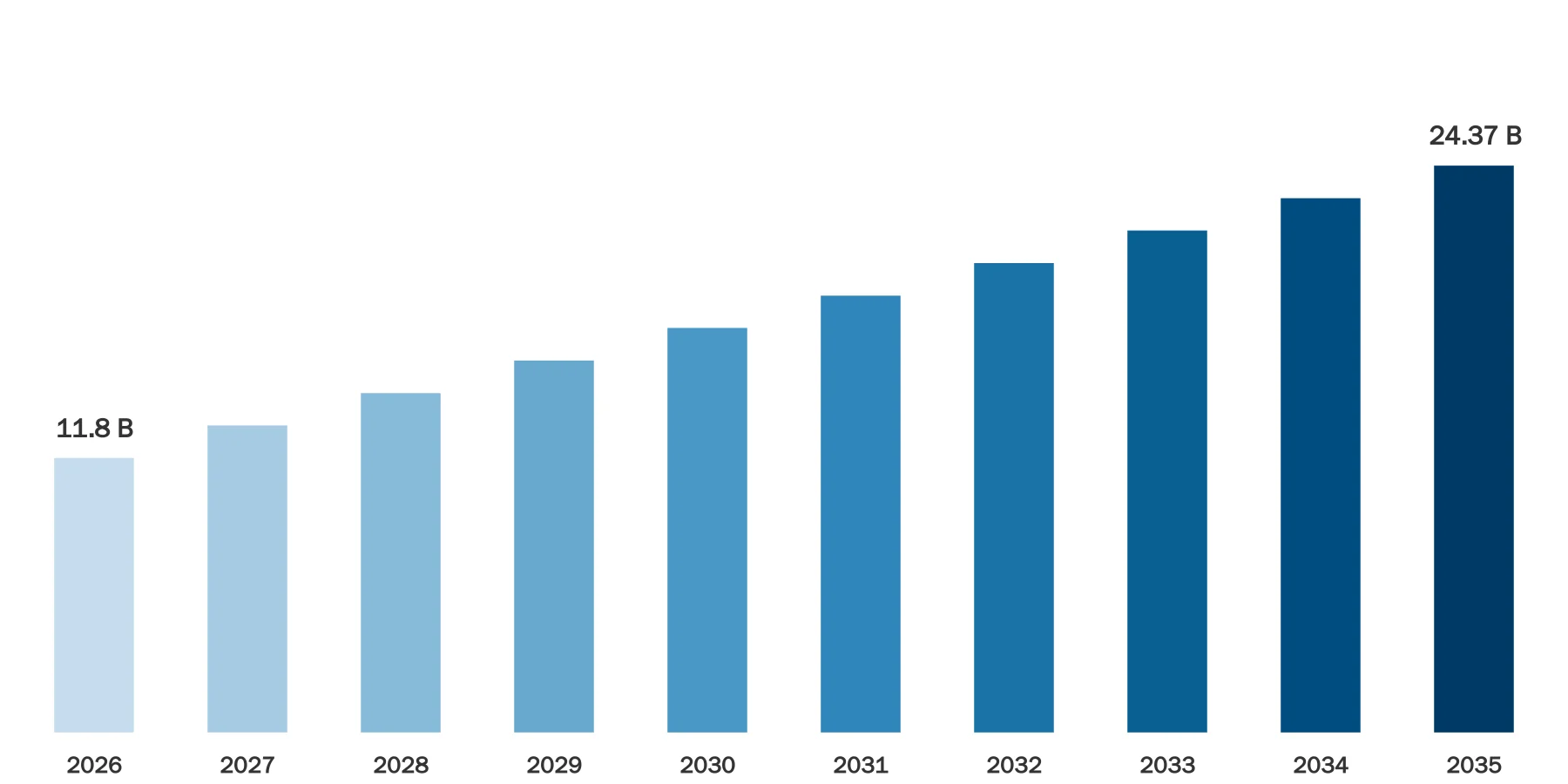
Source: Econ Market Research
The market for power grids includes the transfer and distribution of electricity, making it easier for power plants to deliver energy to end users. It includes the systems, laws, and guidelines controlling the production, transfer, and use of electrical energy. Modernization efforts to improve grid sustainability, efficiency, and dependability are underway in response to rising demand. Regulatory agencies, equipment manufacturers, utility corporations, and grid operators are important stakeholders. The industry is being shaped by innovations like smart grids, renewable energy integration, and grid modernization programs, which strive to fulfill changing energy needs while lessening their negative effects on the environment and boosting grid resilience.
Power Grid Dynamics
Technology developments, laws and regulations, economic conditions, and environmental concerns are just a few of the variables that impact the power grid market. Industry expansion is being propelled by technological advancements including energy storage options, smart grid technology, and grid automation. Market dynamics are greatly influenced by regulatory frameworks, which tend to emphasize grid modernization, emission reduction tactics, and the integration of renewable energy sources.
The market is influenced by various economic factors, such as cost concerns, energy consumption patterns, and investment trends. Grid resilience projects and the transition to cleaner energy sources are also motivated by environmental concerns like climate change and sustainability. The global development of the power grid market is largely shaped by these forces.
Power Grid Drivers
Renewable Energy Integration
Reducing dependency on fossil fuels and mitigating climate change are the driving forces behind the incorporation of renewable energy. Governments and businesses are encouraged to switch to greener energy sources like solar and wind power due to rising environmental awareness and worries about carbon emissions. Renewable energy sources are now more widely used because of technological breakthroughs that have increased their economic viability. In addition, grid modernization initiatives seek to make it easier for renewable energy to be seamlessly integrated, guaranteeing stability, affordability, and dependability as we move toward a sustainable energy future.
Technological Advancements
Power grid operations are being revolutionized by advances in automation, Data Analytics, and materials science. By enabling real-time monitoring, optimization, and control of electricity distribution, smart grid technologies improve efficiency and dependability. Batteries and other energy storage technologies are getting more affordable, which makes it possible to integrate intermittent renewable energy sources. Furthermore, developments in digitization and grid automation simplify operations, save maintenance costs, and open the door for more robust, sustainable, and customer-responsive energy systems in the future.
Restraints:
Regulatory Uncertainty
Planning and investment over the long term are hampered by changing legislation, contradicting standards, and uneven enforcement. Businesses must navigate complicated regulatory standards, which causes delays and higher project costs for grid upgrades. Market fragmentation brought on by disparate regional policies makes businesses even more difficult to manage and prevents economies of scale. Regulation-related uncertainty inhibits innovation and makes it difficult to solve urgent energy issues, which impedes the transition to a sustainable future.
Grid Security Risks
Cybersecurity attacks that target vital grid components have the potential to cause operational disruptions, which could result in service outages and monetary losses. Cyberattack risk is increased by old systems', vulnerabilities and insufficient security measures. Furthermore, the interdependencies and complexity of grid networks increase the possible consequences of security breaches. Grid security risk mitigation measures are made more difficult by worries about data privacy and regulatory compliance, which presents substantial obstacles for industry participants.
Opportunities:
Integration of IoT and AI in Energy Management
IoT sensors make it possible to monitor energy use and grid conditions in real time, which helps with Predictive Maintenance and resource allocation optimization. Massive volumes of data are analyzed by AI algorithms to optimize energy generation, distribution, and consumption, increasing productivity and cutting expenses. Through this integration, grid resilience, flexibility, and stability are improved. Personalized energy services catered to the needs and tastes of individual customers are also made possible.
Expansion of Solar and Wind Power
The growing need for clean and sustainable energy sources is driving the rise of solar and wind power, which offers a substantial opportunity for the power grid sector. Reducing dependency on fossil fuels and diversifying the energy mix are two benefits of solar and wind technologies, which provide an abundance of renewable resources. These sources are growing more competitive, luring investment and stimulating employment growth thanks to falling costs and technological breakthroughs. Additionally, because of their decentralized structure, distributed generation is possible, strengthening grid resilience and expanding access to energy in isolated places.
Segment Overview
By Energy Source
Based on energy sources, the global power grid market is divided into natural gas, solar, wind, coal, and others. The natural gas category dominates the market with the largest revenue share in 2023. Utilizing the plentiful supply of natural gas, natural gas power plants use combustion to create energy. In comparison to coal-fired facilities, they are more flexible and emit fewer greenhouse gases. To generate energy, solar power uses Concentrated Solar Power systems or photovoltaic panels to capture sunlight.
Renewable, plentiful, and eco-friendly is solar energy. Using wind turbines, wind power transforms the kinetic energy of the wind into electrical energy. Wind farms are typically found in windy areas and provide a clean, renewable energy source. Pollutants and greenhouse gasses are released during the burning of coal in coal-fired power plants to produce energy.
By Component
Based on the components, the global power grid market is categorized into power generation, transmission lines, distribution networks, and consumer use. The power generation category leads the global power grid market with the largest revenue share in 2023. In this section, electricity is produced using a variety of fuels, including coal, natural gas, nuclear, hydroelectric, wind, solar, and other energy sources. Electrical energy is produced from primary energy sources by power generation facilities, such as power plants and renewable energy farms.
The foundation of the power system, transmission lines carry electricity over great distances between substations and power plants as well as between different regions. Distribution networks provide power from substations to final consumers, which can be businesses, homes, or industries. The term ",consumer use", refers to how power is ultimately used by businesses, homes, and industries. It covers things like using electricity for lighting, heating, cooling, appliances, running machines, and other electrical devices to fulfill different demands.
Power Grid Overview by Region
The global power grid market is categorized into North America, Europe, Asia-Pacific, and the Rest of the World. Asia-Pacific emerged as the leading region, capturing the largest market share in 2023. In nations like China and India, rapid industrialization and urbanization have prompted large expenditures in power infrastructure to keep up with rising energy consumption. Government programs encouraging the use of renewable energy, system upgrades, and electrification have also stimulated market expansion. Significant investments in clean energy projects have been drawn to the area by its abundant renewable energy potential, which includes solar and wind resources.
Asia-Pacific',s dominance in the global power grid industry has also been strengthened by technology developments and strategic alliances in the power sector. Throughout the forecast period, North America is anticipated to post a significant CAGR. The adoption of cutting-edge technology like smart grids and energy storage systems, as well as continuous modernization initiatives to update existing infrastructure, are some of the causes contributing to this expansion. Investments in renewable energy projects have also increased. The region',s strong growth trajectory is also attributed to regulatory incentives, attempts to improve grid resilience and dependability, and supporting government policies.
Power Grid Competitive Landscape
In the global power grid market, a few major players exert significant market dominance and have established a strong regional presence. These leading companies remain committed to continuous research and development endeavors and actively engage in strategic growth initiatives, including product development, launches, joint ventures, and partnerships. By pursuing these strategies, these companies aim to strengthen their market position, expand their customer base, and capture a substantial share of the market.
Power Grid Market Leading Companies:
Siemens AG
ABB Ltd.
NextEra Energy, Inc.
Mitsubishi Electric Corporation
Eaton Corporation
General Electric Company
Toshiba Corporation
State Grid Corporation of China
National Grid plc
Schneider Electric SE, and various others.
Power Grid Recent Developments
In December 2023, Blackstone declared that its affiliated private equity funds have completed the purchase of Shorehill Capital LLC',s Power Grid Components, Inc. Electrical substations are a crucial part of the electrical grid that is in charge of controlling and monitoring power flows as well as converting electricity into various voltages. PGC is a top domestic designer and manufacturer of a wide range of critical components for protection, monitoring, and safety applications.
In October 2022, including 50,000 equity shares at a par value of 10 apiece, as well as the company',s assets and liabilities, ETL was purchased for an approximate total of 7.04 crore. Right now, Power Grid Corporation of India Ltd. (PGCIL) owns all of the stock in ETL.
In June 2022, Hitachi Energy and Schneider Electric have partnered non-exclusively to accelerate the energy transition and provide better value to customers. Hitachi can benefit from Schneider Electric',s medium-voltage portfolio, and Schneider Electric can utilize Hitachi',s high-voltage portfolio.
Power Grid Market Report Segmentation
Power Grid Market Report Scope & Segmentation
| Attributes | Details |
|---|---|
Market Size (Current) | US$ 11.8 Billion in 2026 |
Market Size (Forecast) | US$ 24.37 Billion in 2035 |
Growth Rate | CAGR of 8.3% from 2026 to 2035 |
Forecast Period | 2026 – 2035 |
Base Year | 2025 |
Historical Data Available | Yes |
Regional Scope | Global |
Segments Covered | By Component
By Power Source
By Application
|
Frequently Asked Questions
Common questions about this report
The study period covers historical insights and forecast projections for the period 2026-2035.
About the Author
Market research expert with years of industry experience

Related Reports
Explore more market insights from the same category