

Predictive Maintenance Market
Predictive Maintenance Market Size, Share, Trends, Growth, and Industry Analysis, By Solution (Integrated, Standalone), By Services (Integration & Deployment, Support & Maintenance, Training & Consulting), By Deployment Mode (Cloud, On-Premises), By Enterprise Size (Large Enterprises, Small & Medium Enterprises (SMEs)), By Monitoring Technique (Torque Monitoring, Vibration Monitoring, Oil Analysis, Thermography, Corrosion Monitoring, Others), By End Use Industry (Aerospace & Defense, Automotive & Transportation, Energy & Utilities, Healthcare, IT & Telecommunications, Manufacturing, Oil & Gas, Others), Regional Analysis and Forecast Period 2026-2035
Predictive Maintenance Market Overview
As per Econ Market Research analysis, the Global Predictive Maintenance Market was recorded at US$ 18.28 Billion in 2026 and is projected to expand to US$ 168.05 Billion by 2035, registering a CAGR of 27.95% over the forecast period. The base year used is 2025.
Predictive Maintenance Market Size 2025-2035 (USD Billion)

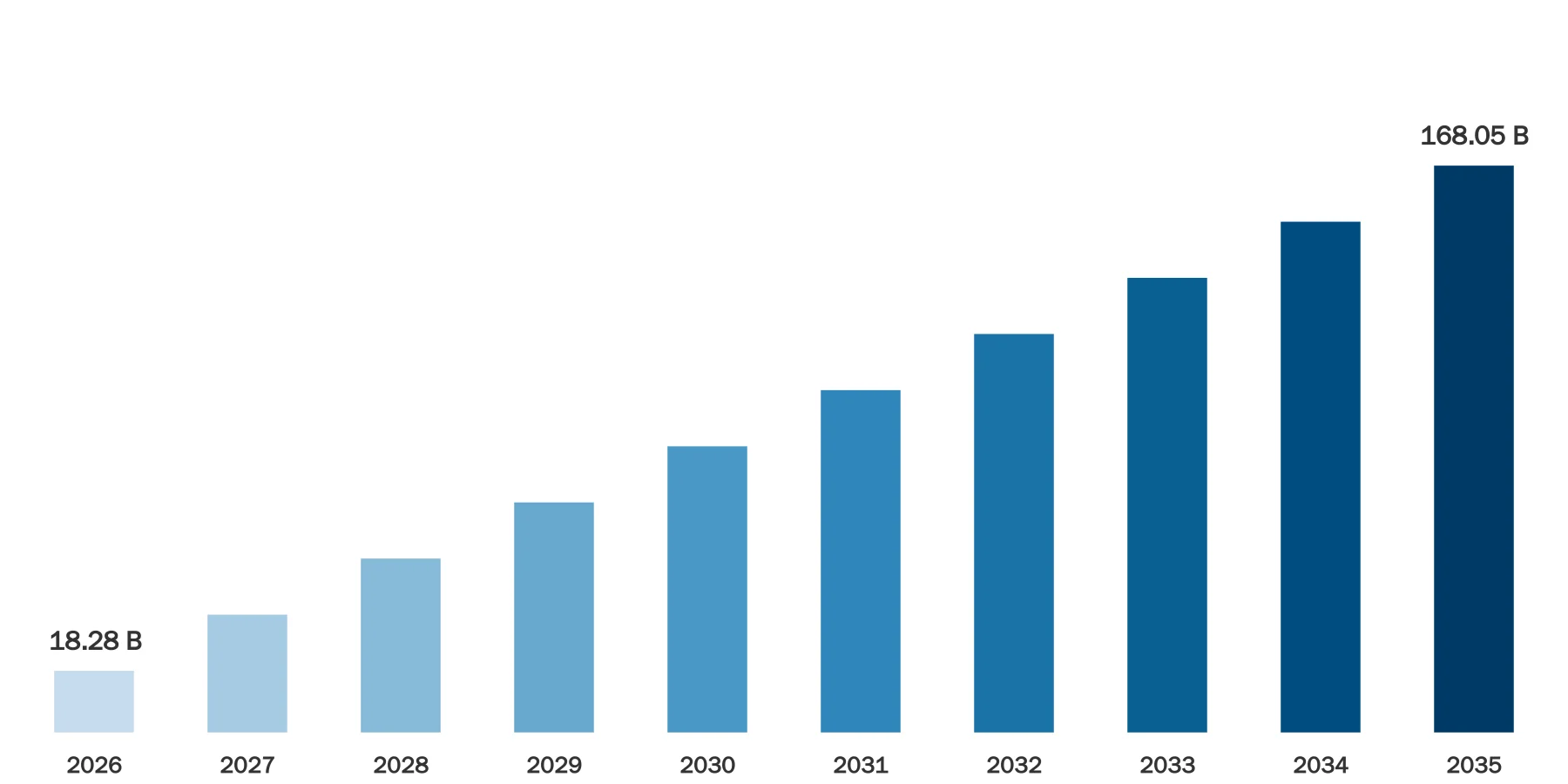
Source: Econ Market Research
The Predictive Maintenance market is expanding rapidly due to the integration of Artificial Intelligence, industrial IoT, and edge analytics across manufacturing plants, utilities, and transportation systems. More than 64% of industrial enterprises deployed at least 1 predictive maintenance platform in 2025, while over 52% of smart factories integrated vibration and thermography monitoring systems into daily operations. Manufacturing facilities using predictive maintenance reduced unexpected equipment downtime by 30% to 50%, while maintenance expenditure declined by nearly 18% to 25%. Over 500 industrial sensors are now deployed per automated production line in advanced facilities, and nearly 72% of industrial operators prioritize predictive analytics for operational continuity and asset optimization.
The USA predictive maintenance market demonstrates strong industrial digitization, with over 68% of large manufacturing companies implementing AI-based maintenance systems in 2025. North America accounted for approximately 33.4% of global predictive maintenance deployment activity, led by aerospace, automotive, and energy sectors. More than 41,000 manufacturing plants in the United States have adopted IoT-connected maintenance systems, while 77% of manufacturers plan additional AI integration into maintenance workflows. Industrial downtime costs among the top 500 global companies reached nearly USD 1.4 trillion annually, accelerating predictive maintenance adoption across U.S. production facilities. Aerospace facilities in the country reported machine utilization improvements exceeding 20% after predictive maintenance deployment.
The European predictive maintenance market benefits from Industry 4.0 modernization initiatives across Germany, France, Italy, and the United Kingdom. More than 58% of European automotive manufacturers integrated AI-enabled maintenance platforms into assembly operations by 2025. Germany accounted for over 28% of Europe’s smart manufacturing installations, while industrial robotics density exceeded 397 robots per 10,000 workers in advanced factories. Predictive maintenance deployment in European energy utilities reduced turbine maintenance interruptions by nearly 32%. Around 46% of European manufacturers implemented cloud-based industrial analytics platforms, while over 35 million industrial IoT devices were connected across European production facilities in 2025, supporting predictive diagnostics and equipment health monitoring.
Predictive Maintenance Market Latest Trends
The Predictive Maintenance Market Report highlights significant expansion in AI-driven diagnostics, digital twins, and industrial edge computing across industrial sectors. More than 73% of manufacturers using Industry 4.0 technologies incorporated predictive maintenance into operational workflows during 2025. AI-enabled vibration monitoring systems now identify bearing failures up to 5 weeks before operational disruption, improving equipment efficiency by over 22%. Cloud-based predictive analytics platforms processed over 4.5 petabytes of industrial machine data daily in 2025, compared with 2.1 petabytes in 2022.
Predictive maintenance market trends also show growing integration with robotics and autonomous inspection systems. Automated industrial robots conducting pipe and corrosion inspections increased by 31% between 2023 and 2025. Over 60% of automotive manufacturing plants now use real-time AI analytics to monitor robotic assembly lines. Edge AI implementation in predictive maintenance systems reduced response latency below 100 milliseconds in approximately 48% of advanced industrial facilities.
The Predictive Maintenance Industry Analysis further indicates rising adoption across healthcare and transportation infrastructure. Hospitals implementing predictive monitoring for MRI and CT equipment reduced machine downtime by 27%. Rail transportation systems integrating predictive maintenance platforms achieved failure detection accuracy above 88%. In India, predictive maintenance represented approximately 22% of industrial IoT manufacturing applications in 2025, driven by smart factory modernization initiatives.
Predictive Maintenance Market Dynamics
The Predictive Maintenance Market Analysis shows accelerating adoption across manufacturing, energy, aerospace, and transportation industries due to increasing operational complexity and machine connectivity. More than 70% of industrial companies now prioritize predictive analytics investments for equipment monitoring. IoT sensor deployment increased by nearly 44% between 2022 and 2025, while industrial AI integration surpassed 61% among large enterprises. Predictive maintenance systems reduce equipment failure rates by approximately 35% and improve asset lifespan by nearly 20%. Advanced analytics platforms now monitor temperature, vibration, pressure, and corrosion parameters simultaneously across over 1 million industrial assets globally.
DRIVER
Increasing Adoption of Industry 4.0 and Industrial IoT
The primary driver in the Predictive Maintenance Market Growth is rapid Industry 4.0 implementation across manufacturing and industrial infrastructure. Over 68% of global factories adopted IoT-connected machinery by 2025, while nearly 55% integrated AI analytics into operational systems. Smart factories deploy an average of 500 to 700 connected sensors per production line for real-time monitoring. Manufacturers implementing predictive maintenance achieved downtime reduction between 30% and 50%, alongside maintenance cost reductions of 18% to 25%. Automotive factories using predictive maintenance reported operational equipment effectiveness improvements exceeding 25%. Additionally, over 77% of manufacturers plan to increase AI investments in operational analytics and predictive diagnostics over the next 24 months.
RESTRAINT
High Integration Complexity with Legacy Infrastructure
A major restraint affecting the Predictive Maintenance Market Outlook is the complexity of integrating predictive platforms with aging industrial infrastructure. Nearly 49% of mid-sized manufacturing facilities continue operating equipment older than 15 years, limiting compatibility with modern IoT sensors and AI systems. Integration costs for PLC, ERP, and SCADA connectivity can increase implementation expenditure by 20% to 35%. Approximately 42% of industrial operators report difficulties in consolidating fragmented operational technology and IT data streams. In addition, over 38% of small manufacturers lack skilled data engineers and AI specialists required for predictive maintenance deployment. Data silos remain present in nearly 45% of industrial organizations, reducing analytics accuracy and slowing adoption rates.
OPPORTUNITY
Expansion of AI-Driven Edge Analytics and Digital Twins
The Predictive Maintenance Market Opportunities are increasing with the rise of edge computing and digital twin technologies. More than 46% of industrial facilities plan to deploy edge AI systems by 2027 to enable real-time anomaly detection. Edge-enabled predictive maintenance reduces processing latency below 100 milliseconds and improves predictive accuracy by approximately 28%. Digital twin adoption across industrial facilities increased by 37% between 2023 and 2025. Aerospace and automotive sectors use digital replicas to simulate component wear, reducing maintenance planning errors by nearly 31%. AI-driven causal inference systems demonstrated recall rates of 87.9% while reducing false alarms by 97%, improving maintenance precision significantly across CNC machine operations.
CHALLENGES
Data Security and Skilled Workforce Shortages
The Predictive Maintenance Industry Report identifies cybersecurity and workforce limitations as major operational challenges. Over 62% of industrial enterprises experienced at least 1 cybersecurity incident linked to connected operational technology networks between 2023 and 2025. Industrial facilities integrating cloud-based predictive analytics increased attack surfaces by nearly 40%. Additionally, approximately 53% of manufacturers report shortages of AI engineers, industrial data scientists, and predictive analytics specialists. Training industrial maintenance teams for AI-assisted workflows requires 6 to 12 months in many facilities. Nearly 35% of SMEs struggle to scale predictive maintenance programs because of limited analytical expertise and insufficient industrial data infrastructure. These operational barriers continue affecting large-scale deployment across emerging economies and traditional manufacturing sectors.
SWOT Analysis
Strengths
Predictive maintenance reduces unplanned equipment downtime by 30% to 50% in manufacturing facilities.
AI-enabled monitoring systems improve equipment lifespan by nearly 20% across industrial operations.
Over 64% of industrial enterprises deployed predictive analytics solutions in 2025.
Smart factories integrate 500 to 700 sensors per production line for real-time diagnostics.
Failure prediction accuracy in advanced AI systems exceeds 87% for industrial machinery.
Weaknesses
Nearly 45% of industrial companies face operational data silos limiting analytics efficiency.
Integration with legacy infrastructure increases deployment complexity by approximately 35%.
Around 38% of SMEs lack skilled personnel for predictive maintenance deployment.
Initial IoT infrastructure setup requires thousands of connected endpoints and network upgrades.
More than 40% of manufacturers report challenges in OT and IT interoperability.
Opportunities
Edge AI adoption in predictive maintenance is projected across over 46% of factories by 2027.
Digital twin deployment increased by 37% between 2023 and 2025 in industrial sectors.
Healthcare equipment predictive diagnostics reduced downtime by approximately 27%.
Rail transportation predictive systems achieved failure detection accuracy above 88%.
Industrial AI deployment in Asia-Pacific manufacturing plants increased by over 33% in 2025.
Threats
Over 62% of industrial organizations faced cybersecurity incidents affecting connected operations.
Industrial cloud systems increased cyberattack exposure by nearly 40%.
Semiconductor shortages affected industrial sensor deliveries by approximately 18% during supply disruptions.
More than 35% of SMEs postponed predictive maintenance deployment because of operational costs.
Workforce shortages in AI and industrial analytics impact nearly 53% of manufacturers globally.
Segmentation Analysis
The Predictive Maintenance Market Research Report segments the industry by solution, services, deployment mode, enterprise size, monitoring technique, and end-use industry. Integrated platforms dominate due to centralized analytics capabilities, while cloud deployment continues expanding because of scalable processing and remote monitoring. Large enterprises account for the majority of installations because of broader industrial asset networks. Vibration monitoring and thermography remain leading techniques, representing more than 40% of industrial diagnostics applications combined. Manufacturing, aerospace, and energy utilities remain the largest end-use industries due to high equipment utilization rates and operational continuity requirements.
By Solution
Integrated predictive maintenance solutions accounted for approximately 63% of enterprise deployments in 2025 due to unified monitoring dashboards, AI analytics, and centralized asset management capabilities. Integrated systems support real-time processing across more than 1 million industrial assets globally. Large manufacturing plants increasingly prefer integrated platforms because they connect ERP, MES, SCADA, and IoT systems within a single operational framework.
Standalone predictive maintenance platforms represented nearly 37% of deployments, mainly among SMEs and specialized industrial operators. Standalone systems remain popular in facilities operating fewer than 250 industrial assets because implementation timelines are shorter by nearly 30%. Automotive manufacturers deploying integrated solutions improved machine utilization by approximately 25%, while standalone deployments reduced maintenance response time by 18%. Aerospace facilities increasingly adopt integrated monitoring systems because aircraft component monitoring requires multi-source data synchronization across engines, avionics, and structural components. Predictive maintenance market share for integrated systems continues expanding because centralized AI analytics improve fault prediction accuracy above 85% in industrial applications.
By Services
Integration and deployment services represented nearly 46% of predictive maintenance service demand in 2025 because industrial facilities require sensor installation, OT-IT integration, and cloud connectivity. Deployment projects in large manufacturing plants often involve integration across 10 to 15 operational systems simultaneously. Support and maintenance services accounted for approximately 34% of service activity due to continuous AI model optimization and software updates.
Training and consulting services represented around 20% of the segment because predictive maintenance implementation requires industrial workforce reskilling. More than 53% of manufacturers identified shortages in AI and analytics expertise. Consulting engagements increased by nearly 28% between 2023 and 2025 as companies accelerated Industry 4.0 adoption. Integration projects for predictive maintenance platforms can require deployment across over 5,000 connected industrial devices in large factories. Support services also expanded because cloud-based predictive maintenance systems process terabytes of operational data daily and require continuous cybersecurity monitoring and predictive model recalibration.
By Deployment Mode
On-premises deployment accounted for approximately 54% of predictive maintenance installations in 2025 due to industrial data security requirements and low-latency operational processing. Energy utilities, aerospace facilities, and defense manufacturers continue preferring on-premises systems because operational data confidentiality remains critical. Advanced on-premises AI platforms can process industrial alerts within less than 50 milliseconds.
Cloud deployment represented nearly 46% of the Predictive Maintenance Market Share, supported by remote monitoring, scalability, and centralized analytics management. Cloud platforms processed more than 4.5 petabytes of industrial data daily in 2025. Multi-site manufacturers increasingly deploy cloud predictive maintenance systems because centralized monitoring reduces maintenance coordination delays by approximately 24%. SMEs demonstrate stronger cloud adoption because cloud infrastructure lowers hardware requirements by nearly 40%. Hybrid deployment models are also increasing across global industries, particularly in automotive and transportation sectors where edge computing and cloud analytics operate simultaneously for enhanced operational visibility and predictive diagnostics.
By Enterprise Size
Large enterprises accounted for approximately 71% of predictive maintenance implementations in 2025 due to extensive industrial infrastructure and higher digital transformation budgets. Large manufacturers often operate more than 10,000 connected industrial assets across multiple facilities. Predictive maintenance reduced operational downtime by approximately 35% in large industrial enterprises using AI-enabled analytics.
SMEs represented nearly 29% of predictive maintenance adoption activity. Cloud deployment and subscription-based analytics platforms are increasing accessibility among SMEs. Small manufacturers deploying predictive maintenance systems reduced machine inspection time by nearly 22%. However, around 35% of SMEs still face limitations related to infrastructure investment and workforce expertise. Industrial SMEs increasingly adopt standalone predictive analytics systems because implementation requires fewer than 100 connected sensors in many facilities. Automotive component suppliers and regional energy providers represent major SME adopters. The Predictive Maintenance Market Forecast indicates increasing SME participation due to decreasing IoT sensor costs and wider cloud analytics availability across industrial sectors.
By Monitoring Technique
Vibration monitoring accounted for approximately 26% of predictive maintenance monitoring activity in 2025 because rotating equipment diagnostics remain essential in manufacturing and energy sectors. Thermography represented nearly 18% of monitoring demand due to increasing Electrical Equipment inspections. Oil analysis contributed approximately 15% of predictive maintenance applications, particularly across oil & gas and heavy machinery industries.
Torque monitoring systems are increasingly used in automotive assembly lines where robotic equipment operates continuously across 24-hour production schedules. Corrosion monitoring adoption increased by approximately 21% between 2023 and 2025, especially in chemical processing and offshore infrastructure. Predictive analytics platforms integrating multiple monitoring techniques improved machine failure prediction accuracy above 85%. AI-enabled vibration analytics detect anomalies up to 5 weeks before equipment failure in industrial facilities. Thermographic inspections reduced transformer-related interruptions by approximately 29% in utilities. Monitoring diversification continues expanding because industrial facilities increasingly require multi-condition diagnostics for operational reliability and asset optimization.
By End Use Industry
Manufacturing accounted for approximately 30% to 32% of predictive maintenance adoption in 2025, making it the leading end-use sector. Automotive and transportation represented nearly 18% of installations because assembly line automation requires continuous machine monitoring. Energy and utilities contributed approximately 16% of deployments, particularly for turbines, transformers, and power distribution systems.
Aerospace and defense facilities increased predictive maintenance usage because aircraft engine diagnostics require precision monitoring across thousands of operational components. Healthcare institutions reduced MRI and CT machine downtime by approximately 27% through predictive diagnostics implementation. Oil and gas facilities expanded corrosion monitoring systems by nearly 24% between 2023 and 2025. IT and telecommunications providers adopted predictive analytics for data center cooling and server infrastructure optimization. Predictive maintenance platforms in manufacturing reduced machine failures by approximately 35% while improving production throughput by more than 20%. Industrial Automation expansion across Asia-Pacific further accelerates adoption across multiple end-use industries.
Regional Analysis
The Predictive Maintenance Market Insights indicate strong regional growth supported by industrial automation, AI adoption, and smart manufacturing investments. North America remains the leading regional market with over 33% share, while Europe benefits from Industry 4.0 initiatives and automotive modernization. Asia-Pacific demonstrates the fastest industrial digitization due to manufacturing expansion in China, India, Japan, and South Korea. Middle East & Africa markets continue increasing predictive maintenance investments across oil & gas, utilities, and transportation infrastructure sectors.
North America
North America accounted for approximately 33.4% of the Predictive Maintenance Market Share in 2025 due to rapid industrial AI adoption and extensive smart factory investments. The United States dominates the regional landscape, supported by more than 41,000 digitally connected manufacturing facilities. Aerospace, automotive, and energy utilities represent major adopters across the region.
More than 68% of large U.S. industrial enterprises implemented predictive maintenance systems by 2025. Automotive facilities using AI-based monitoring reduced unexpected equipment downtime by approximately 40%. Energy utilities integrated predictive analytics into over 12,000 turbine and transformer assets for operational continuity monitoring. Cloud deployment adoption increased by nearly 29% between 2023 and 2025 due to centralized industrial monitoring requirements.
Canada also demonstrated increasing predictive maintenance implementation in mining and utilities sectors, while Mexico expanded industrial automation investments across automotive manufacturing hubs. AI-enabled industrial robotics installations increased by approximately 31% across North American manufacturing facilities. Predictive maintenance systems reduced maintenance labor hours by nearly 20% in aerospace production facilities and improved machine availability above 90% in advanced smart factories.
Europe
Europe represented approximately 27% of the global Predictive Maintenance Market Size in 2025 due to extensive Industry 4.0 modernization across Germany, France, Italy, and the United Kingdom. Germany remained the regional leader, accounting for over 28% of European industrial automation activity. Automotive manufacturing facilities continue dominating predictive maintenance deployments throughout the region.
European manufacturers integrated more than 35 million industrial IoT devices into operational systems by 2025. Robotics density exceeded 397 robots per 10,000 industrial workers in advanced factories, supporting predictive monitoring integration. Wind energy operators reduced turbine downtime by nearly 32% through predictive analytics deployment. Approximately 46% of industrial operators adopted cloud-connected maintenance systems for centralized monitoring.
France and Italy expanded predictive diagnostics in aerospace and transportation sectors, while Nordic countries increased smart utility investments. AI-enabled thermography and vibration monitoring systems improved fault detection accuracy above 84% in industrial machinery applications. European healthcare providers also integrated predictive monitoring for imaging systems and critical medical infrastructure, reducing service interruptions by approximately 25%. Industrial sustainability initiatives across Europe continue supporting predictive maintenance deployment for energy optimization and equipment efficiency improvements.
Asia-Pacific
Asia-Pacific accounted for approximately 29% of global predictive maintenance deployments in 2025 and remains the fastest-expanding regional market due to rapid industrialization and smart manufacturing investments. China, Japan, India, and South Korea dominate regional adoption across automotive, electronics, and heavy machinery industries.
China expanded predictive maintenance implementation through government-led smart factory initiatives, while Japan integrated AI diagnostics into highly automated production facilities. India’s predictive maintenance application share reached nearly 22% within the industrial IoT manufacturing sector in 2025. Industrial AI deployment across Asia-Pacific increased by over 33% between 2023 and 2025.
Automotive plants across the region deploy over 500 sensors per production line for predictive monitoring and anomaly detection. Semiconductor manufacturing facilities integrated thermography and vibration analytics to reduce machine interruptions by approximately 28%. Smart manufacturing investments across Southeast Asia increased connected industrial device installations by nearly 36%. Predictive maintenance systems improved machine utilization above 88% in advanced electronics production facilities.
Regional manufacturers increasingly adopt cloud-based analytics because centralized monitoring supports multi-facility operations across industrial corridors. Transportation infrastructure modernization in China and India further accelerates predictive maintenance integration into rail systems, airports, and logistics networks.
Middle East & Africa
The Middle East & Africa predictive maintenance market continues expanding across oil & gas, utilities, mining, and transportation infrastructure sectors. Oil-producing economies integrated predictive analytics into refinery and pipeline operations to minimize operational interruptions and corrosion-related failures. More than 18% of industrial digital transformation investments in Gulf countries focused on predictive maintenance technologies during 2025.
Energy utilities across the Middle East implemented thermography and oil analysis systems to monitor power infrastructure reliability. Predictive maintenance reduced unplanned turbine maintenance events by approximately 26% across regional utility operators. Smart city initiatives in the United Arab Emirates and Saudi Arabia accelerated deployment of IoT-connected infrastructure systems.
Mining operations in South Africa integrated vibration monitoring systems for heavy equipment diagnostics, improving operational uptime by nearly 21%. Industrial automation adoption across Middle East manufacturing facilities increased by approximately 24% between 2023 and 2025. Transportation infrastructure modernization also supported predictive monitoring deployment across airports, rail networks, and logistics facilities.
Cloud-based predictive maintenance platforms are gaining traction because regional industrial operators increasingly require centralized operational visibility across geographically distributed assets. AI-enabled corrosion monitoring continues expanding in offshore oil and gas operations throughout the Gulf region.

Competitive Landscape
The Predictive Maintenance Market Research Report identifies strong competition among global industrial automation, software analytics, and cloud technology providers. More than 40 major technology companies compete across AI analytics, industrial IoT, digital twins, and monitoring software segments. Leading vendors focus on AI-enabled predictive diagnostics, cloud scalability, and edge computing integration.
Industrial software providers continue increasing investment in machine learning algorithms capable of analyzing millions of industrial data points daily. Approximately 61% of predictive maintenance platforms launched after 2023 include generative AI or advanced anomaly detection functionality. Cloud-native predictive maintenance platforms improved processing efficiency by nearly 35% compared with legacy analytics systems.
Competition is also intensifying around industrial cybersecurity integration because more than 62% of industrial enterprises experienced operational cyber threats linked to connected assets. Strategic partnerships between industrial automation companies and cloud providers increased by approximately 28% between 2023 and 2025. Vendors increasingly prioritize vertical-specific predictive analytics for aerospace, healthcare, automotive, and energy industries. Edge AI functionality remains a major differentiator because industrial facilities require sub-100 millisecond anomaly detection capabilities for operational continuity and machine protection.
List of Top Predictive Maintenance Companies
Accenture
Cisco Systems, Inc.
General Electric Company
Honeywell International Inc.
Hitachi, Ltd.
IBM Corporation
Microsoft
PTC
Robert Bosch GmbH
Rockwell Automation
SAP SE
SAS Institute
Schneider Electric SE
Siemens
Software GmbH
Leading Companies by Market Share
IBM Corporation and Siemens remain among the leading companies by market share in the predictive maintenance market. IBM manages predictive analytics deployments across thousands of industrial assets globally and integrates AI-based anomaly detection into manufacturing and energy systems. Siemens expanded AI-powered sensor deployment across Indian and European factories in 2025, enabling real-time diagnostics and automated machine adjustment capabilities. Both companies support industrial operations involving millions of connected endpoints and large-scale cloud analytics environments.
Market Investment Outlook
The Predictive Maintenance Market Opportunities continue expanding due to increasing industrial AI investments and smart factory modernization programs. More than 77% of manufacturers intend to increase AI and predictive analytics investment over the next 24 months. Industrial enterprises allocated nearly 32% more operational technology budgets toward predictive diagnostics between 2023 and 2025.
Cloud infrastructure investment remains strong because predictive maintenance systems process petabytes of industrial data daily. Industrial edge computing investment increased by approximately 29% during 2025 to support low-latency predictive analytics. Venture capital activity in AI-based industrial maintenance startups also increased significantly, particularly across robotics inspection, digital twin analytics, and autonomous maintenance systems.
Energy utilities and oil & gas companies continue prioritizing predictive maintenance because operational interruptions can affect thousands of industrial assets simultaneously. Aerospace manufacturers are increasing investment in AI-enabled aircraft diagnostics and digital maintenance records. Healthcare institutions expanded predictive maintenance budgets for imaging systems and critical equipment monitoring.
Asia-Pacific industrial modernization initiatives continue generating substantial opportunities for predictive analytics vendors, especially in automotive, electronics, and semiconductor manufacturing. SMEs are also entering the market due to declining sensor costs and broader availability of subscription-based cloud analytics platforms.
New Product Development
New product development in the Predictive Maintenance Market focuses on AI-driven analytics, digital twins, autonomous robotics, and edge-enabled monitoring systems. More than 61% of predictive maintenance platforms introduced after 2023 incorporated machine learning-based anomaly detection and generative AI interfaces.
Industrial vendors launched advanced edge AI devices capable of analyzing vibration, pressure, and temperature data in less than 100 milliseconds. AI-enabled inspection robots equipped with corrosion detection sensors expanded deployment across oil & gas infrastructure and utility facilities. Predictive analytics software now supports simultaneous monitoring of thousands of connected industrial assets through cloud-native dashboards.
Digital twin platforms also evolved significantly between 2023 and 2025. Manufacturers increasingly use virtual equipment replicas to simulate wear patterns and maintenance scheduling scenarios. AI predictive systems can now forecast bearing failures up to 5 weeks before operational disruption. Smart thermography systems introduced in 2025 improved transformer failure detection accuracy by approximately 29%.
New predictive maintenance products also emphasize cybersecurity integration because industrial cloud connectivity continues increasing. Several vendors launched hybrid edge-cloud predictive analytics systems designed for automotive, aerospace, and semiconductor manufacturing environments where low latency and operational continuity are critical requirements.
Recent Developments
In 2025, Siemens deployed Armv9 AI-powered predictive maintenance sensors in Indian manufacturing facilities, enabling real-time anomaly detection and automated machine adjustments across connected production systems.
In 2025, advanced AI predictive systems in automotive manufacturing achieved bearing failure prediction up to 5 weeks before breakdown, improving maintenance planning accuracy significantly.
During 2025, industrial manufacturers integrated AI-powered inspection robots for corrosion and infrastructure diagnostics, reducing manual inspection activity by approximately 31%.
In 2024, manufacturing facilities implementing AI predictive maintenance reduced downtime by 30% and improved overall equipment effectiveness by nearly 25% through machine learning analytics.
In 2025, industrial cloud predictive analytics platforms expanded to process over 4.5 petabytes of machine data daily across manufacturing, utilities, and transportation sectors.
Report Coverage of Predictive Maintenance Market
The Predictive Maintenance Market Report provides comprehensive coverage of industrial analytics deployment across manufacturing, automotive, aerospace, healthcare, energy, transportation, and utility sectors. The report evaluates predictive maintenance technologies including AI analytics, machine learning, digital twins, industrial IoT sensors, vibration monitoring, thermography, oil analysis, and corrosion monitoring systems.
The Predictive Maintenance Industry Analysis covers segmentation by solution type, deployment model, enterprise size, monitoring technique, and end-use industry. It includes operational statistics related to downtime reduction, predictive accuracy, machine utilization, sensor deployment density, and industrial connectivity trends. More than 1 million industrial assets globally are now monitored using predictive analytics systems, highlighting increasing operational digitization.
Regional coverage includes North America, Europe, Asia-Pacific, and Middle East & Africa with detailed insights into smart factory adoption, industrial automation penetration, and AI integration rates. The report also analyzes competitive positioning among industrial software providers, cloud analytics vendors, and automation companies.
Additionally, the Predictive Maintenance Market Forecast evaluates industrial cybersecurity challenges, OT-IT integration complexity, workforce shortages, and investment activity influencing future market expansion. Emerging technologies such as edge AI, autonomous robotics, and digital twin simulation platforms are also examined extensively within the market scope.
Predictive Maintenance Market Report Scope & Segmentation
| Attributes | Details |
|---|---|
Market Size (Current) | US$ 18.28 Billion in 2026 |
Market Size (Forecast) | US$ 168.05 Billion in 2035 |
Growth Rate | CAGR of 27.95% from 2026 to 2035 |
Forecast Period | 2026 – 2035 |
Base Year | 2025 |
Historical Data Available | Yes |
Regional Scope | Global |
Segments Covered | By Solution
By Services
By Deployment Mode
By Enterprise Size
By Monitoring Technique
By End Use Industry
|
Frequently Asked Questions
Common questions about this report
The study period covers historical insights and forecast projections for the period 2026-2035.
About the Author
Market research expert with years of industry experience
As a Senior Research Associate at Econ Market Research, Akash Bhingare leads comprehensive market studies across dynamic and highly specialized sectors, ranging from advanced biotech fields to niche industrial markets. He excels at dissecting complex supply chains, analyzing market segmentation, and forecasting future industry trajectories. Akash’s commitment to high-fidelity data ensures that every report he authors delivers reliable, foundational knowledge for enterprise-level decision-making.
Related Reports
Explore more market insights from the same category