

Home Energy Management Market
Home Energy Management Market Size, Share, Trends, Growth, and Industry Analysis, By Component (Hardware, Software, Services), By Technology (Wi-Fi, ZigBee, Z-Wave, Others), By Application (Single-Family Homes, Multi-Family Homes), Regional Analysis and Forecast Period 2026-2035
Home Energy Management Market Overview
As per Econ Market Research analysis, the Global Home Energy Management Market was recorded at US$ 45.65 Billion in 2026 and is projected to expand to US$ 168.53 Billion by 2035, registering a CAGR of 15.62% over the forecast period. The base year used is 2025.
Home Energy Management Market Size 2025-2035 (USD Billion)

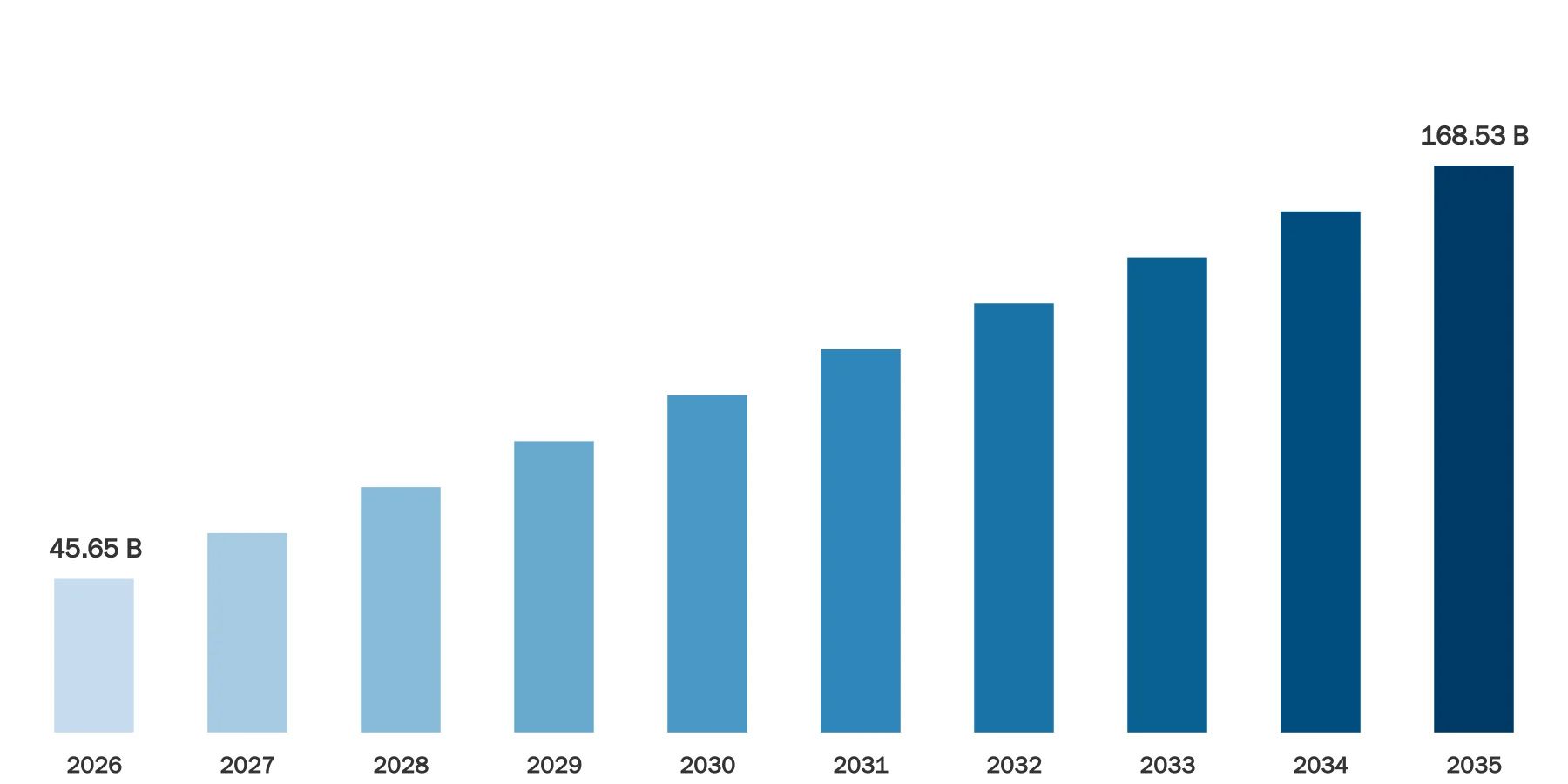
Source: Econ Market Research
The Global Home Energy Management (HEM) market is a burgeoning sector within the broader smart home technology landscape, focusing on optimizing energy usage and enhancing household energy efficiency. HEM systems integrate hardware, software, and communication technologies to monitor, control, and manage energy consumption within residential settings. These systems typically encompass smart thermostats, smart appliances, energy monitoring devices, and software platforms that offer insights into energy usage patterns and enable users to adjust settings remotely.
The primary goal of HEM solutions is to empower homeowners to make informed decisions about their energy usage, reduce energy waste, lower utility bills, and contribute to environmental sustainability by promoting energy conservation. As the demand for energy-efficient and sustainable living solutions continues to rise, the Global Home Energy Management market is poised for significant growth, driven by advancements in IoT technology, increasing awareness of environmental issues, and government initiatives promoting energy conservation and renewable energy adoption.
Home Energy Management Dynamics
Technological advancements, particularly in IoT, AI, and Data Analytics, are revolutionizing the industry by enabling the development of smarter, more intuitive HEM solutions. These innovations empower homeowners to monitor and optimize their energy usage in real-time, leading to greater energy efficiency and cost savings. Additionally, increasing environmental awareness and concerns about climate change are driving consumer interest in sustainable living practices, spurring demand for HEM systems that help reduce carbon footprints and promote eco-friendly lifestyles.
Moreover, government initiatives and regulatory mandates aimed at promoting energy efficiency and renewable energy adoption are creating favourable market conditions, incentivizing both consumers and businesses to invest in energy management solutions. However, challenges such as interoperability issues, data privacy concerns, and high upfront costs remain significant barriers to widespread adoption.
Home Energy Management Drivers
Technological Advancements:
The Home Energy Management (HEM) market is driven primarily by the ongoing advancements in technology, especially in the areas of data analytics, Artificial Intelligence (AI), and the Internet of Things (IoT). Smart metres, connected devices, and advanced sensors allow for real-time monitoring and control of household energy consumption, giving users the power to make educated decisions about their energy use.
Additionally, AI-powered algorithms examine consumption trends and provide tailored advice for maximising energy efficiency, which lowers utility costs and has a positive environmental impact. As technology develops, homeowners looking to improve their homes', energy management capabilities are adopting HEM solutions at a faster rate due to their increased sophistication and ease of use.
Increasing Environmental Awareness:
Growing concerns about climate change and environmental sustainability are driving consumer interest in energy-efficient and eco-friendly solutions, fuelling demand for HEM systems. Homeowners are becoming more conscious of their carbon footprints and are actively seeking ways to reduce energy waste and promote conservation. HEM solutions offer an effective means of achieving these goals by providing insights into energy usage patterns, identifying areas for improvement, and enabling users to implement energy-saving measures. Furthermore, government initiatives and incentives aimed at promoting energy efficiency and renewable energy adoption are further incentivizing consumers to invest in HEM solutions, contributing to market growth.
Restraints:
Interoperability Challenges:
The market for home energy management is facing interoperability issues because there are so many different devices, protocols, and communication standards in use. Standardisation reduces seamless functionality and user experience by complicating integration efforts and preventing interoperability between various HEM systems and smart home devices. In order to address interoperability issues, industry cooperation is needed to create common protocols and standards that enable smooth communication and interoperability across various platforms and devices.
High Upfront Costs:
High upfront costs for hardware, software, and installation are one of the main obstacles preventing HEM solutions from being widely adopted. The initial cost of installing HEM systems may be too much for a lot of homeowners, particularly in areas with little access to government incentives or financing sources. Long-term cost savings and environmental advantages notwithstanding, many potential customers find the upfront capital expenditure to be a major turnoff, which slows the rate of market growth and adoption.
Opportunities:
Emergence of Smart Grid Technologies:
The integration of HEM systems with smart grid technologies presents significant opportunities for market growth. Smart grids enable bi-directional communication between utilities and consumers, facilitating demand-response programs, dynamic pricing schemes, and grid optimization strategies. By leveraging HEM solutions, consumers can actively participate in demand-side management initiatives, adjust energy usage patterns in response to grid conditions, and contribute to grid stability and reliability. The convergence of HEM and smart grid technologies unlocks new opportunities for energy savings, cost optimization, and sustainability across residential and commercial sectors.
Segment Overview
By Component:
Hardware, software, and services form the cornerstone of the Home Energy Management (HEM) market. Among these, hardware holds a significant share, driven by the demand for control devices, communication/display devices, and other essential components facilitating energy monitoring and control. Software solutions are increasingly crucial, leveraging advanced algorithms and analytics to optimize energy usage and enhance efficiency. Services, including installation, maintenance, and support offerings, complement hardware and software solutions, ensuring seamless integration and optimal performance for end-users.
By System:
The system outlook in the HEM market is characterized by the prominence of thermostats, lighting controls, self-monitoring systems, advanced central controllers, and intelligent HVAC controllers. Among these, thermostats and intelligent HVAC controllers lead the market, driven by the need for precise temperature regulation and energy optimization. Lighting controls also play a significant role, offering users flexibility in managing lighting energy consumption. Advanced central controllers and self-monitoring systems are gaining traction, empowering users with comprehensive energy management capabilities and real-time insights into consumption patterns.
By Technology:
Wireless protocols such as Wi-Fi, ZigBee, Z-Wave, and Bluetooth dominate the HEM market, offering flexible connectivity options and enabling seamless communication between devices. Wi-Fi emerges as a leading wireless protocol, favored for its widespread availability and high bandwidth capabilities. ZigBee and Z-Wave cater to the growing demand for low-power, mesh networking solutions, ideal for HEM applications. Bluetooth technology complements wireless protocols, facilitating short-range communication and device pairing. Wired protocols, including hybrid solutions, offer reliable connectivity options for HEM systems, ensuring robust performance and interoperability in various deployment scenarios.
By Application:
Both new construction and retrofit projects drive the application outlook in the HEM market. New construction projects lead the market, driven by the integration of energy management solutions during the initial building phase, enabling seamless integration and optimized energy efficiency. Retrofit installations are gaining momentum, fuelled by the need to upgrade existing homes with energy-saving technologies and address sustainability goals. The versatility of HEM solutions caters to a wide range of residential needs and preferences, driving adoption across diverse application scenarios.
By Deployment Type:
Both on-premises and cloud-based deployments cater to the diverse needs of HEM consumers. On-premises deployments offer localized control and data management capabilities, appealing to users seeking enhanced privacy and security. Cloud-based solutions provide remote access, data storage, and analytics functionalities, offering convenience and scalability for users. The flexibility of deployment options enables users to choose solutions that align with their preferences and infrastructure requirements, driving market growth and adoption.
By Residence Type:
Single-family residences and multi-family dwellings represent distinct segments in the HEM market, each with unique challenges and opportunities. Single-family residences lead the market, driven by the demand for personalized energy management solutions tailored to individual household needs. Multi-family dwellings present opportunities for scalable and integrated HEM systems, addressing the collective energy needs of multiple households within shared residential complexes. The diversity of residence types underscores the importance of adaptable and flexible HEM solutions to accommodate varying user requirements and preferences.
Home Energy Management Overview by Region
In North America, the market is driven by the widespread adoption of smart home technologies, favourable government policies promoting energy efficiency, and increasing consumer awareness of environmental sustainability. The region',s advanced infrastructure and high disposable income levels facilitate the uptake of HEM solutions, with the United States emerging as a key market hub due to its large population and robust residential construction activity.
Similarly, Europe showcases significant growth opportunities driven by stringent energy efficiency regulations, rising energy costs, and initiatives promoting renewable energy adoption. Countries like Germany and the United Kingdom lead the European market, supported by incentives for energy conservation and investments in smart grid infrastructure. In the Asia-Pacific region, rapid urbanization, expanding middle-class populations, and increasing electricity consumption drive demand for HEM solutions.
China, Japan, and South Korea are key markets, characterized by government initiatives promoting smart home technologies and sustainable development. Emerging economies like India and Southeast Asian countries present untapped potential, fuelled by rising incomes, urbanization trends, and growing concerns about energy security and environmental sustainability. Latin America and the Middle East &, Africa regions exhibit nascent but promising HEM markets, propelled by improving living standards, increasing electrification rates, and government efforts to modernize infrastructure and promote energy efficiency.
Home Energy Management Market Competitive Landscape
Established companies such as Google LLC (Nest Labs), Schneider Electric SE, Honeywell International Inc., and Siemens AG dominate the market with a diverse portfolio of HEM solutions encompassing hardware, software, and services. These industry giants leverage their extensive R&,D capabilities, brand reputation, and global presence to innovate and develop cutting-edge technologies that meet the evolving needs of residential consumers. Moreover, partnerships with utility companies, smart home platform providers, and technology vendors enable these players to enhance interoperability, expand market reach, and deliver holistic solutions that integrate seamlessly with existing infrastructure and ecosystems.
Alongside established players, a growing number of start-ups and emerging players are entering the market with innovative HEM solutions tailored to niche segments and specific customer requirements. These newcomers leverage agile business models, disruptive technologies, and niche expertise to challenge incumbents and carve out a foothold in the competitive landscape. Additionally, strategic investments, mergers, and acquisitions are prevalent in the market as companies seek to strengthen their market position, acquire complementary technologies, and capitalize on emerging trends such as artificial intelligence, data analytics, and IoT integration.
Home Energy Management Market Leading Companies:
Honeywell International Inc.
Alphabet Inc. (Google Nest)
Vivint, Inc.
General Electric Company
Ecobee Inc.
Alarm.com
Comcast Corporation
Panasonic Holdings Corporation
Ecofactor, Inc.
EnergyHub, Inc.
Home Energy Management Recent Developments
Dec 2023, ABB has made a strategic investment in Lumin to expedite the advancement of accessible home energy management solutions. ABB spearheaded the investment, joined by Lumin',s primary institutional investor, Carbon Drawdown Collective, as well as its existing investors. Lumin',s pioneering platform allows for electrification enhancements without the need to alter the home',s current electrical panel. It offers unparalleled insights into behind-the-meter consumption data and flexibly redistributes loads to bolster the energy transition within communities.
Oct 2023, Panasonic Life Solutions India and Panasonic Corporation, in collaboration with seed-stage investor 100X.VC, have introduced the start-up accelerator program called Panasonic Ignition. This initiative seeks to support, mentor, and provide funding to early-to-mid-stage start-ups focused on developing energy management solutions for both commercial and residential sectors.
June 2023, Maxeon Solar Technologies, Ltd., a prominent player in solar technology and distribution, has revealed a partnership with Samsung Electronics Co., Ltd. The collaboration aims to incorporate Maxeon',s SunPower One residential energy solution into the SmartThings connected home platform. Through this integration, homeowners can enhance their energy autonomy, reduce expenses, and support environmental sustainability efforts.
Global Home Energy Management Report Segmentation
Home Energy Management Market Report Scope & Segmentation
| Attributes | Details |
|---|---|
Market Size (Current) | US$ 45.65 Billion in 2026 |
Market Size (Forecast) | US$ 168.53 Billion in 2035 |
Growth Rate | CAGR of 15.62% from 2026 to 2035 |
Forecast Period | 2026 – 2035 |
Base Year | 2025 |
Historical Data Available | Yes |
Regional Scope | Global |
Segments Covered | By Component
By Technology
By Application
|
Frequently Asked Questions
Common questions about this report
The study period covers historical insights and forecast projections for the period 2026-2035.
About the Author
Market research expert with years of industry experience

Dipali Bhingare serves as the Market Research Director at Econ Market Research. With a focus on translating complex global economic shifts into actionable business intelligence, she oversees the strategic direction of comprehensive market studies. Her work empowers organizations to navigate volatile industries through data-driven forecasting and deep-dive competitive analysis.
Related Reports
Explore more market insights from the same category