

Modular Data Center Market
Modular Data Center Market Size, Share, Trends, Growth, and Industry Analysis, By Component (Solutions, Services), By Organization Size (Large Enterprises, Small and Medium Enterprises), By Industry Verticals (BFSI, IT and Telecom, Retail, Manufacturing, Healthcare, Energy, Media and Entertainment, Government, Others), Regional Analysis and Forecast Period 2026-2035
Market Overview
As per Econ Market Research analysis, the Global Modular Data Center Market was valued at approximately US$ 38.1 Billion in 2026 and is predicted to reach US$ 164.35 Billion by 2035, expanding at a CAGR of 17.63% over the forecast duration. The base year is 2025.
Modular Data Center Market Size 2025-2035 (USD Billion)

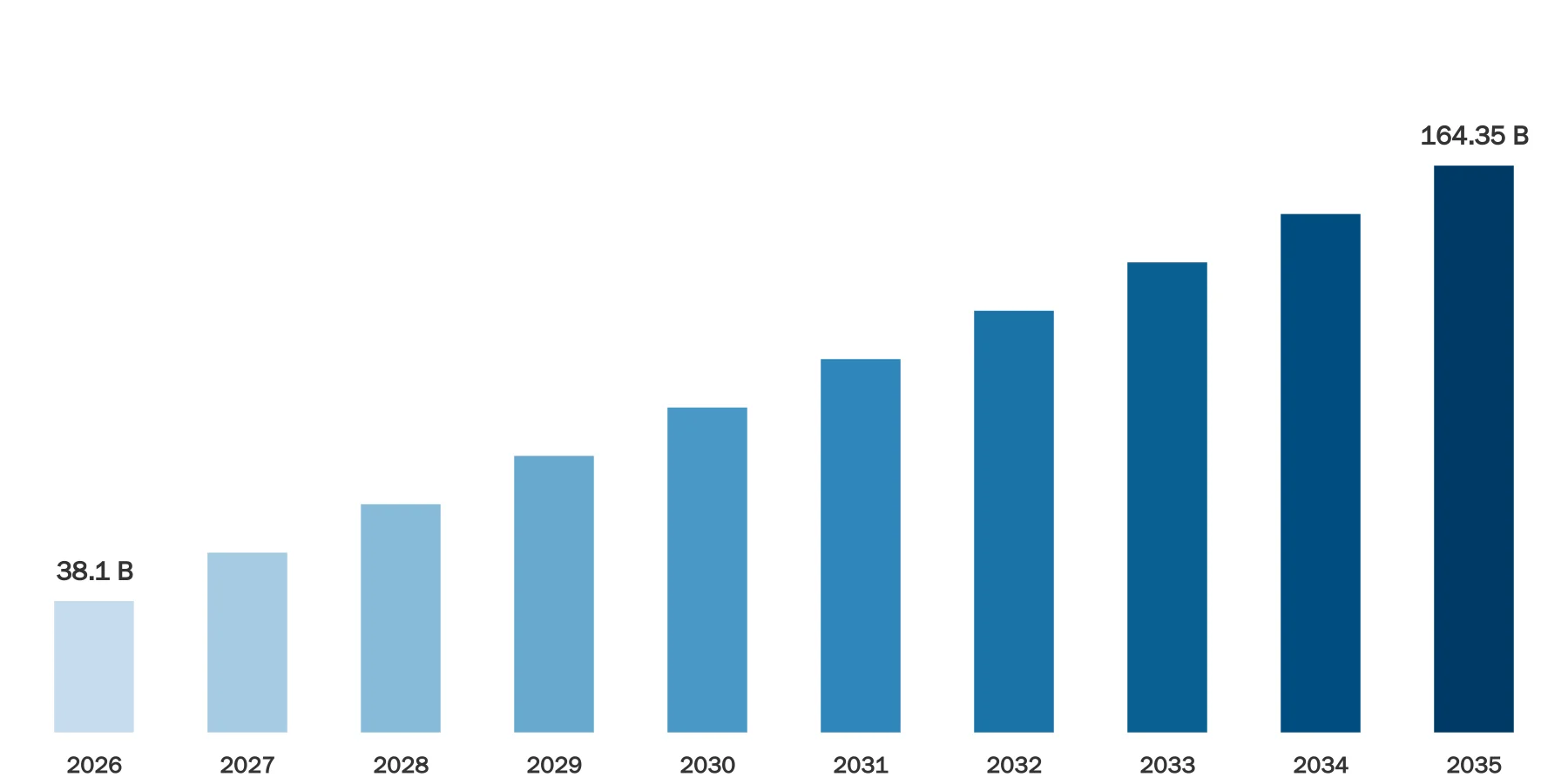
Source: Econ Market Research
A modular data centre (MDC) is a self-contained computing environment that can be easily transported and deployed wherever it is needed. MDCs are designed to be flexible, scalable, and energy-efficient, making them an ideal solution for organizations that need to quickly deploy computing resources in remote or temporary locations. The modular data centre market is indeed growing rapidly due to the increasing demand for data storage and processing, as well as the need for flexible and portable computing solutions.
The global modular data centre market is expected to grow significantly due to the increasing adoption of modular solutions by organizations to meet their growing data storage and processing needs. The fast deployment capability of modular data centres is particularly crucial in industries such as healthcare, finance, and e-commerce, where downtime can have a significant impact on operations and revenue. Moreover, modular data centres offer a scalable and flexible solution that can be customized to meet the specific requirements of an organization. This makes them an attractive option for companies that need to quickly expand their IT infrastructure without incurring significant capital expenditures.
One of the significant benefits of modular data centers is their scalability. They can be easily scaled up or down to accommodate changing business needs and IT requirements. This scalability allows organizations to add capacity as needed without having to build an entire data center from scratch, which can be a time-consuming and expensive process. The modular design of these data centers enables organizations to expand their IT infrastructure in a cost-effective and efficient manner, without sacrificing performance or reliability. This is particularly beneficial for organizations that have rapidly changing or unpredictable IT requirements.
COVID-19 Impact
The COVID-19 pandemic has had a profound impact on the way businesses operate, with remote work becoming the new normal for many companies worldwide. As a result, there has been a significant increase in the demand for IT infrastructure that can support remote work. Modular data centers have emerged as an ideal solution to this challenge, as they are highly scalable and can be quickly deployed in remote locations to support remote workers.
Growth Factors
The fast demand for various applications, including Cloud Computing, disaster recovery, edge computing, and mobile computing, propelled market demand. There are many factors are helping to drive the market are:
Modular data centers are flexible, modular, and scalable
Cost-effectiveness
Rapid deployment of modular data centers
Market Drivers
Modular data centers are flexible, modular, and scalable to brighten the market prospect
Modular data centers offer several advantages over traditional data centers, including their flexibility, modularity, and scalability. Unlike traditional data centers, modular data centers are designed to be quickly and easily deployed and expanded, thanks to their prefabricated modular design. This modular design allows for a more flexible and adaptable approach to IT infrastructure, allowing organizations to scale their operations up or down as needed. With the ability to rapidly deploy and expand, modular data centers enable organizations to respond quickly to changing business needs and IT requirements. This makes them an attractive option for organizations looking to stay competitive and agile in an increasingly fast-paced and demanding digital landscape.
Modular data centers have emerged as an energy-efficient and cost-effective alternative to traditional data centers. They are designed to minimize energy consumption through the use of innovative cooling and power management technologies, which not only reduces operational costs but also helps to reduce the carbon footprint. In addition, the flexibility and scalability of modular data centers make them well-suited for a variety of applications, such as cloud computing, edge computing, mobile computing, and disaster recovery. By providing customized solutions to meet specific business needs, modular data centers enable organizations to optimize their IT infrastructure, enhance efficiency, and reduce costs.
Market Challenges
As the sophistication of cyber-attacks continues to evolve, it is crucial for organizations to stay up-to-date with the latest security technologies and best practices to protect their data and IT infrastructure. Modular data centers can offer security advantages, such as enhanced physical security and the ability to isolate critical workloads from the rest of the IT environment. However, it is important for organizations to work closely with their data center providers and security experts to ensure that all necessary security measures are in place to protect their data and operations. In today',s digital landscape, data security must be a top priority for all organizations, and modular data centers can play a key role in achieving this goal.
In addition to the physical and Cyber Security concerns, organizations must also consider compliance with various regulations and standards that govern data security and privacy. For instance, healthcare organizations in the United States must comply with the Health Insurance Portability and Accountability Act (HIPAA), while businesses in the European Union must adhere to the general data protection regulation (GDPR). Failure to comply with these regulations can result in substantial penalties and reputational damage. Therefore, addressing security concerns is crucial for ensuring that organizations can fully realize the benefits of modular data centers without compromising the security of their data and operations or running afoul of legal requirements.
Market Opportunities
These are the following factor which is likely to create opportunity over the forecast period.
Rise of edge computing
Deployment of 5G networks
Support modular cloud infrastructure
Segments Analysis
Component Insights
Additionally, service providers can also offer maintenance and support services to ensure that the modular data center continues to function effectively and efficiently over time. These services can include monitoring, troubleshooting, and repairs as needed. As modular data centers become more widely adopted, the demand for these services is likely to continue to grow. This is because organizations may lack the internal expertise to manage and maintain their modular Data Center Infrastructure and may therefore require the support of specialized service providers.
Organization Size Insights
Small and medium enterprises, on the other hand, may have more limited IT infrastructure needs and may not require the same level of performance or security as large enterprises. However, as the demand for data-intensive applications continues to grow, smaller organizations may also find themselves in need of modular data center solutions to support their business operations. This could be driven by factors such as the need to support remote work, the adoption of cloud computing, or the need to store and process large amounts of data generated by Internet of Things (IoT) devices. As a result, the demand for modular data centers is expected to grow across all sizes of organizations in the coming years.
Regional Analysis
In addition to the factors you mentioned, North America is also home to several major players in the modular data center market, which contributes to the region',s dominance. Moreover, the region's strong focus on data privacy and security regulations has also driven the demand for modular data centers, which can help organizations meet compliance requirements while maintaining data security. The increasing adoption of modular data centers by various industry verticals, such as BFSI, healthcare, and government, is also contributing to the market growth in North America.
Europe has a mature data center market with a high adoption rate of cloud computing, big data, and IoT technologies, which are driving the demand for modular data centers. The increasing demand for edge computing and the need for high-performance computing solutions in industries such as BFSI, healthcare, and manufacturing are also driving the growth of the European modular data center market. Additionally, the European Union',s strict regulations on data privacy and security are compelling organizations to adopt modular data centers to ensure compliance.
Recent Developments
In October 2019: - Dell Technologies launched its modular data center solution, the Dell EMC Modular Data Center Micro 415.
In September 2021: - Lenovo announced the launch of its ThinkSystem SE350 edge server, a modular data center solution designed for use in edge computing environments.
Key Market Players
BaseLayer Technology LLC
CommScope Inc., Dell Inc.
Eaton, Hewlett Packard Enterprise Company.
Huawei Technologies Co. Ltd.
IBM Corporation
Rittal GmbH.
Schneider Electric.
Vertive Group Corporation
Modular Data Center Market Report Scope & Segmentation
| Attributes | Details |
|---|---|
Market Size (Current) | US$ 38.1 Billion in 2026 |
Market Size (Forecast) | US$ 164.35 Billion in 2035 |
Growth Rate | CAGR of 17.63% from 2026 to 2035 |
Forecast Period | 2026 – 2035 |
Base Year | 2025 |
Historical Data Available | Yes |
Regional Scope | Global |
Segments Covered | By Component
By Organization Size
By Industry Verticals
|
Frequently Asked Questions
Common questions about this report
The study period covers historical insights and forecast projections for the period 2026-2035.
About the Author
Market research expert with years of industry experience

Related Reports
Explore more market insights from the same category