

Machine learning as a Service Market
Machine learning as a Service Market Size, Share, Trends, Growth, and Industry Analysis, By Organization Size (Large Enterprises, Small and Medium Enterprises), By Deployment Type (On-premise, Cloud), By Component (Solution, Services), By End Users (Aerospace and Defense, IT and Telecom, Energy and Utilities, Public sector, Manufacturing, Banking, Financial Services, Insurance, Healthcare, Retail, Other), Regional Analysis and Forecast Period 2026-2035
Machine learning as a Service Market Overview
As per Econ Market Research analysis, the Global Machine learning as a Service Market accounted for US$ 78.24 Billion in 2026 and is expected to surpass US$ 1410 Billion by 2035, witnessing a CAGR of 37.5% throughout 2026–2035. The analysis is based on 2025 as the base year.
Machine learning as a Service Market Size 2025-2035 (USD Billion)

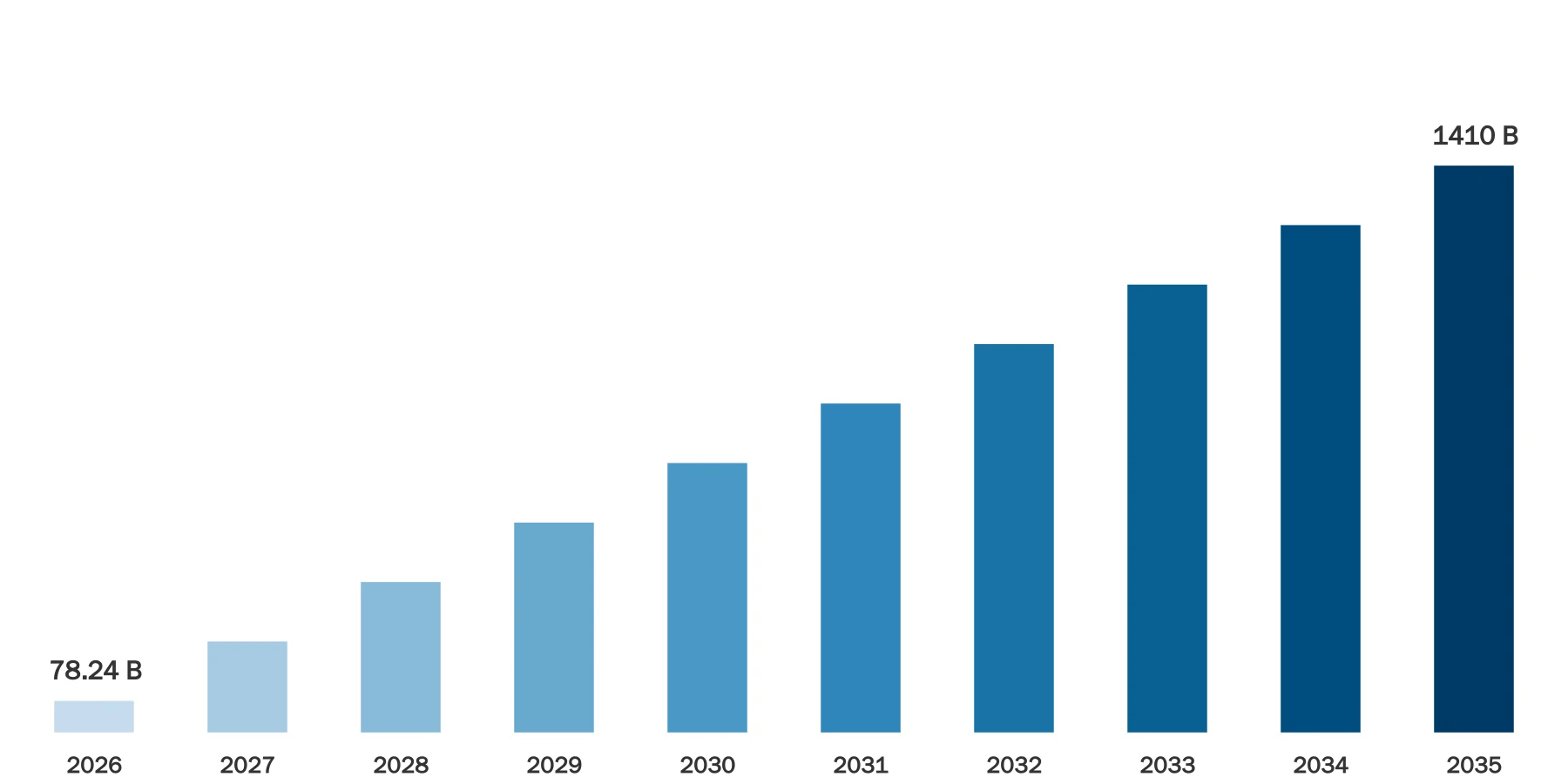
Source: Econ Market Research
Machine learning as a service (MLaaS) offers machine learning tools as part of Cloud Computing services. MLaaS platforms provide algorithms and model creation tools that enable enterprises to rapidly build, deploy, and scale machine learning services. These services can reduce the cost and complexity of developing machine learning-based applications, allowing businesses to use advanced Data Analytics capabilities without investing heavily in hardware and software infrastructure. The MLaaS model is poised to dominate the industry, with consumers having the choice of many alternative solutions customized for various business needs. Furthermore, the market for machine learning as a service is expected to grow as a consequence of factors such as increased cloud-based service usage, IoT (internet of things), automation, and consumer behaviour research. MLaaS offers flexibility, scalability, and cost-effectiveness by providing machine learning algorithms and models on a pay-per-use basis. Furthermore, these platforms can be used by developers and data scientists with minimal knowledge of machine learning to develop and deploy models quickly.
Many large IT companies, including Amazon, Google, and Microsoft, offer MLaaS platforms, while smaller startups are also entering the market. Industries that are particularly suited for MLaaS include healthcare, finance, and e-commerce, among others, and MLaaS applications include fraud detection, customer segmentation, predictive maintenance, and image recognition, among others. While MLaaS has numerous benefits, businesses should carefully evaluate the various options accessible to them and ensure that they have a clear understanding of their objectives and expectations before selecting a provider.
Market Drivers
One of the primary drivers of the machine learning as a service market is the growing demand for cloud computing services. This trend allows users to access machine learning resources and capabilities using cloud services without having to invest in hardware or software infrastructure. Cloud-based machine learning also allows businesses to access and analyse large amounts of data in a scalable and cost-effective manner. Popular cloud providers such as Amazon Web Services (AWS), Microsoft Azure, and Google Cloud Platform offer machine learning services for natural language processing, image analysis, and predictive modelling. Furthermore, cloud providers often offer pre-trained models that can be easily integrated into businesses. The adoption of cloud computing in machine learning has had a positive impact on industries such as healthcare, finance, and retail. As technology continues to evolve, cloud-based machine learning is expected to become even more prevalent in the future.
Market Restraints
The shortage of skilled consultants capable of implementing machine learning as a service is a critical challenge for businesses looking to adopt these technologies. Many businesses struggle to find skilled personnel with the mandatory experience in the sector. As a result, they can be forced to outsource their efforts to third-party providers, which can be costly and time-consuming. The growing demand for machine learning services has LED to increased competition among businesses for talent, putting further pressure on companies to offer competitive salaries and benefits packages.
Covid-19 Impact Analysis
The COVID-19 pandemic has had a substantial impact on the market for machine learning as a service (MLaaS). As organizations of all sizes seek ways to automate activities, enhance productivity, and make better judgements in the face of uncertainty, the epidemic has pushed the adoption of MLaaS. The COVID-19 epidemic has introduced a slew of new issues for organizations, including the need to manage remote workforces, track supply chains, and forecast demand. MLaaS can assist businesses in addressing these difficulties by giving them access to cutting-edge machine learning technology and experience. The COVID-19 epidemic has hastened the transition to cloud computing. This is because cloud-based MLaaS solutions have numerous benefits, including scalability, flexibility, and cost-effectiveness.
Segments Analysis
Organization Size Insights
The global machine learning as a service market segmentation by organization size includes large enterprises and small and medium enterprises (SMEs). The market is dominated by small and medium enterprises (SMEs). SMEs use MLaaS because the machine learning application provides dynamic data. In addition to delivering real-time data, machine learning algorithms can predict future events via predictive analytics. Machine learning technologies can help SMEs fine-tune their supply chain by anticipating product demand and recommending the time and volume of supplies needed to meet consumers', expectations.
Component Insights
Based on component, the global machine learning as a service market segmentation includes solution and service. The service segment dominates the machine learning as a service market and is projected to be the fastest-growing segment during the forecast period. This is due to the fact that participants in the industry are focusing on implementing technologically advanced solutions to improve the utilization of machine learning services.
End Users Insights
Based on end users, the global machine learning as a service market segmentation includes aerospace and defence, IT and telecom, energy and utilities, the public sector, manufacturing, banking, financial services, insurance, healthcare, retail, and others. The market is dominated by the healthcare industry. The use of machine learning services in the healthcare industry for cancer detection as well as checking ECGs and MRIs expands the market in the healthcare sector.
Regional Analysis
The North America region is expected to continue leading the global machine as a service market. The presence of significant technological manufacturers, strong cloud infrastructure, and a dynamic startup ecosystem have all contributed to the expansion of MLaaS in this region. The United States, in particular, has seen widespread use of MLaaS across various industries such as healthcare, finance, e-commerce, and technology. Furthermore, the market is expected to expand throughout the forecast period due to increased defence spending and technological advancements in the telecommunications industry. Services such as cloud apps and security information are anticipated to drive the market. The major industry presence of businesses such as Google, IBM, Microsoft, and Amazon Web Services, as well as their diverse product offerings, have all contributed to the rise in demand for machine learning in this field.
Competitive Landscape:
The machine learning as a service (MLaaS) market is fragmented. There are large number of suppliers offering MLaaS solutions, and the market is constantly changing. Due to this fragmentation, it is challenging for organizations to select the right MLaaS supplier.
Key players operating in the global machine learning as a service market are:
Amazon Web Services (AWS)
Cloudera
Databricks
DataRobot
Google Cloud Platform (GCP)
Hewlett Packard Enterprise
IBM Watson
Microsoft Azure
Oracle
SAS
Recent Development:
In February 2022, Amazon Web Services, Inc. (AWS), an Amazon.com, Inc. company, announced the completion of its first 16 AWS Local Zones in the U.S. and plans to launch new AWS Local Zones in 32 new metropolitan areas in 26 countries around the world.
In April 2021, IBM launched new Watson capabilities to help businesses build trustworthy AI.
Machine learning as a Service Market Report Scope & Segmentation
| Attributes | Details |
|---|---|
Market Size (Current) | US$ 78.24 Billion in 2026 |
Market Size (Forecast) | US$ 1410 Billion in 2035 |
Growth Rate | CAGR of 37.5% from 2026 to 2035 |
Forecast Period | 2026 – 2035 |
Base Year | 2025 |
Historical Data Available | Yes |
Regional Scope | Global |
Segments Covered | By Organization Size
By Deployment Type
By Component
By End Users
|
Frequently Asked Questions
Common questions about this report
The study period covers historical insights and forecast projections for the period 2026-2035.
About the Author
Market research expert with years of industry experience

Dipali Bhingare serves as the Market Research Director at Econ Market Research. With a focus on translating complex global economic shifts into actionable business intelligence, she oversees the strategic direction of comprehensive market studies. Her work empowers organizations to navigate volatile industries through data-driven forecasting and deep-dive competitive analysis.
Related Reports
Explore more market insights from the same category