

Automated Data Platform Market
Automated Data Platform Market Size, Share, Trends, Growth, and Industry Analysis, By Component (Platform, Services), By Services (Advisory, Integration, Support and Maintenance), By Deployment (On-Premises, Cloud), By Enterprise Size (Large Enterprises, Small and Medium Enterprises (SMEs)), By End Use (BFSI, Healthcare, Retail, Manufacturing, IT and Telecom, Government, Others (Travel and Hospitality, Transportation and Logistics, and Energy and Utilities)), Regional Analysis and Forecast Period 2026-2035
Automated Data Platform Market Overview
As per Econ Market Research analysis, the Global Automated Data Platform Market valuation stood at US$ 2.62 Billion in 2026 and is expected to reach US$ 12.16 Billion by 2035, growing at a steady CAGR of 18.65% from 2026 to 2035. 2025 serves as the base year.
Automated Data Platform Market Size 2025-2035 (USD Billion)

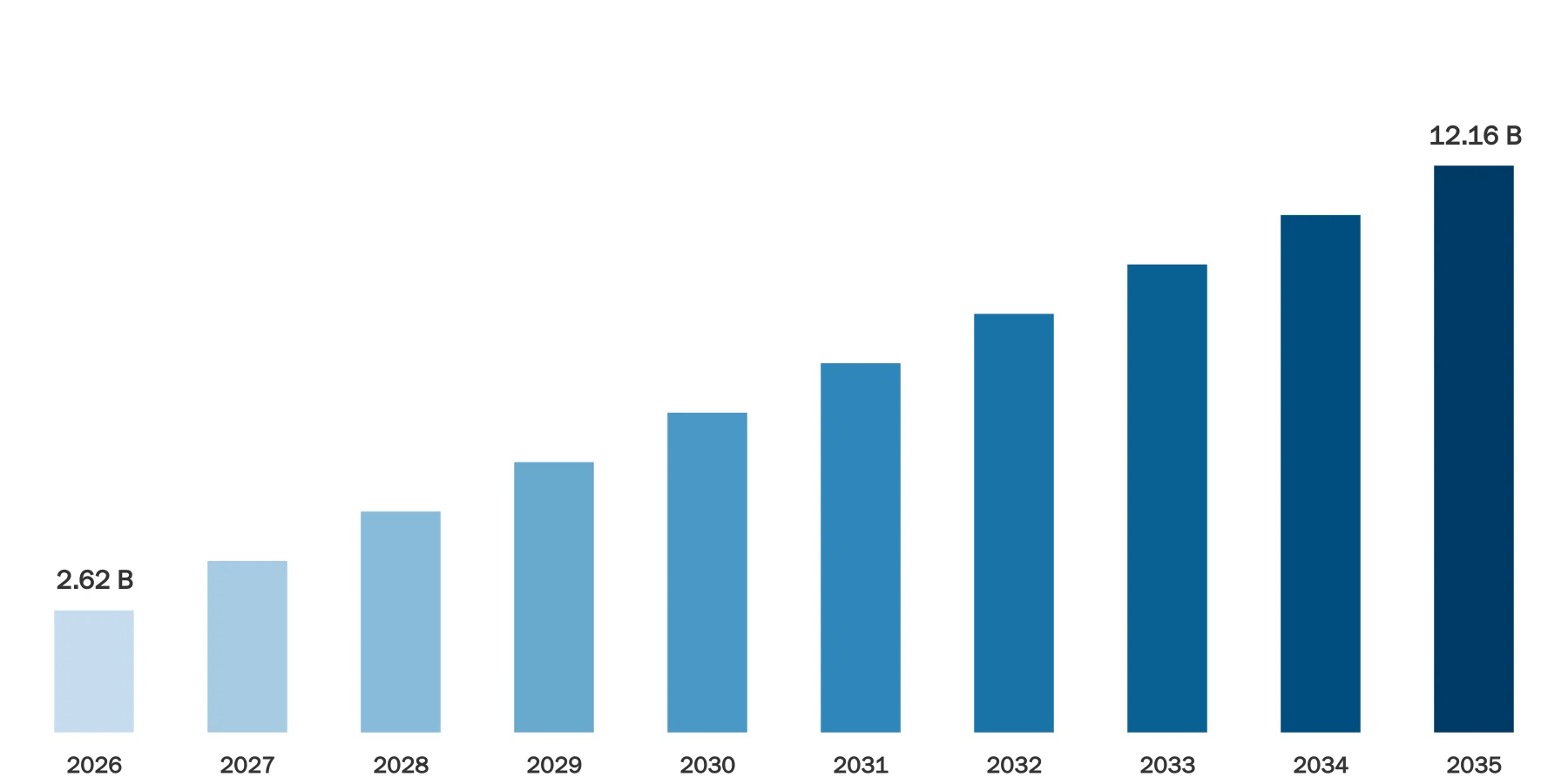
Source: Econ Market Research
The application of cutting-edge technologies such as Machine Learning (ML) and Artificial Intelligence (AI), as well as increased demand for real-time information and increased digitization and automation across industries, are expected to contribute to the growth of the automated data platforms industry. With the trend of cloud platforms in new organizations and the retention of enterprise data primarily in hybrid and public clouds, autonomous data platforms are becoming increasingly applicable in cloud-based businesses.
A self-contained data platform provides exceptional flexibility, allowing businesses to adjust capacity based on convenience and needs. With the rapid growth of social media and associated devices, a large amount of unstructured data is being generated, which is expected to increase the demand for autonomous database platforms from small and medium-sized businesses. Data is encrypted, workloads are tracked, and any entity attempting to access the data is tracked by autonomous data platforms.
Organizations generate an increasing amount and variety of data. With the help of autonomous data platforms, organizations can handle and evaluate this data more effectively and efficiently. The growing popularity of autonomous data platforms reflects the need for more effective and efficient data management and exploitation strategies, as well as the increasing importance of data management and analytics in modern organizations. The growing volume of complex and unstructured data, as well as the increased use of advanced analytics and cognitive computing technologies, all contribute to market growth.
Key Market Drivers
The increasing volume and complexity of data generated by organizations is driving the need for automated data platforms. Traditional data processing and analysis methods may not be able to keep up with the sheer volume of data generated by modern organizations. Automated data platforms can help organizations handle this data volume and complexity by automating data processing, reducing the risk of errors, and speeding up the analysis process.
The ongoing digital transformation across various industries is driving the need for automated data platforms that can help organizations make sense of their data and drive business growth. Organizations are leveraging digital technologies to gain a competitive advantage, and automated data platforms can help organizations leverage their data to identify new opportunities, optimize their operations, and drive business growth.
Cost savings is another key driver of the automated data platform market. By automating data processing and analysis tasks, organizations can reduce the need for manual labor, which can help them save costs. Automated data platforms can also help organizations free up valuable resources that can be directed towards other strategic initiatives.
Key Market Challenges
Data Security and Privacy:
Data security and privacy remain a top concern for many organizations, particularly in light of increasing regulations such as GDPR and CCPA. Automated data platforms may pose a risk to data security and privacy if not properly secured. Data breaches and cyber-attacks can have serious consequences, including financial losses, loss of customer trust, and legal ramifications.
Integration with Legacy Systems:
Many organizations have legacy systems that are not easily compatible with automated data platforms. Integrating these systems can be a complex and costly process, which may hinder adoption of automated data platforms. Organizations may need to invest in new infrastructure and training to integrate automated data platforms with their existing systems.
Data Quality Issues:
Automated data platforms rely on high-quality data to provide accurate insights and recommendations. However, poor data quality can lead to inaccurate insights and poor decision-making. Organizations may need to invest in data quality initiatives to ensure the data used by automated data platforms is accurate and reliable.
Resistance to Change:
Some organizations may be resistant to change and may prefer to stick with their existing manual data processing and analysis methods. Convincing these organizations to adopt automated data platforms can be a challenge, particularly if they are satisfied with their current methods.
Key Market Opportunities
Cloud-based Solutions:
Cloud-based automated data platforms offer several benefits, including scalability, flexibility, and cost-effectiveness. Cloud-based solutions can help organizations leverage the power of automated data platforms without the need for significant investment in infrastructure.
Artificial Intelligence and Machine Learning:
The integration of artificial intelligence (AI) and machine learning (ML) into automated data platforms can help organizations gain deeper insights into their data and make more informed decisions. AI and ML can help identify patterns, trends, and anomalies in data that may be difficult for humans to detect.
Real-time Analytics:
Real-time analytics is becoming increasingly important in today',s fast-paced business environment. Automated data platforms can provide real-time insights into data, enabling organizations to make faster and more accurate decisions.
Integration with IoT Devices:
The Internet of Things (IoT) is generating vast amounts of data that can be leveraged by automated data platforms. Integrating automated data platforms with IoT devices can help organizations gain deeper insights into their operations and identify new opportunities for growth.
Cross-functional Insights:
Automated data platforms can help break down organizational silos by providing cross-functional insights into data. This can help organizations make better decisions by leveraging insights from different departments and functions.
Regional Insights
North America had the highest revenue share in 2022, accounting for 37.3%. Because it is home to the most established countries, including the United States and Canada, the region is thought to be the most evolved in terms of embracing new technologies and cloud-based solutions. The widespread use of mobile phones and the internet in North America is driving significant market growth.
Another factor driving market growth in the area is the increasing use of cell phones and social networking sites to communicate with customers and business partners. The regional distribution of solutions that provide clients with versatile analytics on any cloud while maintaining ongoing control and security is creating strong growth prospects for North America's autonomous data platform business. The Asia Pacific region is expected to grow at the fastest rate, with a CAGR of 24.3%.
Because AI and machine learning are increasingly assisting decision-making, the business is expected to expand rapidly. Furthermore, the ability of businesses to combine client data from multiple sources onto a single platform, saving hours of computational work, is fueling demand for autonomous data platforms.
Key Market Players
Oracle
Teradata
IBM
Amazon Web Services, Inc.
Hewlett Packard Enterprise Development LP
Qubole, Inc.
Cloudera, Inc.
Gemini Data
Denodo Technologies
Alteryx, Inc.
Automated Data Platform Market Report Scope & Segmentation
| Attributes | Details |
|---|---|
Market Size (Current) | US$ 2.62 Billion in 2026 |
Market Size (Forecast) | US$ 12.16 Billion in 2035 |
Growth Rate | CAGR of 18.65% from 2026 to 2035 |
Forecast Period | 2026 – 2035 |
Base Year | 2025 |
Historical Data Available | Yes |
Regional Scope | Global |
Segments Covered | By Component
By Services
By Deployment
By Enterprise Size
By End Use
|
Frequently Asked Questions
Common questions about this report
The study period covers historical insights and forecast projections for the period 2026-2035.
About the Author
Market research expert with years of industry experience

Dipali Bhingare serves as the Market Research Director at Econ Market Research. With a focus on translating complex global economic shifts into actionable business intelligence, she oversees the strategic direction of comprehensive market studies. Her work empowers organizations to navigate volatile industries through data-driven forecasting and deep-dive competitive analysis.
Related Reports
Explore more market insights from the same category