

Forklift Market
Forklift Market Size, Share, Trends, Growth, and Industry Analysis, By Class (Class 1, Class 2, Class 3, Class 4, Class 5), By Power Source (Electric, Internal Combustion Engine), By Load Capacity (Below 5 Ton, 5 Ton to 10 Ton, Above 10 Ton), By End-User (Retail andamp; Wholesale, Logistics, Automotive, Food andamp; Beverage, Others), Regional Analysis and Forecast Period 2026-2035
Forklift Market Overview
As per Econ Market Research analysis, the Global Forklift Market valuation stood at US$ 30.64 Billion in 2026 and is expected to reach US$ 77.12 Billion by 2035, growing at a steady CAGR of 10.8% from 2026 to 2035. 2025 serves as the base year.
Forklift Market Size 2025-2035 (USD Billion)

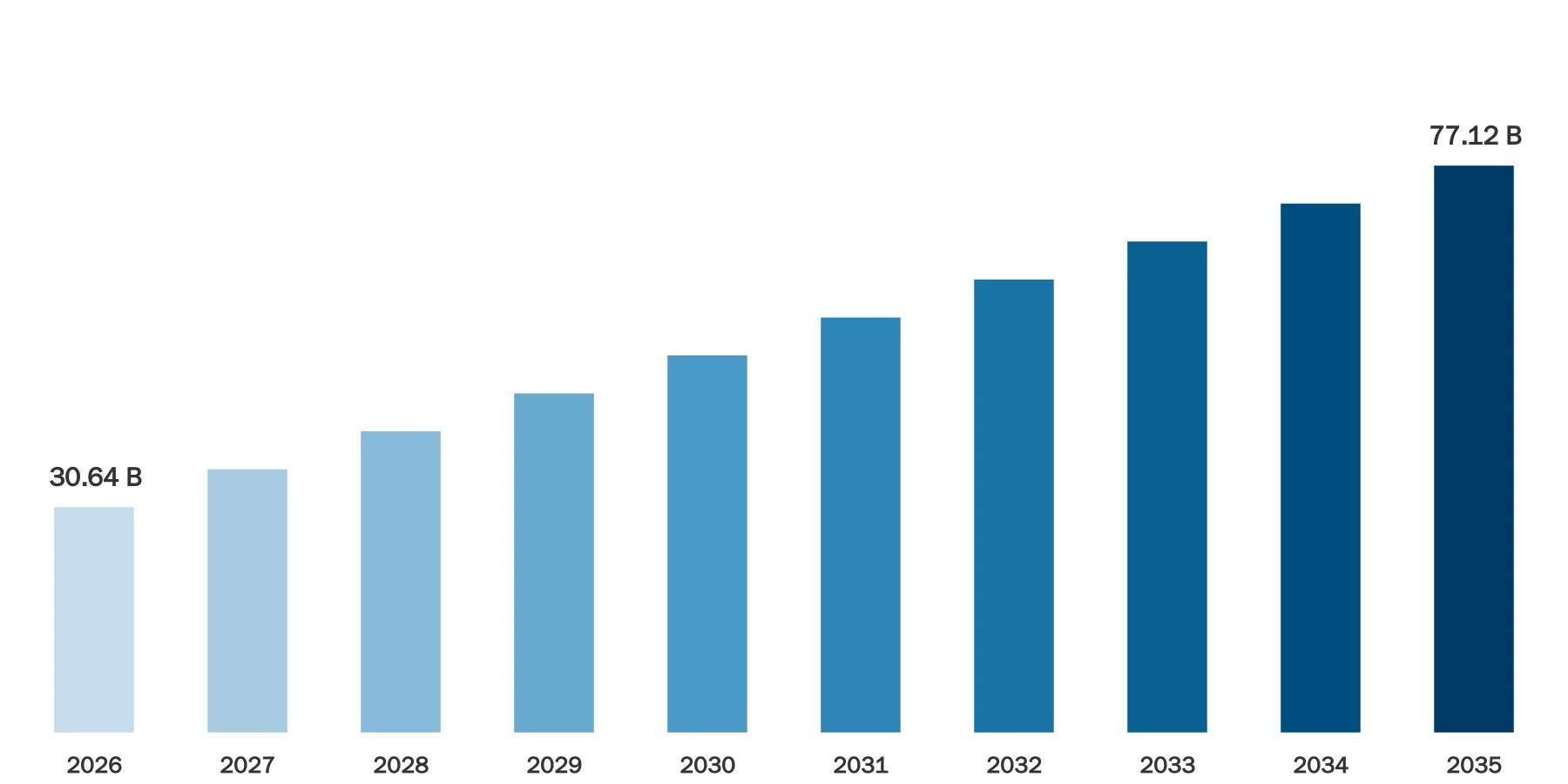
Source: Econ Market Research
A forklift, which is also referred to as a lift truck or powered industrial truck, is a highly adaptable vehicle used extensively in warehouses, construction sites, and various industries. It possesses hydraulic lifting mechanisms and front-mounted forks, enabling it to effortlessly lift and transport heavy loads. Forklifts are available in several types, such as counterbalance, reach trucks, pallet jacks, and order pickers, each specifically designed for particular tasks and operating conditions. They can be powered by either internal combustion engines or electric motors. Forklifts play a vital role in boosting productivity and efficiency by facilitating the movement and stacking of goods. However, the safe operation of forklifts necessitates appropriate training and adherence to safety protocols to prevent accidents and safeguard the well-being of operators and those working nearby. Forklifts are an indispensable tool in modern material handling, making significant contributions to the smooth operation of industries worldwide.
Forklift Market Dynamics
The growth and demand of the forklift market are influenced by multiple factors. One key driver is the expansion of the e-commerce sector, which has led to an increase in warehousing and logistics activities. Consequently, there is a higher demand for efficient forklifts to handle material handling tasks effectively. Furthermore, the global growth of the manufacturing and construction industries has amplified the need for forklifts in tasks like loading, unloading, and transporting heavy goods. In addition, there is a strong focus on enhancing operational efficiency and reducing labor costs, which has resulted in the widespread adoption of forklifts across various industries.
Technological advancements have played a significant role in market growth, particularly with the development of electric forklifts. These environmentally friendly options offer lower operating costs, further driving their adoption. Stringent safety regulations and an increased emphasis on worker safety have also contributed to the demand for advanced forklifts equipped with safety features. These requirements have prompted industry players to invest in safer and more reliable forklift solutions. Overall, the drivers of the forklift market encompass the expansion of industries, the pursuit of operational efficiency, technological advancements, and the need to comply with safety regulations.
Forklift Market Drivers
Rising Demand of Industry Expansion
growth of various industries such as e-commerce, manufacturing, and construction has led to increased demand for forklifts. The expansion of the e-commerce sector has created a higher need for efficient material handling in warehouses and logistics, driving the demand for forklifts.
Restraints
Maintenance and Operating Costs High
Forklifts can be a significant investment for businesses, especially for smaller enterprises. The cost of purchasing or leasing forklifts, along with maintenance and training expenses, can be a barrier for some businesses, limiting their adoption of forklifts.
Opportunities
Rental and Leasing Services
The demand for forklift rental and leasing services is on the rise, providing an opportunity for businesses to offer flexible solutions to customers who may not want to invest in purchasing forklifts outright. Rental and leasing options enable businesses to access forklifts as needed, reducing the financial burden of ownership.
Segment Overview
By Class
Based on the class, the global forklift market is segmented into class 1, class 2, class 3, and class 4/5. The class 3 segment is dominating the market with the largest revenue share of around 37.6% in 2022. Electric forklifts have become increasingly popular due to their positive environmental impact and lower operational costs in comparison to Internal Combustion Engine forklifts. The growing emphasis on sustainability and the reduction of carbon emissions has been a driving force behind the increased demand for electric forklifts.
Moreover, class 3 forklifts are specifically designed for indoor applications, such as warehouses and distribution centers, where maneuverability and compact size are crucial factors. They excel in efficiently handling and stacking pallets, thereby enhancing productivity within confined spaces. Furthermore, advancements in Electric Forklift technology, including improvements in battery life and the availability of better charging infrastructure, have further accelerated the adoption of class 3 forklifts. These technological enhancements have contributed to the market leadership of the class 3 segment.
By Power Source
Based on the power source, the global forklift market is segmented into internal combustion engine and electric. The electric segment is dominating the market with the largest revenue share of around 65.8% in 2022. The growing focus on sustainability and the reduction of carbon emissions has stimulated the demand for Material Handling Equipment powered by electricity. Electric forklifts provide significant environmental benefits by eliminating exhaust emissions and minimizing noise pollution.
The progress made in battery technology has enhanced the performance and efficiency of electric forklifts, enabling longer operating durations and faster charging times. Additionally, the lower operational costs associated with electric forklifts, including reduced fuel expenses and maintenance requirements, make them highly appealing to businesses. Furthermore, the versatility and adaptability of electric forklifts make them suitable for a wide array of applications, ranging from indoor warehousing to outdoor operations. The electric segment's dominance in the market can be attributed to its environmental advantages, cost-effectiveness, and the technological advancements achieved in battery-powered forklifts.
Forklift Market Overview by Region
By Region, the global Forklift Market has been divided into North America, Europe, Asia-Pacific, and the Rest of the World. Asia-Pacific held the largest share, of around 46.5%, of the global market in 2022. The region is currently undergoing rapid industrialization and urbanization, resulting in a surge of manufacturing activities and infrastructure development. This significant industrial growth is a key driver behind the increased demand for forklifts, particularly in industries such as automotive, electronics, and logistics.
The rise of e-commerce in the region has also played a crucial role in fueling the need for efficient material-handling equipment, including forklifts, to support the growing warehousing and logistics operations. Furthermore, the presence of major manufacturing hubs like China, Japan, and South Korea further reinforces the market in the Asia-Pacific region. These countries possess robust industrial bases and serve as major exporters, thereby driving the demand for forklifts.
In addition, government initiatives aimed at promoting industrial growth, favorable investment policies, and an increase in consumer spending contribute to the expansion of the market. These supportive factors create a favorable environment for the adoption and utilization of forklifts in various sectors
Forklift Market Competitive Landscape
In the global forklift market, a small number of prominent players hold significant market dominance and have established a strong regional presence. These key participants are committed to ongoing research and development initiatives. Additionally, they actively engage in strategic growth endeavors such as product development, product launches, joint ventures, and partnerships. By pursuing these strategies, these companies aim to strengthen their market position and expand their customer base to capture a substantial share of the market.
Key Players
Anhui Heli Co., Ltd.
Clark Material Handling Company Inc.
Crown Equipment Corporation
Doosan Industrial Vehicles Co. Ltd
Hangcha Group Co.
Hyster-Yale Materials Handling, Inc.
Jungheinrich AG
KION Group AG
Komatsu Ltd.
Mitsubishi Logisnext Co., Ltd.
Toyota Material Handling
Caterpillar Inc.
Forklift Market Recent Developments
In July 2022, TMH (Toyota Material Handling) has announced the acquisition of PennWest Toyota Lift, a Pennsylvania-based forklift dealership. This purchase includes many places, including Mount Pleasant, Pittsburgh, and Erie. TMH is the proud owner of the Hoist Liftruck series in the United States, which comprises container handlers, marina trucks, and FLTs. TMH also has a large selection of medium and heavy forklifts in their product line.
Forklift Market Report Scope & Segmentation
| Attributes | Details |
|---|---|
Market Size (Current) | US$ 30.64 Billion in 2026 |
Market Size (Forecast) | US$ 77.12 Billion in 2035 |
Growth Rate | CAGR of 10.8% from 2026 to 2035 |
Forecast Period | 2026 – 2035 |
Base Year | 2025 |
Historical Data Available | Yes |
Regional Scope | Global |
Segments Covered | By Class
By Power Source
By Load Capacity
By End-User
|
Frequently Asked Questions
Common questions about this report
The study period covers historical insights and forecast projections for the period 2026-2035.
About the Author
Market research expert with years of industry experience

Dipali Bhingare serves as the Market Research Director at Econ Market Research. With a focus on translating complex global economic shifts into actionable business intelligence, she oversees the strategic direction of comprehensive market studies. Her work empowers organizations to navigate volatile industries through data-driven forecasting and deep-dive competitive analysis.
Related Reports
Explore more market insights from the same category