

Cognitive Robotics Market
Cognitive Robotics Market Size, Share, Trends, Growth, and Industry Analysis, By Learning Type (Motor Babble, Imitation, Knowledge Acquisition), By Component (Hardware, Software, Services), By Application (Aerospace andamp; Defense, Automotive, Consumer Electronics, Healthcare, Commercial), Regional Analysis and Forecast Period 2026-2035
Cognitive Robotics Market Overview
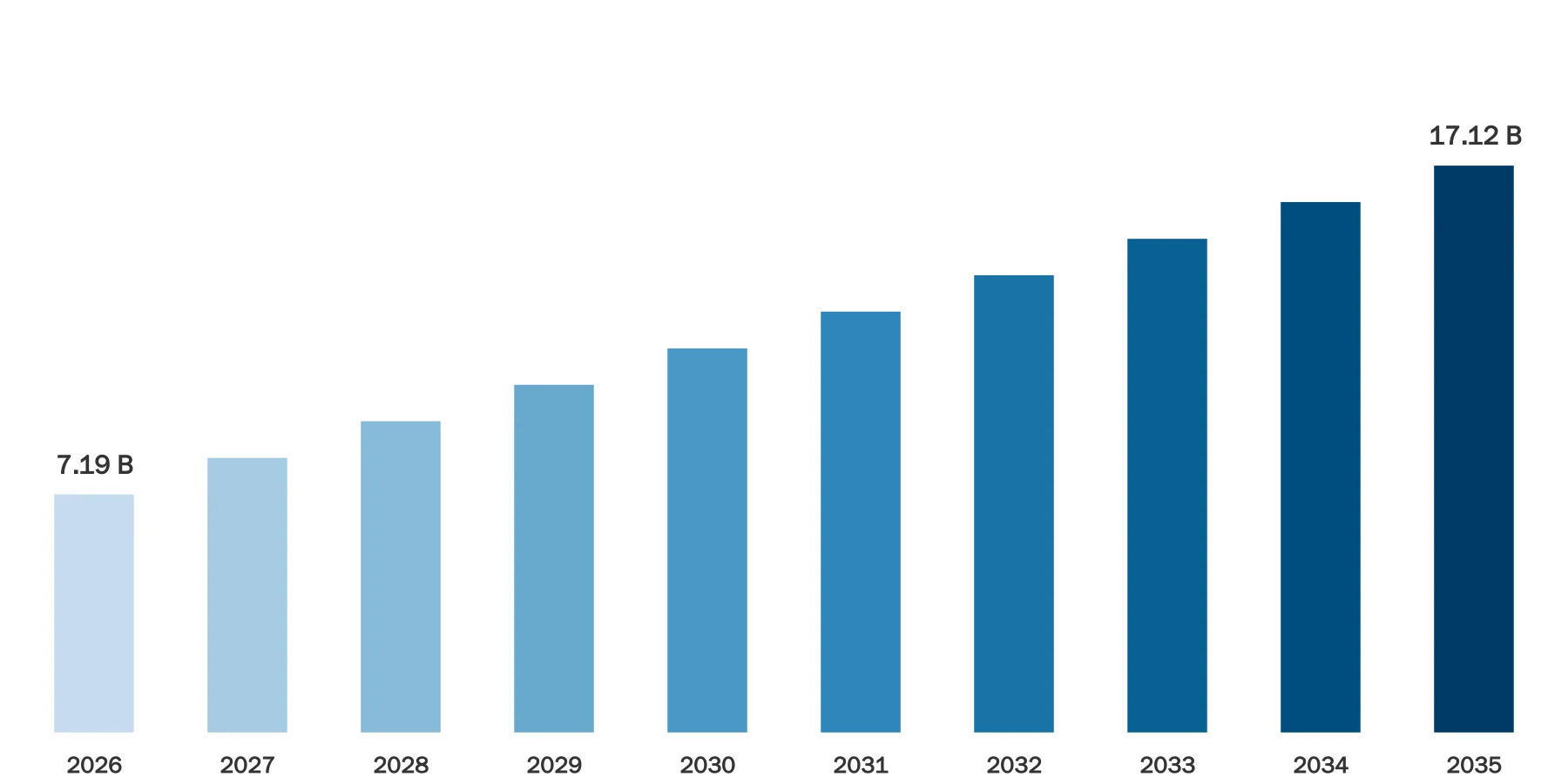
As per Econ Market Research analysis, the Global Cognitive Robotics Market generated revenue of US$ 7.19 Billion in 2026 and is forecast to achieve US$ 17.12 Billion by 2035, at a CAGR of 10% during the study period 2026–2035. The base year considered is 2025.
Cognitive Robotics Market Size 2025-2035 (USD Billion)

Source: Econ Market Research
Cognitive robotics involves the merging of robotics and Artificial Intelligence to create machines capable of performing complex tasks by simulating human cognitive abilities. These machines possess the capability to perceive and analyze environmental data, detect patterns, and adapt their actions based on changing circumstances. With applications spanning various domains such as healthcare, manufacturing, and transportation, the primary goal of cognitive robotics is to develop robots that can interact with humans in a natural and intuitive manner. This creates opportunities for enhanced collaboration between humans and machines, ultimately leading to the advancement of intelligent and autonomous systems that bring significant benefits to society.
Cognitive Robotics Market Dynamics
The growth of the cognitive robotics market is driven by several key factors. These include advancements in artificial intelligence and robotics technologies, a growing demand for automation and industrial robotics, an increasing utilization of cognitive robots in healthcare, and the need for cost-effective solutions. Additionally, there is a rising requirement for personalized and interactive robots, substantial investments in research and development initiatives, and the rapid emergence of cloud-based robotics, all of which contribute to the expansion of the market. Furthermore, the integration of cognitive robots with the Internet of Things (IoT) and other cutting-edge technologies such as machine learning and natural language processing further accelerates the adoption of cognitive robotics solutions across various industries.
Cognitive Robotics Market Drivers
Advancements in Artificial Intelligence and Robotics Technologies
Advancements in artificial intelligence (AI) and robotics technologies refer to the continuous progress and innovation in the capabilities and functionalities of AI and robotics systems. These advancements involve the development of more sophisticated algorithms, improved machine learning techniques, enhanced computer vision capabilities, and the integration of AI with robotics to create intelligent and autonomous systems. These technological advancements empower robots with advanced cognitive abilities, enabling them to perceive, learn, reason, and adapt to complex environments and tasks.
Restraints
Cognitive Robotics Involves Complex Technologies
High initial costs in the context of cognitive robotics refer to the significant financial investments required for the development, implementation, and deployment of cognitive robotics systems. These costs include research and development expenses, procurement of advanced hardware and software, customization for specific applications, and training personnel. The high upfront investment can act as a barrier, particularly for small and medium-sized enterprises (SMEs), limiting their adoption of cognitive robotics technology and its benefits.
Opportunities
Personalized and Interactive Robots
Personalized and interactive robots are designed to provide tailored and engaging experiences for users. These robots are equipped with advanced technologies such as natural language processing, computer vision, and emotion recognition, allowing them to understand and respond to individual preferences, emotions, and needs. They can adapt their behaviors, communication styles, and responses to create personalized interactions with users. This enables them to serve as companions, assistants, or customer service agents, enhancing user satisfaction and creating more meaningful and engaging human-robot interactions.
Segment Overview
By Learning Type
In terms of services, the global cognitive robotics market is categorized into motor babble, imitation, and knowledge acquisition. Among these, the motor babble segment currently holds the largest market share, accounting for approximately 42.6% of the total revenue in 2022. Motor babble is a technique widely employed in cognitive robotics that utilizes intricate motor movements to generate output patterns. Its remarkable ability to provide accurate responses to standard queries has positioned it as a key driver within the cognitive robotics market. By correlating motor movements with feedback, motor babble facilitates the creation of patterns for controlling robotic systems. This technique shows significant potential for the development of intelligent algorithms that find applications across various sectors such as manufacturing, healthcare, and entertainment. As a result, motor babble has gained widespread adoption and achieved success in the market.
By End-Use Industry
Based on delivery mode, the market is segmented into automotive, aerospace &, defense, healthcare, consumer electronics, commercial, and others. In 2022, the automotive sector emerged as the leading segment in the cognitive robotics market, capturing the largest market share of approximately 29.3%. This dominance is attributed to the growing demand for autonomous and semi-Autonomous Vehicles, which drives the need for advanced cognitive robotics solutions.
The integration of cognitive robots in automotive manufacturing processes brings improvements in efficiency, cost reduction, and enhanced product quality. Additionally, cognitive robotics is finding increasing applications in automotive design and engineering, contributing to the expansion of the market. The automotive industry's focus on enhancing the driving experience and ensuring passenger safety serves as a significant driver for the adoption of cognitive robotics solutions.
Cognitive Robotics Market Overview by Region
By Region, the market has been segmented into North America, Europe, Asia-Pacific, and the Rest of the World. In 2022, North America accounted for the largest market share of approximately 43.2% in 2022. This growth can be attributed to its well-established infrastructure, a highly skilled workforce, and the presence of major robotics and artificial intelligence firms. Additionally, the widespread adoption of automation and industrial robots across various industries in the region is contributing to the growing demand for cognitive robotics solutions. Furthermore, the region stands out for its substantial investments in research and development activities, with a particular emphasis on enhancing the performance of cognitive robots, thus, this proactive approach is driving the market growth over the forecast period.
Cognitive Robotics Market Competitive Landscape
In the global cognitive robotics market, a select group of prominent players dominates the industry and possesses a strong regional presence. These key participants are dedicated to continuous research and development efforts while actively pursuing strategic growth initiatives like product development, product launches, joint ventures, and partnerships. Their objective is to fortify their market standing and expand their customer base, capturing a significant market share.
Key Players
IBM Corporation
ABB Ltd.
CognitiveScale Inc.
Kuka AG
Blue River Technology
Intel Corporation
Omron Adept Technologies
Nvidia Corporation
Hanson Robotics Limited
Microsoft Corporation
Rethink Robotics
Universal Robots
Vicarious Inc.
Google LLC
CloudMinds Technology Inc.
SoftBank Robotics
Boston Dynamics
Robotics Plus Ltd.
Neura Robotics
Cognitive Robotics Market Recent Developments
In July 2022, Premier Tech Systems & Automation has unveiled the RPL SERIES robotic palletizer solution, a cutting-edge device manufactured in India to cater to a wide range of palletizing requirements. The robotic cells exhibit exceptional efficiency, equipped with an in-house designed gripper capable of meeting diverse palletization needs in the current packaging systems. With a remarkable capacity to palletize up to 1,800 bags per hour and handle multi-pick-up setups, the company's robots deliver outstanding performance.
Cognitive Robotics Market Report Scope & Segmentation
| Attributes | Details |
|---|---|
Market Size (Current) | US$ 7.19 Billion in 2026 |
Market Size (Forecast) | US$ 17.12 Billion in 2035 |
Growth Rate | CAGR of 10% from 2026 to 2035 |
Forecast Period | 2026 – 2035 |
Base Year | 2025 |
Historical Data Available | Yes |
Regional Scope | Global |
Segments Covered | By Learning Type
By Component
By Application
|
Frequently Asked Questions
Common questions about this report
The study period covers historical insights and forecast projections for the period 2026-2035.
About the Author
Market research expert with years of industry experience

Dipali Bhingare serves as the Market Research Director at Econ Market Research. With a focus on translating complex global economic shifts into actionable business intelligence, she oversees the strategic direction of comprehensive market studies. Her work empowers organizations to navigate volatile industries through data-driven forecasting and deep-dive competitive analysis.
Related Reports
Explore more market insights from the same category