

Delivery Robots Market
Delivery Robots Market Size, Share, Trends, Growth, and Industry Analysis, By Load Carrying Capacity (Up to 10 kg, 10 kg to 50 kg, More than 50 kg), By Component (Hardware, Software), By Number of Wheels (4 Wheels, 6 Wheels, Others), By End-User (Retail, Food andamp; Beverages, Postal, Healthcare, Hospitality), Regional Analysis and Forecast Period 2026-2035
Delivery Robots Market Overview
As per Econ Market Research analysis, the Global Delivery Robots Market was valued at US$ 0.94 Billion in 2026 and is expected to reach US$ 7.58 Billion by 2035, registering a CAGR of 27.7% during the forecast period 2026–2035. The base year considered is 2025.
Delivery Robots Market Size 2025-2035 (USD Billion)

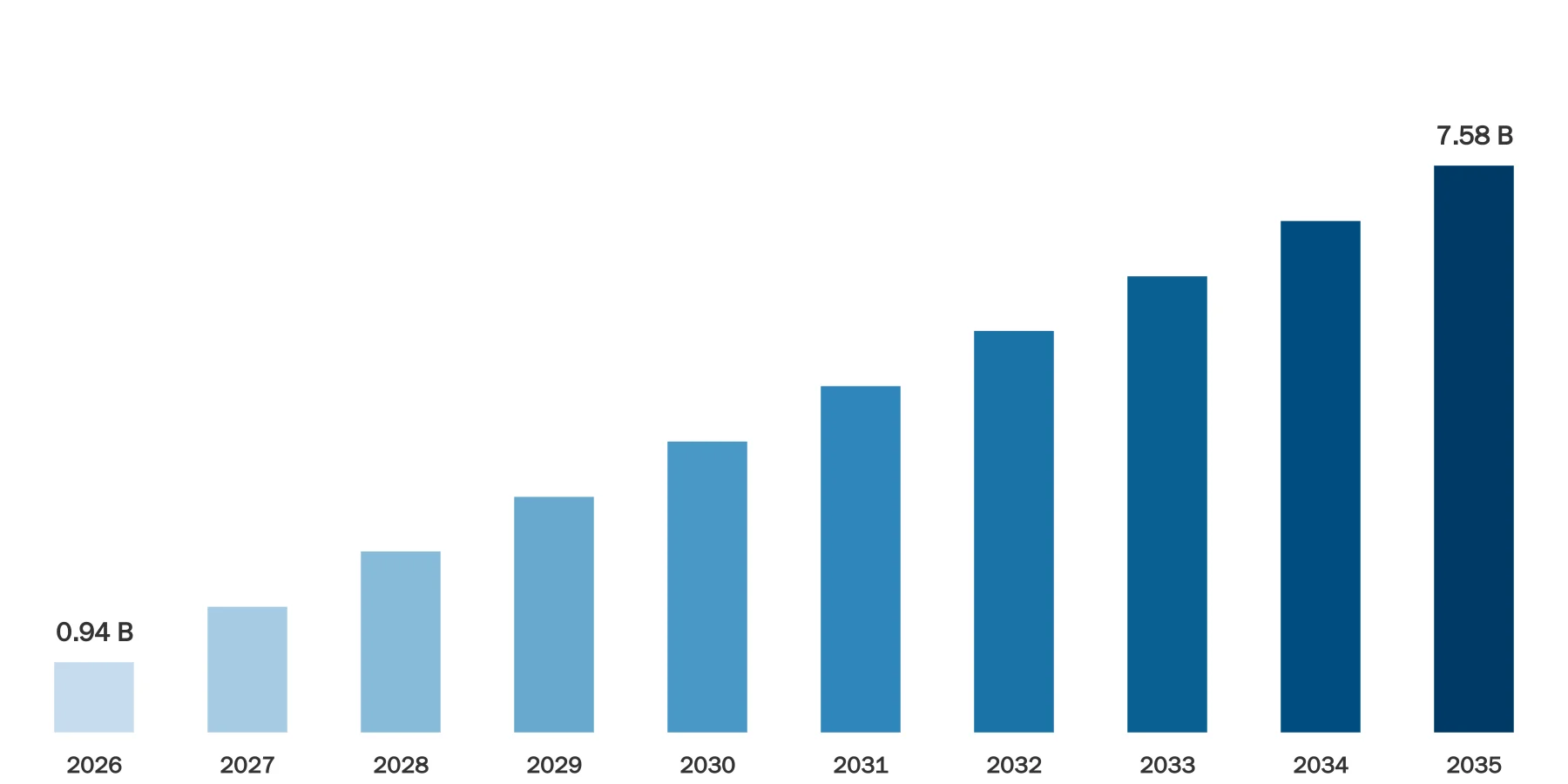
Source: Econ Market Research
Delivery robots are self-governing devices engineered to move items from one place to another without requiring human involvement. These robots provide a practical and effective answer for transporting goods over short distances, particularly in city areas. Equipped with sensors, cameras, and navigation systems, they can successfully navigate through sidewalks, streets, and other public areas. Delivery robots are available in various types, such as wheeled robots, drones, and even humanoid robots. Their adaptability allows them to accommodate packages of different sizes and shapes, catering to a wide array of delivery requirements. With the ability to operate nonstop, these robots significantly reduce delivery times and enhance the overall efficiency of the delivery process.
Delivery Robots Market Dynamics
The rising need for effective solutions in delivering goods over short distances in urban areas plays a vital role. Delivery robots present a cost-efficient and time-saving substitute for traditional delivery methods, effectively addressing challenges like traffic congestion and limited parking spaces. Furthermore, the flourishing e-commerce industry and the surge in online shopping have generated a demand for quicker and more adaptable delivery options, which can be met by delivery robots. Furthermore, environmental concerns and the drive towards sustainable practices have further accelerated the adoption of delivery robots, as they diminish carbon emissions and reduce dependence on fossil fuels. The progress in robotics and Artificial Intelligence technologies has significantly enhanced the capabilities of these robots, empowering them to maneuver through complex environments and interact with humans safely.
Delivery Robots Market Drivers
Technological Advancements
The advancements in robotics and artificial intelligence technologies have significantly improved the capabilities of delivery robots. These robots can now navigate complex environments, including sidewalks and streets, and interact with humans safely. The continuous development of these technologies is driving the expansion and effectiveness of the delivery robots market.
Restraints
Regulatory and Legal Challenges
The use of delivery robots in public spaces raises regulatory and legal challenges. Issues related to safety, privacy, and liability need to be addressed to ensure smooth integration of delivery robots into existing infrastructures.
Opportunities
Integration with Other Technologies
Delivery robots can be integrated with other emerging technologies such as Internet of Things (IoT) and 5G connectivity, enabling real-time tracking, remote monitoring, and enhanced communication capabilities. This integration can further optimize the delivery process and provide valuable data insights.
Segment Overview
By Wheels
Based on the wheels, the global delivery robots market is segmented into 2-wheel robots, 3-wheel robots, 4-wheel robots, and 6-wheel robots. The 2-wheel robots segment is dominating the market with the largest revenue share of around 40.2% in 2022. 2-wheel robots provide a versatile and nimble solution for efficient package delivery in urban settings. With their small size and agility, they can effortlessly navigate through sidewalks, streets, and other pedestrian areas, making them highly suitable for last-mile delivery. Moreover, 2-wheel robots are often cost-effective compared to other types of robots, making them an appealing option for businesses seeking affordable delivery solutions. Additionally, the increasing demand for same-day and on-demand deliveries in the e-commerce industry has further accelerated the adoption of 2-wheel robots, as they provide the speed and flexibility required to meet these evolving customer expectations.
By Solution
The delivery robots market has been segmented into hardware and software. The software segment is dominating the market with the largest revenue share of around 73.5% in 2022. The hardware component forms a crucial and fundamental aspect of delivery robots, encompassing sensors, power sources, navigation systems, and other vital elements. As the capabilities of delivery robots continue to advance and become more sophisticated, there is a growing demand for advanced and dependable hardware components.
The hardware segment comprises various robot types, including wheeled robots, drones, and humanoid robots, each designed to cater to diverse delivery requirements and environments. Moreover, innovations in hardware drive the overall performance and capabilities of delivery robots, empowering them to navigate complex terrains, handle packages of varying sizes, and interact effectively with their surroundings.
By End-Use
Based on end-use, the global delivery robots market is segmented into food &, beverage, retail, healthcare, postal service, and others. The food &, beverage segment is dominating the market with the largest revenue share of around 27.5% in 2022. The surge in online ordering platforms, food delivery services, and ghost kitchens has amplified the need for dependable and efficient delivery solutions within the food and beverage industry. Delivery robots present a convenient and cost-effective method to transport food orders, guaranteeing timely deliveries and elevating customer satisfaction
Delivery Robots Market Overview by Region
By Region, the global Delivery Robots Market has been divided into North America, Europe, Asia-Pacific, and the Rest of the World. North America held the largest market share, of around 43.8% in 2022. The region comprises technologically advanced nations such as the United States and Canada, known for their emphasis on innovation and the adoption of state-of-the-art technologies. This conducive environment has fostered the growth and implementation of restraint robots across diverse industries in the region. In North America, the healthcare sector is particularly robust, and restraint robots are widely employed in hospitals and medical facilities to manage patients and ensure the safety of staff members. Additionally, the region boasts a well-developed law enforcement infrastructure where restraint robots are utilized to handle potentially hazardous situations, minimizing risks and optimizing operational efficiency.
Delivery Robots Market Competitive Landscape
In the global delivery robots market, a small number of prominent players hold significant market dominance and have established a strong regional presence. These key participants are committed to ongoing research and development initiatives. Additionally, they actively engage in strategic growth endeavors such as product development, product launches, joint ventures, and partnerships. By pursuing these strategies, these companies aim to strengthen their market position and expand their customer base to capture a substantial share of the market.
Key Players
Starship Technologies
Nuro
Amazon Robotics
Kiwibot
Serve Robotics
Panasonic
RIVR
TeleRetail
Shanghai Slamtec
A2Z Drone Delivery
Wing Aviation
Robomart
Robby Technologies
Boston Dynamics
Eliport
Piaggio Fast Forward
Delivery Robots Market Recent Developments
In March 2023, Suzuki Motor Corporation and LOMBY Inc. have collaborated to build self-driving delivery robots. Suzuki will be in charge of the creation and design of the robot's basis in this joint project, while LOMBY will be in charge of manufacturing the prototype, making required revisions, and developing a delivery system. They will also undertake demonstration testing to demonstrate the autonomous delivery robot's capabilities.
Delivery Robots Market Report Scope & Segmentation
| Attributes | Details |
|---|---|
Market Size (Current) | US$ 0.94 Billion in 2026 |
Market Size (Forecast) | US$ 7.58 Billion in 2035 |
Growth Rate | CAGR of 27.7% from 2026 to 2035 |
Forecast Period | 2026 – 2035 |
Base Year | 2025 |
Historical Data Available | Yes |
Regional Scope | Global |
Segments Covered | By Load Carrying Capacity
By Component
By Number of Wheels
By End-User
|
Frequently Asked Questions
Common questions about this report
The study period covers historical insights and forecast projections for the period 2026-2035.
About the Author
Market research expert with years of industry experience

Related Reports
Explore more market insights from the same category