Electric Forklift Market Overview
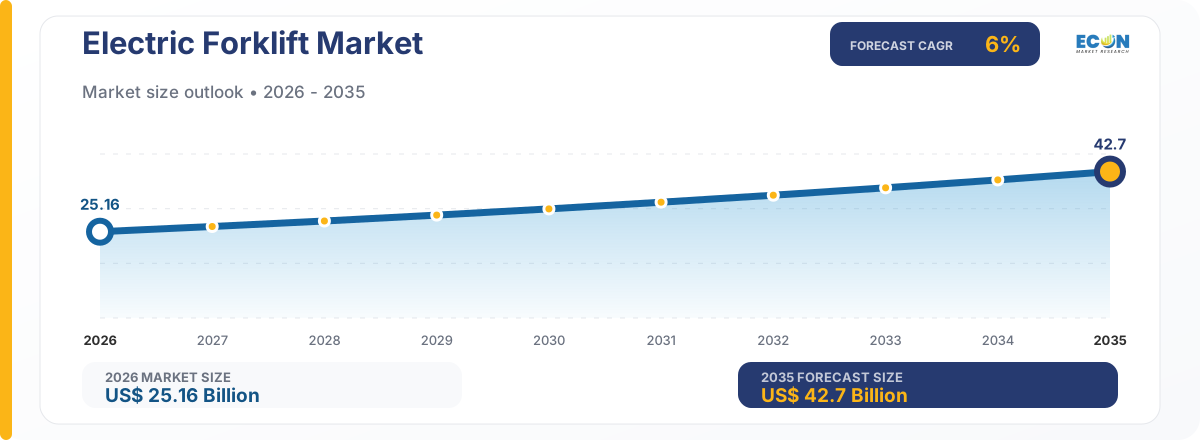
As per Econ Market Research analysis, the Global Electric Forklift Market reached a valuation of US$ 25.16 Billion in 2026 and is anticipated to grow to US$ 42.7 Billion by 2035, at a CAGR of 6% during the forecast timeline 2026–2035. The base year considered is 2025.
Electric forklifts are battery-driven rather than diesel or gasoline, making them less polluting and more environment-friendly. This has led to their increasing popularity because of efficiency, low costs, and being less emitting, thus, this is in tandem with global goals to sustain the environment. Electric forklifts have gained immense demand with the growth of e-commerce to avoid carbon emissions by utilizing efficient material handling solutions. The companies are interested in buying electric forklifts in order to heighten their productivity while reducing carbon emissions from their sites.
Besides this, quite significant improvements have been made in battery technology, which has improved the performance and runtime efficiency of electric forklifts, making them suitable for quite a wide range of applications. Moreover, these factors go hand in hand with rising awareness of the advantages of electric forklifts. The government is also promoting cleaner technologies in the industry. Growing businesses will look to optimize their operations within and without environmentally compliant standards, which can bode well for spectacular growth in the electric forklift market in the coming years.
Dynamic Insights
One of the most crucial factors is the growing requests for sustainability and environmental accountability from businesses. When organizations look to cut down their carbon footprint, electric forklifts come as cleaner alternatives to conventional variants with internal combustion-based technology, this moves in tandem with the fight against climates in the world. The invention of new battery technology, the development of the lithium-ion battery, has led to improvements in the efficiency and performance of electric forklifts and made them highly desirable for many applications. These innovations enable longer operating periods with faster charging, leading to increased productivity in material handling operations.
The market, however, also has challenges. Electric forklifts have a higher initial purchase price than their gasoline or diesel counterparts. This may encourage some companies from coming into the circle. Especially the small to medium enterprises, with a tight budget have. And, to a large extent, charging infrastructure will determine the proliferation of electric forklifts, inadequate charging solutions may limit the application of electric forklifts in some environments. However, supportive government policies and incentives encouraging Electric Vehicle adoption would remain supportive factors for growth in the market. Increasingly, more and more businesses realize long-term cost savings and operational benefits that can be accrued through electric forklifts, and it is in this context that further expansion in the market is probable to occur in the next years.
Drivers Insights
Environmental Sustainability
One of the key factors fuelling the global electric forklift market is the growing focus on sustainability across all walks of life. Governments and organizations across the globe have imposed strict regulations as part of efforts to contain emissions and promote the adoption of green procedures, and electric forklifts are an attractive solution. They do not generate tailpipe emissions, which not only minimize greenhouse gas pollution in enclosed warehouse settings and other indoor settings but also greatly contribute to minimizing air pollution.
At the same time, by wanting to extend their CSR profiles, companies are interested in the adoption of electric forklifts because they allow the reduction of carbon footprints. Many businesses have discovered that investments in electric forklifts help the environment but add better market images and respond to consumer demand in terms of environmentally friendly practice.
Technological Advancements
Continuous advancements in battery technology and forklift design are significantly driving the market. Innovations such as lithium-ion batteries have transformed the capabilities of electric forklifts, providing longer operational hours, quicker charging times, and reduced maintenance needs compared to traditional lead-acid batteries. This technological shift enhances the overall efficiency of electric forklifts, making them more reliable and cost-effective for businesses. As manufacturers continue to invest in research and development, the emergence of smarter, more integrated electric forklifts is expected, offering enhanced features like automation and improved safety systems, further driving adoption.
Restraints Insights
Despite the long-term savings and efficiency benefits, high initial costs are likely to remain one of the key barriers to the growth of the market. Prices for electric models may also rise to a point where they are considerably higher than the internal combustion model forklifts, which would hinder SMEs from replacing them. Though the great savings realized over the electric fork lift',s operating life may appeal to businesses of almost any size, firms with limited budgets will be reluctant to spend money on electric forklifts. This financial barrier can slow down the overall growth of the market and hamper adoption in areas where financing opportunities are restricted.
Charging Infrastructure
Availability and accessibility of charging infrastructure will also be the most important factors in electric forklift adoption. Electric forklifts are unlikely to be adopted into many businesses, especially in areas such as a warehouse or open environment, where charging stations are not adequately available. Companies must be assured that the charging solutions available are efficient and compatible with their operational needs. This is worrisome because if electric forklifts are not easy to charge, then companies will end up with the traditional models which tend to restrain full growth of the electric forklift market. A counter for this kind of problem will be in the creation of a powerful charging infrastructure, critical in obtaining broad-based adoption.
Opportunities Insights
Growing E-commerce Sector
Expansion in the e-commerce sector overnight has created a massive opportunity in the electric forklift market. There is a gigantic requirement for efficient and effective material handling solutions in warehouses and distribution centers because more and more goods are stored and shipped across these concerns. This will be achieved through the use of electric forklifts that can maximize the speed, diminish operation cost, and optimize productivity. As e-commerce business ventures expand their logistics networks, electric forklifts will likely see an uptick in demand, creating opportunities for manufacturers to come up with solutions specific enough to meet such required needs of operations.
Segment Analysis
By Product Type
The electric forklift market can be segmented by product type into counterbalance forklifts, warehouse forklifts, and others. Counterbalance forklifts are the most common type, designed to lift heavy loads while balancing the weight at the rear. This design makes them highly versatile for various applications, including loading and unloading trucks and moving materials in tight spaces. Warehouse forklifts, on the other hand, are specifically tailored for indoor use in warehouse settings, featuring designs optimized for narrow aisles and high stacking capabilities. These forklifts typically include reach trucks and order pickers, enhancing efficiency in inventory management and order fulfilment.
By Battery Type
With regards to the battery types, lead-acid and lithium-ion are two variants mainly used in the market. Lead acid has been used for long periods due to the fact that they are relatively cheaper to buy, and their availability is huge. They are reliable and satisfactory for most electric forklifts, particularly during less strenuous applications. On the downside, charging time is more extensive, and operational lifetimes are not as long as the newer technologies are making.
However, lithium-ion batteries are increasingly being purchased due to high performance, longer running times, and faster charging rates. Although expensive, lower maintenance and higher energy efficiency form a competitive business case for companies who want to boost their productivity levels. With improvements in battery technologies, demand for lithium-ion batteries is further surmised to increase the market dynamics.
By Application
The application segment of the electric forklift market encompasses warehousing, manufacturing, construction, retail and warehouse, and others. In warehousing, electric forklifts play a crucial role in efficiently managing inventory, facilitating quick loading and unloading processes, and optimizing space utilization within storage facilities. Manufacturing applications benefit from electric forklifts as they transport materials and components across production lines, contributing to streamlined operations. The construction sector utilizes electric forklifts for moving materials on-site, enhancing productivity and safety in often challenging environments. In retail and warehouse settings, these forklifts are essential for managing stock and ensuring timely deliveries to customers.
Regional Analysis
Electric forklifts are in high demand in North America, particularly in the United States, due to the increase in e-commerce and the need for greater efficiency when handling materials in warehouses. There, companies must invest in electric forklifts, which allow manufacturing companies to produce with higher productivity but lower emissions and fit into the larger pursuit of leaner operations. A healthy government push and provisions keep supporting market growth as there is a need to shift from traditional forklifts to electric versions. Electric forklift markets in Europe are expanding at a fast pace, and leaders in the market are Germany, France, and the UK.
European makers are looking to innovate and become sustainable producers of forklifts, this has led to the production of high-end electric forklift models with lithium-ion batteries and automation features. This increasing pressure through emission regulations and environmental accountability is compelling companies to opt for electric forklifts in their operations. The Asia-Pacific region is particularly and highly emerging in electric forklifts, especially with the strong presence of countries like China, Japan, and India. Rapid industrialization coupled with the ever-booming e-commerce sector further increases demand for efficient material handling solutions. Furthermore, an increasing awareness of environmental issues compels businesses to switch to electric forklifts.
Competitive Landscape
Major market companies include Toyota Industries Corporation, Hyster-Yale Materials Handling, Inc., and Crown Equipment Corporation. The success behind the company&rsquo,s results from advanced technology, robust product offerings, and strong distribution networks. These companies always develop research and innovations mainly to enhance their electric forklifts performance efficiency while integrating smart technologies and effective battery systems. Strategic partnerships, mergers, and acquisitions are frequently employed in the field. These allow firms to extend product lines and consolidate market positions. This has also opened room for emerging players entering the market with niche electric forklift solutions targeting specific applications or regions.
New entrants in the market often use innovative designs and technologies, such as automation and telematics, to differentiate themselves from these major brands. Local manufacturers succeed because they offer customized solutions tailored to particular market needs that regional players can hardly compete with due to the complexities of regional dynamics. Companies, therefore, should focus on the eco-friendly practices and products as sustainability becomes the core of most business activities.
List of Key Players:
Hangcha Forklift
Mitsubishi Logisnext Co., Ltd.
Crown Equipment Corporation
Jungheinrich AG
KION Group AG
Hyster-Yale Materials Handling, Inc.
Doosan Corporation
Anhui Heli Co., Ltd.
Clark Material Handling Company
Toyota Material Handling
Komatsu Ltd.
Recent Developments
August 2024, Godrej &, Boyce has introduced India',s first lithium-ion powered Forklift Truck, featuring a fully indigenous Battery Management System.
Electric Forklift Market Report Scope & Segmentation
| Attributes | Details |
|---|---|
| Market Size (Current)Current market valuation | US$ 25.16 Billion in 2026 |
| Market Size (Forecast)Projected market valuation | US$ 42.7 Billion in 2035 |
| Growth RateCompound Annual Growth Rate | CAGR of 6% from 2026 to 2035 |
| Forecast PeriodAnalysis timeline | 2026 – 2035 |
| Base YearReference year for analysis | 2025 |
| Historical Data AvailablePast market data availability | Yes |
| Regional ScopeGeographical coverage | Global |
| Segments CoveredMarket segments analyzed | By Power Source
By Class
By End-Use Industry
|
Frequently Asked Questions
Common questions about this report
The study period covers historical insights and forecast projections for the period 2026-2035.
About the Author
Market research expert with years of industry experience

Dipali Bhingare serves as the Market Research Director at Econ Market Research. With a focus on translating complex global economic shifts into actionable business intelligence, she oversees the strategic direction of comprehensive market studies. Her work empowers organizations to navigate volatile industries through data-driven forecasting and deep-dive competitive analysis.