

Battery Management System Market
Battery Management System Market Size, Share, Trends, Growth, and Industry Analysis, By Battery Type (Lithium-Ion Based, Lead-Acid Based, Nickel-Based, Others), By Topology (Centralized, Distributed, Modular), By Application (Automotive, Consumer Electronics, Medical Devices, Energy Storage, Telecommunications, Renewable Energy Systems, Others), Regional Analysis and Forecast Period 2026-2035
Battery Management System Market Overview
As per Econ Market Research analysis, the Global Battery Management System Market valuation stood at US$ 12.13 Billion in 2026 and is expected to reach US$ 66.1 Billion by 2035, growing at a steady CAGR of 20.5% from 2026 to 2035. 2025 serves as the base year.
Battery Management System Market Size 2025-2035 (USD Billion)

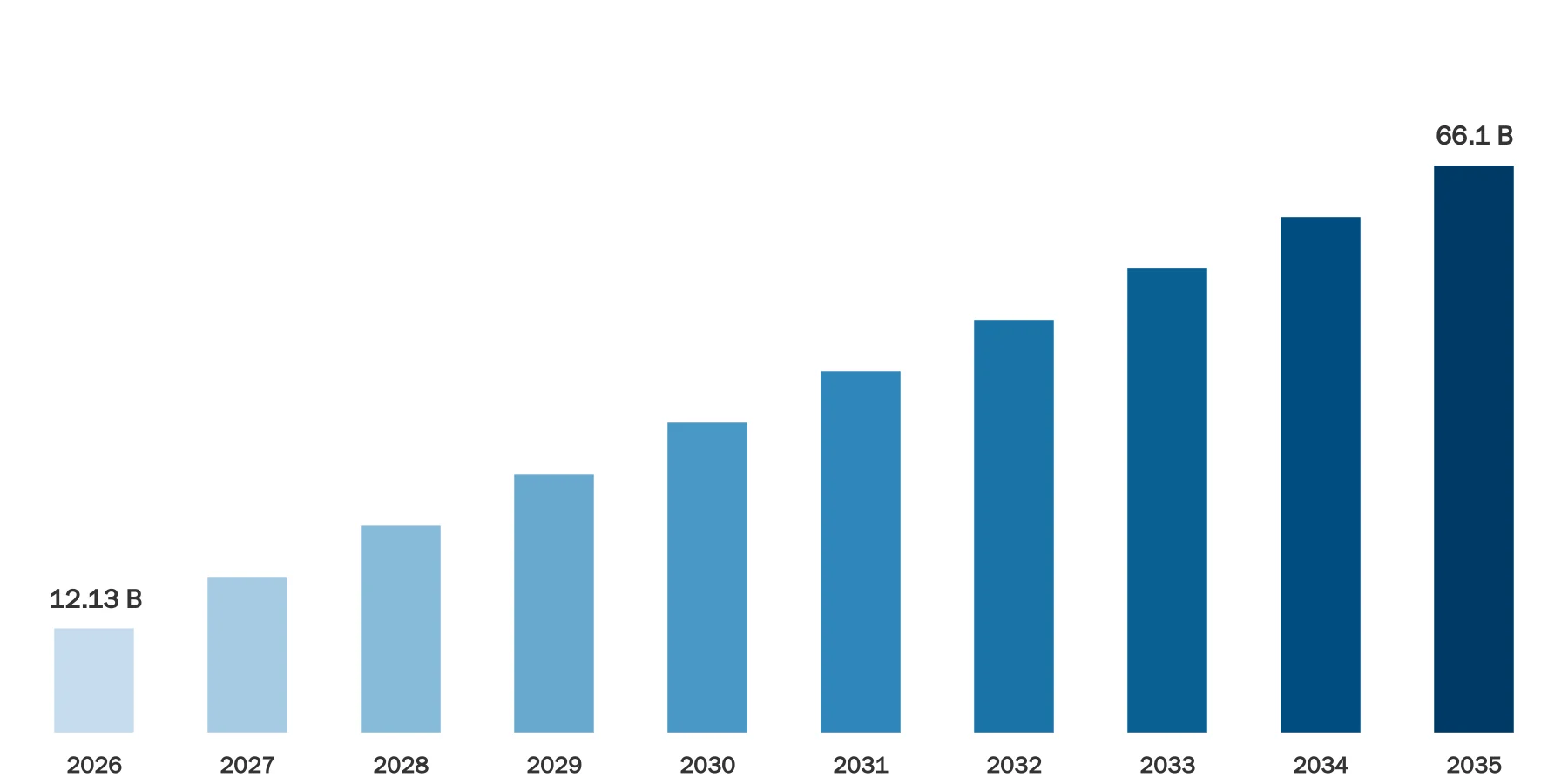
Source: Econ Market Research
A battery management system (BMS) is an essential component of current battery-powered systems. It is in charge of monitoring and managing the performance, safety, and longevity of rechargeable batteries. The BMS regulates battery charging and discharging, preventing overcharging, over-discharging, and overheating. It continually monitors critical factors such as voltage, current, and temperature to ensure battery health. Furthermore, the BMS provides key functions such as state-of-charge (SoC) estimation, cell balancing, and fault detection to maximize battery efficiency and longevity.
Battery Management System Market Dynamics
The demand for electric cars (EVs) is one of the main drivers. The performance of EV batteries must be managed and optimized by BMS as the automotive industry transitions to electric transportation. BMS is in high demand in grid-connected energy storage applications due to the expanding deployment of renewable energy systems like solar and wind power, which calls for effective energy storage solutions. To improve the performance and lifetime of wearable electronics and portable consumer electronics, which are becoming more and more popular, dependable battery management is required. Furthermore, the need for sophisticated BMS systems is fueled by strict governmental guidelines, safety requirements, and environmental considerations.
Battery Management System Market Drivers
Increasing Renewable Energy Installations
Growing Demand for Electric Vehicles (EVs)
The rising installation of renewable energy sources such as solar and wind power is driving the demand for energy storage systems. BMS plays a crucial role in managing and monitoring the batteries used in these systems, contributing to the growth of the BMS market.
Restraints
Battery-related Safety Concerns
Battery-related safety concerns, such as thermal runaway, overcharging, and short-circuiting, pose challenges to the widespread adoption of battery systems. BMS helps address these concerns, but there is still a need for continuous advancements in safety features to gain consumer trust and confidence.
Opportunities
Advancements in Battery Technologies
The ongoing advancements in battery technologies, including solid-state batteries, lithium-air batteries, and other emerging chemistries, present opportunities for the BMS market. These new battery technologies will require advanced BMS solutions to ensure efficient operation and safety.
Expansion of Electric Vehicle Charging Infrastructure
Segment Overview
By Battery Type
Based on battery type, the global battery management system market is divided into lithium-ion-based, lead-acid-based, nickel-based, and flow batteries. The lead-acid-based category dominates the market with the largest revenue share of around 45.6% in 2022. This is due to a number of variables, including the fact that lead-acid batteries have been widely utilized for a long time, particularly in applications such as the automotive and industrial industries. As a result, there is a substantial existing infrastructure and market for lead-acid batteries, which drives demand for BMS systems designed specifically for these batteries.
By Topology
Based on the topology, the global battery management system market is divided into centralized, distributed, and modular. The centralized category dominates the market with the largest revenue share of around 40.5% in 2022. This is due to various factors, including the fact that centralized BMS systems provide a complete and centralized method for monitoring and managing several batteries at the same time, making them suited for applications with large battery banks or complicated battery topologies.
By End-Use
Based on end-use, the global battery management system market is divided into automotive, consumer electronics, energy, and defense. The consumer electronics category dominates the market with the largest revenue share of around 40.5% in 2022. This may be attributable to a variety of causes, including the development of smartphones, laptops, tablets, and wearable gadgets, which has resulted in an increase in demand for dependable and efficient battery solutions. BMS systems are critical in improving battery performance, increasing safety, and prolonging the lifespan of numerous consumer electrical gadgets. Technological developments have resulted in the creation of high-capacity, fast-charging lithium-ion batteries, which are now widely used in consumer gadgets
Battery Management System Market Overview by Region
The global battery management system market is categorized into North America, Europe, Asia-Pacific, and the Rest of the World. North America emerged as the leading region, capturing approximately 33.8% of the market share in 2022. The adoption of electric vehicles (EVs) has gained significant traction in North America, driven by a growing emphasis on sustainability and reducing carbon emissions. Consequently, the demand for battery management systems (BMS) to effectively monitor and manage EV batteries has surged in the region. Moreover, North America',s position as a hub for technological innovation and advancements in the battery industry has propelled the development and utilization of sophisticated BMS systems.
Battery Management System Market Competitive Landscape
In the global battery management system market, a few major players exert significant market dominance and have established a strong regional presence. These leading companies remain committed to continuous research and development endeavors and actively engage in strategic growth initiatives, including product development, launches, joint ventures, and partnerships. By pursuing these strategies, these companies aim to strengthen their market position, expand their customer base, and capture a substantial share of the market.
Key Players
Johnson Matthey PLC
Analog Devices
Lithium Balance A/S
NXP Semiconductor N.V.
Elithion, Inc.
Nuvation Engineering
Texas Instruments, Inc.
Leclanché, SA
Battery Management System Market Recent Developments
In January 2023, Hero Electric, a renowned Indian electric Scooter manufacturer, has established a strategic and long-lasting partnership with Maxwell Energy Solutions, a provider of advanced battery management solutions. This collaboration aims to procure cutting-edge BMS products for Hero Electric',s range of electric two-wheelers. As part of the agreement, Maxwell Energy Systems will supply Hero Electric with over a million BMS devices to meet the rising demand for electric transportation.
Battery Management System Market Report Scope & Segmentation
| Attributes | Details |
|---|---|
Market Size (Current) | US$ 12.13 Billion in 2026 |
Market Size (Forecast) | US$ 66.1 Billion in 2035 |
Growth Rate | CAGR of 20.5% from 2026 to 2035 |
Forecast Period | 2026 – 2035 |
Base Year | 2025 |
Historical Data Available | Yes |
Regional Scope | Global |
Segments Covered | By Battery Type
By Topology
By Application
|
Frequently Asked Questions
Common questions about this report
The study period covers historical insights and forecast projections for the period 2026-2035.
About the Author
Market research expert with years of industry experience

Dipali Bhingare serves as the Market Research Director at Econ Market Research. With a focus on translating complex global economic shifts into actionable business intelligence, she oversees the strategic direction of comprehensive market studies. Her work empowers organizations to navigate volatile industries through data-driven forecasting and deep-dive competitive analysis.
Related Reports
Explore more market insights from the same category