

Floating Production Storage and Offloading Market
Floating Production Storage and Offloading Market Size, Share, Trends, Growth, and Industry Analysis, By Propulsion (Self-Propelled, Towed), By Hull Type (Single Hull, Double Hull), By Usage (Shallow Water, Deepwater, Ultra-Deepwater), By Type (Converted, New Build), Regional Analysis and Forecast Period 2026-2035
Market Overview
As per Econ Market Research analysis, the Global Floating Production Storage and Offloading Market accounted for US$ 60.48 Billion in 2026 and is expected to surpass US$ 237.24 Billion by 2035, witnessing a CAGR of 16.4% throughout 2026–2035. The analysis is based on 2025 as the base year.
Floating Production Storage and Offloading Market Size 2025-2035 (USD Billion)

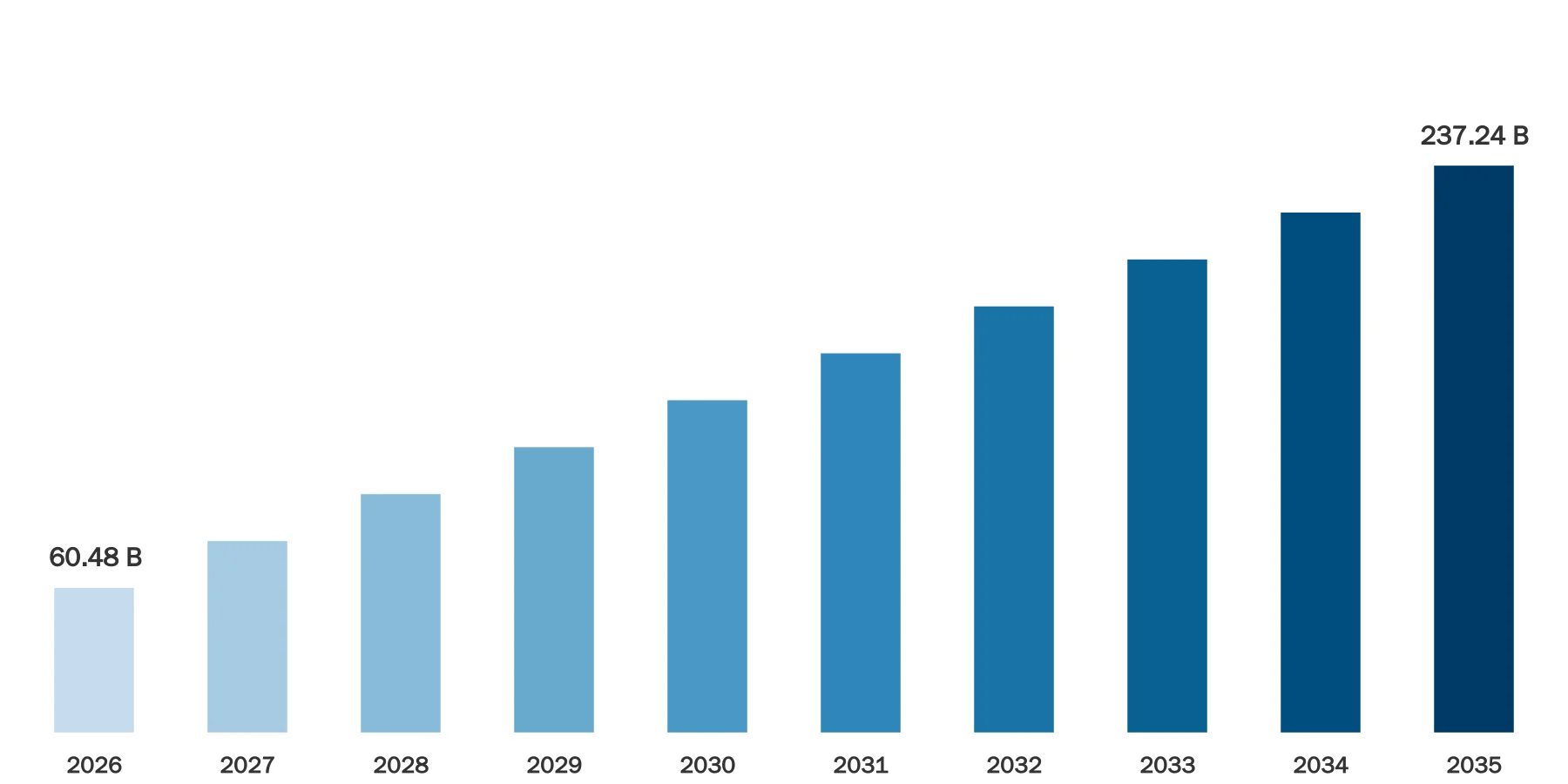
Source: Econ Market Research
A Floating Production Storage and Offloading (FPSO) vessel is a versatile floating facility utilized in the offshore oil and gas sector. It integrates production, storage, and offloading capabilities, enabling the extraction of hydrocarbons from offshore fields. The FPSO receives unrefined oil and gas from underwater wells, processes them on the vessel, and stores them in large tanks before transferring them to tankers for transportation to refineries. By obviating the necessity for fixed offshore platforms, it becomes well-suited for remote or deep-water locations. FPSOs are engineered to withstand challenging environmental conditions and can be leased and deployed on a project-specific basis, offering flexibility and cost-effectiveness.
Floating Production Storage &, Offloading Market Dynamics
Several factors drive the market for floating production storage and offloading (FPSO) vessels. The demand for FPSOs is being propelled by the increasing exploration and production activities in offshore fields, particularly in remote and deep-water locations. These vessels present a flexible and cost-effective solution for extracting oil and gas in challenging environments. Compared to fixed offshore platforms, FPSOs provide a quick time-to-market advantage, enabling swift deployment and production initiation. Moreover, FPSOs offer operational and logistical benefits by allowing easy relocation between different fields, resulting in reduced capital costs. Investments in the market are also driven by technological advancements in FPSO design, such as enhanced mooring systems and processing capabilities.
Floating Production Storage &, Offloading Market Drivers
Increasing Exploration And Production Activities
The rise in exploration and production activities refers to the increasing efforts and investments made by companies in searching for and extracting oil and gas reserves. This trend is driven by the growing demand for energy, depletion of onshore reserves, and advancements in technology that enable access to previously untapped offshore fields, leading to increased exploration and production activities in the industry.
Restraints
High Upfront Costs
High upfront costs pertain to the significant initial investment required for the construction, deployment, and operation of Floating Production Storage and Offloading (FPSO) vessels. These costs encompass various aspects, including engineering, procurement, fabrication, installation, and commissioning. The substantial financial commitment can pose a challenge for operators and may require careful financial planning and capital allocation to overcome this barrier in the FPSO market.
Opportunities
Technological Advancements
Technological advancements refer to continuous improvements and innovations in the design, systems, and processes related to Floating Production Storage and Offloading (FPSO) vessels. These advancements include enhanced mooring systems, processing capabilities, safety features, automation, digitalization, and remote monitoring. Technological progress drives increased efficiency, safety, performance, and cost-effectiveness of FPSOs, making them more attractive and competitive in the offshore oil and gas industry.
Segment Overview
By Propulsion
Based on the propulsion, the global floating production storage &, offloading market is segmented into self-propelled and towed. The self-propelled segment is dominating the market with the largest revenue share of around 60.3% in 2022. Compared to their non-self-propelled counterparts, self-propelled products and solutions provide superior mobility and flexibility. They come equipped with their own propulsion systems, enabling them to operate independently without relying on external power sources or towing. This autonomy leads to efficient operations, reduced dependence on external resources, and improved maneuverability, making self-propelled solutions highly desirable.
By Type
Based on the type, the global floating production storage &, offloading market is segmented into converted and new build. The converted segment is dominating the market with the largest revenue share of around 43.1% in 2022. The transformation of pre-existing assets, such as ships or vessels, into new applications offers a cost-effective and time-efficient solution. By converting existing structures, resources can be repurposed, minimizing the requirement for extensive construction from the ground up. This aspect plays a crucial role in the substantial market share held by the converted segment. Moreover, the conversion process allows for the customization of assets to meet specific requirements, accommodating a wide range of applications and operational needs.
By Usage
Based on the usage, the global floating production storage &, offloading market is segmented into shallow water, deep water, and ultra-deep water. In 2022, the shallow water segment emerged as the dominant segment in the floating production storage &, offloading market, capturing the largest market share with around 37.2%. The primary reasons for this are diverse, including the upsurge in exploration and production activities in shallow water regions, advancements in drilling and production technologies tailored for these areas, and the existence of untapped reserves. Shallow water fields are typically more accessible and economically viable to develop in comparison to deep-water or ultra-deep-water regions.
By Hull Type
Based on hull type, the global floating production storage & offloading market is segmented into single hull and double hull. The double hull segment is anticipated to grow at a higher CAGR of 12.6% during the forecast period. The rising demand for double hull vessels can be attributed to the growing emphasis on safety and environmental protection through increased regulatory requirements and industry standards. Double hull designs offer an extra layer of protection, reducing the likelihood of oil spills and bolstering structural integrity. With governments and industry stakeholders prioritizing sustainability and risk mitigation, the demand for double hull vessels is expected to increase.
Floating Production Storage & Offloading Market Overview by Region
By Region, the global Floating Production Storage & Offloading Market has been divided into North America, Europe, Asia-Pacific, and the Rest of the World. North America dominated the market with around 34.6%, of the global market in 2022. The region is characterized by advanced economies such as the United States and Canada, which boast thriving industrial sectors and technological progress. These nations prioritize research and development, innovation, and entrepreneurial endeavors, resulting in the creation of state-of-the-art products and services. North America possesses abundant natural resources, including oil, gas, and Minerals, which drive the energy and mining industries. Moreover, the region benefits from a well-established infrastructure, efficient logistics networks, and a stable regulatory environment that fosters business expansion. Additionally, a large consumer base, high disposable income, and a culture of consumerism contribute to a robust market demand across various product and service categories.
Floating Production Storage & Offloading Market Competitive Landscape
In the global floating production storage & offloading market, a small number of prominent players hold significant market dominance and have established a strong regional presence. These key participants are committed to ongoing research and development initiatives. Additionally, they actively engage in strategic growth endeavors such as product development, product launches, joint ventures, and partnerships. By pursuing these strategies, these companies aim to strengthen their market position and expand their customer base to capture a substantial share of the market.
Key Players
Chevron
Exxon Mobil
BP PLC
Equinor
Woodside Energy
Aker Solutions
Eni S.P.A.
Dommo Energia
BW Offshore
Teekay
Floating Production Storage &, Offloading Market Recent Developments
In November 2022, SBM Offshore has announced a partnership with China Merchants Financial Leasing (Hong Kong) Holding Company (CMFL), a Chinese financial firm. The goal of this collaboration is to share ownership and operation of FPSO projects. They would be able to supply top-tier FPSO solutions to clients worldwide by merging their individual skills. The competence of SBM Offshore in the design, building, and management of FPSOs will be supplemented by CMFL's strong financial skills and leasing and financing experience.
Floating Production Storage and Offloading Market Report Scope & Segmentation
| Attributes | Details |
|---|---|
Market Size (Current) | US$ 60.48 Billion in 2026 |
Market Size (Forecast) | US$ 237.24 Billion in 2035 |
Growth Rate | CAGR of 16.4% from 2026 to 2035 |
Forecast Period | 2026 – 2035 |
Base Year | 2025 |
Historical Data Available | Yes |
Regional Scope | Global |
Segments Covered | By Propulsion
By Hull Type
By Usage
By Type
|
Frequently Asked Questions
Common questions about this report
The study period covers historical insights and forecast projections for the period 2026-2035.
About the Author
Market research expert with years of industry experience

Dipali Bhingare serves as the Market Research Director at Econ Market Research. With a focus on translating complex global economic shifts into actionable business intelligence, she oversees the strategic direction of comprehensive market studies. Her work empowers organizations to navigate volatile industries through data-driven forecasting and deep-dive competitive analysis.
Related Reports
Explore more market insights from the same category