

Photovoltaic Market
Photovoltaic Market Size, Share, Trends, Growth, and Industry Analysis, By Technology (Thin Film, Mono Si, Poly Si, Others), By System (High CPV, Low CPV), By Application (Industrial, Residential, Commercial), Regional Analysis and Forecast Period 2026-2035
Market Overview
As per Econ Market Research analysis, Global Photovoltaic Market size stood at US$ 345 Billion in 2026 and is projected to reach US$ 694.5 Billion by 2035, growing at a CAGR of 8.1% over the forecast period 2026–2035. 2025 is taken as the base year.
Photovoltaic Market Size 2025-2035 (USD Billion)

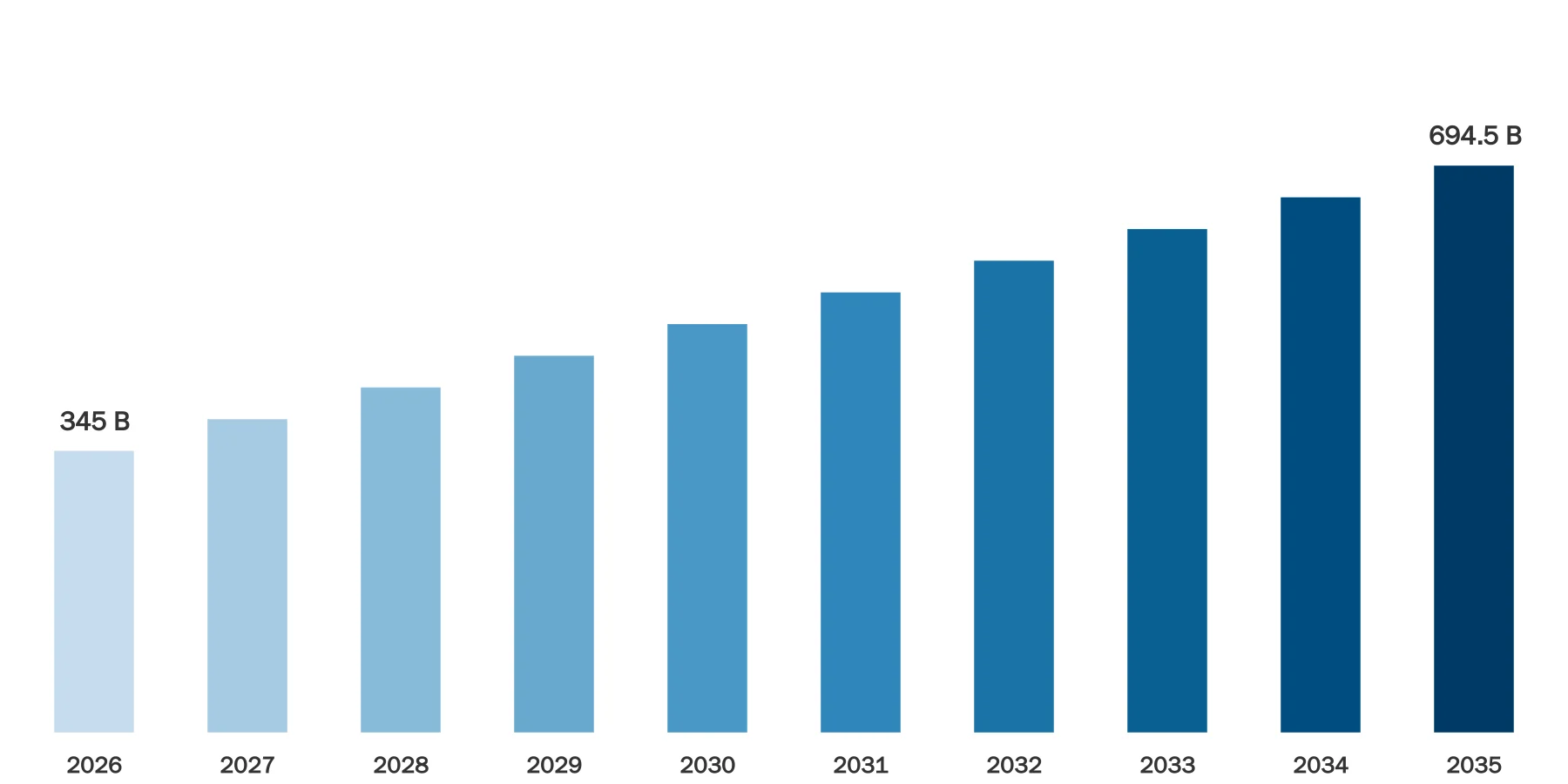
Source: Econ Market Research
Photovoltaic (PV) technology is a sustainable and fast-developing renewable energy source that turns sunlight directly into electricity. PV systems are made up of Solar Panels made up of photovoltaic cells, which are commonly comprised of Semiconductor materials such as silicon. When exposed to sunlight, these cells create an electric current via the photovoltaic effect. PV systems may be installed in various sizes, ranging from modest rooftop installations to enormous solar farms. They have various advantages, including zero greenhouse gas emissions, low maintenance requirements, and extended lifespans. Furthermore, PV technology has gotten more efficient and inexpensive over the years, making it a feasible choice for wider adoption.
Photovoltaic Market Dynamics
The growing worldwide concern about climate change and the need to cut greenhouse gas emissions has resulted in a greater emphasis on renewable energy sources, with photovoltaics (PV) playing a crucial role. Furthermore, government regulations and incentives, including feed-in tariffs and tax credits, have played an important role in increasing PV system adoption. Furthermore, the rising demand for energy, along with the necessity for decentralized and off-grid power solutions in rural places, has increased PV system implementation. Overall, improving consumer knowledge of the environmental and economic benefits of PV has resulted in increased demand for solar power installations.
Photovoltaic Market Drivers
Increasing Demand for Renewable Energy
The growing global awareness of the environmental impact of traditional energy sources has led to a surge in demand for renewable energy solutions like photovoltaic (PV) systems. The need to reduce carbon emissions and combat climate change is a major driver of the PV market.
Restraints:
Competition from Other Renewable Technologies
While PV is one of the most widely adopted renewable energy technologies, it faces competition from other sources such as wind power, hydropower, and geothermal energy. The availability of alternative renewable options may divert some investments away from PV systems.
Opportunities:
Energy Storage Integration
The integration of PV systems with energy storage technologies, such as batteries, presents a significant opportunity for the market. Energy storage enhances the value proposition of PV systems by enabling load shifting, grid stabilization, and backup power, making them more reliable and versatile.
Segment Overview
By Component
Based on the component, the global photovoltaic market is divided into modules, inverters, and balance of system. The balance of system category dominates the market with the largest revenue share of around 53.8% in 2022. BOS refers to all of the components and equipment needed for the installation and operation of a photovoltaic (PV) system, excluding the solar panels themselves. Inverters, mounting structures, cabling, connections, monitoring systems, and other essential equipment are all included.
By Cell Type
Based on the cell type, the global photovoltaic market is divided into full-cell PV modules and half-cell PV modules. The full-cell PV modules category dominates the market with the largest revenue share of around 63.7% in 2022. Full-cell modules have busbars that completely cover the cell area, leading to lower power losses and improved overall module performance. When compared to other module types, this design provides better power output and improved efficiency.
By Application
Based on application, the global photovoltaic market is divided into residential, commercial &, industrial, and utilities. The utilities category dominates the market with the largest revenue share of around 34.5% in 2022. This may be attributable to a number of things, including the fact that utilities have substantially invested in large-scale solar projects, utilizing economies of scale and cost-effectiveness.
Photovoltaic Market Overview by Region
By Region, the global photovoltaic market has been segmented into North America, Europe, Asia-Pacific, and the Rest of the World. Asia-Pacific accounted for 42.5% revenue share of the global market in 2022. The growth factors including the substantial expenditures made in Solar Energy infrastructure by nations like China, Japan, and India, which has resulted in a sharp rise in PV installations. To encourage the use of PV systems, these countries have enacted favorable government policies, such as feed-in tariffs, subsidies, and renewable energy objectives.
Photovoltaic Market Competitive Landscape
In the global photovoltaic market, a handful of major players hold substantial market domination and exhibit a robust regional presence. These influential players remain dedicated to continuous research and development endeavors. Additionally, they actively engage in strategic growth initiatives, including product creation, product launches, joint ventures, and partnerships. By employing these tactics, these organizations aim to bolster their market position, expand their client base, and secure a significant market share.
Key Players
Trina Solar
LONGi Green Energy Technology
Canadian Solar
First Solar
Hanwha Q CELLS
Sungrow Power Supply Co., Ltd.
Wuxi Suntech Power
Sharp Corporation
Mitsubishi Electric Corporation
ABB Ltd.
Huawei Technologies Co., Ltd.
SMA Solar Technology AG
Array Technologies
Chint Solar
GCL System Integration Technology
Photovoltaic Market Recent Developments
In February 2022, The 54-cell Hi-MO 5m 54c module was recently presented by LONGi in China. The newest member of the Hi-MO 5m series has been designed exclusively for rooftop installations in residential and commercial & industrial (C&I) buildings. The Hi-MO 5m module has an excellent efficiency of 21.25% while producing a maximum power output of 415W.`
Photovoltaic Market Report Scope & Segmentation
| Attributes | Details |
|---|---|
Market Size (Current) | US$ 345 Billion in 2026 |
Market Size (Forecast) | US$ 694.5 Billion in 2035 |
Growth Rate | CAGR of 8.1% from 2026 to 2035 |
Forecast Period | 2026 – 2035 |
Base Year | 2025 |
Historical Data Available | Yes |
Regional Scope | Global |
Segments Covered | By Technology
By System
By Application
|
Frequently Asked Questions
Common questions about this report
The study period covers historical insights and forecast projections for the period 2026-2035.
About the Author
Market research expert with years of industry experience

Dipali Bhingare serves as the Market Research Director at Econ Market Research. With a focus on translating complex global economic shifts into actionable business intelligence, she oversees the strategic direction of comprehensive market studies. Her work empowers organizations to navigate volatile industries through data-driven forecasting and deep-dive competitive analysis.
Related Reports
Explore more market insights from the same category