

Silicon Battery Market
Silicon Battery Market Size, Share, Trends, Growth, and Industry Analysis, By Component (Cathode, Anode, Electrolyte, Others), By Capacity (Less than 1,500 mAh, 1,500 mAh to 2,500 mAh, Above 2,500 mAh), By Application (Consumer Electronics, Automotive, Medical Devices, Industrial), Regional Analysis and Forecast Period 2026-2035
Silicon Battery Market Overview
As per Econ Market Research analysis, the Global Silicon Battery Market size amounted to US$ 0.79 Billion in 2026 and is anticipated to grow to US$ 26.2 Billion by 2035, recording a CAGR of 47.53% during 2026–2035. The base year taken for analysis is 2025.
Silicon Battery Market Size 2025-2035 (USD Billion)

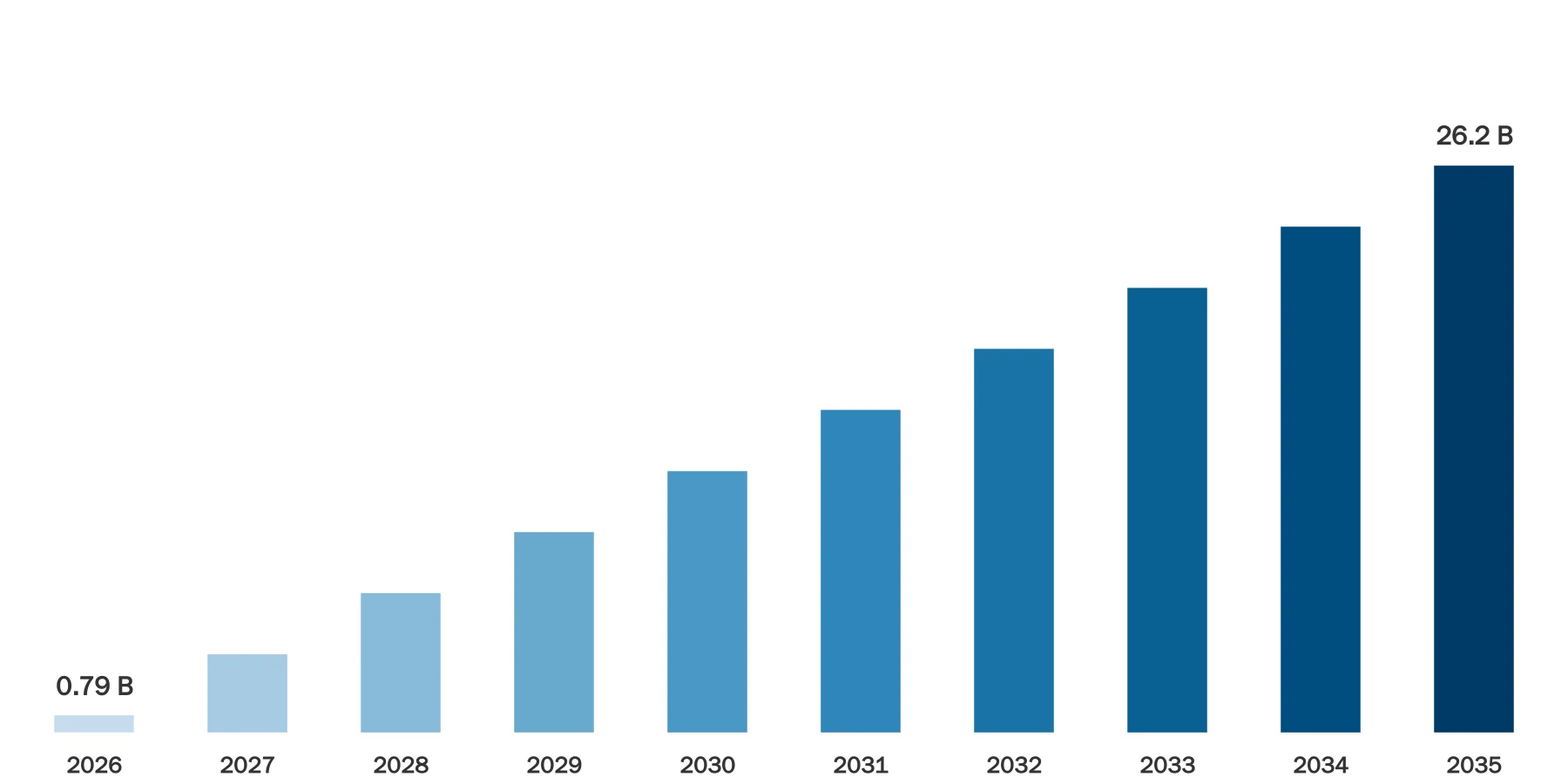
Source: Econ Market Research
Silicon batteries represent a promising technology for storing energy, where silicon is the main material used in the anode. In comparison to conventional lithium-ion batteries, silicon batteries offer several benefits. Silicon possesses a high theoretical capacity, allowing it to store more energy per unit weight or volume. Consequently, this leads to higher energy density and the possibility of longer-lasting batteries. Moreover, silicon is abundant and inexpensive, making it a cost-effective option for large-scale battery production. Nevertheless, the expansion and contraction of silicon during charge and discharge cycles can result in electrode degradation and reduced capacity. To overcome these challenges, researchers are actively investigating various approaches, such as nanostructuring silicon or utilizing silicon composites.
Silicon Battery Market Dynamics
The escalating need for energy storage solutions across diverse sectors, including electric vehicles, renewable energy systems, and portable electronics, is a primary catalyst. Silicon batteries present an appealing option for these applications due to their higher energy density and extended lifespan. The abundance and cost-effectiveness of silicon as a material further contribute to market growth. With plentiful silicon reserves and efficient manufacturing processes, silicon batteries can be produced at a reasonable expense.
Ongoing research and development endeavors aimed at addressing challenges associated with silicon batteries, such as electrode degradation and capacity loss, are fostering innovation and propelling market expansion. As advancements continue to enhance the performance and durability of silicon batteries, their market adoption is anticipated to experience substantial growth in the upcoming years.
Silicon Battery Market Drivers
Increasing Demand for Energy Storage
The rising demand for energy storage solutions in sectors such as electric vehicles, renewable energy systems, and portable electronics is a significant driver for the silicon battery market. These batteries offer higher energy density and longer lifespan, making them an attractive choice for such applications.
Restraints
Electrode Degradation and Capacity Loss
Silicon batteries experience challenges related to electrode degradation and capacity loss due to the expansion and contraction of silicon during charge and discharge cycles. These issues can limit the overall performance and lifespan of silicon batteries.
Opportunities
Market Expansion in Energy Storage Applications
Silicon batteries have significant potential for market expansion in energy storage applications. As advancements are made in improving the performance and durability of silicon batteries, their adoption is expected to increase in electric vehicles, renewable energy systems, and portable electronics.
Segment Overview
By Application
Based on the application, the global silicon battery market is segmented into consumer electronics, automotive, aerospace &, defense, and medical devices. The medical devices segment is dominating the market with the largest revenue share of around 30.4% in 2022. The demand for dependable and durable power sources in the medical device sector is on the rise. This demand stems from the need to power various devices, including implantable devices, wearable monitors, and diagnostic equipment. Silicon batteries have emerged as a viable solution due to their extended lifespan and higher energy density. These batteries effectively provide the required power for such medical devices. Furthermore, advancements in silicon battery technology have successfully addressed safety concerns, making them suitable for use in medical applications. With the increasing emphasis on remote patient monitoring and telehealth services, there has been a notable increase in the adoption of Portable Medical Devices. These devices rely on efficient and long-lasting batteries to function optimally, driving the demand for silicon batteries in the medical industry.
By Capacity
Based on the capacity, the global silicon battery market is segmented into <,3,000 mAh, 3,000-10,000 mAh, and >, 10,000 mAh. The <,3,000 mAh segment is dominating the market with the largest revenue share of around 45.8% in 2022. The battery capacity range of less than 3,000 mAh finds widespread usage in portable electronic devices like smartphones, tablets, and wearables. As the demand for these devices continues to grow worldwide, there is a significant requirement for high-performance batteries that provide extended battery life and faster charging capabilities. In this context, silicon batteries prove to be well-suited due to their higher energy density compared to conventional lithium-ion batteries. They can meet the increasing demand for longer-lasting power and quicker charging times. Furthermore, advancements in silicon battery technology have addressed some of the challenges associated with smaller form factor batteries, including issues like electrode degradation and capacity loss.
By Component
Based on the component, the global silicon battery market is segmented into cathode, anode, electrolyte, and others. The anode segment is dominating the market with the largest revenue share of around 35.2% in 2022. Silicon has emerged as a preferred option for battery manufacturers due to its superior energy density and increased storage capacity in comparison to conventional materials. The demand for batteries with extended lifespan and exceptional performance, particularly in electric vehicles and portable electronics, has significantly bolstered the growth of the anode segment. Furthermore, continuous research and development endeavors to enhance silicon anode technology have played a crucial role in establishing its market dominance.
By Type
Based on type, the global silicon battery market is segmented into cells and battery packs. The battery pack segment is anticipated to grow at a higher CAGR of 30.5% during the forecast period. The global surge in Electric Vehicle (EV) adoption is fueling the need for high-capacity battery packs that can effectively power these vehicles. Furthermore, the increasing implementation of renewable energy systems, including solar and wind, necessitates resilient and dependable energy storage solutions, often fulfilled by battery packs. Moreover, the progress made in silicon battery technology and manufacturing processes is facilitating the creation of battery pack solutions that are both more efficient and cost-effective.
Silicon Battery Market Overview by Region
By Region, the global silicon battery market has been divided into North America, Europe, Asia-Pacific, and the Rest of the World. Asia-Pacific held the largest share, of around 42.6%, of the global market in 2022. The Asia-Pacific region has experienced rapid economic growth and industrial development, resulting in a substantial increase in energy consumption. This has created a strong demand for efficient energy storage solutions. Moreover, the region is home to some of the largest electric vehicle markets globally, including China, Japan, and South Korea, which intensifies the need for high-performance batteries. Additionally, governments in the Asia-Pacific region have implemented favorable policies and incentives to encourage the adoption of renewable energy sources. This has created a conducive environment for the growth of the silicon battery market.
Silicon Battery Market Competitive Landscape
In the global silicon battery market, a small number of prominent players hold significant market dominance and have established a strong regional presence. These key participants are committed to ongoing research and development initiatives. Additionally, they actively engage in strategic growth endeavors such as product development, product launches, joint ventures, and partnerships. By pursuing these strategies, these companies aim to strengthen their market position and expand their customer base to capture a substantial share of the market.
Key Players
Sila Nanotechnologies (USA)
Group14 Technologies (USA)
Amprius Technologies (USA)
Enovix Corporation (USA)
NanoGraf Corporation (USA)
Enevate Corporation (USA)
Nexeon Limited (UK)
Panasonic Energy (Japan)
Samsung SDI (South Korea)
LG Energy Solution (South Korea)
CATL (China)
BTR New Material Group (China)
OneD Battery Sciences (USA)
E-magy (Netherlands)
StoreDot (Israel)
SK On (South Korea)
Gotion High-tech (China)
LeydenJar Technologies (Netherlands)
NEO Battery Materials (Canada)
Sicona Battery Technologies (Australia)
Silicon Battery Market Recent Developments
In January 2023, Nexeon Limited has recently formed partnerships with famous automobile manufacturer Bayerische Motoren Werke AG (Germany) and Solid State Battery maker Ilika PLC (UK). Nexeon will deliver its NSP-2 material as part of these collaborations to aid in the development of solid-state batteries especially tailored for electric vehicles (EVs). The NSP-2 material will be used in the solid-state battery cells anode.
Silicon Battery Market Report Scope & Segmentation
| Attributes | Details |
|---|---|
Market Size (Current) | US$ 0.79 Billion in 2026 |
Market Size (Forecast) | US$ 26.2 Billion in 2035 |
Growth Rate | CAGR of 47.53% from 2026 to 2035 |
Forecast Period | 2026 – 2035 |
Base Year | 2025 |
Historical Data Available | Yes |
Regional Scope | Global |
Segments Covered | By Component
By Capacity
By Application
|
Frequently Asked Questions
Common questions about this report
The study period covers historical insights and forecast projections for the period 2026-2035.
About the Author
Market research expert with years of industry experience

Dipali Bhingare serves as the Market Research Director at Econ Market Research. With a focus on translating complex global economic shifts into actionable business intelligence, she oversees the strategic direction of comprehensive market studies. Her work empowers organizations to navigate volatile industries through data-driven forecasting and deep-dive competitive analysis.
Related Reports
Explore more market insights from the same category