Electric Vehicle Market Overview
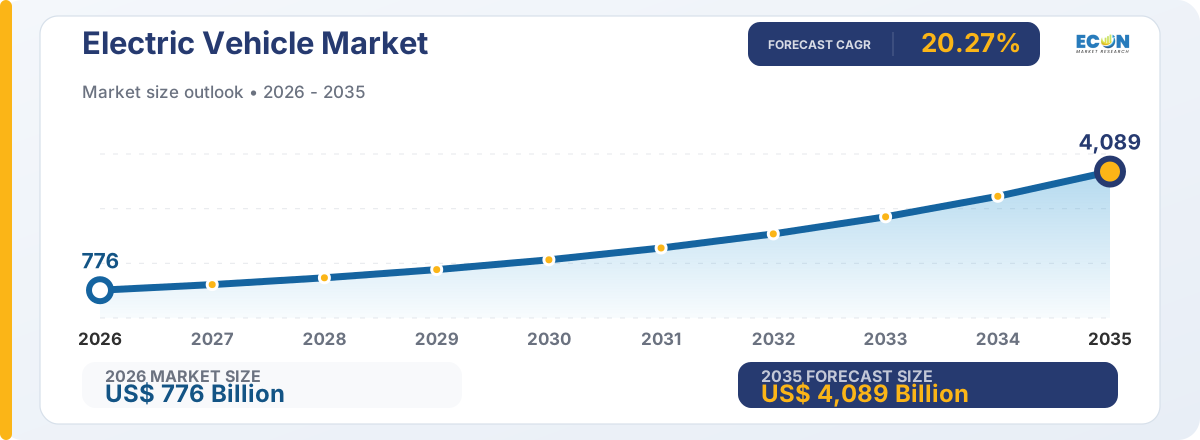
As per Econ Market Research analysis, the Global Electric Vehicle Market accounted for US$ 776 Billion in 2026 and is expected to surpass US$ 4089 Billion by 2035, witnessing a CAGR of 20.27% throughout 2026–2035. The analysis is based on 2025 as the base year.
Electric vehicles (EVs) Market are self-propelled automobiles that are used to move cargo and people from one location to another. These include plug-in hybrid electric cars (PHEVs), hybrid electric vehicles (HEVs), and battery electric vehicles (BEVs) (PHEVs). They are powered by batteries that store energy and are recharged by self-charging components like turbochargers and regenerative braking systems, which can transform kinetic energy into electrical energy. In addition to this, EVs are more cost-effective to operate than conventional vehicles and do not produce exhaust emissions. As a result, they are spreading like wildfire over the world.
Market Growth
Since COVID-19 impacted practically every other industry in the market, its effects on the market for electric vehicles were unavoidable. However, the global adoption rate of mild-hybrid electric vehicles is rapidly increasing year over year, which is driving significant growth in the electric vehicle (EV) industry. For instance, despite the pandemic, sales of electric vehicles increased dramatically in China and Europe, providing evidence of a dynamic market during the projection period. Long-term drivers of the use of electric vehicles market are anticipated to include factors like rising gasoline prices and government campaigns to raise public awareness of EVs in various regions.
Due to a well-established supply chain for batteries and traction motors, nations like China continue to dominate the passenger vehicle and urban bus markets while infrastructure for charging stations is expanded. The market for electric vehicles is expanding as a result of rising consumer demand for fuel-efficient, high-performance, and low-emission automobiles, stricter rules and regulations governing vehicle emissions, falling battery prices, and rising fuel prices.
Market Dynamics
Market Drivers
One of the main factors favoring the market is the combination of quick urbanization, a booming automotive sector, and changing consumer preferences for hybrid and electric vehicles (H/EVs). Additionally, the demand for EVs is being fueled by consumers, increased concern for environmental sustainability and their awareness of the negative effects that greenhouse gas (GHG) emissions have on the environment. Along with this, the introduction of supportive government measures promoting sustainable development is boosting market expansion. For instance, a variety of advantages offered by the government, including as tax exemptions, subsidies, affordable purchase prices, and free charging stations, are raising their overall adoption rates. The market is growing as a result of numerous developments in battery technology and the use of cutting-edge technologies like ADAS, AI, IoT, and others. Major companies are making significant investments to provide their goods with the most modern features, boost OEM competitiveness, and support market expansion. Many countries are trying to adopt electric mobility, but as more cars hit the market, charging infrastructures continue to be a key problem.
Market Restraints
Refueling stations, on the other hand, are still in the development stage. Electric car long-distance travels may be hampered by a lack of refueling facilities. Speed and range of an electric car are both limited. The majority of electric vehicles have a range of 50 to 100 miles before needing a recharge, which takes four to six hours. Over the projected period, these issues are anticipated to hamper the worldwide electric vehicle market',s expansion.
Market Opportunities
The market for electric vehicles is expanding as a result of rising consumer demand for fuel-efficient, high-performance, and low-emission automobiles, stricter rules and regulations governing vehicle emissions, falling battery prices, and rising fuel prices.
Governments all across the world are getting more and more interested in electric mobility. Government policies to phase out fossil fuel-powered vehicles, government investments to upgrade public EV Charging Infrastructure, and programs to promote the adoption of EVs through subsidies and tax breaks are all expected to have an impact on market growth. Governments are making investments in infrastructure for charging, either directly via the construction of public charging stations or indirectly through the funding of private charging stations at residences and businesses.
Competitive Market Players
Some of the main manufacturers of electric vehicles are :
Ampere Vehicles
Benling India Energy and Technology Pvt Ltd
BMW AG
BYD Company Limited
Chevrolet Motor Company
Daimler AG
Energica Motor Company S.p.A.
Ford Motor Company
General Motors
Hero Electric
Hyundai Motor Company
Karma Automotive
Kia Corporation
Lucid Group, Inc.
Mahindra Electric Mobility Limited
NIO
Nissan Motors Co., Ltd.
Rivain
Tata Motors
Tesla Inc.
Toyota Motor Corporation
Volkswagen AG
WM Motor
Regional Analysis
The Chinese government is promoting the use of electric automobiles. The nation already has plans in place to phase out diesel fuel, which powers the current generation of trucks and other commercial vehicles. By 2040, the nation intends to outlaw all gasoline and diesel-powered automobiles. China is a significant market participant in the electric bus industry, and it is projected that it will maintain its leadership throughout the projection period. More than 420,000 electric buses, or over 99% of the global fleet, were in use in China as of May 2020. The significant proportion of China in the global market for electric buses is mostly due to the country',s intense focus on electrifying public transportation, which is accompanied by widespread subsidies and national legislation.
Recent Development
A company for energy technology that sells new energy vehicle (NEV) battery swapping facilities was established by SAIC Motor in May 2022. The new firm, known as Shanghai Jieneng YidianEnergy Technology Co. Ltd, was founded with a registered capital of CNY 30 million, according to the enterprise information inquiry platform Tianyancha (USD 4.497 million). It is a fully owned subsidiary of SAIC Motor Investment Management Co. Ltd, a company that SAIC Motor controls in its whole.
Stellantis and Qualcomm Technologies Inc. established a multi-year technology partnership in April 2022. Starting in 2024, millions of vehicles from Stellantis', 14 renowned automotive brands will be equipped with the most cutting-edge Snapdragon®, Digital Chassis technology.
Renault Group, Valeo, and Siemens Automobile declared in February 2022 that they had signed a Memorandum of Understanding to establish a strategic alliance for the design, joint development, and production in France of a new generation of automotive electric motors without the usage of rare earth. In order to create an electric drivetrain system that is unmatched globally and provides greater power on less energy without the usage of rare earth, the three partners will pool their knowledge and widely known experience.
Tesla Inc. disclosed intentions to increase part manufacturing at its Shanghai factory in February 2022 to satisfy the rising export demand.
Electric Vehicle Market Report Scope & Segmentation
| Attributes | Details |
|---|---|
| Market Size (Current)Current market valuation | US$ 776 Billion in 2026 |
| Market Size (Forecast)Projected market valuation | US$ 4089 Billion in 2035 |
| Growth RateCompound Annual Growth Rate | CAGR of 20.27% from 2026 to 2035 |
| Forecast PeriodAnalysis timeline | 2026 – 2035 |
| Base YearReference year for analysis | 2025 |
| Historical Data AvailablePast market data availability | Yes |
| Regional ScopeGeographical coverage | Global |
| Segments CoveredMarket segments analyzed | By Component
By Charging Type
By Propulsion Type
By Vehicle Type
|
Leading companies covered in this report
- Key players in the Electric Vehicle Market include Tesla
- BYD
- Volkswagen Group
- Toyota Motor Corporation
- Hyundai Motor Company
- General Motors
- Ford Motor Company
- BMW Group
- Mercedes-Benz Group
- and NIO
Frequently Asked Questions
Common questions about this report
The study period covers historical insights and forecast projections for the period 2026-2035.
About the Author
Market research expert with years of industry experience

Dipali Bhingare serves as the Market Research Director at Econ Market Research. With a focus on translating complex global economic shifts into actionable business intelligence, she oversees the strategic direction of comprehensive market studies. Her work empowers organizations to navigate volatile industries through data-driven forecasting and deep-dive competitive analysis.