Hydraulic Cylinders Market Overview
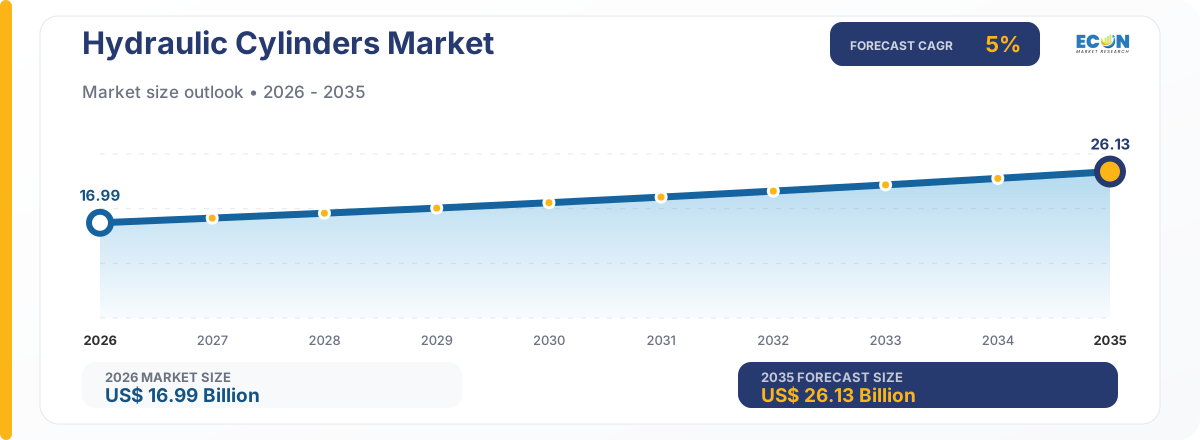
As per Econ Market Research analysis, the Global Hydraulic Cylinders Market size amounted to US$ 16.99 Billion in 2026 and is anticipated to grow to US$ 26.13 Billion by 2035, recording a CAGR of 5% during 2026–2035. The base year taken for analysis is 2025.
Hydraulic Cylinders offer the force required in moving heavy loads up and pushing or pulling them. This kind of machinery and equipment is very vital in the construction, agricultural, manufacturing, and transport sectors. They have powerful and effective movement. The hydraulic cylinders have experienced steady growth during the past few years, this being due to a rise in demand for automation and mechanization of most businesses.
Particularly, this sector was driven by the construction segment as many projects required very robust machinery that could facilitate heavy lifting and movement works. Infrastructure growth, coupled with the high usage of hydraulic systems by mobile equipment such as excavators and cranes, also contributed to market growth. Technological advances promote hydraulic cylinders to be more efficient and durable. Industries will focus on improving productivity and reducing costs, and the hydraulic cylinders market will continue to grow. Opportunities are open for innovation and expansion into emerging markets.
Dynamic Insights
One of the primary reasons is the growing need for automation in all sectors, including construction, agriculture, and manufacturing. With an increasing desire to optimize their workflow and productivity, demand for hydraulic systems grew and consequently hydraulic cylinders. The growth in the market globally is mainly attributed to infrastructure projects as many of these projects consist of a huge percentage of heavy machinery for lifting and transferring materials, most of which are installed with hydraulic cylinders. Another significant dynamic is the technological advancement in hydraulic cylinder design and manufacturing.
Advances such as lightweight materials, improved sealing technologies, and enhanced durability make hydraulic cylinders more efficient and reliable. These advances increase the life of the products while reducing maintenance costs, thereby attracting more industries to hydraulic solutions. Still, market-related challenges remain. Raw material prices fluctuate, and alternative technologies compete in the market. Producers need to be responsive to such market challenges as they continue working on research and development to satisfy changing customer needs.
Drivers Insights
Growing Automation in Industries
Booming trend in automation of various industries such as manufacturing, construction, and agriculture boosts hydraulic cylinders market. The companies are always on the look-out to enhance efficiency and productivity. This is followed by increased adoption of more high-end machinery with hydraulic systems.
In these automation systems, the hydraulic cylinders play a vital role in providing force to work through equipment like forklifts, excavators, and automated assembly lines. This increased focus on automation not only makes the process more streamlined but also safer. Machines can do things that would be hazardous for workers. As more industries make automation part of the process, demand for hydraulic cylinders is likely to climb steadily.
Infrastructure Development
Infrastructure development is another critical driver propelling the hydraulic cylinders market. With increasing investments in public infrastructure projects, including roads, bridges, and buildings, there is a heightened demand for Construction Equipment that utilizes hydraulic cylinders.
The need for heavy machinery, such as cranes and bulldozers, that can efficiently lift and move materials directly correlates with the growth of infrastructure projects. Government initiatives and funding for infrastructure improvements in various regions also contribute to this trend. As urbanization continues and countries focus on enhancing their infrastructure, the hydraulic cylinders market will benefit from the sustained demand for reliable and robust machinery.
Restraints Insights
Fluctuating Raw Material Prices
Volatility in raw material prices was the main constraint for the hydraulic cylinders market. The raw materials used mainly in hydraulic cylinders are steel and aluminum, which are used in the production of hydraulic cylinders. Sudden hikes can affect the production cost. When raw material costs increase, manufacturers face stringent norms while keeping profit margins low, resulting in the final sale to end-users at a higher price. This development may discourage some companies from investing in new hydraulic systems or up-gradation of existing ones. In addition, since supply chains around the world are uncertain due to geopolitical tensions and environmental issues, uncertainty shoots prices up in these chains, thereby further complicating manufacturing planning and budgeting.
Competition from Alternative Technologies
Hydraulic cylinders compete with alternative technologies, which include electric and pneumatic systems. In their pursuit of more energy-efficient solutions, industries have turned to electric actuators and compressed air systems, which are increasingly in use. Such alternatives tend to offer advantages such as low energy consumption, minimal maintenance requirements, and high precision. In the interest of lowering costs, companies are becoming increasingly focused on the total cost of ownership for their machines. These new alternatives may undermine the popularity of hydraulic systems. They must continue to innovate and prove in these heavy-duty applications the advantages that are unique to hydraulic systems, namely power and reliability.
Opportunities Insights
Technological Innovations
The hydraulic cylinders market presents substantial opportunities for growth through technological innovations. Advancements in materials science and engineering are paving the way for the development of lighter, more durable, and efficient hydraulic cylinders. Innovations such as IoT integration and smart sensors can enhance performance by allowing for real-time monitoring and predictive maintenance, reducing downtime and increasing operational efficiency. Companies that invest in research and development to create advanced hydraulic solutions will be well-positioned to capture market share. The ability to offer customized and highly efficient products can open new markets and client segments, particularly in industries focused on sustainability and energy efficiency.
Segment Analysis
By Product Type
By product type, the hydraulic cylinders market can be diversified into five major categories: double-acting hydraulic cylinders, single-acting hydraulic cylinders, telescopic hydraulic cylinders, specialty hydraulic cylinders, and miniature hydraulic cylinders. Double-acting hydraulic cylinders can deploy force both in extension and in retraction and hence are the most widely used as they can be uniformly used in a number of applications requiring consistent motion.
Hydraulic cylinders single-acting depend on hydraulic pressure and are generally suited to the moving action in one direction of forces and use springs or gravity for retracting. They make them suitable for lighter applications. Hydraulic cylinders have a telescopic design, they work because, in their true sense, they are the cylinders that nest inside each other and have the capability to extend while maintaining a compact size. Most of them work in dump trucks and cranes.
Specialty hydraulic cylinders are specific to special applications that typically come in a specialized design for certain industries such as marine or aerospace. For general solutions proven to be insufficient, specialty hydraulic cylinders fit the bill. Miniature hydraulic cylinders are small in size and appropriate for application where space is not plentiful such as with robots or small machines.
By Application
By application-wise, there are various core areas that hydraulic cylinders embrace in usage, including construction, agriculture, material handling, manufacturing, marine, automotive, aerospace, oil and gas, and mining. Hydraulic cylinders are among the leading sectors due to heavy machinery in the construction sector, an area where the heavy machinery is deemed to consist of heavy machines such as excavators and bulldozers, enacting the operation tasks with lifting and moving requirements.
Hydraulic systems are also found in the agricultural sector of machinery such as tractors and harvesters, hence enhancing productivity in farm operations. Hydraulic cylinders play a considerable role in material handling in the lifting and moving of products within warehouses and logistics. Manufacturing industries have hydraulic cylinders mounted on the production lines and automation systems to improve production output. Hydraulic cylinders are majorly used in the marine industry for steering mechanisms and cargo handling systems.
Similarly, in the automotive industry, hydraulic cylinders are used in the assembly process and in the braking system of a vehicle. Aerospace also makes use of hydraulic cylinders in aircraft systems due to their safety and performance. In the oil and gas industry, hydraulic cylinders play a crucial role in drilling operations as well as rig equipment, in the mining industry, hydraulic cylinders are predominantly utilized in running heavy machinery in hostile conditions.
Regional Analysis
With mature production industries, along with a robust construction sector, it is North America that takes up the most significant market share. Here, the demand for hydraulic cylinders in construction machinery and equipment is primarily driven by infrastructure investments undertaken by the United States. Additionally, the advanced use of hydraulic technologies in automotive and aerospace sectors further contributes to this growth.
Europe: Important regional players for hydraulic cylinders are Germany, the United Kingdom, and France. The region calls out for innovation and sustainability, which leads to developing high-tech hydraulic systems that are more efficient and less harmful to the environment. Increase in green renewable energy project - wind and solar industries, which is going to open up significant scope for hydraulic cylinders too.
The Asia-Pacific region is likely to grow the most, with rapid industrialization and urbanization and significant investment in infrastructure development. The fastest-growing countries include China and India, which are developing their manufacturing capacity and executing large-scale infrastructure projects that require heavy investment in hydraulic cylinders. Growth is also observed in Latin America and the Middle East due to the rapid growth of construction and mining investments.
Competitive Landscape
Major market players companies like Parker Hannifin Corporation, Bosch Rexroth AG, Eaton Corporation, and SMC Corporation lead the market through their wide product portfolio and superior technological potential. They have invested heavily in terms of research and development for efficient and strong hydraulic cylinders that can match every advanced industrial requirement. This would mean an opportunity for them to cater to specific applications across construction, agriculture, and manufacturing sectors, thereby being capable of providing customized solutions.
The market also includes many regional and local manufacturers who target niche segments and special applications. Competition among them fuels innovation and price policy, as the smaller firms often try to be different by offering more unique goods or, perhaps, cheaper solutions. Many companies are into collaboration and joint ventures along the landscape, exploiting each other',s strength, and widening the geographical scale of their business. In addition, growing demands by clients for sustainability and energy efficiency are forcing many manufacturers to create friendly hydraulic systems that is another stratum of competition since companies are attuning their products according to the market demand.
List of Key Players:
Bosch Rexroth AG
Eaton
Southern Hydraulic Cylinder, Inc.
Charvá,t Group s.r.o
Liebherr
WEBER-HYDRAULIK GMBH
Pacoma GmbH
Yates Industries Inc.
PARKER HANNIFIN CORP
Lehigh Fluid Power, Inc.
Caterpillar
Burnside Autocyl
Texas Hydraulics
SMC Corporation
Hengli hydraulic
Global Hydraulic Cylinders Report Segmentation
Hydraulic Cylinders Market Report Scope & Segmentation
| Attributes | Details |
|---|---|
| Market Size (Current)Current market valuation | US$ 16.99 Billion in 2026 |
| Market Size (Forecast)Projected market valuation | US$ 26.13 Billion in 2035 |
| Growth RateCompound Annual Growth Rate | CAGR of 5% from 2026 to 2035 |
| Forecast PeriodAnalysis timeline | 2026 – 2035 |
| Base YearReference year for analysis | 2025 |
| Historical Data AvailablePast market data availability | Yes |
| Regional ScopeGeographical coverage | Global |
| Segments CoveredMarket segments analyzed | By Function
By Specification
By End-User Industry
|
Frequently Asked Questions
Common questions about this report
The study period covers historical insights and forecast projections for the period 2026-2035.
About the Author
Market research expert with years of industry experience

Dipali Bhingare serves as the Market Research Director at Econ Market Research. With a focus on translating complex global economic shifts into actionable business intelligence, she oversees the strategic direction of comprehensive market studies. Her work empowers organizations to navigate volatile industries through data-driven forecasting and deep-dive competitive analysis.