

Cell Surface Markers Market
Cell Surface Markers Market Size, Share, Trends, Growth, and Industry Analysis, By Product (Flow Cytometer, Hematology Analyzers, Reagents andamp; Kits), By Application (Disease Diagnosis, Research andamp; Drug Discovery), By End-User (Pharmaceutical andamp; Biotechnology Companies, Academic andamp; Research Institutes, Hospitals andamp; Diagnostic Laboratories), Regional Analysis and Forecast Period 2026-2035
Market Overview
As per Econ Market Research analysis, the Global Cell Surface Markers Market accounted for US$ 6.68 Billion in 2026 and is expected to surpass US$ 13.89 Billion by 2035, witnessing a CAGR of 8.46% throughout 2026–2035. The analysis is based on 2025 as the base year.
Cell Surface Markers Market Size 2025-2035 (USD Billion)

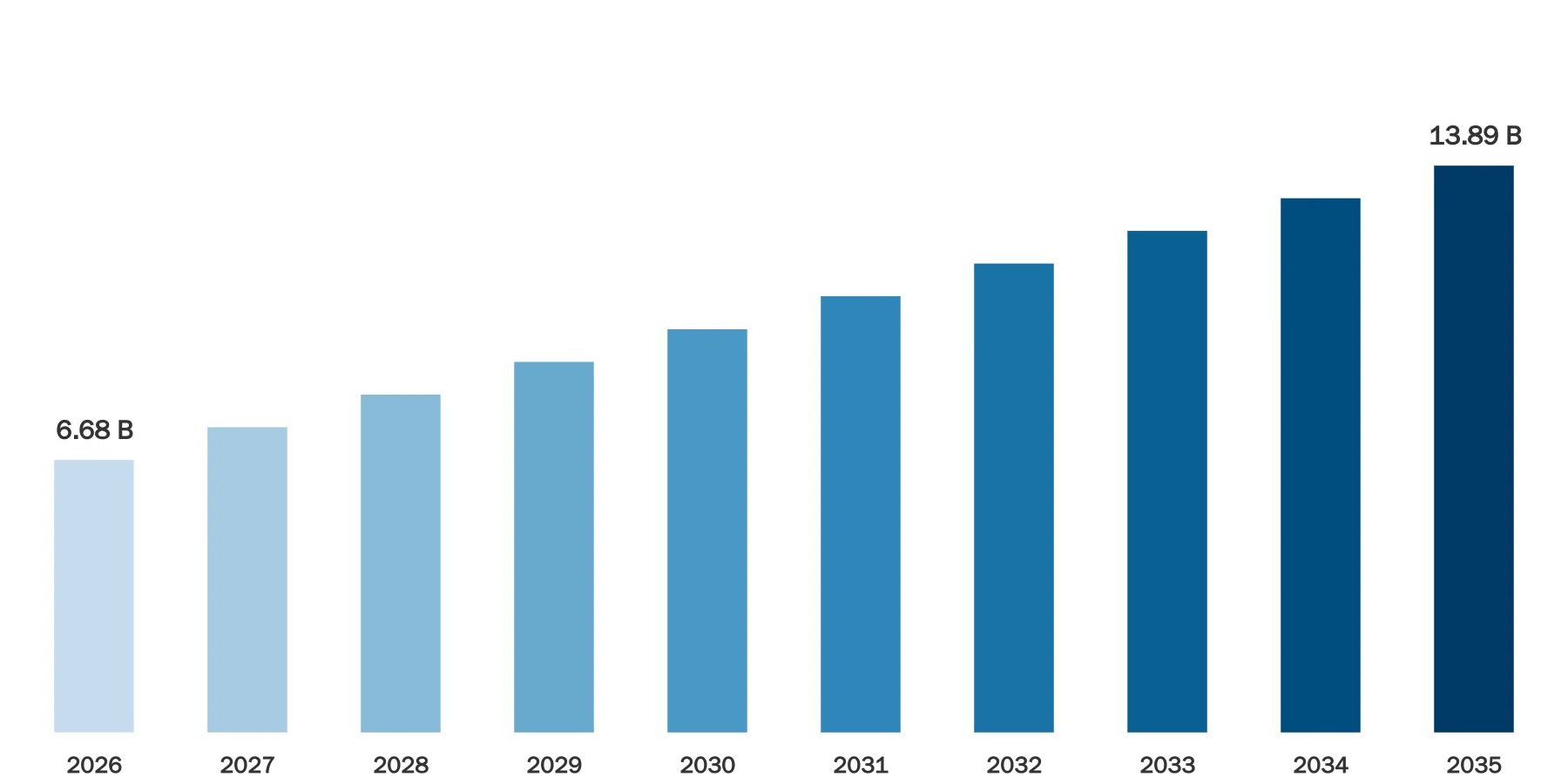
Source: Econ Market Research
Cell surface markers, which are proteins expressed on the surface of cells and are also referred to as antigens or biomarkers, are essential for recognising, separating, and describing various cell types. These markers offer important insights into disease pathology and treatment responses and are useful in immunotherapy, drug development, and diagnostics.
As the demand for personalized medicine and targeted therapies continues to rise, the Global Cell Surface Markers Market is witnessing substantial growth, driven by advancements in technology, increasing research and development activities, and a growing focus on precision medicine. Cell surface markers find applications in diverse fields, including cancer research, infectious diseases, autoimmune disorders, and Regenerative Medicine. The market is characterized by a wide array of products, such as antibodies, Flow Cytometry instruments, and assays, designed for the detection and analysis of specific cell surface markers.
Cell Surface Markers Dynamics
Growth in the market is mostly driven by technological developments in cell analysis methods, especially in flow cytometry and immunohistochemistry. These developments increase the usefulness of cell surface markers in clinical and research settings by facilitating their more precise and effective detection. The need for cell surface markers is primarily driven by the rising incidence of chronic diseases, including cancer and autoimmune disorders. These markers are essential for disease diagnosis, prognosis, and therapeutic monitoring.
Moreover, the rise in funding for research and development activities, both from public and private sectors, propels market expansion. The market is witnessing a surge in collaborations and partnerships among key players, fostering the development of novel products and technologies. Additionally, the growing emphasis on personalized medicine and targeted therapies amplifies the importance of cell surface markers in tailoring treatment approaches based on individual patient characteristics.
However, challenges such as the high cost associated with research and development, stringent regulatory requirements, and ethical considerations in the use of certain markers may impede market growth. Economic uncertainties and budget constraints in the healthcare sector could also affect market dynamics. Despite these challenges, the Global Cell Surface Markers Market is poised for sustained growth, fuelled by the relentless pursuit of scientific innovation, expanding applications, and the increasing need for precise and personalized healthcare solutions.
Cell Surface Markers Drivers
Technological Advancements
The Global Cell Surface Markers Market is propelled by continuous technological advancements in cell analysis tools, particularly in flow cytometry, immunohistochemistry, and molecular biology techniques. Innovations such as high-content screening and multiplex assays contribute to enhanced sensitivity and specificity in detecting cell surface markers. These technological improvements not only facilitate more accurate identification and characterization of cells but also enable the development of novel markers for emerging therapeutic targets. As the industry evolves, these advancements are anticipated to drive market growth by expanding the capabilities of cell surface marker detection in various research and clinical applications.
Increasing Prevalence of Chronic Diseases
The market for cell surface markers is significantly driven by the rising incidence of chronic diseases, such as cancer, autoimmune diseases, and infectious diseases, throughout the world. Cell surface markers are essential for the identification, assessment, and tracking of these illnesses. The increasing prevalence of these illnesses, along with the need for individualised and focused treatments, is driving the use of cell surface markers to accurately identify and categorise cells implicated in pathological processes. The demand for cell surface markers is anticipated to be driven by the market',s anticipated benefits from the ongoing expansion of research and diagnostic efforts addressing the complexity of chronic diseases.
Restraints:
High Research and Development Costs
The Cell Surface Markers Market faces the challenge of high research and development costs associated with the discovery and validation of new markers, as well as the development of advanced detection technologies. The complex nature of cell surface marker research, coupled with the need for extensive clinical validation, poses financial challenges for both industry players and research institutions. These high costs can limit the pace of innovation and product development, hindering market growth and accessibility.
Stringent Regulatory Requirements
The market is constrained by stringent regulatory requirements governing the approval and commercialization of cell surface marker-based products. Compliance with regulatory standards, including rigorous testing, validation, and ethical considerations, adds complexity and time to the product development lifecycle. Navigating the regulatory landscape is a significant challenge for companies in this market, impacting time-to-market for new products and potentially limiting the range of available offerings.
Opportunities:
Expansion of Personalized Medicine
The growing trend towards personalized medicine presents a significant opportunity for the Cell Surface Markers Market. Cell surface markers play a crucial role in tailoring treatment strategies based on individual patient characteristics. As the healthcare industry increasingly shifts towards precision medicine, the demand for specific and reliable cell surface markers for patient stratification and targeted therapies is expected to expand, opening new avenues for market growth.
Segment Overview
By Product Type
The market encompasses several key product types, including Flow Cytometers, Hematology Analyzers, and Reagents/Kits. Flow cytometers are instrumental in quantifying and analysing cells based on their individual characteristics, allowing for the simultaneous measurement of multiple parameters. This technology is widely used for the detection and characterization of cell surface markers, offering high-throughput capabilities and precision.
Hematology analyzers, on the other hand, are specialized instruments designed to analyse blood components, including cells expressing specific surface markers. These analyzers aid in the diagnosis of various hematological disorders and contribute to the understanding of cell populations involved in diseases. Reagents and kits constitute a crucial segment, providing the necessary tools for the detection, isolation, and characterization of cell surface markers. These reagents play a pivotal role in research, diagnostics, and drug discovery, facilitating the identification and analysis of specific cell types based on their surface antigens.
By Application
In terms of application, the market is categorized into Disease Diagnosis and Identification, as well as Research/Drug Discovery. In Disease Diagnosis and Identification, cell surface markers are utilized as biomarkers for various conditions, allowing for the identification and classification of disease-related cells. This application is critical in clinical settings for diagnosing and monitoring diseases such as cancer, autoimmune disorders, and infectious diseases.
The Research/Drug Discovery segment involves the use of cell surface markers in laboratory research and drug development processes. Researchers leverage these markers to characterize cells, understand disease mechanisms, and identify potential therapeutic targets. The application extends to the development of targeted therapies, where specific cell surface markers serve as key indicators for drug design and treatment strategies.
Cell Surface Markers Overview by Region
North America stands as a prominent market, driven by a robust healthcare infrastructure, extensive research and development activities, and a high prevalence of chronic diseases. The region',s emphasis on technological innovation and the adoption of advanced diagnostic tools contribute to the significant market share. In Europe, the Cell Surface Markers Market is characterized by a strong presence of key players, a well-established healthcare system, and an increasing focus on personalized medicine.
The region witnesses substantial investments in research initiatives, fostering advancements in cell surface marker technologies. Additionally, Asia-Pacific emerges as a rapidly growing market, propelled by rising healthcare expenditure, a burgeoning patient population, and increasing awareness of advanced diagnostic and therapeutic approaches. Countries like China and India are key contributors to market expansion, driven by their large and diverse patient pools and growing investments in healthcare infrastructure.
Cell Surface Markers Market Competitive Landscape
Leading companies such as Becton, Dickinson and Company, Thermo Fisher Scientific Inc., and Beckman Coulter, Inc. dominate the market with their extensive product portfolios and global market presence. These players consistently invest in research and development activities to introduce advanced technologies and expand their product offerings, ensuring a competitive edge in the rapidly evolving landscape of cell surface marker analysis.
In addition to established giants, emerging players contribute to the competitive dynamics by introducing innovative solutions and catering to niche segments within the market. The pursuit of novel biomarkers and the development of cutting-edge detection technologies are key strategies employed by both established and emerging players to gain a competitive advantage. Collaborations and partnerships with academic institutions, research organizations, and pharmaceutical companies are common, facilitating knowledge exchange and strengthening product pipelines.
Cell Surface Markers Market Leading Companies:
Abbott Laboratories
Danaher Corporation (Beckman Coulter Inc.)
Becton, Dickinson and Company
Bio-Rad Laboratories Inc.
Thermo Fisher Scientific Inc.
Merck Millipore
Abcam
Cell Surface Markers Recent Developments
Jan 2023, Diatron, a European laboratory equipment supplier, unveiled Aquarius 3, its latest in vitro diagnostic (IVD) hematology analyzer designed for Complete Blood Count testing. Marking the inception of a new hematology analyzer family, Aquarius 3 builds upon the robust counting technology of Diatron',s flagship analyzer, the Abacus 380. However, it introduces new features aimed at enhancing operability and connectivity, enabling adaptability to diverse environments for the benefit of customers and users alike.
May 2023, Sysmex Corporation, a healthcare company based in Japan, launched its Clinical Flow Cytometry System. This comprehensive system integrates the Flow Cytometer XF-1600, Sample Preparation System PS-10, antibody reagents, and other related products. Offering a fully automated testing process, from sample preparation to the reporting of measurement results in clinical Ferric carboxymaltose (FCM) testing, the system enhances efficiency and standardization in laboratories. This automation reduces the workload on clinical technologists, enabling them to concentrate on the more technically demanding analysis of testing results.
Global Cell Surface Markers Report Segmentation
Cell Surface Markers Market Report Scope & Segmentation
| Attributes | Details |
|---|---|
Market Size (Current) | US$ 6.68 Billion in 2026 |
Market Size (Forecast) | US$ 13.89 Billion in 2035 |
Growth Rate | CAGR of 8.46% from 2026 to 2035 |
Forecast Period | 2026 – 2035 |
Base Year | 2025 |
Historical Data Available | Yes |
Regional Scope | Global |
Segments Covered | By Product
By Application
By End-User
|
Frequently Asked Questions
Common questions about this report
The study period covers historical insights and forecast projections for the period 2026-2035.
About the Author
Market research expert with years of industry experience

Dipali Bhingare serves as the Market Research Director at Econ Market Research. With a focus on translating complex global economic shifts into actionable business intelligence, she oversees the strategic direction of comprehensive market studies. Her work empowers organizations to navigate volatile industries through data-driven forecasting and deep-dive competitive analysis.
Related Reports
Explore more market insights from the same category