

Flow Cytometry Market
Flow Cytometry Market Size, Share, Trends, Growth, and Industry Analysis, By Technology (Cell-based Flow Cytometry, Bead-based Flow Cytometry), By Product (Instruments, Reagents and Consumables, Software, Services), By Application (Research Applications, Clinical Applications, Industrial Applications), By End-User (Hospitals and Clinical Labs, Academic and Research Institutes, Pharmaceutical and Biotechnology Companies), Regional Analysis and Forecast Period 2026-2035
Flow Cytometry Market Overview
As per Econ Market Research analysis, the Global Flow Cytometry Market was estimated at US$ 5.33 Billion in 2026 and is forecast to attain US$ 9.8 Billion by 2035, expanding at a CAGR of 7% between 2026 and 2035. The base year for the study is 2025.
Flow Cytometry Market Size 2025-2035 (USD Billion)

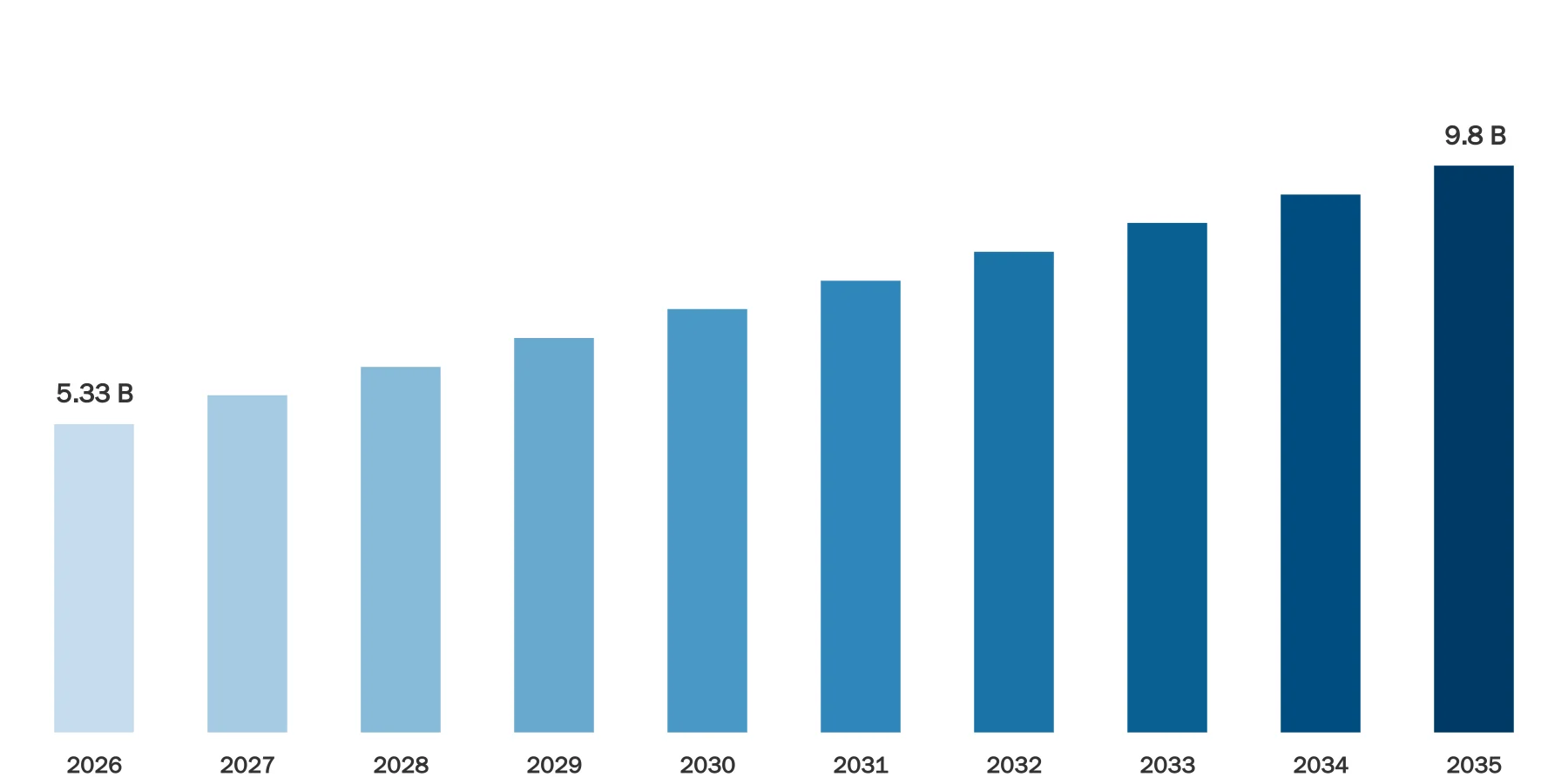
Source: Econ Market Research
Flow cytometry is a powerful technique used in biology and medicine to analyze and quantify various characteristics of cells and particles. It is widely used in research, diagnostics, and clinical applications to study the physical and chemical properties of individual cells within a heterogeneous population. The basic principle of flow cytometry involves passing cells or particles through a flow cytometer, which is a specialized instrument equipped with lasers, detectors, and fluidics systems. As the cells flow in a single file through the instrument, they are exposed to laser light.
The light interacts with the cells, causing various components within the cells to emit signals. These signals are then collected by detectors and converted into measurable data. This technology employs lasers and detectors to analyze cell size, complexity, and surface markers, utilizing fluorescently labeled antibodies to distinguish cell types and functional characteristics. Over the years, the flow cytometry market has experienced substantial growth, finding applications in diverse fields including immunology, cancer research, and diagnostics.
Its ability to analyze thousands of cells per second and provide multi-parameter data has led to breakthroughs in understanding cellular functions and diseases. The market has been driven by technological advancements, such as increased laser options, improved detection capabilities, and higher throughput systems. Furthermore, its integration with automation and Artificial Intelligence has streamlined data analysis. The global flow cytometry market continues to expand due to its indispensable role in basic research, clinical diagnostics, and pharmaceutical development, making it a cornerstone technology in modern life sciences.
Flow Cytometry Market Dynamics
The flow cytometry market is characterized by dynamic and evolving trends that impact its growth and adoption. Technological advancements, including improved laser capabilities, higher resolution detectors, and enhanced data analysis software, continue to drive market expansion. These innovations enable more accurate and complex cell analysis, appealing to researchers and clinicians seeking detailed insights into cellular characteristics.
The increasing demand for personalized medicine and precision diagnostics has also fueled the growth of flow cytometry. Its ability to identify specific cell subpopulations and biomarkers has proven invaluable in cancer research, immunology, and infectious diseases. Moreover, the integration of flow cytometry with other technologies, such as genomics and proteomics, has created synergies that enhance overall research capabilities. Automation and high-throughput systems are reshaping the market, enabling the analysis of larger sample sizes and improving efficiency. Additionally, the application of artificial intelligence and machine learning in data interpretation is becoming more prevalent, aiding in the extraction of meaningful insights from complex datasets.
Challenges include the high cost of instruments and reagents, which can limit access in some settings. Standardization and quality control also remain important issues to ensure reliable and reproducible results. As the market continues to adapt to these factors, its growth trajectory remains positive, driven by the expanding needs of life sciences research, clinical diagnostics, and drug development industries.
Flow Cytometry Market Drivers
Expanding Applications in Research and Clinical Diagnostics
Flow cytometry',s versatility in analyzing complex cellular characteristics has made it an essential tool across a wide range of scientific disciplines. In research, flow cytometry enables researchers to explore into the intricacies of cell biology. Its ability to identify specific cell populations, quantify surface markers, and analyze intracellular molecules provides valuable insights into disease mechanisms, immune responses, and cellular interactions. This has been particularly impactful in fields like immunology, where flow cytometry helps characterize immune cell subtypes and monitor their responses to various stimuli.
Additionally, in cancer research, flow cytometry aids in identifying cancer stem cells and assessing drug efficacy. In clinical diagnostics, flow cytometry has revolutionized disease diagnosis and patient management. Its precise identification and quantification of immune cells have enhanced our understanding of diseases like HIV/AIDS, leukemia, and autoimmune disorders. By analyzing immune cell subsets and their functional states, clinicians can make informed decisions about treatment strategies and disease progression. Moreover, flow cytometry',s ability to detect minimal residual disease has significantly improved cancer patient prognosis and therapeutic monitoring.
Rise of Personalized Medicine and Drug Development
The rise of personalized medicine and drug development has significantly propelled the demand for flow cytometry, positioning it as a crucial tool in advancing targeted therapies and efficient drug discovery processes. Flow cytometry',s unique capability to analyze cell heterogeneity and identify specific cell populations has revolutionized how pharmaceutical companies approach drug development.
In drug discovery, flow cytometry plays a pivotal role in early-stage research. It allows researchers to screen and identify potential drug candidates by assessing their effects on various cellular parameters, such as cell viability, proliferation, and apoptosis. The technologies ability to provide rapid, multiparametric data aids in the selection of compounds with the desired pharmacological effects.
Restraints
High Costs and Complex Instrumentation
The initial investment required to acquire flow cytometry instruments can be substantial, encompassing not only the cost of the instrument itself but also additional expenses like specialized software, analysis tools, and training for operators. This financial barrier limits access to advanced cell analysis technology for smaller research institutions, laboratories, and clinics with limited budgets. Moreover, the ongoing operational costs of flow cytometry are notable. Reagents, antibodies, and fluorescent dyes used for cell staining and analysis can be expensive. Regular maintenance and servicing are essential to ensure the proper functioning of the intricate instrument components, including lasers and detectors, adding to the overall operational costs. The complex nature of flow cytometry instrumentation can also be a challenge.
Challenges in Standardization and Quality Control
Achieving consistent and reproducible results across different laboratories, instruments, and experiments is a complex attempt. Variations in instrument calibration and setup can lead to discrepancies in data interpretation. Flow cytometry instruments require regular calibration to ensure accurate measurements, but differences in calibration procedures and equipment calibration cycles can introduce variability in results. This lack of standardized calibration protocols can hinder result in comparability and reliability. The quality and consistency of reagents, including fluorescent antibodies and staining kits, impact the accuracy of flow cytometry analysis. Variability in reagent batches or differences in storage conditions can affect staining efficiency and signal intensity, leading to inconsistent results between experiments.
Opportunities
Rapid Growth in Single-Cell Analysis
The rapid growth in single-cell analysis represents a significant opportunity for the global flow cytometry market. Single-cell analysis techniques, such as single-cell RNA sequencing (scRNA-seq), have revolutionized our understanding of cellular heterogeneity by enabling the characterization of gene expression profiles at the individual cell level. However, scRNA-seq primarily focuses on gene expression, leaving a gap in our understanding of protein expression and functional responses.
Flow cytometry has the potential to bridge this gap by providing real-time analysis of protein expression and functional attributes in single cells. Integrating flow cytometry with single-cell omics technologies offers a comprehensive approach to studying cell behavior. Researchers can simultaneously analyze protein markers, intracellular signaling molecules, and functional responses in individual cells.
Advancements in High-Dimensional Analysis
With the increasing demand for deeper insights into complex biological systems, there',s an opportunity for flow cytometry to evolve into a high-dimensional analysis tool. Incorporating more parameters in a single experiment, such as measuring multiple biomarkers simultaneously, can enhance the granularity of cell characterization. Innovations like spectral flow cytometry and mass cytometry enable researchers to analyze a broader range of cellular features, unlocking deeper insights into cellular behavior and interactions.
Segment Overview
By Product
Based on Product, the global flow cytometry market is divided into flow cytometry instruments, reagents and consumables, software, accessories, and services. The reagents and consumables category dominates the market with the largest revenue share. agents and consumables play a crucial role in enabling the functioning of flow cytometry instruments and facilitating accurate cell analysis. This category encompasses a range of components necessary for sample preparation, staining, and data acquisition, making it an essential part of the workflow.
Reagents include fluorescently labeled antibodies, viability dyes, cell-specific markers, and other staining solutions. These reagents are designed to bind to specific cellular components, allowing researchers to differentiate between different cell populations and characterize their properties. As the heart of the flow cytometry process, reagents enable the identification of specific cell types, measurement of protein expression levels, and assessment of cellular functions. Consumables include a variety of items such as tubes, plates, filters, and collection containers. These components are essential for sample handling, containment, and proper flow cytometer operation. Proper consumables ensure accurate and reliable results while maintaining the integrity of the experimental setup.
By Technology
Based on the technology, the global flow cytometry market is categorized into cell-based flow cytometry and bead-based flow cytometry. The cell-based flow cytometry category leads the global flow cytometry market with the largest revenue share of around 75.9% in 2022. In cell-based flow cytometry, individual cells are analyzed as they pass through the instrument',s laser beams. This approach involves staining cells with fluorescently labeled antibodies or dyes to identify specific Cell Surface Markers, intracellular molecules, or functional characteristics.
As cells flow through the cytometer, they are individually interrogated for their fluorescence emissions and light scattering properties. Where, bead-based flow cytometry, also known as bead-based assays or flow cytometric bead arrays (FCBAs), involves using microscopic beads that are coated with specific capture molecules such as antibodies. These beads serve as a platform to measure the concentration of analytes. Bead-based flow cytometry is commonly used for quantitative analysis of soluble biomarkers, cytokines, and other molecules in biological samples. It offers a high-throughput and multiplexed approach to biomarker profiling and is often employed in clinical research, diagnostics, and drug development.
By Application
Based on application, the global flow cytometry market is segmented into research applications, clinical applications, and industrial applications. The clinical applications segment dominates the flow cytometry market, capturing approximately 45.0% of the market share in 2022. The dominance of the clinical applications segment in the flow cytometry market reflects the extensive utility of this technology in various aspects of medical diagnostics, disease monitoring, and patient care.
Flow cytometry has become a cornerstone of clinical diagnostics and patient care. In this segment, the technology is employed in the diagnosis, prognosis, and monitoring of various medical conditions. Flow cytometry aids in identifying abnormal cell populations, assessing immune responses, detecting minimal residual disease (MRD), and evaluating treatment efficacy. Hematology, immunology, transplantation medicine, and infectious disease diagnostics are just a few examples of clinical applications that rely on flow cytometry to guide medical decisions and improve patient outcomes.
By End Users
Based on end-users, the global flow cytometry market is divided into academic &, research institutes, hospitals, pharmaceutical &, Biotechnology companies, clinical testing laboratories, blood bank, and others. The academic & research institutes category dominates the market with the largest revenue share of 30.9% in 2022. Academic institutions, universities, and research centers are at the forefront of utilizing flow cytometry for basic research and scientific discovery. Researchers in these settings employ flow cytometry to explore cellular functions, study disease mechanisms, investigate immune responses, and advance our understanding of various biological processes.
Flow cytometry provides a powerful tool for characterizing cell populations and analyzing multiple parameters simultaneously, enabling researchers to generate comprehensive datasets that drive breakthroughs in various scientific fields. Where hospitals and clinical laboratories utilize flow cytometry for diagnostic and clinical purposes. Flow cytometry',s ability to provide rapid and detailed information about cell populations supports timely and informed medical decisions, improving patient care and treatment outcomes.
Flow Cytometry Market Overview by Region
The global flow cytometry market is categorized into North America, Europe, Asia-Pacific, and the Rest of the World. North America emerged as the leading region, capturing approximately 40.6% of the market share in 2022. North America boasts a vibrant ecosystem of academic and research institutions, pharmaceutical companies, biotechnology firms, and healthcare centers. These entities are actively engaged in cutting-edge research and development, driving the demand for flow cytometry technology.
The region',s emphasis on innovation and technology adoption fosters a conducive environment for the growth of advanced scientific tools. Governments, private organizations, and academic institutions in North America allocate substantial resources to research and development efforts. This funding supports both basic scientific research and applied research in areas such as cancer biology, immunology, and infectious diseases.
North America',s leadership in the flow cytometry market is a result of its strong research and innovation ecosystem, advanced healthcare infrastructure, robust pharmaceutical and biotechnology industry, substantial investment in research and development, and a culture of collaboration. Due to the expanding pharmaceutical and biotechnology sectors in rising economies like China and India, Asia Pacific is predicted to experience a substantial CAGR of 8.1% throughout the projection period. As the pharmaceutical, biotechnology, and healthcare sectors continue to expand, the adoption of flow cytometry is likely to play a pivotal role in advancing scientific understanding and improving medical outcomes in the region.
Flow Cytometry Market Competitive Landscape
In the global flow cytometry market, a few major players exert significant market dominance and have established a strong regional presence. These leading companies remain committed to continuous research and development endeavors and actively engage in strategic growth initiatives, including product development, launches, joint ventures, and partnerships. By pursuing these strategies, these companies aim to strengthen their market position, expand their customer base, and capture a substantial share of the market.
Key Players
Sysmex Corporation
Agilent Technologies, Inc.
BD (Becton, Dickinson and Company)
Bio-Rad Laboratories, Inc.
Beckman Coulter, Inc.
Sony Biotechnology Inc.
Apogee Flow Systems Ltd.
Cytek Biosciences, Inc.
bioMérieux SA
Merck KGaA
Elabscience Biotechnology Inc.
Miltenyi Biotec
Takara Bio Inc.
Thermo Fisher Scientific Inc.
Flow Cytometry Market Recent Developments
In January 2022, BD Innovation Reported the Feature Article on Science Demonstrates Landmark Advancement in Flow Cytometry Technology. Fluorescence imaging and image-based decisioning are two new BD innovations in flow cytometry that allow for the rapid sorting of individual cells based on their visual characteristics rather than only the kind or concentration of biomarkers. Research in immunology, cell biology, and genomics could be transformed by the new technique, opening the door to new cell-based therapeutic discoveries.
Flow Cytometry Market Report Scope & Segmentation
| Attributes | Details |
|---|---|
Market Size (Current) | US$ 5.33 Billion in 2026 |
Market Size (Forecast) | US$ 9.8 Billion in 2035 |
Growth Rate | CAGR of 7% from 2026 to 2035 |
Forecast Period | 2026 – 2035 |
Base Year | 2025 |
Historical Data Available | Yes |
Regional Scope | Global |
Segments Covered | By Technology
By Product
By Application
By End-User
|
Frequently Asked Questions
Common questions about this report
The study period covers historical insights and forecast projections for the period 2026-2035.
About the Author
Market research expert with years of industry experience

Dipali Bhingare serves as the Market Research Director at Econ Market Research. With a focus on translating complex global economic shifts into actionable business intelligence, she oversees the strategic direction of comprehensive market studies. Her work empowers organizations to navigate volatile industries through data-driven forecasting and deep-dive competitive analysis.
Related Reports
Explore more market insights from the same category