

Magnetic Nanoparticles Market
Magnetic Nanoparticles Market Research Report: By Product Type (Iron Oxide Nanoparticles and Magnetic Microspheres), By Application (Electronic, Optics, Chemical Industry, Bio-Medical Industry), and By Region (North America, Europe, Asia-Pacific, and Rest of the World) Global Industry Analysis, Size, Share, Growth, Trends, Regional Analysis, Competitor Analysis and Forecast
Market Overview
As per Econ Market Research analysis, the Global Magnetic Nanoparticles Market was valued at US$ 0.08 Billion in 2026 and is expected to reach US$ 0.42 Billion by 2035, registering a CAGR of 19.6% during the forecast period 2026–2035. The base year considered is 2025.
Magnetic Nanoparticles Market Size 2025-2035 (USD Billion)

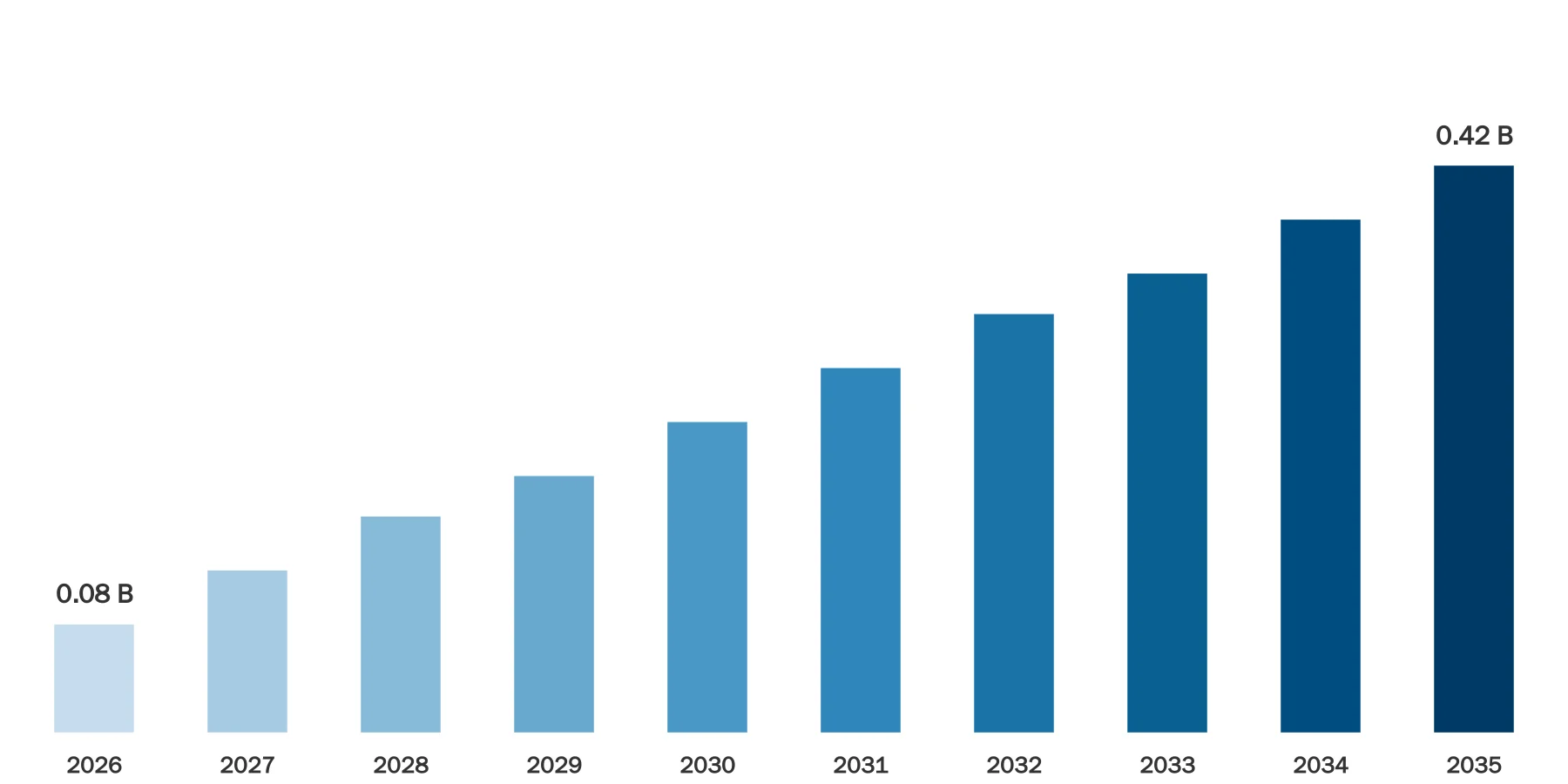
Source: Econ Market Research
Small particles of a magnetic substance with magnetic characteristics are known as magnetic nanoparticles. Magnetic nanoparticles have a high surface area-to-volume ratio due to their small size and high surface area compared to total volume. They are therefore perfect for applications involving surface interactions, including catalysis, sensing, and drug delivery. In the presence of an external magnetic field, magnetic nanoparticles can get magnetized and some of this magnetization can persist after the field is removed. This characteristic is essential for its applications in medicine administration, imaging, and data storage.
The magnetic nanoparticles market witnessed significant growth following their introduction due to their versatile applications across various industries. These nanoparticles, typically ranging from 1 to 100 nanometers, possess remarkable magnetic properties that have revolutionized fields like biomedicine, electronics, and environmental science. In biomedicine, they found use in targeted drug delivery, hyperthermia treatment for cancer, and enhancing Magnetic Resonance Imaging (MRI) contrast. This led to improvements in the accuracy of diagnosis and treatment.
The development of high-capacity storage systems like hard drives and magnetic tapes, which improved data storage capabilities, relied heavily on magnetic nanoparticles in electronics. Additionally, the use of these materials in sensors and catalysis led to the development of improved detection techniques as well as more effective and environmentally friendly chemical processes. As a result, the demand for better medical treatments, cutting-edge electronics, and creative environmental solutions has led to a steady growth in the magnetic nanoparticles market. As long as research and development efforts are made, new applications are discovered and the frontiers of magnetic nanoparticle technology are pushed, this growth tendency is predicted to continue.
Magnetic Nanoparticles Dynamics
The market for magnetic nanoparticles is fueled by a complex web of variables that interact to influence its expansion and development. Rapid developments in materials science and nanotechnology have stoked interest in magnetic nanoparticles and propelled a wide range of commercial possibilities for them. The potential of these nanoparticles to target certain cells for medication administration and improve imaging methods has increased the desire for more accurate treatments and diagnostics in the field of biomedicine.
The need for larger data storage capacities in electronics has sparked innovation in magnetic storage technologies, increasing the importance of magnetic nanoparticles in this field. Due to the use of magnetic nanoparticles in effective water treatment techniques and the repair of environmental contamination, environmental concerns have also been present.
The significance of using magnetic nanoparticles as catalysts in more environmentally friendly chemical processes has also increased as a result of the growing focus on green and sustainable technology. Investments in R&,D, legal frameworks, and technical alliances all have an impact on market expansion. However, there is still ongoing study and concern surrounding issues such nanoparticle toxicity, scalability, and cost-effectiveness. As industries continue to explore novel applications and capitalize on the unique properties of magnetic nanoparticles, the market',s trajectory remains dynamic. The ever-expanding possibilities across medicine, electronics, environmental solutions, and beyond, combined with ongoing scientific discoveries, will likely continue to drive the magnetic nanoparticles market forward.
Magnetic Nanoparticles Drivers
Advancements in Medical Imaging and Diagnostics
Technological innovations have greatly contributed to improvements in patient care, disease identification, and treatment planning through advancements in medical imaging and diagnostics. The development of increasingly advanced and accurate imaging techniques has been accelerated by quick advancements in domains like radiology, nuclear medicine, and molecular imaging. Modern imaging techniques have experienced significant improvements in resolution, speed, and accuracy, including ultrasound, computed tomography (CT), positron emission tomography (PET), and magnetic resonance imaging (MRI).
These advancements make it possible for medical personnel to see anatomical structures clearly and spot irregularities, which promotes early diagnosis and improved treatment results. Furthermore, the integration of artificial intelligence (AI) and machine learning has revolutionized medical imaging by automating image analysis, assisting in pattern recognition, and enabling predictive diagnostics. AI-driven algorithms can assist radiologists in detecting subtle anomalies, reducing interpretation time, and improving overall diagnostic accuracy.
Rising Demand in Electronics
The globalization of businesses and lifestyles has been influenced by the increasing demand for electronics, which has become a key driver of technological advancement. This need has been fueled by the widespread use of consumer gadgets, communication tools, and smart technology. Electronics have been evolving continuously as a result of consumer demands for gadgets that are more powerful, smaller, and connected. This trend is demonstrated by the quick development of smartphones, tablets, laptops, and wearable technology, which has forced manufacturers to create smaller, more energy-efficient components without sacrificing performance. The internet of things (IoT) revolution has expanded the demand for electronics across sectors. Connected devices in homes, industries, healthcare, and transportation rely on intricate electronic systems for data collection, analysis, and automation.
Restraints
Regulatory Hurdles and Safety Concerns
The growth and adoption of numerous technologies and industries might be hampered by regulatory obstacles and safety worries. Strict regulatory frameworks are necessary in fields like healthcare, Biotechnology, and emerging technologies to guarantee consumer safety, product effectiveness, and ethical considerations. It can be time-consuming, expensive, and difficult to navigate these regulatory processes. Additionally, developing technology like AI and driverless vehicles present difficulties with safety certification, liability, and moral conundrums. Public discussion and regulatory scrutiny have been sparked by worries about AI bias, data privacy, and the ethical ramifications of decision-making using AI.
Innovative manufacturing practices and specialized materials are frequently needed, which raises production prices. This can prevent widespread adoption because end customers could think these products are beyond their price range. For instance, complex assembly and quality control procedures are frequently used in the production of cutting-edge electronic devices, renewable energy systems, and precise medical equipment, which drives up costs. In the field of biopharmaceuticals, creating and manufacturing new medications, particularly biologics, necessitates in-depth study, rigorous clinical testing, and regulatory compliance. These procedures take a lot of time and require a lot of resources, which raises the expense, which can then be passed on to patients and healthcare systems.
Opportunities
Growing Demand for Biomedical Applications
A huge chance to transform healthcare and enhance patient outcomes is presented by the rising demand for biomedical applications. Applications in the biomedical field span a variety of fields, including medication delivery, tissue engineering, medical imaging, treatments, and diagnostics. Advancements in technologies like molecular imaging, biomarker identification, and point-of-care testing are making disease detection in diagnostics sooner and more precise. This not only helps with prompt intervention but also lowers healthcare expenditures by stopping the spread of disease.
Nanotechnology and biotechnology are combining therapeutically to create individualized treatments. Nanoparticle-based targeted drug delivery systems can deliver drugs directly to afflicted cells, reducing adverse effects and improving treatment effectiveness. Additionally, cutting-edge biomaterials and 3D printing technologies are helping regenerative medicine by making it possible to create functional tissues and organs.
Rising Interest in Nanotechnology
Electronic devices have become speedier and more energy-efficient as a result of the ongoing miniaturization of component sizes. Ultra-high-resolution screens, flexible electronics, and powerful computers are being made possible by nanoscale transistors, quantum dots, and nanowires. Nanotechnology is undergoing profound developments in the world of medicine. Targeted medicine delivery using nanoparticles improves treatment effectiveness while reducing negative effects. Improved biological structure visualization is made possible by nanoscale imaging agents, which helps with early illness detection and accurate therapy monitoring.
Nanotechnology is also instrumental in addressing environmental challenges. Nanomaterials are used for pollution remediation, water purification, and energy storage. Nanotechnology-driven advances in solar cells, batteries, and supercapacitors hold the promise of more efficient and sustainable energy solutions.
Segment Overview
By Product Type
Based on product type, the global magnetic nanoparticles market is divided into iron oxide nanoparticles and magnetic microspheres. The iron oxide nanoparticles category dominates the market with the largest revenue share. Iron oxide nanoparticles are nanoscale particles composed of iron and oxygen. They exhibit magnetic properties due to their iron content and are often coated with materials to enhance stability and biocompatibility. These nanoparticles have found a wide range of applications, including in biomedicine, electronics, and environmental remediation.
In biomedicine, iron oxide nanoparticles are commonly used as contrast agents in magnetic resonance imaging (MRI). They are also utilized in targeted drug delivery systems, where their magnetic properties help guide drug-loaded nanoparticles to specific sites within the body. Magnetic microspheres are larger particles compared to nanoparticles, typically ranging from hundreds of nanometers to several micrometers in size. These microspheres are often made from polymers or other materials that encapsulate magnetic nanoparticles within their structure.
By Application
Based on the application, the global magnetic nanoparticles market is categorized into electronic, optics, chemical industry, and bio-medical industries. The bio-medical industry category leads the global magnetic nanoparticles market with the largest revenue share. The biomedical sector benefits greatly from magnetic nanoparticles, which have applications in drug delivery, medical imaging, diagnostics, and targeted therapy. In drug delivery, magnetic nanoparticles can be loaded with drugs and guided to specific areas within the body using external magnetic fields. In medical imaging, these nanoparticles enhance contrast for imaging techniques like MRI. They are also used in diagnostics and therapies, such as cancer treatment through hyperthermia.
In the electronics industry, magnetic nanoparticles find applications in areas like data storage, sensors, and spintronics. Magnetic nanoparticles are essential components in magnetic hard drives, providing the means to store and retrieve data through changes in magnetic orientation. In the optics field, magnetic nanoparticles contribute to innovations in display technologies, magneto-optical data storage, and imaging. Their magnetic properties can influence the polarization of light, making them valuable in devices like liquid crystal displays (LCDs) and magneto-optical devices used for data storage and manipulation. Magnetic nanoparticles are utilized in the chemical industry for catalysis, separations, and environmental remediation. Their high surface area and unique magnetic behavior make them effective catalysts, promoting chemical reactions and enabling greener and more efficient processes.
Magnetic Nanoparticles Overview by Region
The global magnetic nanoparticles market is categorized into North America, Europe, Asia-Pacific, and the Rest of the World. North America emerged as the leading region, capturing the largest market share in 2022. North America, particularly the United States, has been at the forefront of technological innovation. The region is home to many world-renowned research universities, technology hubs, and cutting-edge research and development centers. This fosters a culture of innovation and provides a conducive environment for the development of groundbreaking technologies and industries.
North America benefits from significant investments in research, infrastructure, and education. Government support, venture capital funding, and private investments play a crucial role in fueling the growth of emerging sectors and industries. The region attracts talent from around the world due to its vibrant job market, strong educational institutions, and opportunities for career advancement. This diverse and skilled workforce contributes to the development and advancement of various industries. The consumer market in North America is substantial, providing a large and diverse customer base for products and services across industries. This encourages companies to invest in research, development, and innovation to meet evolving consumer needs and preferences.
Competitive Landscape
In the global magnetic nanoparticles market, a few major players exert significant market dominance and have established a strong regional presence. These leading companies remain committed to continuous research and development endeavors and actively engage in strategic growth initiatives, including product development, launches, joint ventures, and partnerships. By pursuing these strategies, these companies aim to strengthen their market position, expand their customer base, and capture a substantial share of the market.
Key Players
US Research Nanomaterials, Inc.
nanoComposix, Inc.
Cytodiagnostics, Inc.
American Elements
Nanoshel LLC
Nanografi Nano Technology
Reade International Corp.
SkySpring Nanomaterials, Inc.
Merck KGaA
Thermo Fisher Scientific Inc.
NNCrystal US Corporation
Ocean NanoTech, LLC
Fortis Life Sciences
Strem Chemicals, Inc.
Recent Developments
In November 2022, Independent Distributor Strem Chemicals UK is acquired by Ascensus. They declared that they were buying Strem Chemicals UK, an independent distributor of Ascensus high-purity, research-grade catalysts, ligands, organometallics, metal carbonyls, and CVD/ALD precursors for the UK market. They also announced that they were buying the company and a few of its assets.
In July 2021, NanoComposix, a premium nanomaterials firm that specializes in solutions for assay development and diagnostics, was acquired by Fortis Life Sciences. It will create a potent synergy in the market for life science reagents when nanoComposix joins forces with the other Fortis portfolio firms.
Magnetic Nanoparticles Market Report Scope & Segmentation
| Attributes | Details |
|---|---|
Market Size (Current) | US$ 0.08 Billion in 2026 |
Market Size (Forecast) | US$ 0.42 Billion in 2035 |
Growth Rate | CAGR of 19.6% from 2026 to 2035 |
Forecast Period | 2026 – 2035 |
Base Year | 2025 |
Historical Data Available | Yes |
Regional Scope | Global |
Segments Covered | By Particle Size
By Synthesis Method
By Application
|
Frequently Asked Questions
Common questions about this report
The study period covers historical insights and forecast projections for the period 2026-2035.
About the Author
Market research expert with years of industry experience

Related Reports
Explore more market insights from the same category