

Neuroscience Antibodies and Assays Market
Neuroscience Antibodies and Assays Market Size, Share, Trends, Growth, and Industry Analysis, By Product (Consumables, Instruments), By Technology (Immunoassays/Immunochemistry, Molecular Diagnostics, Others), By End-User (Academic andamp; Research Institutes, Pharmaceutical andamp; Biotechnology Companies, Others), Regional Analysis and Forecast Period 2026-2035
Neuroscience Antibodies and Assays Market Overview
As per Econ Market Research analysis, the Global Neuroscience Antibodies and Assays Market was recorded at US$ 4.1 Billion in 2026 and is projected to expand to US$ 6.3 Billion by 2035, registering a CAGR of 4.88% over the forecast period. The base year used is 2025.
Neuroscience Antibodies and Assays Market Size 2025-2035 (USD Billion)

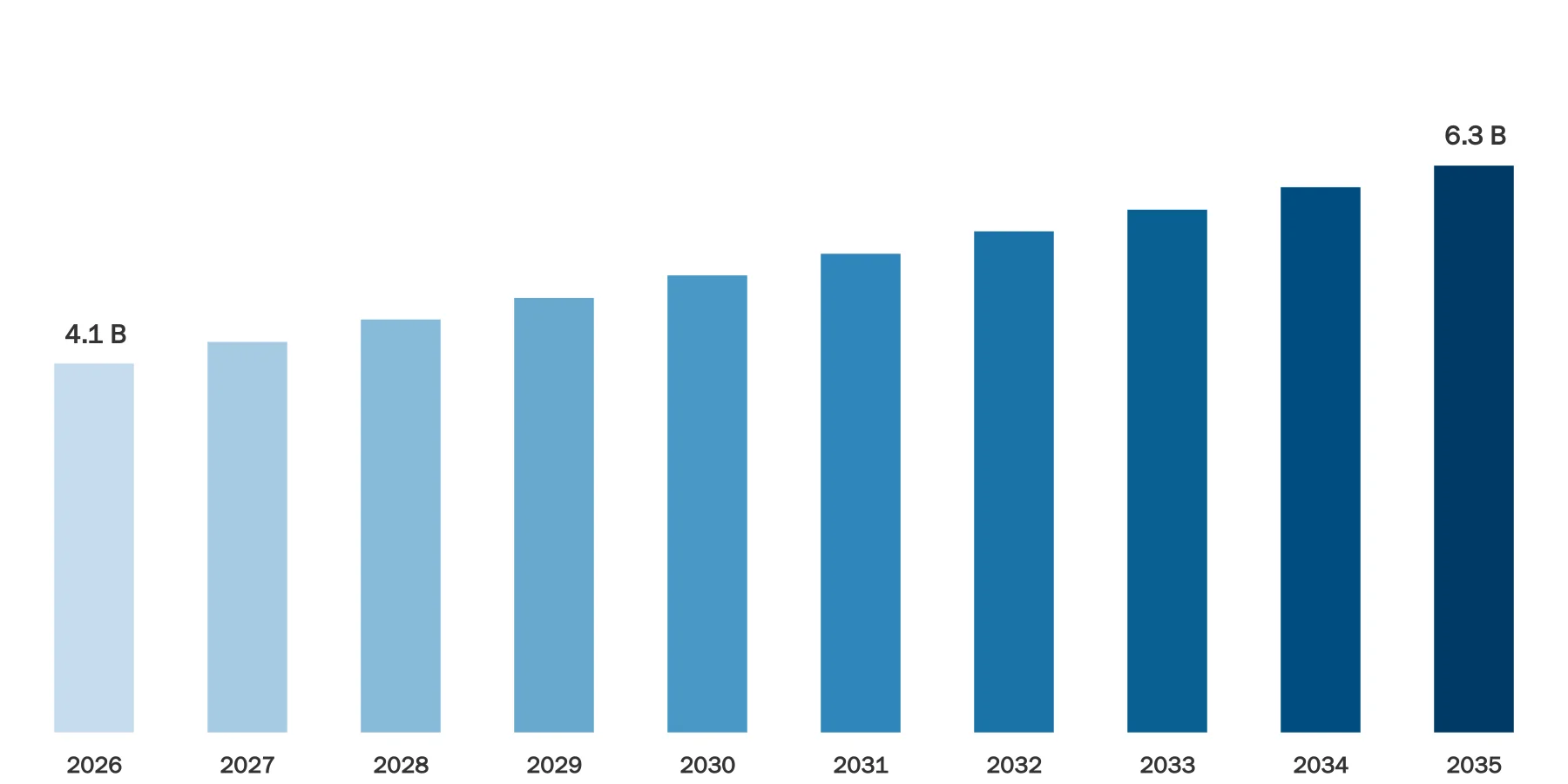
Source: Econ Market Research
Neuroscience assays and antibodies are essential tools for studying the nervous system because they allow scientists to look into many facets of brain anatomy, function, and disorders. These specialised proteins, known as antibodies, are made to attach to particular sites in the nervous system in order to help locate and identify important molecules that are involved in neuronal functions. Conversely, assays are experimental processes that use these antibodies to identify and measure particular biomolecules, offering important insights into the complex workings of the brain.
As scientists and pharmaceutical companies step up their efforts to comprehend and create treatments for neurological disorders like Parkinson',s disease, Alzheimer',s disease, and various psychiatric conditions, the market is characterised by a growing demand for advanced neuroscience tools. This market is growing as a result of factors like increased funding for neuroscience research, rising prevalence of neurological disorders, and technological advancements. The industry',s overall growth is facilitated by the development of high-quality and innovative antibodies and assays, which are essential for accurate and dependable neuroscience research.
Neuroscience Antibodies and Assays Dynamics
One major factor is the increasing global prevalence of neurological disorders, which calls for intensive research and development to find new treatments. By improving the accuracy and productivity of neuroscience research, technological developments in antibody production and assay techniques&mdash,including the introduction of sophisticated imaging modalities and high-throughput screening methods&mdash,are driving the market.
The industry is distinguished by a steady stream of capital and funding going towards neuroscience research, which encourages creativity and the creation of innovative instruments. Collaborations among academic institutions, pharmaceutical companies, and Biotechnology firms are on the rise, creating synergistic effects that boost market expansion and accelerate product development. Additionally, the need for specialised antibodies and assays is being driven by the growing knowledge of the cellular and molecular details of neurological disorders, which is building a strong market ecosystem.
Neuroscience Antibodies and Assays Drivers
Increasing Prevalence of Neurological Disorders
Growing rates of neurological diseases, such as Parkinson',s disease, Alzheimer',s disease, and other psychiatric disorders, are a major factor propelling the global market for neuroscience antibodies and assays. The prevalence of these disorders keeps rising as the world',s population ages and lifestyles change, requiring significant research and development efforts. In order to facilitate the development of targeted therapeutics, it is imperative to comprehend the underlying molecular and cellular mechanisms of these disorders, which in turn drives the demand for advanced neuroscience tools like antibodies and assays.
Technological Advancements in Neuroscience Research
The market is driven forward by the rapid technological advancements in neuroscience research, especially in the fields of imaging techniques and high-throughput screening methods. The incorporation of state-of-the-art technologies augments the accuracy and efficacy of neuroscience investigations, permitting scholars to investigate the intricacies of the nervous system with unparalleled minutiae. Our understanding of brain function and pathology is advanced by the development of novel tools and techniques that enable more accurate biomolecule detection and quantification. The capabilities of neuroscience research are increased by this technological advancement, which also increases demand for complex antibodies and assays and propels market expansion.
Restraints:
Complexity of Neurological Research
The market is severely constrained by the complex nature of neurological research. Deciphering intricate interactions between different molecules and pathways is a challenge when studying the nervous system, making it difficult to pinpoint precise targets for antibodies. Neurological disorders are complex due to their multifaceted nature, necessitating careful experimental design and interpretation. It can take a lot of time and resources to develop highly specific and dependable antibodies and assays, but these problems require constant innovation.
Regulatory Challenges and Ethical Considerations
Stringent regulatory requirements and ethical considerations surrounding antibody development and assay techniques present restraints to market growth. Adhering to regulatory frameworks for product approval is essential but can be a time-consuming process. Additionally, ethical concerns related to the use of animals in antibody development may lead to increased scrutiny and necessitate the exploration of alternative methods. Navigating these regulatory and ethical challenges requires significant investments in research and development, potentially impacting the speed of product commercialization.
Opportunities:
Growing Collaborations in Research and Development
Opportunities abound in the increasing trend of collaborations between academic institutions, pharmaceutical companies, and biotechnology firms. Partnerships foster synergies, combining diverse expertise and resources to accelerate product development and innovation. Collaborative efforts can lead to the creation of novel antibodies and assays, tapping into a broader knowledge base and potentially unlocking new avenues for neuroscience research and therapeutic interventions.
Segment Overview
By Product Type
The market is segmented into consumables and instruments. Consumables encompass a range of products essential for neuroscience research, including antibodies, assay kits, reagents, and other laboratory supplies. These are the recurring and often disposable components required for experiments and analyses. Instruments, on the other hand, comprise the equipment and machinery utilized in neuroscience laboratories, such as imaging systems, analyzers, and other advanced tools. Both consumables and instruments play integral roles in facilitating accurate and efficient neuroscience research, with advancements in technology driving the development of innovative products in each category.
By Technology
The technology segment encompasses immunoassays/immunochemistry, molecular diagnostics, and other technologies. Immunoassays and immunochemistry involve the use of antibodies to detect and quantify specific molecules, offering high specificity and sensitivity in neuroscience research. Molecular diagnostics focus on the genetic and molecular aspects of neurological disorders, providing insights into the underlying molecular mechanisms. Other technologies may include emerging approaches and tools that contribute to the diverse toolkit available to researchers. The dynamic interplay between these technologies reflects the multifaceted nature of neuroscience research, allowing for a comprehensive exploration of the nervous system',s intricacies.
By End User
The end user segment includes academic and research institutes, pharmaceutical and biotechnology companies, and other end users. Academic and research institutes form the backbone of neuroscience research, driving scientific discovery and knowledge generation. Pharmaceutical and biotechnology companies leverage neuroscience tools in drug discovery and development processes, aiming to bring novel therapies to market. Other end users may include diagnostic laboratories, healthcare institutions, and contract research organizations, representing a diverse array of entities contributing to and benefiting from advancements in neuroscience antibodies and assays. The collaboration and interaction among these end users foster a dynamic ecosystem that accelerates innovation and addresses the complex challenges associated with neurological research and therapeutic development.
Neuroscience Antibodies and Assays Overview by Region
Due to its strong presence of top biotechnology and pharmaceutical companies, reputable academic and research institutions, and large investments in neuroscience research, North America currently commands the largest share of the market. The area has favourable regulatory frameworks and a developed healthcare ecosystem, which promote the creation and uptake of cutting-edge neuroscience tools.
Europe is closely behind, with a focus on academic research, especially in nations with well-known neuroscience research centres. Collaborative initiatives between academia and industry drive innovation and facilitate the translation of research findings into clinical applications, which benefits the European market. Furthermore, bolstering government funding for neuroscience research is a factor in the region',s expansion.
Asia-Pacific represents a rapidly expanding market, propelled by a rising focus on scientific research, a growing pool of skilled researchers, and increasing investments in healthcare infrastructure. Countries like China, Japan, and India are at the forefront of neuroscience research initiatives, with a burgeoning demand for advanced antibodies and assays. The Asia-Pacific market also benefits from collaborations with international research organizations and the globalization of pharmaceutical and biotechnology industries.
Neuroscience Antibodies and Assays Market Competitive Landscape
Leading pharmaceutical and biotechnology companies, such as Thermo Fisher Scientific, Merck Group, and Abcam plc, dominate the market with their extensive product portfolios, robust research and development capabilities, and global market presence. These companies invest significantly in the development of cutting-edge antibodies and assay technologies, ensuring a continuous stream of advanced solutions to meet the evolving needs of neuroscience researchers.
In addition to industry giants, a vibrant ecosystem of niche players and emerging start-ups contributes to the competitive dynamics. These entities focus on niche markets, offering specialized antibodies and assays that cater to specific research requirements. This diverse landscape fosters innovation and provides researchers with a broad spectrum of tools for their studies. Strategic collaborations between industry players and academic institutions further amplify the competitive intensity, promoting knowledge exchange and the development of novel solutions.
The market also witnesses mergers and acquisitions as key players seek to expand their product portfolios and enhance their market share. Partnerships between technology providers and research institutions facilitate the integration of cutting-edge technologies into neuroscience research, fuelling market growth. As the demand for personalized medicine grows, companies are increasingly investing in technologies that enable the customization of antibodies and assays for specific patient profiles, presenting a new frontier in the competitive landscape.
Neuroscience Antibodies and Assays Market Leading Companies:
Abcam plc
BioLegend Inc.
Bio-Rad Laboratories Inc.
Cell Signaling Technology Inc.
F. Hoffmann-La Roche AG
Thermo Fisher Scientific
Merck KGaA
Rockland Immunochemicals Inc.
GenScript Biotech Corporation
Santa Cruz Biotechnology Inc.
Global Neuroscience Antibodies and Assays Report Segmentation
Neuroscience Antibodies and Assays Market Report Scope & Segmentation
| Attributes | Details |
|---|---|
Market Size (Current) | US$ 4.1 Billion in 2026 |
Market Size (Forecast) | US$ 6.3 Billion in 2035 |
Growth Rate | CAGR of 4.88% from 2026 to 2035 |
Forecast Period | 2026 – 2035 |
Base Year | 2025 |
Historical Data Available | Yes |
Regional Scope | Global |
Segments Covered | By Product
By Technology
By End-User
|
Frequently Asked Questions
Common questions about this report
The study period covers historical insights and forecast projections for the period 2026-2035.
About the Author
Market research expert with years of industry experience

Dipali Bhingare serves as the Market Research Director at Econ Market Research. With a focus on translating complex global economic shifts into actionable business intelligence, she oversees the strategic direction of comprehensive market studies. Her work empowers organizations to navigate volatile industries through data-driven forecasting and deep-dive competitive analysis.
Related Reports
Explore more market insights from the same category