Chemoinformatics Market Overview
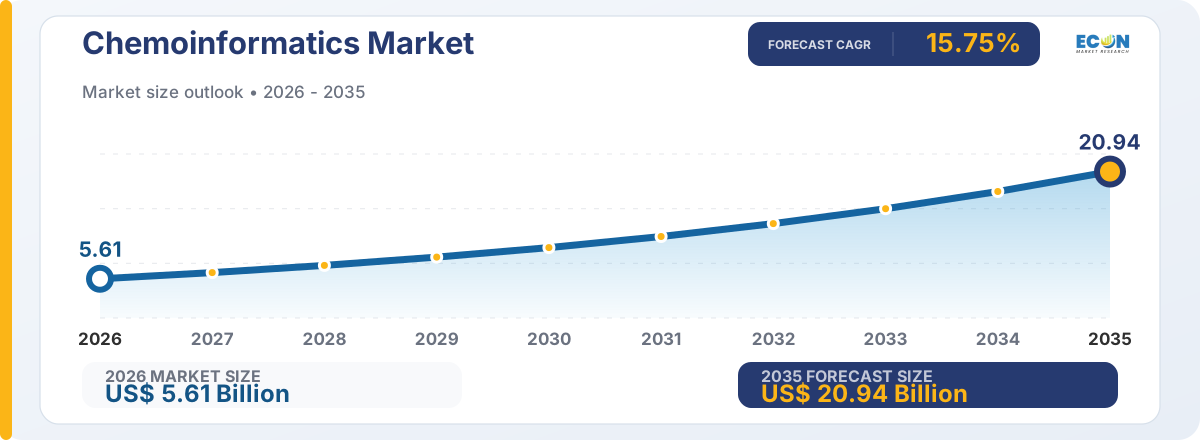
As per Econ Market Research analysis, the Global Chemoinformatics Market was valued at US$ 5.61 Billion in 2026 and is expected to reach US$ 20.94 Billion by 2035, registering a CAGR of 15.75% during the forecast period 2026–2035. The base year considered is 2025.
Chemoinformatics is the study of chemical data analysis through the use of information technologies and computational methods to aid in the processes of drug design, discovery, and optimisation. The growing complexity of drug development is driving this market and necessitating more effective and economical solutions. Molecular modelling, virtual screening, and chemical informatics tools that help researchers analyse chemical structures and predict their biological activities are important parts of the chemoinformatics market.
The market for chemoinformatics is expanding due to the growing need for new and efficient treatment candidates as well as developments in AI and machine learning. Companies within this space are focusing on developing innovative software platforms and databases that enable scientists to expedite the drug discovery process by streamlining data analysis and decision-making. Additionally, the integration of big Data Analytics and Cloud Computing technologies is enhancing the scalability and accessibility of chemoinformatics tools.
The market is characterized by collaborations between pharmaceutical companies and technology providers to leverage each other',s expertise and capabilities. As the pharmaceutical industry continues to face challenges such as increasing R&,D costs and the need for personalized medicine, the role of chemoinformatics becomes increasingly crucial in accelerating the development of new therapeutic agents. The global chemoinformatics market is poised for substantial growth as it becomes an indispensable component in the quest for innovative and targeted drug discovery solutions, ultimately contributing to advancements in healthcare and the improvement of patient outcomes.
Chemoinformatics Dynamics
One of the main factors driving market expansion is the growing focus on drug discovery and development, which is being driven by the rising incidence of complex diseases. The use of chemoinformatics tools for data analysis, virtual screening, and molecular modelling has increased as pharmaceutical and biotechnology companies look to optimise the effectiveness of their research processes. Furthermore, the incorporation of AI and machine learning into chemoinformatics solutions is spurring innovation by improving the accuracy of molecular interaction predictions and hastening the discovery of promising therapeutic candidates.
Additionally, industry participants and research institutions are increasingly collaborating in market-wide initiatives that promote knowledge and resource exchange to advance chemoinformatics capabilities. On the flip side, challenges such as the complexity of biological systems and the sheer volume of chemical data pose obstacles to seamless implementation. Moreover, issues related to data quality, standardization, and interoperability require continuous attention to ensure the reliability of results generated through chemoinformatics tools.
Regulatory considerations and the need for skilled professionals proficient in both chemistry and informatics add another layer of complexity. Nevertheless, the overall trajectory of the chemoinformatics market remains positive, driven by the persistent demand for innovative drug discovery solutions and the ongoing evolution of technologies that promise to revolutionize the field. As these dynamics unfold, the market is positioned for sustained growth and continuous advancements in the realm of computational chemistry and informatics.
Chemoinformatics Drivers
Growing Emphasis on Personalized Medicine
The growing emphasis on customised medicine is a key factor propelling the chemoinformatics market. The need for sophisticated computational tools like chemoinformatics is growing as healthcare trends move towards more customised and focused treatment approaches. In order to identify particular molecular targets and customise drug therapies, these tools are essential for analysing large datasets pertaining to individual patient profiles. In this case, chemoinformatics integration improves drug development',s accuracy and efficacy by adapting to the changing healthcare environment and pursuing more specialised and effective solutions.
Advancements in Artificial Intelligence and Machine Learning
The continuous advancements in artificial intelligence (AI) and machine learning (ML) technologies represent another driving force for the chemoinformatics market. The ability of AI and ML algorithms to analyze complex chemical data, predict molecular interactions, and streamline drug discovery processes significantly accelerates research and development efforts.
Chemoinformatics tools leverage these technologies to enhance predictive modeling, virtual screening, and decision-making, ultimately reducing the time and cost associated with bringing new drugs to market. The synergy between chemoinformatics and AI/ML is anticipated to revolutionize the drug discovery landscape, making it more efficient and data-driven.
Restraints:
Data Quality and Standardization Challenges
The chemoinformatics market is hindered primarily by innate challenges pertaining to data standardisation and quality. There are several barriers to easy analysis and interpretation of chemical data, including different data formats, inconsistent standards, and a variety of chemical data sources. For significant insights to be produced, data inputs must be accurate and reliable. Industry stakeholders must work together to address these standardisation issues, which is impeding the seamless application of chemoinformatics solutions.
Complexity of Biological Systems
The intricate nature of biological systems presents a significant restraint for the chemoinformatics market. Predicting how chemical compounds will interact within the complexity of living organisms is a formidable challenge. The limitations in accurately representing biological intricacies within computational models can lead to potential gaps in understanding drug behavior, efficacy, and safety. Overcoming these complexities demands ongoing research and development efforts to refine and improve chemoinformatics tools, ensuring they effectively capture the nuances of biological systems.
Opportunities:
Rising Adoption of Cloud Computing
An emerging opportunity for the chemoinformatics market lies in the increasing adoption of cloud computing technologies. Cloud platforms offer scalable and flexible infrastructure, enabling researchers to store, process, and analyze large datasets more efficiently. The cloud facilitates collaboration, data sharing, and remote access to computational resources, providing a conducive environment for the deployment of chemoinformatics tools. As the industry embraces cloud-based solutions, it opens avenues for enhanced accessibility, cost-effectiveness, and collaborative research in the field of computational chemistry.
Segment Overview
By Application
The chemoinformatics market encompasses a spectrum of applications crucial for advancing scientific research and industrial processes. At its core is the realm of chemical analysis, where computational tools decode intricate chemical data, providing insights into molecular structures and behaviors. This foundational application serves as a cornerstone for industries such as pharmaceuticals, materials science, and environmental studies, enabling researchers to leverage computational methods for comprehensive chemical analysis. In the drug discovery segment, chemoinformatics takes center stage in accelerating the identification and design of potential drug candidates.
Virtual screening, molecular modeling, and structure-activity relationship analyses are integral components, empowering researchers to navigate extensive chemical libraries efficiently. This application addresses the pressing need for innovative drugs by streamlining the selection of promising candidates for further experimental validation. Moving into the drug validation phase, chemoinformatics tools play a pivotal role in post-discovery optimization. Researchers employ computational approaches to validate and refine drug candidates, analyzing pharmacokinetics, toxicity profiles, and efficacy. This ensures that selected compounds are not only effective but also safe for clinical use, contributing to a more efficient drug development pipeline.
Chemoinformatics Overview by Region
Leading pharmaceutical companies, research institutes, and technological advancements are concentrated in North America, which commands a substantial market share. The chemoinformatics market has grown as a result of the region',s proactive adoption of cutting-edge technologies, especially in the United States. Europe is closely behind, with notable contributions from nations like France, Germany, and the United Kingdom. In Europe, the use of cutting-edge computational tools in drug discovery and development processes is encouraged by a strong focus on research initiatives and partnerships between academia and industry. The Asia-Pacific region emerges as a key player, driven by a rapidly expanding pharmaceutical sector and growing investments in research and development.
Countries such as China and India are witnessing increased utilization of chemoinformatics applications to streamline drug discovery efforts and address healthcare challenges. Furthermore, the rising prevalence of complex diseases in the region is fueling the demand for novel therapeutic solutions, further propelling the growth of the chemoinformatics market. Latin America and the Middle East &, Africa regions, while currently representing a smaller market share, are poised for growth as healthcare infrastructure improves and awareness regarding the benefits of computational tools in drug development expands. Collaborations between global pharmaceutical players and local research institutions are anticipated to contribute to the steady evolution of the chemoinformatics market across these regions.
Chemoinformatics Market Competitive Landscape
Leading global players such as Schrö,dinger, ChemAxon, and Biovia (a Dassault Systè,mes company) dominate the market with comprehensive chemoinformatics platforms offering molecular modeling, virtual screening, and data analysis tools. These companies leverage their extensive industry experience, technological expertise, and strategic collaborations to provide end-to-end solutions for drug discovery and development processes.
In addition to these established players, a vibrant ecosystem of startups and niche players contributes to the competitive dynamics. Companies like OpenEye Scientific Software and Cresset specialize in offering specific chemoinformatics tools, addressing unique aspects of computational chemistry. The market also witnesses collaborations and partnerships between software providers and pharmaceutical giants, exemplified by partnerships between Schrö,dinger and leading pharmaceutical companies, showcasing a trend of knowledge exchange and mutual expertise utilization.
Chemoinformatics Market Leading Companies:
Scilligence
BioSolveIT GmbH
Collaborative Drug Discovery Inc.
ChemAxon Ltd
Dassault Systè,mes
Advanced Chemistry Development, Inc.
Altoris
Bio-Rad Laboratories, Inc.
Certara, Inc.
Eidogen-Sertanty, Inc.
Golden Helix, Inc.
Jubilant Biosys Ltd.
Chemoinformatics Recent Developments
June 2023, ChemAxon, Inc., a prominent provider of web-based cheminformatics and bioinformatics software, unveiled a collaboration with the Tetra Partner Network. The partnership aims to empower customers in significantly enhancing their ability to discover and synthesize chemical compounds, leading to improved overall property profiles.
Feb 2023, Agilent Technologies Inc. disclosed its acquisition of advanced artificial intelligence (AI) technology developed by Virtual Control, a provider of AI and machine learning software. This technology is known for crafting distinctive analytical solutions in laboratory testing. Agilent intends to integrate the ACIES software into its renowned gas chromatography and mass spectrometry (GS/MS) equipment, aiming to elevate productivity, efficiency, and precision.
Chemoinformatics Report Segmentation
Chemoinformatics Market Report Scope & Segmentation
| Attributes | Details |
|---|---|
| Market Size (Current)Current market valuation | US$ 5.61 Billion in 2026 |
| Market Size (Forecast)Projected market valuation | US$ 20.94 Billion in 2035 |
| Growth RateCompound Annual Growth Rate | CAGR of 15.75% from 2026 to 2035 |
| Forecast PeriodAnalysis timeline | 2026 – 2035 |
| Base YearReference year for analysis | 2025 |
| Historical Data AvailablePast market data availability | Yes |
| Regional ScopeGeographical coverage | Global |
| Segments CoveredMarket segments analyzed | By Product Type
By Application
By End-User
|
Leading companies covered in this report
- Schrödinger
- BIOVIA (Dassault Systèmes)
- ChemAxon
- Agilent
- Bio-Rad
- OpenEye Scientific
- Molecular Discovery
- BioSolveIT
Frequently Asked Questions
Common questions about this report
The study period covers historical insights and forecast projections for the period 2026-2035.
About the Author
Market research expert with years of industry experience

Dipali Bhingare serves as the Market Research Director at Econ Market Research. With a focus on translating complex global economic shifts into actionable business intelligence, she oversees the strategic direction of comprehensive market studies. Her work empowers organizations to navigate volatile industries through data-driven forecasting and deep-dive competitive analysis.