

Serum-free Media Market
Serum-free Media Market Size, Share, Trends, Growth, and Industry Analysis, By Type (CHO Media, BHK Media, Vero Media, HEK 293 Media, Others), By Application (Biopharmaceutical Production, Tissue Engineering, Gene Therapy), By End-User (Biopharmaceutical Companies, Academic andamp; Research Institutes, CROs), Regional Analysis and Forecast Period 2026-2035
Serum-free Media Market Overview
As per Econ Market Research analysis, the Global Serum-free Media Market accounted for US$ 8.59 Billion in 2026 and is expected to surpass US$ 21.91 Billion by 2035, witnessing a CAGR of 11.05% throughout 2026–2035. The analysis is based on 2025 as the base year.
Serum-free Media Market Size 2025-2035 (USD Billion)

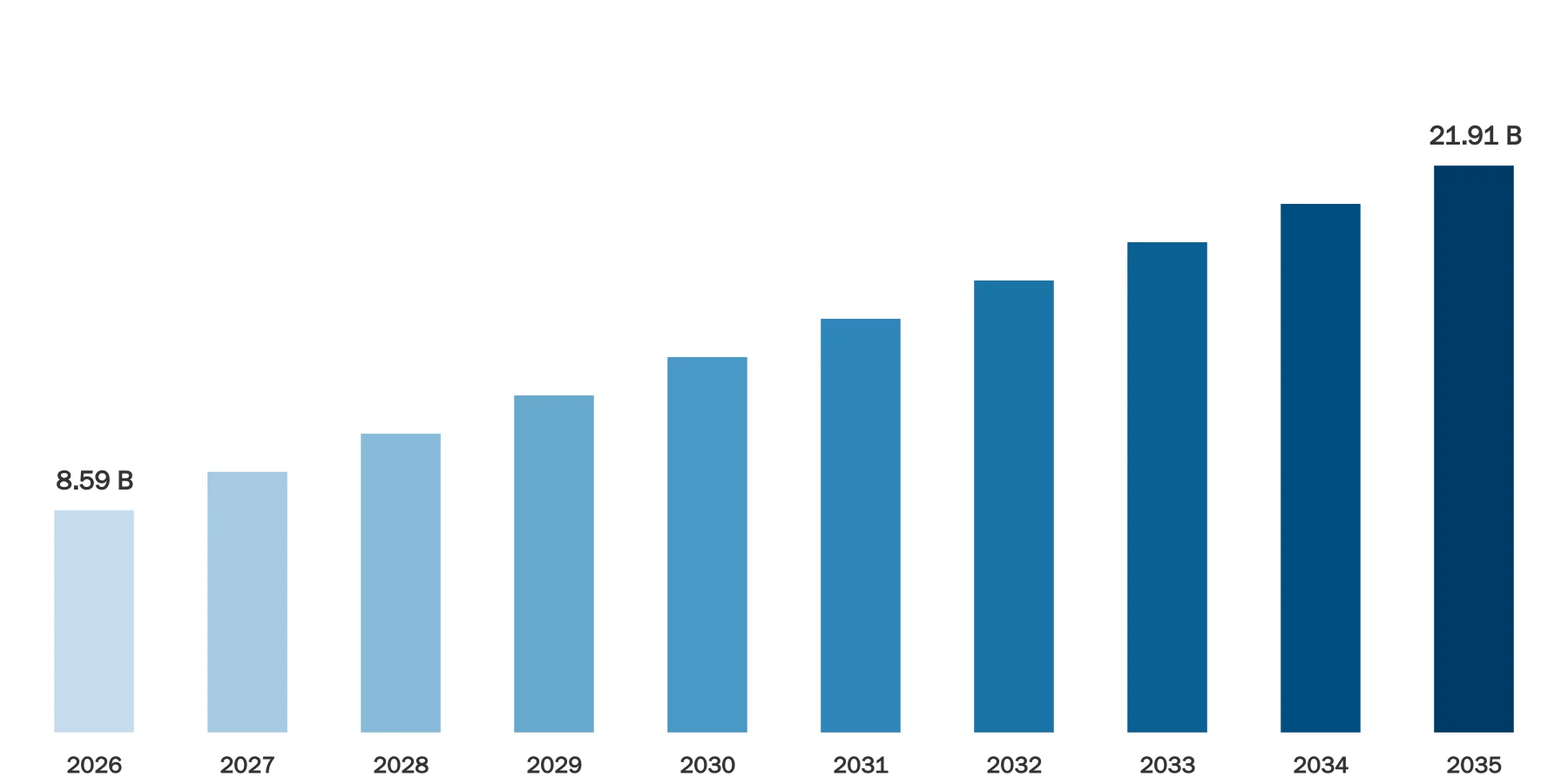
Source: Econ Market Research
Serum-free media',s release onto the market represents a substantial development in cell culture technology. Serum-free formulations offer a feasible substitute for conventional serum-containing medium, giving researchers and industrial users more control over the circumstances under which cells grow. This reduces variability and improves repeatability. This invention provides a more controlled and secure environment for cell culture, allaying worries about impurities originating from serum. The advent of serum-free media satisfies the changing needs of the Biotechnology, pharmaceutical, and academic sectors, increasing efficiency and speeding advancement in numerous domains of life sciences. There is an increased demand for dependable and consistent cell culture systems.
Serum-free Media Dynamics
The use of serum-free substitutes is fueled by growing worries about pollutants produced from serum, such as unpredictability and safety risks. Further supporting market expansion, innovation, and product creation are developments in biotechnology and cell culture methods. Further driving the market',s rise is the growing need for uniformity and reproducibility in cell culture applications. In addition, the trend toward serum-free media is driven by ethical and regulatory concerns related to the usage of goods obtained from animals. Research institutions and industry entities working together create a dynamic environment of ever-evolving formulas and technologies and drive market competitiveness.
Serum-free Media Drivers
Advancements in Biotechnology
Researchers and manufacturers are searching for serum-free alternatives to conventional medium as biotechnological techniques advance, with the goal of improving control, reproducibility, and safety in cell culture applications. The development of complex serum-free formulations suited for different cell types and applications is made possible by these innovations, which meet the growing need for dependable and scalable cell culture methods in fundamental research, Regenerative Medicine, and the manufacturing of Biopharmaceuticals.
Demand for Reproducibility
The market for serum-free medium is driven by the need for reproducibility, which is a top priority for companies and academics who want uniform and standardized cell culture results. Serum-free medium reduce variability and improve repeatability in experimental outcomes by providing a specified, controlled environment. The use of serum-free media meets the demand for reproducibility, which is essential for scientific research, drug discovery, and biomanufacturing procedures. This ensures dependable and uniform cell growth conditions across various trials, batches, and labs.
Restraints:
Transition Challenges
The logistical difficulties involved in making the move from serum-containing to serum-free formulations impede the adoption of serum-free media. Significant protocol modifications, experimental technique revalidation, and possible disruptions to established processes are all necessary for this transformation. Furthermore, to ensure compatibility with certain cell types or applications and optimize serum-free media formulations, specialized knowledge and resources are required. The general use of serum-free media is being delayed by these obstacles, which present problems for enterprises and researchers thinking about making the changeover.
Complex Formulations
Developing serum-free media formulations for particular cell types or applications necessitates a deep comprehension of growth factors, dietary requirements, and cell biology. The intricacy of the problem escalates the duration and expenses linked to formulating new formulations, hence impeding the expansion and marketing of products utilizing serum-free medium. Furthermore, these formulations', complexity can make them inaccessible to enterprises and researchers with little funding or experience.
Opportunities:
Advancements in Stem Cell Research
The market for serum-free media is presented with prospects by developments in stem cell research, which drive the need for customized formulations that promote the growth and differentiation of different types of stem cells. The application of stem cell research in drug development, disease modeling, and regenerative medicine is driving the demand for serum-free media that are ideal for culturing pluripotent and multipotent stem cells in vitro. Manufacturers now have the chance to provide cutting-edge serum-free media products that meet the changing requirements of doctors and stem cell researchers.
Rising Demand for Animal-Free Products
The demand for serum-free media formulations that provide a workable substitute is rising as ethical and legal issues pertaining to the usage of sera produced from animals increase. The adoption of animal-free media is in line with ethical and sustainability concerns in a number of businesses, including biopharmaceuticals, biotechnology, and research. Producers can take advantage of this chance by creating and offering premium serum-free media solutions to satisfy the growing market need.
Segment Overview
By Product
Based on the product, the global serum-free media market is divided into CHO media, HEK 293 media, BHK medium, vero medium, stem cell medium, and other serum-free media. The CHO media category dominates the market with the largest revenue share in 2023. Serum-free medium formulations created especially for Chinese Hamster Ovary (CHO) cell development and maintenance are included in this category.
In the manufacturing of biopharmaceuticals, CHO cells are frequently employed to express therapeutic proteins and monoclonal antibodies. Serum-free formulations known as HEK 293 media are designed specifically for the culture of Human Embryonic Kidney (HEK) 293 cells. Serum-free media specially designed for the cultivation of Baby Hamster Kidney (BHK) cells are referred to as BHK medium. African Green Monkey Kidney Epithelial Cells are the source of Vero cells, which are cultivated in the vero medium.
By Application
Based on the application, the global serum-free media market is categorized into bioproduction, vaccine production, tissue engineering &, regenerative medicine, and cell and gene therapy. The bioproduction category leads the global serum-free media market with the largest revenue share in 2023. The large-scale cell culture used in bioproduction to produce biopharmaceuticals such recombinant proteins, monoclonal antibodies, and vaccines is suited for serum-free media.
The development and proliferation of virus-infected cells or virus-like particles used in vaccine manufacture are optimized in serum-free medium. The development, differentiation, and functional maturation of distinct cell types used in tissue engineering constructions or regenerative therapies are supported by serum-free medium used in tissue engineering and regenerative medicine.
By End-user
Based on end-user, the global serum-free media market is segmented into pharmaceutical &, biotechnology companies, research &, academic institutes, and others. The pharmaceutical &, biotechnology companies segment dominates the serum-free media market. Pharmaceutical companies, biotechnology companies, and biopharmaceutical manufacturers involved in medication discovery, development, and production make up this part of the serum-free media market. These businesses produce vaccines, conduct stem cell research, produce therapeutic proteins and monoclonal antibodies through bioproduction, and use serum-free media for a variety of purposes.
Academic labs, research facilities, and universities make up a sizable portion of the market for serum-free media. To conduct basic research, disease modeling, drug screening, and stem cell investigations in a variety of scientific fields, such as molecular biology, cell biology, immunology, and regenerative medicine, these institutes use serum-free media.
Serum-free Media Overview by Region
The global serum-free media market is categorized into North America, Europe, Asia-Pacific, and the Rest of the World. North America emerged as the leading region, capturing the largest market share in 2023. With a large number of pharmaceutical and biotechnology businesses spearheading innovation and research in cell culture technologies, the region has a thriving biopharmaceutical industry. Furthermore, North America is home to internationally recognized academic institutions and research facilities that promote a culture of technical innovation and intellectual brilliance.
Additionally, the region',s adoption of serum-free media is aided by robust healthcare infrastructure, supportive government legislation, and significant investment in research and development. This prediction is supported by several variables, such as the region',s growing biopharmaceutical industry, increased R&,D spending, and growing use of cutting-edge cell culture methods. The region',s growth potential is further enhanced by advantageous government efforts, expanding pharmaceutical industry outsourcing tendencies, and a substantial pool of highly qualified individuals. The need for serum-free media is also being driven by growing healthcare spending, better infrastructure, and a developing biotechnology sector, which positions Asia-Pacific as a major market growth engine.
Serum-free Media Competitive Landscape
In the global serum-free media market, a few major players exert significant market dominance and have established a strong regional presence. These leading companies remain committed to continuous research and development endeavors and actively engage in strategic growth initiatives, including product development, launches, joint ventures, and partnerships. By pursuing these strategies, these companies aim to strengthen their market position, expand their customer base, and capture a substantial share of the market.
Serum-free Media Market Leading Companies:
Thermo Fisher Scientific Inc.
Sartorius AG
Merck KgaA
Lonza Group AG
Danaher
FUJIFILM Holdings Corporation
MP Bio medicals
Corning Incorporated
PAN-Biotech
R&,D Systems, Inc., and various others.
Serum-free Media Recent Developments
In January 2023, The Singapore Food Agency (SFA) has granted a new, first-in-the-world regulatory license to GOOD Meat, the cultivated meat branch of Eat Just, Inc., for the use of serum-free media in the manufacture of cultivated meat.
In January 2021, Thermo Fisher Scientific used allogeneic procedures to create a novel medium for human T lymphocyte development and expansion for cell therapy producers.
Serum-free Media Market Report Segmentation
Serum-free Media Market Report Scope & Segmentation
| Attributes | Details |
|---|---|
Market Size (Current) | US$ 8.59 Billion in 2026 |
Market Size (Forecast) | US$ 21.91 Billion in 2035 |
Growth Rate | CAGR of 11.05% from 2026 to 2035 |
Forecast Period | 2026 – 2035 |
Base Year | 2025 |
Historical Data Available | Yes |
Regional Scope | Global |
Segments Covered | By Type
By Application
By End-User
|
Frequently Asked Questions
Common questions about this report
The study period covers historical insights and forecast projections for the period 2026-2035.
About the Author
Market research expert with years of industry experience
Dipali Bhingare serves as the Market Research Director at Econ Market Research. With a focus on translating complex global economic shifts into actionable business intelligence, she oversees the strategic direction of comprehensive market studies. Her work empowers organizations to navigate volatile industries through data-driven forecasting and deep-dive competitive analysis.
Related Reports
Explore more market insights from the same category