

Base Editing Market
Base Editing Market Size, Share, Trends, Growth, and Industry Analysis, By Type (DNA Base Editing, RNA Base Editing), By Application (Drug Discovery andamp; Development, Agriculture, Veterinary, Others), By End-User (Pharmaceutical andamp; Biotechnology Companies, Academic andamp; Research Institutes, Contract Research Organizations (CROs)), Regional Analysis and Forecast Period 2026-2035
Base Editing Market Overview
As per Econ Market Research analysis, the Global Base Editing Market was estimated at US$ 3.45 Billion in 2026 and is forecast to attain US$ 20.3 Billion by 2035, expanding at a CAGR of 19.38% between 2026 and 2035. The base year for the study is 2025.
Base Editing Market Size 2025-2035 (USD Billion)

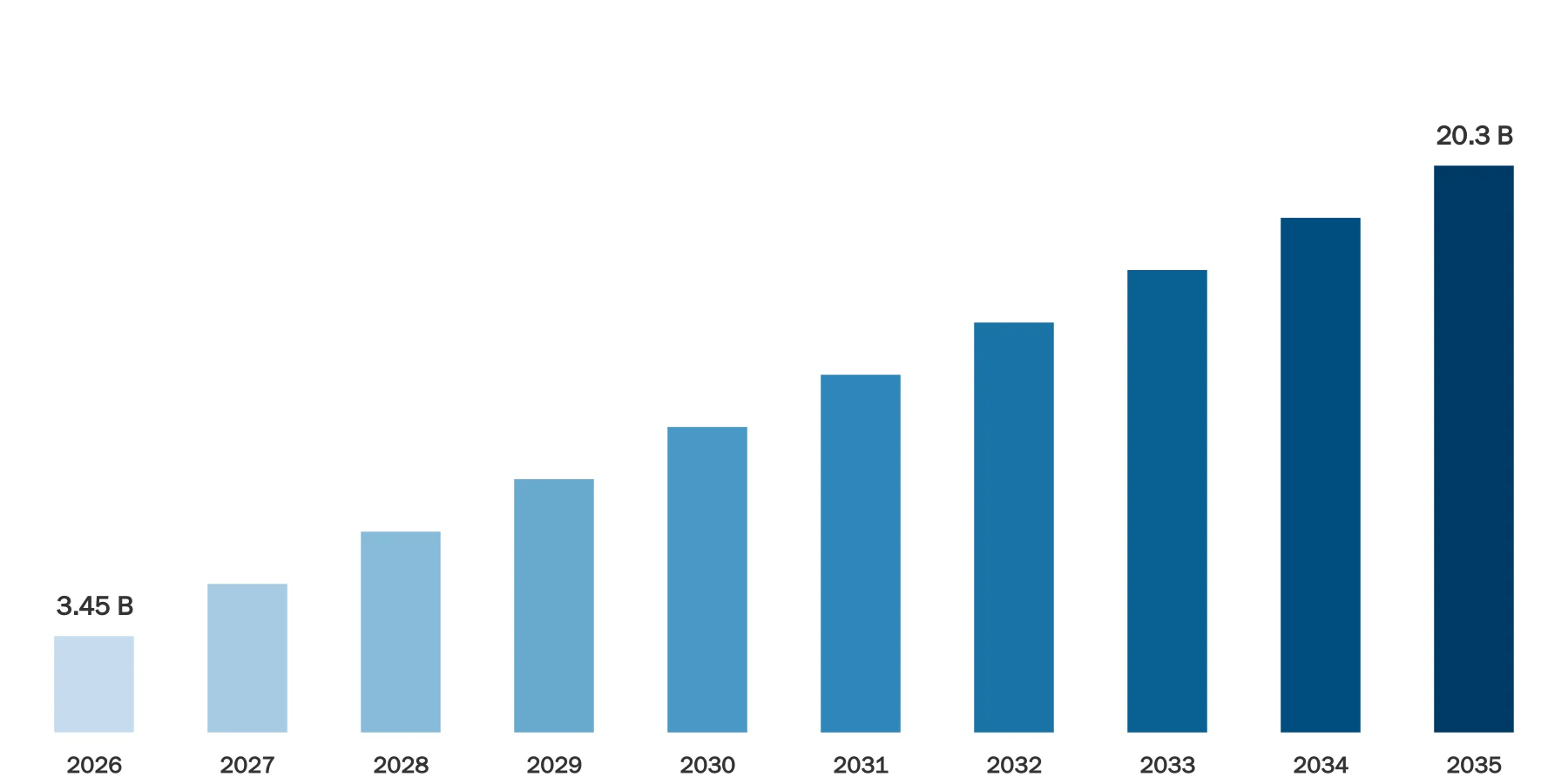
Source: Econ Market Research
A novel technique known as base editing permits precise alteration of individual nucleotides within the DNA sequence without resulting in double-strand breaks. Base editing, as opposed to conventional CRISPR-Cas9 methods, provides more accuracy by directly transforming one DNA base pair into another, reducing off-target effects and mitigating unwanted genetic alterations. This method has enormous potential for treating genetic illnesses, increasing crop yields, and developing medicinal uses.
Base Editing Dynamics
A primary driver is the increasing prevalence of genetic disorders and the pressing need for precise therapeutic interventions. As the understanding of the genetic basis of diseases expands, base editing emerges as a powerful tool for correcting pathogenic mutations with unparalleled accuracy, fostering a robust demand in the healthcare sector. Additionally, the escalating interest from the agricultural industry in optimizing crop traits and improving yields further propels the market',s momentum.
The market landscape is significantly shaped by strategic collaborations and partnerships. Leading Biotechnology and pharmaceutical companies form alliances to take advantage of complementary expertise and hasten the development and commercialization of base editing technologies. Another important factor driving market expansion is the flood of capital into R&,D projects, which is encouraged by supportive regulatory environments. The competitive landscape is marked by intense innovation and product development, as companies strive to stay ahead in the rapidly evolving genomics space.
Base Editing Drivers
Rising Prevalence of Genetic Disorders
One significant driver propelling the Global Base Editing Market is the escalating incidence of genetic disorders worldwide. There is an urgent need for precise and targeted therapeutic interventions as our understanding of the genetic foundations of many diseases grows. Base editing is a game-changing technique in the field of gene therapy because it can fix particular genetic mutations without causing unintended harm. The market is witnessing increased adoption and investment in base editing technologies as the need to address genetic diseases more effectively drives the growing demand for personalised medicine.
Strategic Collaborations and Partnerships
The market is experiencing substantial growth due to strategic collaborations and partnerships among key players. Biotechnology and pharmaceutical companies are recognizing the potential of base editing and are actively engaging in alliances to combine expertise, resources, and accelerate the development and commercialization of base editing technologies. These collaborations facilitate the pooling of knowledge, access to diverse research capabilities, and shared financial investments, fostering innovation and driving the market forward. The collaborative efforts also enhance the ability to navigate regulatory complexities and address challenges related to the technology',s ethical considerations, contributing to the overall advancement of the base editing market.
Restraints:
Ethical Concerns and Regulatory Hurdles
The precision of base editing raises questions about the ethical implications of manipulating the human genome. Ensuring responsible use and addressing public concerns require robust regulatory frameworks. Achieving a delicate balance between encouraging scientific progress and safeguarding ethical considerations poses a challenge for the widespread adoption of base editing technologies, slowing down the regulatory approval processes and market penetration.
Off-Target Effects and Safety Concerns
Another key restraint for the base editing market is the potential for off-target effects, where unintended genetic modifications occur. For base editing tools to be widely used, it is essential to ensure their safety and specificity. The possibility of inadvertent genome modifications can obstruct regulatory clearances and market uptake. In order to reduce off-target effects and improve safety profiles, ongoing research efforts are concentrated on improving base editing technologies, however, resolving these issues continues to be a significant obstacle in the market',s development.
Opportunities:
Advancements in CRISPR-Based Technologies
The continuous advancements in CRISPR-based technologies, including base editing, present a significant opportunity for market growth. As research and development efforts progress, innovations in CRISPR tools contribute to refining base editing techniques, improving efficiency, and expanding the range of targetable genetic elements.
The evolution of these technologies enhances the overall competitiveness of the base editing market by addressing technical challenges, reducing costs, and broadening the spectrum of applications, thereby attracting increased investments and fostering market expansion. As the field of genome editing evolves, the synergy with CRISPR-based advancements positions the base editing market at the forefront of cutting-edge biotechnological innovations.
Segment Overview
By Product &, Services
The global base editing market is categorized into distinct segments based on products and services, reflecting the diverse components contributing to the advancements in genome editing technologies. Under the product category, key components include platforms, kits &, reagents, plasmids, and base editing libraries. Platforms form the foundational technology that enables base editing, providing researchers and scientists with the necessary tools for precision genome modifications. Kits &, reagents encompass the essential biochemical components and materials required for executing base editing experiments, facilitating streamlined workflows.
Plasmids, serving as carriers of genetic material, play a crucial role in delivering the necessary editing machinery into target cells, while base editing libraries provide comprehensive collections of pre-designed base editing tools, enhancing the efficiency and convenience of genome editing applications. On the services front, the market offers gRNA design services, cell line engineering, and other ancillary services. gRNA design services focus on the creation of guide RNAs that guide the base editing machinery to specific genomic locations, ensuring accuracy and specificity.
Cell line engineering services involve the modification of cellular genomes using base editing techniques, providing customized solutions for research and therapeutic applications. Other services encompass a spectrum of offerings, including technical support, training, and consultation, enhancing the overall accessibility and usability of base editing technologies.
By Type
The segmentation by type classifies base editing technologies into DNA base editing and RNA base editing. DNA base editing involves the direct modification of nucleotides within the DNA sequence, enabling precise changes to the genetic code. This approach is pivotal in addressing genetic disorders and advancing therapeutic applications. On the other hand, RNA base editing targets the RNA molecules, allowing for modifications without altering the underlying DNA. This type of base editing holds promise in applications where transient modifications are sufficient, offering unique advantages in certain therapeutic and research scenarios.
By Targeted Base
The targeted base segmentation further refines the focus by categorizing base editing into cytosine base editing and adenine base editing. Cytosine base editing is centred around the modification of cytosine nucleotides in the DNA sequence, while adenine base editing focuses on altering adenine nucleotides. These distinctions cater to the specificity required for different genetic interventions, allowing researchers and practitioners to choose the most suitable approach based on the nature of the genetic modification required.
By Application
The application segment encompasses the diverse fields where base editing technologies find utility. This includes drug discovery &, development, where precise genetic modifications contribute to the identification and validation of therapeutic targets. In agriculture, base editing plays a pivotal role in crop improvement, enhancing traits such as yield, resistance, and nutritional content. The veterinary sector benefits from base editing applications in developing targeted interventions for animal health and breeding programs. The segmentation by application underscores the versatility of base editing technologies across various domains, showcasing their potential to drive advancements in diverse scientific and commercial endeavours.
Base Editing Overview by Region
North America stands at the forefront, driven by robust investments in research and development, a well-established biotechnology sector, and favourable regulatory frameworks. The presence of key market players and academic institutions actively engaged in base editing advancements further solidifies the region',s dominance. Europe follows closely, with a burgeoning biopharmaceutical industry and increasing focus on precision medicine, positioning the continent as a key contributor to the global market. The European regulatory landscape',s adaptability to emerging biotechnologies enhances the prospects for base editing applications in therapeutic and research domains.
Asia-Pacific emerges as a rapidly growing market, propelled by increasing healthcare expenditure, rising awareness of genetic disorders, and a burgeoning agricultural sector. Countries such as China and Japan are notable players, with a strong emphasis on genomics research and biotechnological innovations. The region',s potential for market expansion is further augmented by strategic collaborations, technology transfers, and government initiatives supporting genomic research. Latin America and the Middle East &, Africa regions, while currently nascent in their contributions, showcase untapped potential. Increasing awareness of genetic applications in healthcare and agriculture, coupled with evolving regulatory environments, positions these regions as emerging players in the base editing market.
Base Editing Market Competitive Landscape
Leading biotechnology and pharmaceutical companies such as CRISPR Therapeutics, Editas Medicine, and Beam Therapeutics are at the forefront, leveraging their expertise in genome editing to drive research, development, and commercialization of base editing technologies. These industry giants play a pivotal role in shaping market trends through substantial investments, strategic partnerships, and continuous product innovations.
In addition to established players, the market is witnessing the emergence of nimble start-ups focused exclusively on base editing. Companies like Inscripta and Synthego are gaining traction with specialized solutions, contributing to the diversification of the market. Strategic collaborations between academia and industry further enhance the competitive landscape, facilitating knowledge exchange and fostering advancements in base editing techniques. The academic sector, with institutions like the Broad Institute and the Innovative Genomics Institute, plays a crucial role in driving foundational research, providing a fertile ground for novel discoveries and technological breakthroughs.
Base Editing Market Leading Companies:
ElevateBio
Verve Therapeutics
Pairwise
Prime Medicine
Editas Medicine
CRISPR Therapeutics
Intellia Therapeutics
Precision BioSciences
Sangamo Therapeutics
Cellectis
Arbor Biotechnologies
Base Editing Recent Developments
In May 2023, Revvity forged a licensing agreement with AstraZeneca for the proprietary technology behind its Pin-point base editing system. This cutting-edge modular gene editing platform boasts a robust safety profile, and AstraZeneca aims to leverage it in the development of cell therapies targeting cancer and immune-mediated diseases.
In July 2023, Beam Therapeutics entered into a collaborative partnership with Verve Therapeutics. Within this collaboration, Beam Therapeutics granted Verve Therapeutics a license for an additional target related to liver-mediated cardiovascular diseases.
Global Base Editing Report Segmentation
Base Editing Market Report Scope & Segmentation
| Attributes | Details |
|---|---|
Market Size (Current) | US$ 3.45 Billion in 2026 |
Market Size (Forecast) | US$ 20.3 Billion in 2035 |
Growth Rate | CAGR of 19.38% from 2026 to 2035 |
Forecast Period | 2026 – 2035 |
Base Year | 2025 |
Historical Data Available | Yes |
Regional Scope | Global |
Segments Covered | By Type
By Application
By End-User
|
Frequently Asked Questions
Common questions about this report
The study period covers historical insights and forecast projections for the period 2026-2035.
About the Author
Market research expert with years of industry experience

Related Reports
Explore more market insights from the same category