

Acoustic Insulation Market
Acoustic Insulation Market Size, Share, Trends, Growth, and Industry Analysis, By Material (Mineral Wool, Glass Wool, Polymeric Foams), By Installation Zone (Walls and Partitions, Floors, Ceilings), By End-User (Residential, Commercial, Industrial, Transportation), Regional Analysis and Forecast Period 2026-2035
Acoustic Insulation Market Overview
As per Econ Market Research analysis, Global Acoustic Insulation Market size stood at US$ 17.64 Billion in 2026 and is projected to reach US$ 27.94 Billion by 2035, growing at a CAGR of 5.4% over the forecast period 2026–2035. 2025 is taken as the base year.
Acoustic Insulation Market Size 2025-2035 (USD Billion)

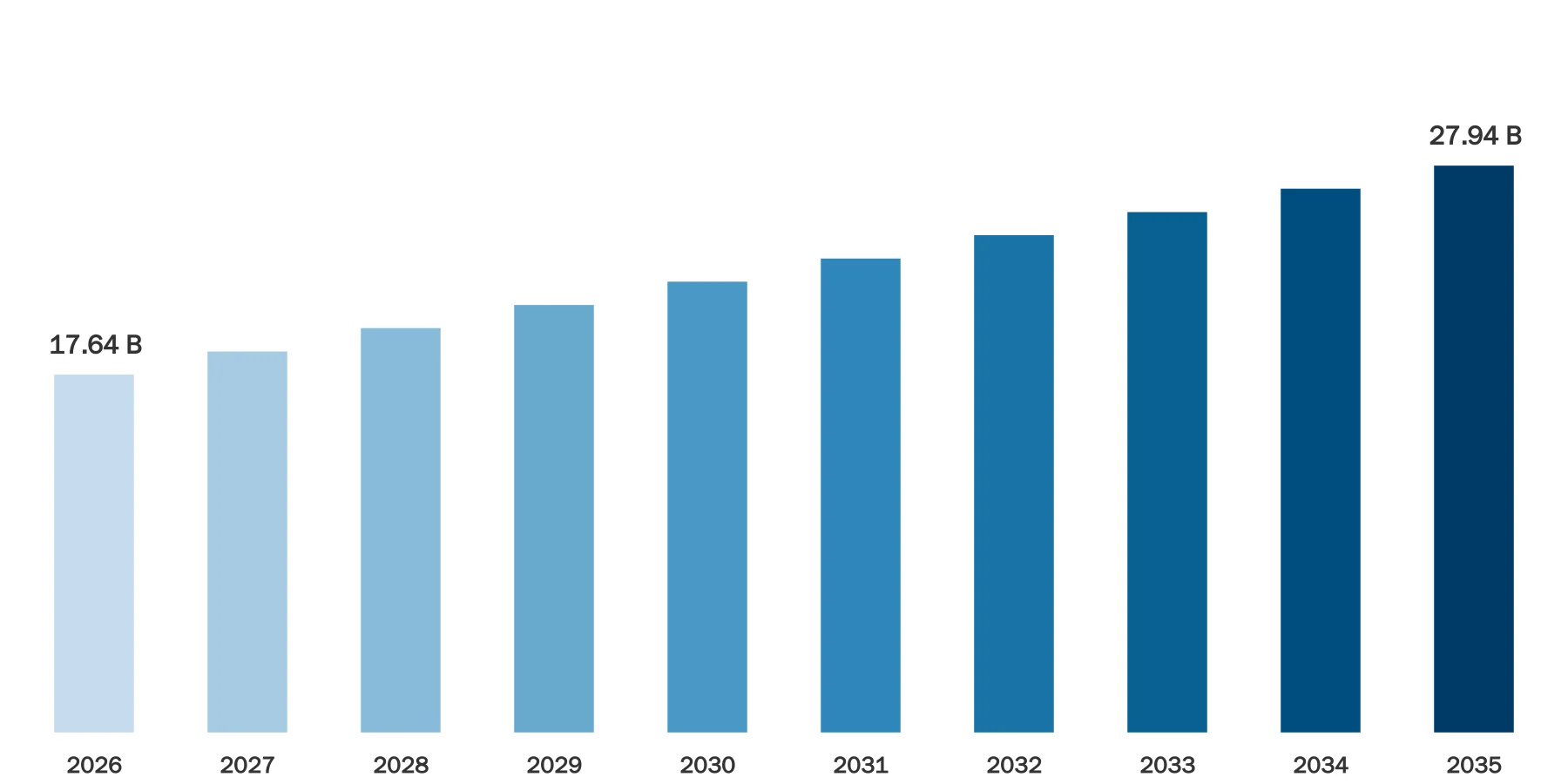
Source: Econ Market Research
Acoustic insulation refers to the process of reducing sound transmission between spaces or isolating sound within a specific area to enhance comfort, privacy, and safety. This market encompasses products such as fiberglass, mineral wool, foam plastics, and others, which are utilized in construction, automotive, industrial, and residential sectors. The demand for acoustic insulation has surged due to increasing urbanization, industrialization, and stringent noise regulations across the globe. Growing awareness regarding the adverse effects of noise pollution on human health and well-being has further propelled the adoption of acoustic insulation solutions.
The market is witnessing significant innovation and technological advancements aimed at developing high-performance, eco-friendly, and cost-effective insulation materials to cater to diverse end-user requirements. Key players in the market are focusing on strategic collaborations, product launches, and mergers and acquisitions to expand their product portfolios and strengthen their market presence. However, challenges such as fluctuating raw material prices, regulatory complexities, and intense competition pose potential obstacles to market growth. Despite these challenges, the Global Acoustic Insulation market is poised for steady expansion, driven by increasing infrastructure development activities, rising consumer awareness, and the growing emphasis on sustainable construction practices.
Geographically, Asia-Pacific is anticipated to emerge as a lucrative market for acoustic insulation, owing to rapid industrialization, urbanization, and infrastructural development initiatives in countries such as China, India, and Southeast Asian nations. Furthermore, the adoption of acoustic insulation in automotive manufacturing and transportation sectors is expected to witness significant growth, driven by increasing vehicle production and stringent noise emission regulations.
Acoustic Insulation Dynamics
Key drivers include the rising awareness about the adverse effects of noise pollution on health and well-being, driving demand for effective soundproofing solutions across residential, commercial, industrial, and automotive sectors. Stringent government regulations aimed at controlling noise emissions and enhancing acoustic comfort in buildings and transportation systems further propel market growth. Moreover, rapid urbanization, industrialization, and infrastructure development activities worldwide necessitate the implementation of acoustic insulation solutions to mitigate noise levels and ensure occupant comfort and safety.
On the supply side, market dynamics are influenced by factors such as technological advancements, material innovation, and strategic collaborations among key players to develop high-performance and sustainable acoustic insulation products. Manufacturers are increasingly focusing on eco-friendly materials and production processes to address growing environmental concerns and meet stringent regulatory requirements. Additionally, the emergence of advanced manufacturing techniques, such as 3D printing and nanotechnology, presents opportunities for enhancing product efficiency and performance.
However, the market faces challenges such as fluctuating raw material prices, which impact manufacturing costs and overall profitability. Intense competition among market players also drives the need for continuous innovation and differentiation to maintain market share and competitiveness. Furthermore, economic uncertainties, geopolitical tensions, and regulatory changes in key regions can influence market dynamics and pose risks to industry growth.
Acoustic Insulation Drivers
Increasing Awareness of Noise Pollution:
Growing awareness about the adverse effects of noise pollution on health and well-being is a significant driver for the acoustic insulation market. As individuals and governments become more cognizant of the detrimental impacts of noise on mental and physical health, the demand for effective soundproofing solutions rises across various sectors. Consumers are increasingly seeking products and materials that can mitigate noise levels in residential, commercial, and industrial settings, driving the adoption of acoustic insulation solutions.
Stringent Regulatory Standards:
The demand for acoustic insulation products is being driven by strict government regulations and standards that aim to improve acoustic comfort in buildings and transportation systems while also controlling noise emissions. Global regulatory organisations are enforcing more stringent guidelines regarding noise pollution and requiring soundproofing techniques to be used in industrial facilities, building sites and auto factories. Adoption of superior acoustic insulation products and solutions is required to comply with these regulations, which will drive market expansion.
Restraints:
Fluctuating Raw Material Prices:
Fluctuations in raw material prices pose a significant restraint to the acoustic insulation market. The prices of key materials such as fiberglass, mineral wool, and foam plastics can be volatile due to factors such as supply chain disruptions, changes in demand, and geopolitical tensions. Instability in raw material prices can impact manufacturing costs, profit margins, and pricing strategies for acoustic insulation manufacturers, posing challenges to market growth and profitability.
Intense Competition and Price Pressure:
The acoustic insulation market is constrained by price pressures and fierce competition among market participants. Price competition heats up as more suppliers and manufacturers compete for market share, putting pressure on margins and making it harder to stay profitable. Furthermore, consumers who are price-sensitive might put affordability before quality, which would commoditize acoustic insulation products and reduce the possibility of premiumization and value-added offerings.
Opportunities:
Technological Advancements and Innovation:
Technological advancements and innovation present significant opportunities for the acoustic insulation market. Continued research and development efforts are driving the emergence of novel materials, manufacturing techniques, and product designs aimed at enhancing acoustic performance, durability, and sustainability. Innovations such as aerogel-based insulation, recycled materials, and smart acoustic solutions offer opportunities for differentiation and competitive advantage in the market.
Segment Overview
By Type
Mineral Wool, composed of rock or slag fibers, provides excellent thermal and acoustic insulation properties, making it suitable for various construction and industrial applications. Glass Wool, manufactured from recycled glass fibers, offers lightweight and cost-effective insulation solutions ideal for residential and commercial construction projects. Polymeric Foams, including materials like expanded polystyrene (EPS) and Polyurethane Foam, provide versatile and customizable insulation options with high sound absorption capabilities, commonly used in transportation and industrial applications. Natural insulation materials, such as cotton, wool, and hemp, offer eco-friendly alternatives to traditional insulation materials, appealing to environmentally conscious consumers and industries seeking sustainable solutions.
By End-Use
The market is segmented by end-use into Residential Construction, Commercial Construction, Transportation, and Industrial sectors, reflecting the diverse applications and demand drivers for acoustic insulation products. In Residential Construction, acoustic insulation is essential for enhancing indoor comfort and privacy by reducing noise transmission between rooms and blocking external noise sources. Commercial Construction encompasses a wide range of buildings such as offices, schools, hospitals, and hotels, where acoustic insulation is critical for creating productive and comfortable environments for occupants.
Transportation applications, including automotive, aerospace, and marine sectors, require acoustic insulation to minimize noise and vibration levels within vehicles and vessels, ensuring a quiet and comfortable ride experience. In the Industrial sector, acoustic insulation is employed in factories, manufacturing facilities, and power plants to mitigate noise generated by machinery and equipment, safeguarding worker health and complying with regulatory standards.
Acoustic Insulation Overview by Region
North America, characterized by mature construction and automotive industries, is a key market for acoustic insulation solutions, driven by stringent noise regulations, increasing focus on energy efficiency, and rising demand for sustainable building materials. Europe follows suit with robust demand for acoustic insulation in residential, commercial, and industrial sectors, fueled by strict noise control regulations, green building initiatives, and advancements in insulation technologies.
Asia-Pacific emerges as a rapidly growing market for acoustic insulation, propelled by rapid urbanization, infrastructure development, and expanding construction activities in countries like China, India, and Southeast Asian nations. The region',s burgeoning automotive industry, coupled with rising awareness about noise pollution and occupant comfort, drives demand for acoustic solutions in vehicles. Meanwhile, Latin America and the Middle East &, Africa regions offer opportunities for market expansion, supported by infrastructure projects, urban development initiatives, and increasing adoption of acoustic insulation in commercial and industrial applications.
Acoustic Insulation Market Competitive Landscape
Leading companies such as Owens Corning, Rockwool International, Saint-Gobain, and Knauf Insulation dominate the market with extensive product portfolios, geographic presence, and strong brand recognition. These companies continually invest in research and development to innovate new materials, enhance product performance, and meet evolving customer demands for high-quality acoustic insulation solutions across residential, commercial, industrial, and transportation sectors.
Moreover, the market witnesses active participation from a diverse range of players including regional manufacturers, niche suppliers, and start-ups, contributing to market fragmentation and competitive dynamics. These players focus on niche markets, specialized applications, and innovative solutions to carve out their market niche and compete with larger incumbents. Strategic collaborations, mergers, and acquisitions are prevalent strategies adopted by companies to expand market reach, diversify product offerings, and strengthen competitive positioning in the global landscape.
Acoustic Insulation Market Leading Companies:
Saint-Gobain S.A.
Owens Corning
ROCKWOOL A/S
Armacell
Kingspan Group
Knauf Insulation
BASF SE
Johns Manville
Fletcher Insulation
Cellecta Ltd.
Global Acoustic Insulation Report Segmentation
Acoustic Insulation Market Report Scope & Segmentation
| Attributes | Details |
|---|---|
Market Size (Current) | US$ 17.64 Billion in 2026 |
Market Size (Forecast) | US$ 27.94 Billion in 2035 |
Growth Rate | CAGR of 5.4% from 2026 to 2035 |
Forecast Period | 2026 – 2035 |
Base Year | 2025 |
Historical Data Available | Yes |
Regional Scope | Global |
Segments Covered | By Material
By Installation Zone
By End-User
|
Frequently Asked Questions
Common questions about this report
The study period covers historical insights and forecast projections for the period 2026-2035.
About the Author
Market research expert with years of industry experience

Dipali Bhingare serves as the Market Research Director at Econ Market Research. With a focus on translating complex global economic shifts into actionable business intelligence, she oversees the strategic direction of comprehensive market studies. Her work empowers organizations to navigate volatile industries through data-driven forecasting and deep-dive competitive analysis.
Related Reports
Explore more market insights from the same category