

Construction Stone Market
Construction Stone Market Size, Share, Trends, Growth, and Industry Analysis, By Stone Type (Granite, Marble, Sandstone, Slate, Engineered Stone), By Application (Flooring and Paving, Exterior Cladding, Interior Decoration, Landscaping), By End-User (Residential, Commercial, Institutional), Regional Analysis and Forecast Period 2026-2035
Market Overview
As per Econ Market Research analysis, the Global Construction Stone Market accounted for US$ 48.39 Billion in 2026 and is expected to surpass US$ 74.35 Billion by 2035, witnessing a CAGR of 4.8% throughout 2026–2035. The analysis is based on 2025 as the base year.
Construction Stone Market Size 2025-2035 (USD Billion)

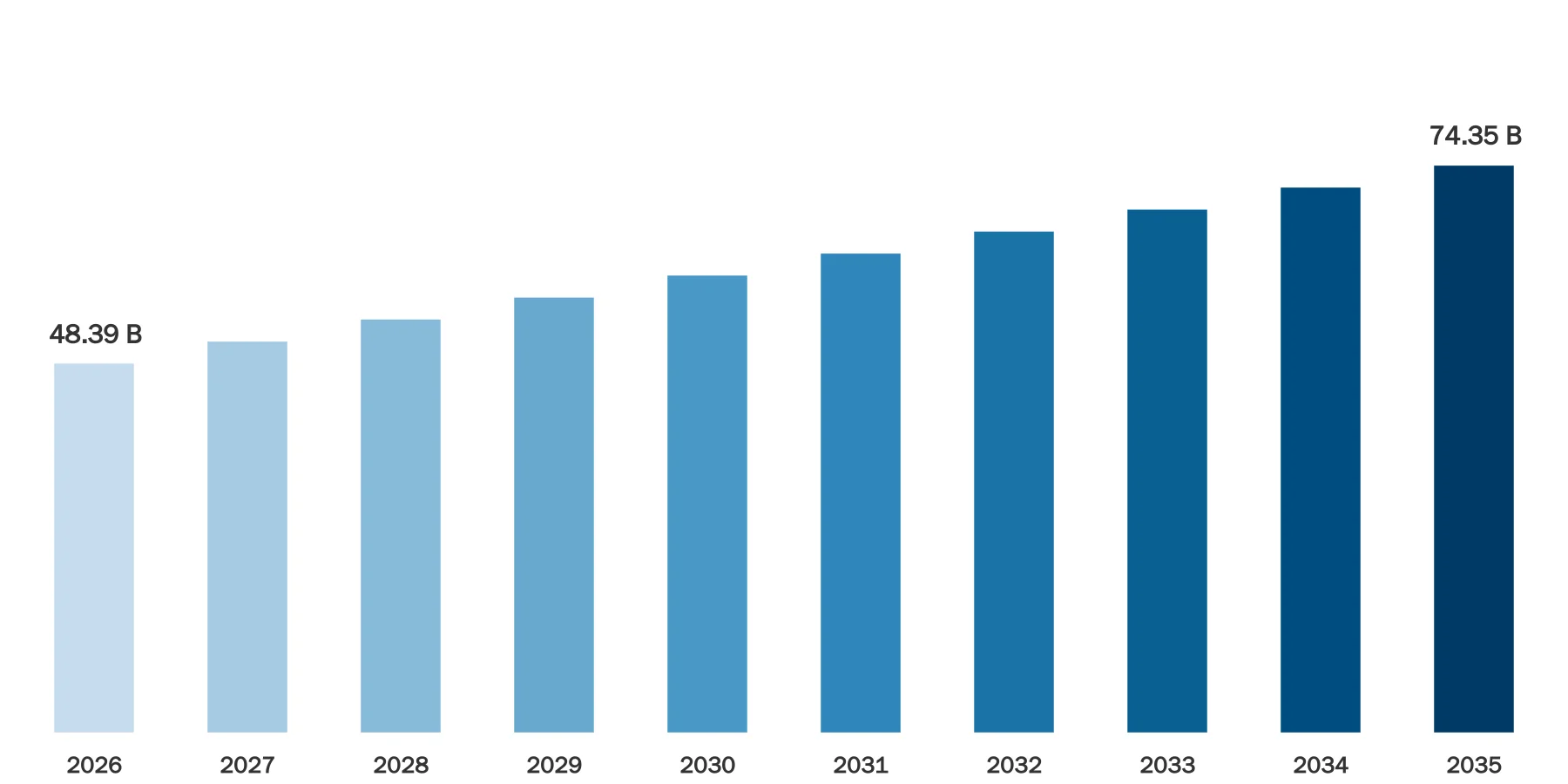
Source: Econ Market Research
The market for construction stones is a vital component of the building sector, including materials required for infrastructure, residential, and commercial projects. This market meets a wide range of structural, functional, and aesthetic needs with its wide range of alternatives, which include granite and limestone. Global infrastructure development and urbanization are driving the demand for construction stone. Building stone is prized not just for its strength and adaptability but also for its vital role in sustainable building methods, which lessen environmental effects and increase energy efficiency. The stone market is still essential to the development and innovation of the built environment since it is a fundamental component of contemporary construction.
Construction Stone Dynamics
Demand is influenced by changes in government laws, infrastructure spending, and building activity. Industrial, transportation, and extraction technologies have advanced to improve productivity and quality of output. Sustainable materials and methods are adopted due to environmental concerns, which affect consumer choices. Market trends are also influenced by regional differences in stone preferences and availability. Global pricing and supply chains are also impacted by changes in trade regulations and currency exchange rates. All things considered, a wide range of technological, economic, and environmental issues can affect the construction stone market, which forces the sector to constantly innovate and adapt.
Construction Stone Drivers
Population Growth and Urbanization
Infrastructure development and investments serve as key drivers for the construction stone market by stimulating demand for materials in projects such as roads, bridges, railways, and utilities. Government initiatives and private investments in infrastructure projects, driven by economic growth and urbanization, create a significant need for durable and reliable construction materials like stone. As countries strive to enhance their infrastructure to support economic activities and improve quality of life, the demand for construction stone remains robust, driving market growth.
Infrastructure Development and Investments
Infrastructure development and investments serve as key drivers for the construction stone market by stimulating demand for materials in projects such as roads, bridges, railways, and utilities. Government initiatives and private investments in infrastructure projects, driven by economic growth and urbanization, create a significant need for durable and reliable construction materials like stone. As countries strive to enhance their infrastructure to support economic activities and improve quality of life, the demand for construction stone remains robust, driving market growth.
Restraints:
Regulatory Constraints and Compliance Challenges
Strict environmental laws governing mining and processing activities have the potential to reduce output and raise expenses. Complying with labor laws and safety standards raises the costs and complexity of operations. Furthermore, market actors face uncertainty as a result of changing regulatory environments, which affects long-term planning and investment choices. Construction stone businesses may find it more difficult to grow their markets and turn a profit while navigating these regulatory obstacles, which call for significant resources and experience.
Infrastructure Limitations and High Transportation Costs
Logistical difficulties occur in areas with poor transportation infrastructure, which causes stone transit from quarries to building sites to be delayed and more expensive. Longer transportation lengths are also required to get to remote quarries, which increases fuel costs and carbon emissions. These limitations not only raise project costs overall but also make stone suppliers less competitive, which hurts market accessibility and profitability.
Opportunities:
Technological Innovations in Stone Extraction and Processing
Modern equipment and methods increase productivity, making it possible to extract stone from quarries more quickly and precisely. Processing innovations make it possible to produce unique forms and finishes that satisfy a range of architectural and design tastes. Furthermore, processes are streamlined by automation and digitization, which lowers labor costs and raises safety. Accepting these technologies can help construction stone suppliers become more competitive, and productive, and open up new market niches.
Integration of Digital Solutions for Marketing and Sales
Stone suppliers may present their products more efficiently and attract a wider audience by utilizing digital marketing tactics and online platforms. By leveraging e-commerce platforms, market reach transcends geographic boundaries and transactions are made easier. Targeted marketing initiatives are made possible by Data Analytics tools, which offer insightful information about consumer trends and preferences. In the cutthroat world of building stone, using digital solutions builds stronger brand awareness and loyalty, expedites sales procedures, and improves customer interaction.
Segment Overview
By Type
Based on type, the global construction stone market is divided into construction aggregates and natural stones. The natural stones category dominates the market with the largest revenue share in 2023. Natural stones are geological materials taken from quarries that have either not been handled at all or very little. Among these stones are sandstone, granite, marble, limestone, and slate.
Because natural stones come in so many different hues, textures, and patterns, they are frequently used in architecture and Interior Design. When utilized in construction projects, inert granular materials including sand, gravel, crushed stone, and recycled concrete are known as construction aggregates. They are mostly used in asphalt, concrete, and other construction applications as basic materials.
By Application
Based on the application, the global construction stone market is categorized into public infrastructure, commercial infrastructure, and residential infrastructure. The commercial infrastructure category leads the global construction stone market with the largest revenue share in 2023. Projects connected to private companies or businesses are included in the category of commercial infrastructure. These projects include retail stores, manufacturing plants, and entertainment spaces like arenas, theaters, and convention halls.
Projects financed and managed by municipal, regional, or federal governments are included in the category of public infrastructure. These projects, which have the public interest as their goal, usually involve public buildings (schools, hospitals, government offices), utilities (water supply, sewage systems), transportation networks (roads, bridges, highways), and other necessary facilities (parks, airports, ports). Residential communities and housing developments are covered by residential infrastructure. The creation of planned residential areas, apartment complexes, condominiums, and single-family homes are all part of these projects.
Construction Stone Overview by Region
The global construction stone market is categorized into North America, Europe, Asia-Pacific, and the Rest of the World. Asia-Pacific emerged as the leading region, capturing the largest market share in 2023. Infrastructure development and construction operations have become widespread in countries like China, India, and Southeast Asia due to rapid urbanization, population growth, and economic development. Large amounts of building stone are needed for a variety of projects, including commercial and residential developments as well as public infrastructure, by the region',s rapidly expanding construction industry.
Population expansion and continuous urbanization are driving up construction, especially in areas like infrastructure, retail, and residential development. Second, the ongoing need for building supplies, particularly stone, is fueled by government programs and expenditures on infrastructure modernization and renewal projects. Furthermore, the industry is further supported by rising awareness of sustainable building techniques and the usage of natural materials like stone.
Construction Stone Competitive Landscape
In the global construction stone market, a few major players exert significant market dominance and have established a strong regional presence. These leading companies remain committed to continuous research and development endeavors and actively engage in strategic growth initiatives, including product development, launches, joint ventures, and partnerships. By pursuing these strategies, these companies aim to strengthen their market position, expand their customer base, and capture a substantial share of the market.
Construction Stone Market Leading Companies:
Caesarstone
DowDuPont
Compac
Indian Limestone Company
Levantina
Hanwha LandC
Precision Countertops
Anhui Conch Cement
Universal Marble and Granite
Best Cheer Stone Group
Nordkalk
Antolini
Coldspring, and various others.
Construction Stone Recent Developments
In December 2023, Lehman-Roberts Company (",LRC",) and Memphis Stone &, Gravel Company (",MSG",), reputable makers and suppliers of asphalt pavement and aggregates, were acquired by Granite Construction Incorporated. With this acquisition, Granite broadens its market reach and establishes a new avenue for expansion in the desirable Memphis metropolitan area.
In September 2023, With great pleasure, Polycor announces the successful conclusion of its acquisition of ROCAMAT, a prominent player in the global construction stone production business and one of France',s top producers of natural stone. This significant achievement follows the initial announcement of Polycor',s takeover plan.
Construction Stone Market Report Segmentation
Construction Stone Market Report Scope & Segmentation
| Attributes | Details |
|---|---|
Market Size (Current) | US$ 48.39 Billion in 2026 |
Market Size (Forecast) | US$ 74.35 Billion in 2035 |
Growth Rate | CAGR of 4.8% from 2026 to 2035 |
Forecast Period | 2026 – 2035 |
Base Year | 2025 |
Historical Data Available | Yes |
Regional Scope | Global |
Segments Covered | By Stone Type
By Application
By End-User
|
Frequently Asked Questions
Common questions about this report
The study period covers historical insights and forecast projections for the period 2026-2035.
About the Author
Market research expert with years of industry experience

Dipali Bhingare serves as the Market Research Director at Econ Market Research. With a focus on translating complex global economic shifts into actionable business intelligence, she oversees the strategic direction of comprehensive market studies. Her work empowers organizations to navigate volatile industries through data-driven forecasting and deep-dive competitive analysis.
Related Reports
Explore more market insights from the same category