

Fireproof Insulation Market
Fireproof Insulation Market Size, Share, Trends, Growth, and Industry Analysis, By Material (Glass Wool, Stone Wool, Plastic Foam, Others), By Application (Residential, Commercial, Industrial), Regional Analysis and Forecast Period 2026-2035
Fireproof Insulation Market Overview
As per Econ Market Research analysis, the Global Fireproof Insulation Market was valued at US$ 19.28 Billion in 2026 and is expected to reach US$ 26.83 Billion by 2035, registering a CAGR of 3.69% during the forecast period 2026–2035. The base year considered is 2025.
Fireproof Insulation Market Size 2025-2035 (USD Billion)

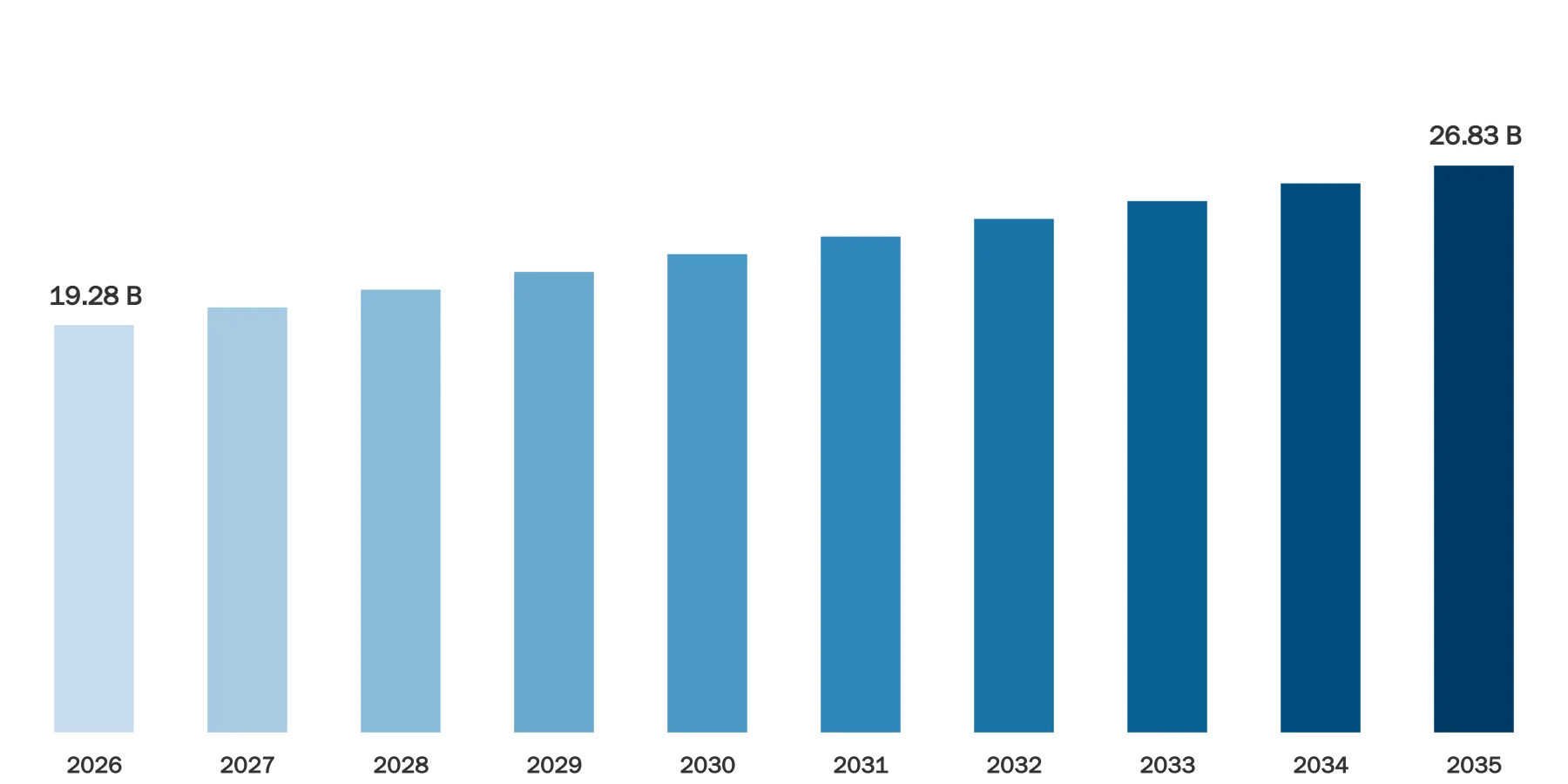
Source: Econ Market Research
Fireproof insulation materials are crucial components in construction projects, industrial facilities, and residential buildings, providing vital protection against fire hazards. These materials include mineral wool, fiberglass, cellulose, foam glass, and perlite, among others. The market is driven by stringent fire safety regulations and growing awareness regarding the importance of fireproofing in various industries. Factors such as urbanization, industrialization, and infrastructure development further propel the demand for fireproof insulation materials worldwide.
The residential, commercial, and industrial sectors have increased their use of fireproof insulation materials due to strict building codes and regulations requiring fire safety standards. Key players in the industry are in fierce competition with one another as they work to develop cutting-edge fireproofing solutions. In the near future, technological developments like the creation of sustainable and environmentally friendly insulation materials are expected to propel market expansion. Furthermore, manufacturers are concentrating on the creation of fireproof insulation materials with improved thermal performance and environmental sustainability due to growing concerns about energy efficiency and sustainability. Even with the bright future ahead of the market, obstacles like volatile raw material prices and unstable regional economies could partially impede its growth.
Fireproof Insulation Dynamics
The construction sector, in particular, is a significant contributor to market growth, as builders and developers seek reliable solutions to enhance the fire resistance of structures. Additionally, increasing awareness among consumers regarding the importance of fire safety further fuels market expansion. Technological advancements play a pivotal role in driving innovation within the industry, with manufacturers focusing on the development of advanced insulation materials that offer superior fire protection while also addressing concerns related to energy efficiency and sustainability.
Moreover, the market dynamics are influenced by macroeconomic factors such as urbanization, industrialization, and infrastructure development. Rapid urbanization, especially in emerging economies, drives the demand for fireproof insulation materials in residential and commercial construction projects. Industrial facilities, including petrochemical plants, refineries, and manufacturing plants, also contribute significantly to market growth, as these sectors require robust fireproofing solutions to safeguard assets and ensure operational safety.
Furthermore, the competitive landscape of the global fireproof insulation market is characterized by intense rivalry among key players striving to expand their market presence and gain a competitive edge. Strategic initiatives such as product innovations, partnerships, and acquisitions are common strategies adopted by companies to strengthen their foothold in the market. However, challenges such as fluctuating raw material prices and regulatory uncertainties may pose obstacles to market growth.
Fireproof Insulation Drivers
Stringent Regulatory Standards:
Government regulations mandating stringent fire safety standards in construction and industrial settings are a significant driver for the fireproof insulation market. These regulations compel builders, architects, and industries to incorporate fireproofing materials into their structures to mitigate fire hazards and ensure occupant safety. As governments worldwide intensify their focus on enhancing building safety codes, the demand for fireproof insulation materials is expected to escalate correspondingly. Manufacturers that can offer compliant and innovative solutions stand to benefit from this growing demand.
Increasing Construction Activities:
The fireproof insulation market is largely driven by the expanding construction sector, especially in emerging economies. The demand for fireproof insulation materials in residential, commercial, and industrial construction projects is driven by rapid urbanisation, population growth, and infrastructure development. Effective fire safety measures are becoming more and more important as cities grow and new structures are constructed.
Additionally, the use of fireproof insulation solutions that provide better performance and durability is fuelled by developments in building methods and materials. In order to serve the growing construction industry, companies in the fireproof insulation market can benefit from this trend by diversifying their product offerings and fortifying their distribution systems.
Restraints:
Fluctuating Raw Material Prices:
The fireproof insulation market faces challenges associated with fluctuating raw material prices, particularly those of mineral wool, fiberglass, and other key components. Volatility in raw material costs can significantly impact production costs and profit margins for manufacturers. Moreover, fluctuations in currency exchange rates and geopolitical tensions can further exacerbate price volatility, making it challenging for companies to maintain stable pricing strategies and profitability. Despite the long-term benefits of fireproof insulation, the initial investment costs associated with these materials can act as a restraint for market growth.
Fireproof insulation materials often come at a premium compared to conventional insulation options, which may deter budget-conscious consumers and businesses from adopting them. Additionally, retrofitting existing structures with fireproof insulation can entail substantial expenses in terms of material procurement and installation labor. Companies in the fireproof insulation market need to address these cost concerns by offering cost-effective solutions and emphasizing the long-term advantages of fireproofing in terms of safety, energy efficiency, and regulatory compliance.
Opportunities:
Growing Focus on Sustainability:
The increasing emphasis on sustainability and environmental stewardship presents a promising opportunity for companies in the fireproof insulation market. As consumers and businesses prioritize eco-friendly building materials and practices, there is a growing demand for sustainable fireproof insulation solutions with minimal environmental impact. Manufacturers can capitalize on this trend by incorporating recycled materials, reducing carbon footprints, and obtaining eco-certifications for their products.
Furthermore, government incentives and green building initiatives aimed at promoting sustainable construction practices create a conducive environment for the adoption of environmentally friendly fireproof insulation materials. Companies that align their strategies with sustainability goals and consumer preferences stand to gain market share and foster long-term growth in the increasingly eco-conscious marketplace.
Segment Overview
By Material:
The market offers a diverse range of fireproof insulation materials, including glass wool, stone wool, fiberglass, cellulose, mineral wool, rock wool, slag wool, polystyrene, Polyurethane Foam, and other specialized options. Each material possesses unique characteristics and properties that make them suitable for specific applications and environments. For instance, fiberglass and mineral wool are commonly used in construction for their excellent fire resistance and thermal insulation properties, while polystyrene and polyurethane foam are preferred for their lightweight and versatility in diverse applications.
By End-Users:
Fireproof insulation finds application across a spectrum of end-users, including residential buildings, commercial buildings, marine and offshore structures, and industrial building and construction projects. Residential buildings require fireproof insulation to enhance safety and protect occupants from fire hazards. Commercial buildings such as offices, shopping malls, and hospitals also rely on fireproof insulation to comply with safety regulations and mitigate fire risks.
Marine and offshore structures face unique challenges due to harsh environmental conditions, making fireproof insulation essential for safeguarding assets and personnel. Industrial building and construction projects, including factories, warehouses, and power plants, prioritize fireproofing to ensure uninterrupted operations and protect critical infrastructure.
By Application:
Fireproof insulation is applied across various components and structures, including walls and partitions, cable lines, piping, air ducts, storage tanks, and supporting structures. Walls and partitions are crucial areas where fireproof insulation is installed to contain and prevent the spread of fire within buildings. Cable lines and piping require fireproof insulation to maintain integrity and functionality during fire incidents. Air ducts and storage tanks also benefit from fireproofing to prevent damage and maintain operational efficiency. Supporting structures such as beams and columns are reinforced with fireproof insulation to enhance structural stability and withstand fire-induced stresses.
Fireproof Insulation Overview by Region
In North America, stringent building codes and regulations drive the demand for fireproof insulation materials, particularly in the United States and Canada. The region',s robust construction industry, coupled with increasing awareness of fire safety measures, fuels market growth. Europe also witnesses significant demand for fireproof insulation, driven by stringent regulatory standards and a strong emphasis on sustainable construction practices. Countries like Germany, the United Kingdom, and France lead the adoption of fireproof insulation materials, supported by government initiatives promoting energy efficiency and environmental sustainability.
Asia Pacific emerges as a key growth market for fireproof insulation, propelled by rapid urbanization, infrastructure development, and industrialization across countries such as China, India, and Southeast Asian nations. Rising awareness of fire safety regulations and increasing investments in commercial and residential construction projects contribute to market expansion in the region. In Latin America, countries like Brazil and Mexico experience a growing demand for fireproof insulation materials, driven by urbanization and the need for modernization in infrastructure and building practices.
The Middle East and Africa region also present opportunities for market growth, supported by infrastructure development projects, particularly in the Gulf Cooperation Council (GCC) countries. The construction boom in cities like Dubai and Riyadh fuels demand for fireproof insulation materials to enhance building safety and compliance with regulatory standards. However, regional market dynamics are influenced by factors such as economic conditions, political stability, and regulatory frameworks, which may vary across countries.
Fireproof Insulation Market Competitive Landscape
Major companies such as Owens Corning, Saint-Gobain, Johns Manville, Knauf Insulation, and Rockwool International dominate the market with their extensive product portfolios and global presence. These industry leaders focus on product innovation, research and development, and strategic partnerships to enhance their market share and gain a competitive edge. Additionally, mergers and acquisitions are prevalent strategies among key players to expand their geographic footprint, diversify their product offerings, and leverage synergies to strengthen their market position.
Moreover, regional players and emerging market entrants contribute to market competition by offering specialized solutions tailored to local requirements and preferences. The competitive landscape is further shaped by factors such as pricing strategies, distribution networks, regulatory compliance, and customer service. As the demand for fireproof insulation materials continues to rise, competition among industry players intensifies, prompting companies to differentiate themselves through quality, performance, and sustainability attributes.
Fireproof Insulation Market Leading Companies:
Rockwool International A/S
Owens Corning Corporation
Saint-Gobain S.A.
Paroc Group
Knauf Insulation
GAF
Beijing New Building Material
Kingspan Group plc
Etex Group
3M Company
Armacell International S.A.
Global Fireproof Insulation Report Segmentation
Fireproof Insulation Market Report Scope & Segmentation
| Attributes | Details |
|---|---|
Market Size (Current) | US$ 19.28 Billion in 2026 |
Market Size (Forecast) | US$ 26.83 Billion in 2035 |
Growth Rate | CAGR of 3.69% from 2026 to 2035 |
Forecast Period | 2026 – 2035 |
Base Year | 2025 |
Historical Data Available | Yes |
Regional Scope | Global |
Segments Covered | By Material
By Application
|
Frequently Asked Questions
Common questions about this report
The study period covers historical insights and forecast projections for the period 2026-2035.
About the Author
Market research expert with years of industry experience

Related Reports
Explore more market insights from the same category