

Glass Movable Walls Market
Glass Movable Walls Market Size, Share, Trends, Growth, and Industry Analysis, By Product Type (Automated, Manual), By Panel Type (Framed, Frameless), By Application (Commercial, Residential, Institutional), Regional Analysis and Forecast Period 2026-2035
Market Overview
As per Econ Market Research analysis, the Global Glass Movable Walls Market was recorded at US$ 5.02 Billion in 2026 and is projected to expand to US$ 12.38 Billion by 2035, registering a CAGR of 11.95% over the forecast period. The base year used is 2025.
Glass Movable Walls Market Size 2025-2035 (USD Billion)

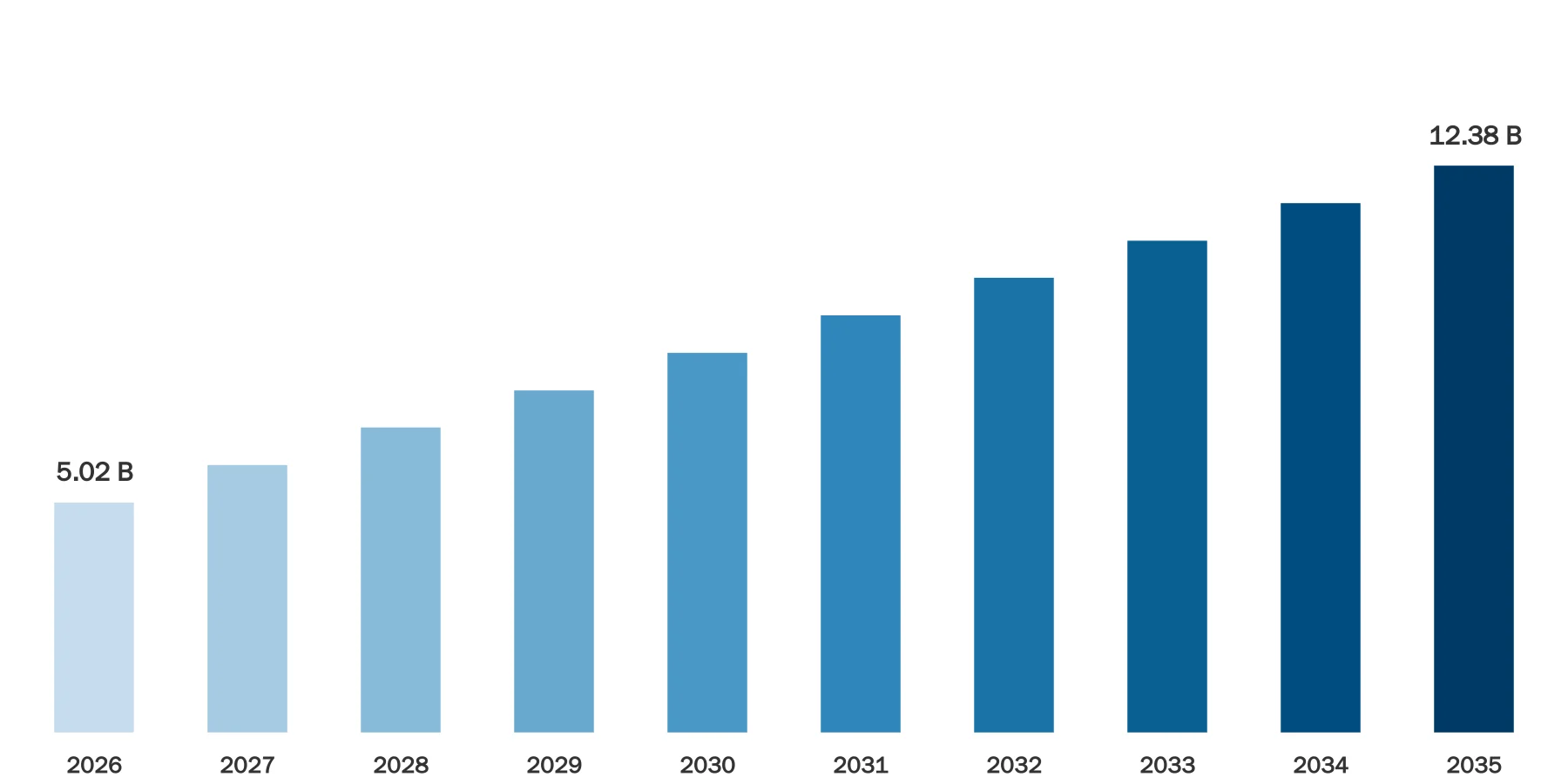
Source: Econ Market Research
The Global Glass Movable Walls market refers to the segment within the construction and Interior Design industry that focuses on movable partitions made primarily of glass. These walls are designed to offer flexibility in space utilization, allowing for the creation of temporary or semi-permanent divisions within larger areas. The use of glass in these partitions provides transparency and visual connectivity while also maintaining acoustic privacy and sound insulation, making them ideal for modern office spaces, conference rooms, hotels, and residential environments.
In recent years, the Global Glass Movable Walls market has witnessed significant growth due to several factors. The rising trend towards open-concept office layouts and flexible workspaces has increased the demand for adaptable partitioning solutions that can easily transform the layout of a space to accommodate changing needs. Additionally, the emphasis on natural light and aesthetic appeal in interior design has led to the preference for glass partitions over traditional opaque walls, as they allow for the penetration of daylight and create a sense of spaciousness. Furthermore, advancements in technology have enabled the development of innovative glass systems that offer enhanced functionality, such as soundproofing, thermal insulation, and motorized operation, further driving market growth.
Glass Movable Walls Dynamics
One significant driver is the growing emphasis on workspace flexibility and adaptability in commercial and residential environments. As organizations seek to optimize space utilization and create dynamic work environments that foster collaboration and innovation, the demand for movable glass partitions continues to rise. Additionally, the increasing adoption of sustainable building practices and green design principles has fuelled interest in glass partitioning systems, which offer benefits such as energy efficiency, natural light utilization, and recyclability.
Furthermore, advancements in technology play a pivotal role in shaping market dynamics by enabling the development of innovative glass partition solutions with enhanced functionality and performance. For instance, the integration of smart technologies allows for features such as automated operation, remote control, and integration with building management systems, offering users greater convenience and control over their workspace environment. Moreover, the COVID-19 pandemic has accelerated the adoption of glass partitions as businesses prioritize health and safety measures to mitigate the spread of infectious diseases in shared spaces. The transparent nature of glass partitions provides a physical barrier while maintaining visual connectivity, addressing concerns around social distancing and hygiene.
Glass Movable Walls Drivers
Workspace Flexibility Demands:
The increasing trend towards flexible workspaces across various industries is a significant driver for the Global Glass Movable Walls market. With the rise of remote work and the need for collaborative environments, businesses are seeking adaptable office layouts that can easily accommodate changing needs. Glass movable walls offer a practical solution by allowing spaces to be reconfigured quickly and efficiently, enabling organizations to maximize the use of available floor space. This flexibility enhances productivity, encourages creativity, and fosters a sense of openness and collaboration among employees, driving the demand for glass partitioning systems in commercial and corporate settings.
Emphasis on Sustainable Design:
Sustainability concerns are driving the adoption of eco-friendly building materials and design practices, making glass movable walls increasingly attractive to architects, designers, and building owners. Glass partitions offer several sustainability benefits, including energy efficiency, daylight optimization, and recyclability. By allowing natural light to penetrate deeper into interior spaces, glass walls reduce the need for artificial lighting, resulting in energy savings and lower carbon emissions. Additionally, glass is a highly recyclable material, contributing to resource conservation and waste reduction in construction projects. As green building certifications and environmental regulations become more stringent, the demand for sustainable partitioning solutions is expected to grow, driving market expansion for glass movable walls.
Restraints:
One of the primary restraints for the Global Glass Movable Walls market is the relatively high initial costs associated with the purchase and installation of glass partitioning systems compared to traditional drywall or solid partitions. The use of premium materials, specialized hardware, and skilled labor contribute to the higher upfront investment required for glass walls. While glass partitions offer long-term benefits such as durability, aesthetic appeal, and flexibility, the initial capital outlay may deter some budget-conscious customers, particularly in markets with limited financial resources or stringent cost constraints.
Installation Challenges:
The installation process for glass movable walls can be complex and time-consuming, presenting logistical challenges and potential disruptions to ongoing operations in commercial and residential settings. Unlike conventional partitions that can be easily assembled and installed, glass walls require precise measurements, careful handling, and specialized equipment to ensure proper alignment and structural integrity.
Moreover, retrofitting existing spaces with glass partitions may involve modifications to electrical, HVAC, and Fire Protection Systems, further complicating the installation process and adding to project costs. These installation challenges can prolong project timelines, increase labor expenses, and impact overall project schedules, posing barriers to market growth for glass movable walls.
Opportunities:
Technological Advancements:
The integration of advanced technologies such as smart glass, Augmented Reality, and Building Information Modeling (BIM) presents significant opportunities for innovation and differentiation in the Global Glass Movable Walls market. Smart glass systems, for example, offer dynamic transparency control, allowing users to adjust the opacity of glass partitions based on privacy needs or environmental conditions. Augmented reality tools enable designers and architects to visualize and customize glass wall configurations in real-time, streamlining the design and specification process.
BIM platforms facilitate collaboration among project stakeholders by providing a centralized digital environment for planning, coordination, and communication throughout the project lifecycle. Embracing these technological advancements can enhance product functionality, improve user experience, and create new business opportunities for manufacturers and suppliers of glass partitioning systems.
Segment Overview
By Type
By Type, glass movable walls are categorized into Automated Movable Walls and Manual Movable Walls. Automated systems are equipped with motorized mechanisms that enable users to effortlessly open, close, and reconfigure partition layouts with the push of a button or through remote control, offering convenience and ease of operation. On the other hand, Manual Movable Walls rely on manual manipulation for partition adjustment, providing a cost-effective alternative for spaces where automation may not be necessary or feasible.
By Application
In terms of Application, glass movable walls find diverse usage across a range of sectors including Offices, Schools and Universities, Hotels, Hospitals, Fairs and Conferences, and other commercial and residential environments. These partitions serve various purposes such as creating flexible workspaces, dividing classrooms, enhancing privacy in hotel rooms, facilitating patient care in healthcare facilities, and delineating exhibition spaces at conferences and events.
By Sales Channel
The Sales Channel segment distinguishes between Direct and Indirect distribution channels through which glass movable walls are marketed and sold. Direct channels involve manufacturers selling directly to end-users or through company-owned stores and showrooms, allowing for greater control over product positioning, pricing, and customer relationships. Indirect channels, on the other hand, involve third-party distributors, dealers, and online retailers who facilitate product distribution to a wider network of customers, offering convenience and accessibility to buyers.
By Visibility
Visibility categorizes glass movable walls based on their transparency characteristics, with options including Transparent and Opaque partitions. Transparent walls allow for visual connectivity and light penetration while maintaining spatial openness, making them suitable for environments where transparency and aesthetics are desired. Opaque walls, on the other hand, provide privacy and concealment, blocking visibility and reducing sound transmission between spaces, making them ideal for areas requiring enhanced confidentiality or acoustic control.
Glass Movable Walls Overview by Region
In North America, particularly in the United States and Canada, the market is driven by robust commercial construction activity, growing demand for flexible workspace solutions, and increasing emphasis on sustainable building practices. The region',s strong economy, technological advancements, and evolving workplace trends contribute to the adoption of glass movable walls across a wide range of industries including technology, finance, healthcare, and education. In Europe, countries like Germany, the United Kingdom, and France are prominent markets for glass partitioning systems, driven by stringent building regulations, a focus on energy efficiency, and a preference for modern and aesthetic interior designs.
The region',s mature construction industry, architectural innovation, and emphasis on workplace ergonomics and employee wellbeing fuel the demand for flexible and adaptable workspace solutions. In the Asia Pacific region, countries such as China, Japan, and India are experiencing rapid urbanization, infrastructure development, and commercial real estate expansion, driving the adoption of glass movable walls in corporate offices, educational institutions, hospitality establishments, and healthcare facilities.
The region',s burgeoning middle class, increasing urban population, and rising disposable incomes contribute to the demand for modern and innovative interior solutions that enhance productivity, efficiency, and comfort. Other regions such as Latin America, the Middle East, and Africa also present opportunities for market growth, driven by urbanization, commercial development, and investments in infrastructure and construction projects. However, challenges such as economic volatility, political instability, and varying levels of regulatory compliance may influence market dynamics and investment decisions in these regions.
Glass Movable Walls Market Competitive Landscape
Key players in the market include established companies such as Dormakaba, Hufcor, Skyfold, Modernfold, and CR Laurence, renowned for their extensive product portfolios, technological expertise, and global reach. These industry leaders leverage strategic initiatives such as product innovation, mergers and acquisitions, partnerships, and geographical expansion to strengthen their market position and meet evolving customer demands. Additionally, niche players and emerging start-ups contribute to market competitiveness by offering specialized solutions, customization options, and competitive pricing strategies targeting specific market segments and customer needs.
Competition in the market is driven by factors such as product quality, performance, reliability, design aesthetics, pricing, customer service, and brand reputation. As businesses and consumers increasingly prioritize sustainability, flexibility, and user experience in their built environments, competition in the Global Glass Movable Walls market is expected to intensify, prompting companies to invest in research and development, marketing, and customer engagement initiatives to stay ahead of the competition and capture growth opportunities in the evolving market landscape.
Glass Movable Walls Market Leading Companies:
Hufcor, Inc.
Kwik-Wall Company
NanaWall Systems
Andersen Windows &, Doors
Modernfold, Inc.
IMT Modular Partitions Ltd.
Avanti Systems USA
Dormakaba Group
MHB
Bendheim
Global Glass Movable Walls Report Segmentation
Glass Movable Walls Market Report Scope & Segmentation
| Attributes | Details |
|---|---|
Market Size (Current) | US$ 5.02 Billion in 2026 |
Market Size (Forecast) | US$ 12.38 Billion in 2035 |
Growth Rate | CAGR of 11.95% from 2026 to 2035 |
Forecast Period | 2026 – 2035 |
Base Year | 2025 |
Historical Data Available | Yes |
Regional Scope | Global |
Segments Covered | By Product Type
By Panel Type
By Application
|
Frequently Asked Questions
Common questions about this report
The study period covers historical insights and forecast projections for the period 2026-2035.
About the Author
Market research expert with years of industry experience

Related Reports
Explore more market insights from the same category