

Multiomics Market
Multiomics Market Size, Share, Trends, Growth, and Industry Analysis, By Type (Genomics, Proteomics, Metabolomics, Transcriptomics, Immunomics), By End-User (Academic andamp; Research Institutes, Pharmaceutical andamp; Biotechnology Companies, Others), Regional Analysis and Forecast Period 2026-2035
Multiomics Market Overview
As per Econ Market Research analysis, the Global Multiomics Market generated revenue of US$ 3.2 Billion in 2026 and is forecast to achieve US$ 11.67 Billion by 2035, at a CAGR of 15.29% during the study period 2026–2035. The base year considered is 2025.
Multiomics Market Size 2025-2035 (USD Billion)

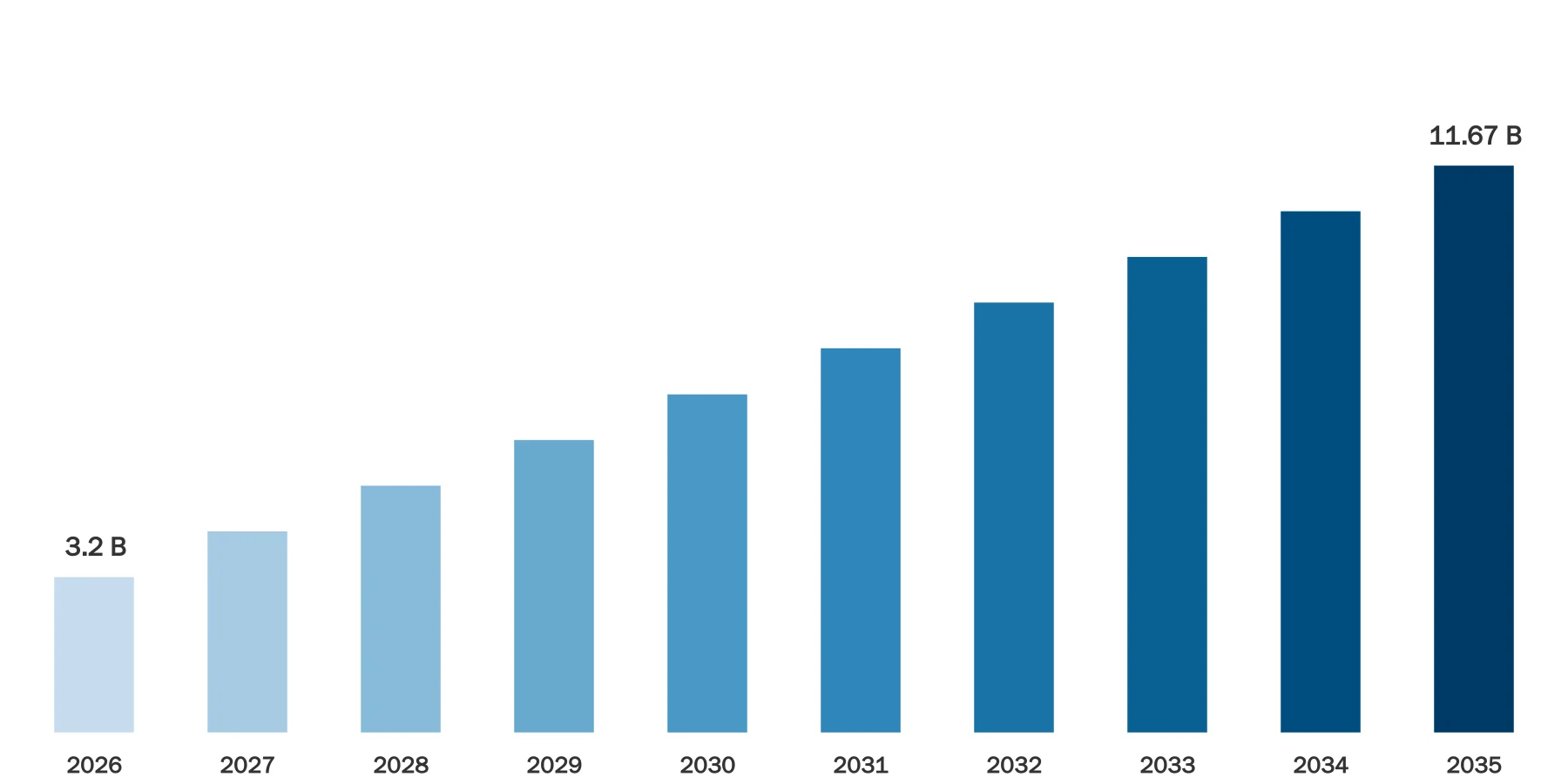
Source: Econ Market Research
The Global Multiomics market refers to the integration of multiple omics disciplines such as genomics, proteomics, metabolomics, and transcriptomics to understand biological systems comprehensively. This approach allows researchers to analyze various layers of biological information simultaneously, providing a holistic view of complex biological processes. The market encompasses technologies, tools, and services utilized in multiomics research, including sequencing platforms, mass spectrometry, bioinformatics software, and data analysis services.
The demand for multiomics solutions is driven by the growing need for personalized medicine, biomarker discovery, and understanding disease mechanisms. Additionally, advancements in high-throughput technologies and decreasing sequencing costs have fueled market growth. Key players in the market include Biotechnology companies, research institutions, and academic laboratories. The Global Multiomics market is projected to witness significant growth in the coming years, driven by ongoing research initiatives in areas such as cancer biology, infectious diseases, and precision medicine. However, challenges such as data integration, standardization, and ethical considerations remain barriers to widespread adoption.
Multiomics Dynamics
The growing need for precision healthcare and individualized medication is one major motivator. With the use of multiomics technologies, a person',s genomic, proteomic, metabolomic, and other omics data may be analyzed, allowing for customized therapies based on each person',s distinct biological composition. The increased incidence of chronic diseases including cancer, heart problems, and neurological disorders, where multiomics techniques might offer deeper understanding of disease mechanisms and speed up the identification of new therapeutic targets and biomarkers, is another factor driving this need.
Furthermore, by lowering the barrier to entry for researchers and clinicians seeking to employ multiomics techniques, technological developments and cost reductions in high-throughput sequencing and omics technologies are propelling market expansion. These developments have broadened the market',s appeal and encouraged innovation by increasing the use of multiomics solutions in clinical and academic contexts. Further driving market expansion is anticipated to be the increasing focus on data-driven healthcare and the integration of multiomics data with Electronic Health Records (EHRs). However, obstacles to commercial expansion include issues with data uniformity, interpretation, and privacy.
Multiomics Drivers
Rising Demand for Personalized Medicine
The global multiomics industry is significantly driven by the rising need for personalized treatment. The goal of personalized medicine is to adjust medical interventions based on a patient',s unique genetic composition, way of life, and surroundings. By offering thorough insights into a person',s molecular profile across several omics layers, such as transcriptomics, proteomics, metabolomics, and genomes, multiomics technologies are essential to reaching this goal.
Healthcare professionals can find biomarkers, forecast treatment outcomes, and create customized treatments based on each patient',s distinct biological profile by evaluating these intricate datasets. Treatment efficacy is increased, side effects are decreased, and patient outcomes are improved by this method, which encourages the use of multiomics solutions in clinical practice and research.
Technological Advancements and Cost Reductions
Due to the increased accessibility and affordability of multiomics methodologies brought about by technological breakthroughs and cost reductions in omics and high-throughput sequencing, the market is growing. Rapid advancements in mass spectrometry, sequencing technologies, and bioinformatics tools over time have improved multiomics analysis throughput, accuracy, and efficiency.
Furthermore, as sequencing prices have come down, more people have access to genetic data, which has led to a wider use of multiomics techniques in academic, clinical, and industrial settings. These developments have increased the use of multiomics in domains like environmental monitoring, medication development, disease research, and agricultural biotechnology, opening up new avenues for creativity and cooperation across a range of industries.
Restraints:
Data Integration and Interpretation Challenges
One of the primary restraints hindering the growth of the Global Multiomics market is the complexity associated with integrating and interpreting multiomics data. Multiomics analysis generates vast amounts of heterogeneous data from different omics platforms, requiring sophisticated bioinformatics tools and computational algorithms for data integration, normalization, and analysis.
The integration of multiomics data poses technical challenges related to data compatibility, standardization, and interoperability, limiting the scalability and reproducibility of multiomics studies. Moreover, the interpretation of multiomics data requires expertise in bioinformatics, statistics, and domain-specific knowledge, which may pose barriers for researchers and clinicians lacking specialized training in omics data analysis.
Regulatory and Ethical Considerations
Regulatory and ethical considerations present significant restraints for the Global Multiomics market. The integration of multiomics data in healthcare raises privacy concerns regarding patient data protection, informed consent, and data sharing practices. Regulatory frameworks governing data privacy, security, and ethical use of genomic information vary across different regions, leading to compliance challenges for multiomics research and clinical applications.
Moreover, concerns about data ownership, intellectual property rights, and commercialization may hinder collaboration and data sharing among researchers, impeding the progress of multiomics research initiatives. Addressing these regulatory and ethical challenges requires the development of robust governance frameworks, data protection policies, and ethical guidelines to ensure responsible conduct and equitable access to multiomics technologies and data resources.
Opportunities:
Precision Agriculture and Food Security
The application of multiomics technologies in agriculture offers significant opportunities to enhance crop productivity, sustainability, and food security. By integrating genomics, metabolomics, and other omics approaches, researchers can gain insights into plant genetics, metabolism, and environmental responses, enabling the development of resilient crop varieties with improved yield, nutritional quality, and stress tolerance.
Multiomics analysis also facilitates the identification of biomarkers for disease resistance, nutrient uptake, and crop performance, enabling precision agriculture practices such as targeted breeding, precision fertilization, and crop management strategies tailored to specific environmental conditions and agronomic needs. Furthermore, multiomics approaches can contribute to the development of sustainable agricultural practices, resource-efficient farming techniques, and climate-Smart Agriculture solutions to address global challenges related to climate change, soil degradation, and water scarcity.
Segment Overview
By Component
The Global Multiomics market comprises two primary components: products and services. Products include instruments, consumables, and software essential for multiomics analysis. Instruments encompass high-throughput sequencing platforms, mass spectrometers, and other laboratory equipment required for data generation and analysis. Consumables include reagents, kits, and sample preparation tools necessary for sample processing and omics analysis. Software plays a crucial role in data analysis, visualization, and interpretation, providing bioinformatics solutions for omics data integration, statistical analysis, and pathway analysis.
On the other hand, services encompass consulting, assay development, bioinformatics analysis, and contract research services offered by specialized providers to support multiomics research projects and applications. These services cater to the diverse needs of academic research institutes, pharmaceutical companies, and other end-users in designing and executing multiomics studies, data analysis, and interpretation.
By Type
The Global Multiomics market encompasses two primary types of analysis: single-cell multiomics and bulk multiomics. Single-cell multiomics involves the simultaneous analysis of multiple omics layers, including genomics, transcriptomics, and proteomics, at the single-cell level. This approach enables the characterization of cellular heterogeneity, identification of rare cell populations, and profiling of cell-to-cell variations in gene expression, protein abundance, and metabolic activity.
In contrast, bulk multiomics analysis involves the collective analysis of omics data from bulk tissue samples or cell populations, providing insights into average cellular responses and population-level trends. Both single-cell and bulk multiomics approaches have unique advantages and applications in various fields, including cancer research, developmental biology, and immunology, contributing to our understanding of complex biological systems and disease mechanisms.
By Platform
The Global Multiomics market encompasses several omics platforms, including genomics, transcriptomics, proteomics, metabolomics, and integrated omics platforms. Genomics platforms enable the analysis of DNA sequences, genetic variations, and genome-wide associations, providing insights into gene expression, regulation, and inheritance patterns. Transcriptomics platforms focus on the analysis of RNA transcripts, mRNA expression levels, alternative splicing, and non-coding RNA molecules, elucidating gene expression dynamics and regulatory networks.
Proteomics platforms facilitate the identification and quantification of proteins, post-translational modifications, and protein-protein interactions, offering insights into protein function, signaling pathways, and disease mechanisms. Metabolomics platforms analyze small molecule metabolites, metabolic pathways, and metabolic fluxes, revealing biochemical signatures associated with physiological states, disease progression, and drug responses. Integrated omics platforms combine multiple omics technologies to generate comprehensive molecular profiles, enabling systems-level analysis and integration of omics data for a deeper understanding of biological processes and disease complexity.
By Application
The Global Multiomics market serves various applications across different fields, including cell biology, oncology, neurology, and immunology. In cell biology, multiomics approaches are employed to study cellular processes, signaling pathways, and regulatory networks, advancing our understanding of cell function, differentiation, and homeostasis. In oncology, multiomics analysis is used for cancer biomarker discovery, patient stratification, and personalized treatment selection, driving precision oncology initiatives and improving cancer patient outcomes.
In neurology, multiomics research aims to unravel the molecular mechanisms underlying neurodegenerative diseases, neurodevelopmental disorders, and brain function, paving the way for innovative therapies and diagnostic strategies. In immunology, multiomics approaches elucidate immune cell diversity, immune responses, and host-pathogen interactions, facilitating vaccine development, immunotherapy optimization, and infectious disease research.
By End-use
The Global Multiomics market caters to diverse end-users, including academic and research institutes, pharmaceutical and biotechnology companies, and others. Academic and research institutes constitute a significant segment of the market, driving multiomics research and innovation in various disciplines, including biology, medicine, agriculture, and environmental science. Pharmaceutical and biotechnology companies utilize multiomics technologies for drug discovery, target identification, and biomarker validation, accelerating the development of novel therapeutics and precision medicine approaches.
Other end-users encompass government agencies, contract research organizations, and clinical diagnostic laboratories, leveraging multiomics solutions for academic collaborations, regulatory submissions, and clinical testing services. The adoption of multiomics technologies across different end-use sectors underscores the broad impact and applications of multiomics in advancing biomedical research, healthcare delivery, and industrial biotechnology.
Multiomics Overview by Region
North America leads the market, attributed to the presence of leading biotechnology companies, academic research institutes, and government funding initiatives supporting multiomics research. The region benefits from a robust healthcare ecosystem, advanced technological infrastructure, and strong emphasis on personalized medicine and precision healthcare. Europe follows closely, characterized by significant investments in life sciences research, collaborative research networks, and supportive regulatory frameworks for omics technologies.
Asia-Pacific emerges as a rapidly growing market, fueled by increasing R&,D investments, expanding biotechnology sector, and rising prevalence of chronic diseases driving demand for advanced diagnostics and therapeutic solutions. Countries like China, Japan, and India are at the forefront of multiomics research, leveraging their scientific expertise, large patient cohorts, and strategic partnerships with international collaborators. Latin America and the Middle East &, Africa regions are also witnessing gradual adoption of multiomics technologies, albeit at a slower pace, attributed to infrastructure challenges, resource constraints, and limited access to specialized expertise and funding. However, initiatives aimed at strengthening research capabilities, improving healthcare infrastructure, and fostering international collaborations are expected to drive market growth in these regions in the coming years.
Multiomics Market Competitive Landscape
Leading companies in the market include Illumina Inc., Thermo Fisher Scientific Inc., Agilent Technologies Inc., and Bruker Corporation, among others. These companies offer a comprehensive range of multiomics solutions, including sequencing platforms, mass spectrometry systems, bioinformatics software, and integrated omics platforms, catering to the diverse needs of academic research institutes, pharmaceutical companies, and other end-users. Strategic partnerships, collaborations, and mergers and acquisitions are common strategies employed by market players to strengthen their market presence, enhance product offerings, and gain a competitive edge.
Moreover, investments in research and development, technological advancements, and geographical expansion are key focus areas for market leaders to sustain growth and capitalize on emerging opportunities in the rapidly evolving multiomics landscape. Additionally, emerging players and startups are disrupting the market with innovative technologies and niche solutions, contributing to market competitiveness and driving innovation in multiomics research and applications.
Multiomics Market Leading Companies:
Thermo Fisher Scientific Inc.
Agilent Technologies Inc.
Illumina Inc.
QIAGEN N.V.
F. Hoffmann-La Roche Ltd.
Becton, Dickinson and Co. (BD)
Danaher Corporation (Beckman Coulter)
PerkinElmer Inc.
Shimadzu Corporation
Bruker Corporation
BGI Genomics
Multiomics Recent Developments
Oct 2023, Centogene N.V. has unveiled the enhancement of its MOx diagnostic portfolio, now integrating state-of-the-art transcriptomic analysis. Known as MOx 2.0, this single-step multiomic solution merges DNA sequencing, biochemical testing, and newly added RNA sequencing, offering healthcare professionals an unparalleled depth of diagnostic capability.
Feb 2024, Element Biosciences, Inc., a company specializing in innovative scientific technologies, has revealed a partnership with DNAnexus, a leading provider of the Precision Health Data Cloud. This collaboration enables customers to seamlessly transfer data from Element',s AVITI&trade, System directly to their DNAnexus accounts. By merging AVITI sequencing',s exceptional performance with DNAnexus', secure and comprehensive multi-omic analysis platform, customers gain access to a powerful combination of capabilities.
Multiomics Report Segmentation
Multiomics Market Report Scope & Segmentation
| Attributes | Details |
|---|---|
Market Size (Current) | US$ 3.2 Billion in 2026 |
Market Size (Forecast) | US$ 11.67 Billion in 2035 |
Growth Rate | CAGR of 15.29% from 2026 to 2035 |
Forecast Period | 2026 – 2035 |
Base Year | 2025 |
Historical Data Available | Yes |
Regional Scope | Global |
Segments Covered | By Type
By End-User
|
Frequently Asked Questions
Common questions about this report
The study period covers historical insights and forecast projections for the period 2026-2035.
About the Author
Market research expert with years of industry experience

Dipali Bhingare serves as the Market Research Director at Econ Market Research. With a focus on translating complex global economic shifts into actionable business intelligence, she oversees the strategic direction of comprehensive market studies. Her work empowers organizations to navigate volatile industries through data-driven forecasting and deep-dive competitive analysis.
Related Reports
Explore more market insights from the same category