

Chromatography Resin Market
Chromatography Resin Market Size, Share, Trends, Growth, and Industry Analysis, By Origin (Natural, Synthetic), By Technique (Ion Exchange, Affinity, Size Exclusion, Hydrophobic Interaction), By End-User (Pharmaceutical andamp; Biotechnology, Food andamp; Beverage, Water andamp; Environmental Agencies), Regional Analysis and Forecast Period 2026-2035
Chromatography Resin Market Overview
As per Econ Market Research analysis, the Global Chromatography Resin Market valuation stood at US$ 1.76 Billion in 2026 and is expected to reach US$ 2.8 Billion by 2035, growing at a steady CAGR of 4.8% from 2026 to 2035. 2025 serves as the base year.
Chromatography Resin Market Size 2025-2035 (USD Billion)

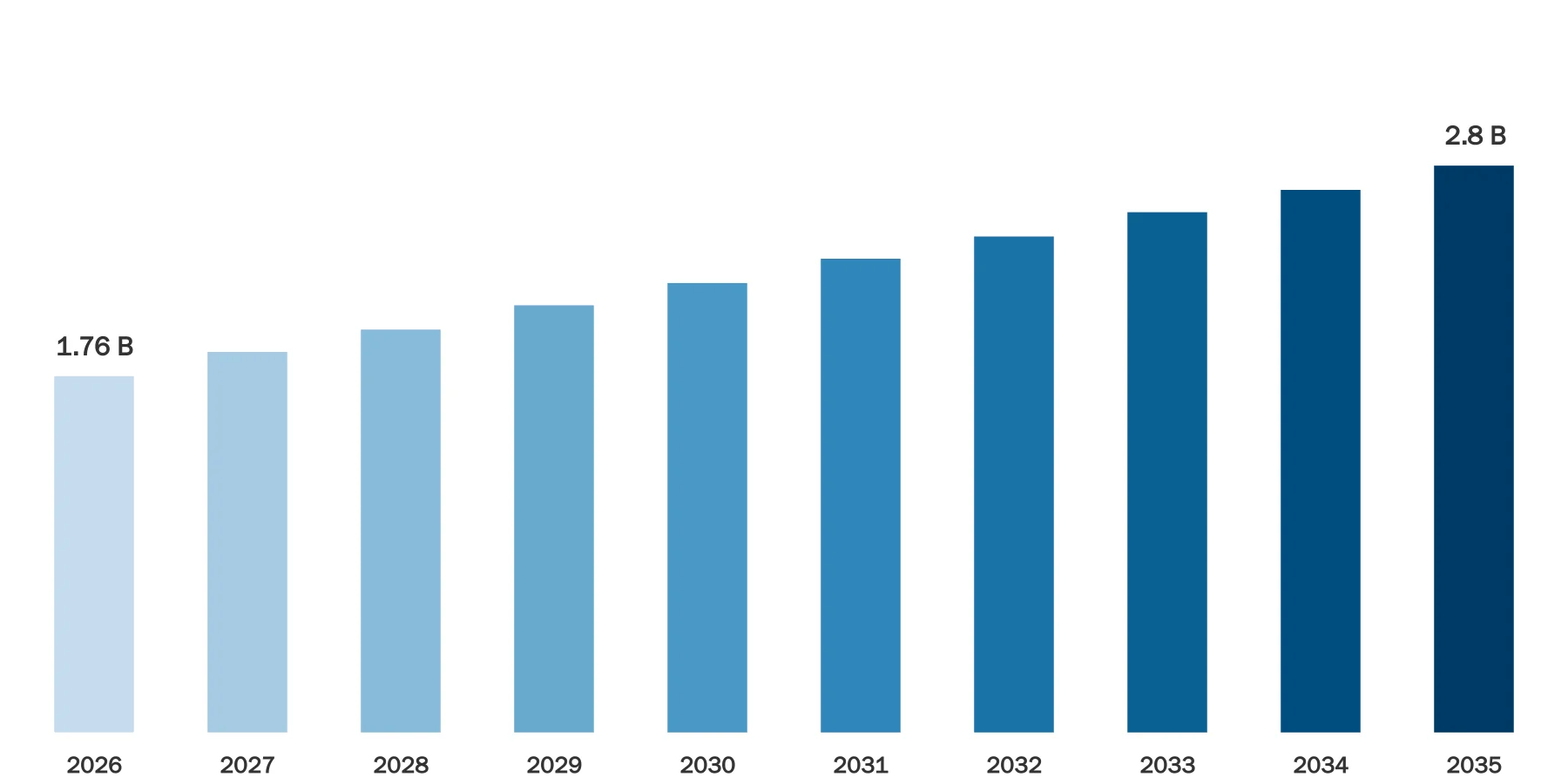
Source: Econ Market Research
Chromatography resins serve as crucial components in chromatography columns, enabling the separation of target compounds based on their chemical properties and interactions with the resin matrix. These resins are extensively utilized in various industries such as pharmaceuticals, Biotechnology, food and beverages, environmental analysis, and research laboratories. They facilitate the purification and isolation of biomolecules, such as proteins, antibodies, nucleic acids, and peptides, with high purity and efficiency, thereby playing a pivotal role in drug discovery, disease diagnosis, and bioprocessing applications.
The global chromatography resin market has witnessed significant growth driven by increasing demand for Biopharmaceuticals, growing investments in research and development activities, and advancements in chromatography technologies. Key players in the market are continually innovating to develop novel chromatography resins with enhanced selectivity, binding capacity, and efficiency to meet the evolving needs of the biopharmaceutical and biotechnology industries. Moreover, rising awareness regarding the importance of chromatography in ensuring product quality and regulatory compliance has further bolstered market expansion.
Geographically, North America and Europe dominate the chromatography resin market owing to the presence of established biopharmaceutical and biotechnology industries, coupled with robust research infrastructure and favourable regulatory frameworks. However, the Asia-Pacific region is poised to witness rapid growth attributed to increasing investments in healthcare infrastructure, expanding biopharmaceutical manufacturing capabilities, and growing research and development activities in emerging economies such as China and India. Despite the promising growth prospects, the chromatography resin market faces challenges such as high costs associated with resin production, stringent regulatory requirements, and competition from alternative separation technologies.
Chromatography Resin Dynamics
One of the primary drivers is the increasing adoption of chromatography techniques across various industries, particularly in pharmaceuticals, biotechnology, and food and beverages, for the purification and analysis of complex biomolecules. With the rising demand for biopharmaceuticals and advancements in biotechnology research, there is a growing need for high-performance chromatography resins that offer improved efficiency, selectivity, and scalability. Moreover, stringent regulatory requirements regarding product quality and safety have propelled the demand for chromatography resins with enhanced purification capabilities, contributing to market expansion.
Furthermore, ongoing technological advancements and innovations in chromatography resin materials and manufacturing processes are revolutionizing the market landscape. Key players are investing in research and development initiatives to develop next-generation chromatography resins that address the evolving needs of end-users and offer superior performance characteristics. These innovations include the development of novel resin chemistries, ligand modifications, and advanced matrix designs aimed at enhancing binding capacity, resolution, and purification efficiency.
Additionally, the emergence of automated chromatography systems and integrated process solutions is streamlining downstream bioprocessing operations, thereby driving the adoption of chromatography resins in biopharmaceutical manufacturing. Despite the promising growth prospects, the chromatography resin market faces challenges such as the high cost of resin production, stringent regulatory standards, and competition from alternative separation technologies. Moreover, economic uncertainties and fluctuations in raw material prices impact market dynamics.
Chromatography Resin Drivers
Growing Demand for Biopharmaceuticals and Biotechnology Products
The increasing prevalence of chronic diseases and the aging population worldwide have fuelled the demand for biopharmaceuticals and biotechnology products. Chromatography resins play a critical role in the purification and isolation of biotherapeutics such as monoclonal antibodies, recombinant proteins, and vaccines. As biopharmaceutical companies strive to develop innovative therapies with higher efficacy and specificity, the demand for chromatography resins continues to rise. Moreover, advancements in bioprocessing technologies and the shift towards personalized medicine further drive the adoption of chromatography resins in downstream purification processes, thereby contributing to market growth.
Technological Advancements and Product Innovations
The chromatography resin market is characterized by ongoing technological advancements and product innovations aimed at enhancing resin performance, efficiency, and cost-effectiveness. Key players are investing in research and development activities to develop novel resin chemistries, ligand modifications, and matrix designs that offer improved selectivity, binding capacity, and process scalability.
Additionally, the integration of chromatography resins with automated systems and software solutions streamlines bioprocessing workflows, reduces operational costs, and minimizes human errors, thereby driving market growth. Furthermore, the development of disposable chromatography resins and single-use systems offers flexibility and convenience in biopharmaceutical manufacturing, accelerating process development and time-to-market for new therapeutics.
Restraints:
High Cost of Chromatography Resins
The production of chromatography resins involves complex manufacturing processes and the use of expensive raw materials, resulting in high production costs. As a result, the high cost of chromatography resins poses a significant barrier to market growth, especially for small and medium-sized biopharmaceutical companies and research laboratories with limited financial resources. Moreover, the cost-intensive nature of chromatography resin purification processes contributes to the overall operational expenses in biopharmaceutical manufacturing, hindering market expansion.
Stringent Regulatory Requirements
The chromatography resin market is subject to stringent regulatory standards and quality requirements imposed by regulatory authorities such as the U.S. Food and Drug Administration (FDA) and the European Medicines Agency (EMA). Compliance with regulatory guidelines necessitates rigorous validation and documentation of chromatography processes, raw materials, and equipment used in biopharmaceutical manufacturing. Additionally, the need for continuous process monitoring, quality control, and documentation increases operational complexities and resource requirements, thereby posing challenges to market players. Furthermore, any deviations from regulatory standards lead to product recalls, fines, and reputational damage, further restraining market growth.
Opportunities:
Advancements in Chromatography Technologies
The continuous evolution of chromatography technologies presents opportunities for market players to develop innovative solutions that address existing challenges and unmet needs in biopharmaceutical manufacturing. The advent of novel chromatography resins with enhanced selectivity, binding capacity, and process robustness enables efficient purification of complex biomolecules while reducing processing time and costs.
Additionally, the integration of chromatography systems with advanced analytics, Artificial Intelligence, and machine learning algorithms enhances process control, optimization, and predictive maintenance capabilities, thereby improving overall operational efficiency and product quality. Furthermore, the development of sustainable and environmentally friendly chromatography resins using renewable raw materials and green manufacturing processes aligns with growing environmental consciousness and regulatory initiatives, providing a competitive edge and market differentiation for players in the chromatography resin market.
Segment Overview
By Type
Chromatography resins are categorized into three main types: natural, synthetic, and inorganic. Natural chromatography resins are derived from natural sources such as agarose, cellulose, and dextran, offering high biocompatibility and low nonspecific binding. Synthetic chromatography resins are chemically synthesized polymers, designed to exhibit specific functional groups for target molecule binding and separation. These resins offer excellent mechanical stability, chemical inertness, and uniform particle size distribution, making them ideal for high-resolution chromatographic separations.
Inorganic chromatography resins are composed of inorganic materials such as silica, alumina, and zeolites, offering unique selectivity and adsorption properties for various analytes. These resins are commonly used in applications requiring extreme pH conditions, high temperature stability, and resistance to organic solvents, catering to diverse chromatography needs across industries.
By Technique
Chromatography resins support various chromatographic techniques, including ion exchange, affinity, hydrophobic interaction, size exclusion, mixed mode, and others. Ion exchange chromatography relies on electrostatic interactions between charged functional groups on the resin and target molecules, enabling separation based on differences in ionic charge. Affinity chromatography exploits specific reversible interactions between immobilized ligands on the resin and target biomolecules, offering high selectivity and purification efficiency.
Hydrophobic interaction chromatography separates biomolecules based on their hydrophobicity and surface properties, while size exclusion chromatography separates molecules based on their size and molecular weight. Mixed-mode chromatography employs multiple interaction mechanisms for enhanced selectivity and resolution, catering to complex separation challenges. Other chromatography techniques include reversed-phase, chiral, and dye-ligand chromatography, each offering unique advantages and applications in biomolecule purification, analysis, and isolation.
By End-Use
Chromatography resins find extensive applications across diverse end-use industries, including pharmaceutical and biotechnique, food and beverage, water and environmental analysis, and others. In the pharmaceutical and biotechnique sector, chromatography resins are utilized for the purification and isolation of biopharmaceuticals, monoclonal antibodies, vaccines, and recombinant proteins, ensuring product quality and regulatory compliance. In the food and beverage industry, chromatography resins play a crucial role in the analysis and quality control of food additives, flavors, fragrances, and contaminants, safeguarding consumer health and safety.
Water and environmental analysis rely on chromatography resins for the detection and quantification of pollutants, toxins, and organic compounds in water, soil, and air samples, facilitating environmental monitoring and remediation efforts. Other applications of chromatography resins include research laboratories, academic institutions, forensic analysis, and industrial process optimization, underscoring their versatility and importance across various sectors.
Chromatography Resin Overview by Region
North America dominates the global chromatography resin market, driven by the presence of established biopharmaceutical and biotechnology industries, robust research infrastructure, and favourable regulatory frameworks. The region',s continuous investments in research and development activities, technological advancements, and strategic collaborations contribute to market expansion. Europe follows suit, propelled by increasing demand for biopharmaceuticals, stringent regulatory standards, and growing investments in healthcare infrastructure.
The Asia Pacific region is poised to witness substantial growth attributed to expanding biopharmaceutical manufacturing capabilities, rising healthcare expenditure, and increasing research and development activities in emerging economies such as China, India, and South Korea. The region',s large population base, increasing prevalence of chronic diseases, and favorable government initiatives drive market growth. Furthermore, Latin America and the Middle East &, Africa regions offer untapped growth opportunities fueled by improving healthcare infrastructure, rising disposable incomes, and growing investments in pharmaceutical and biotechnology sectors. However, market growth can be hindered by economic uncertainties, political instability, and regulatory challenges in these regions.
Chromatography Resin Market Competitive Landscape
Prominent companies operating in the market include Merck KGaA, Bio-Rad Laboratories, Inc., GE Healthcare Life Sciences, Thermo Fisher Scientific Inc., Tosoh Corporation, Purolite Corporation, Mitsubishi Chemical Corporation, Repligen Corporation, Avantor, Inc., and Agilent Technologies, Inc. These companies focus on developing advanced chromatography resin technologies with enhanced performance characteristics such as higher binding capacities, improved selectivity, and greater process efficiencies. Moreover, investments in research and development activities aimed at expanding product portfolios, optimizing manufacturing processes, and addressing evolving customer requirements remain key strategies adopted by market players.
Additionally, strategic collaborations, partnerships, and alliances with academic institutions, research organizations, and biopharmaceutical companies enable market players to leverage complementary expertise, resources, and capabilities to drive innovation and accelerate market penetration. Furthermore, geographical expansions into emerging markets such as Asia Pacific, Latin America, and the Middle East &, Africa regions present lucrative growth opportunities for market players. However, intense competition, pricing pressures, and regulatory challenges pose significant barriers to entry and market expansion. To maintain a competitive edge, companies focus on delivering value-added solutions, superior customer service, and efficient technical support to meet the evolving needs of end-users across various industries.
Chromatography Resin Market Leading Companies:
GE Healthcare Life Sciences
Bio-Rad Laboratories Inc.
Merck KGaA
Tosoh Corporation
Thermo Fisher Scientific
Pall Corporation
Purolite Corporation
Mitsubishi Chemical Corporation
Avantor Performance Materials, Inc.
Danaher Corporation
Agilent Technologies
Repligen Corporation
Bio-Works Technologies AB
Dupont
BIA Separations
Chromatography Resin Recent Developments
Feb 2024, Purolite, in collaboration with Repligen Corporation (NASDAQ:RGEN), a prominent life sciences company renowned for bioprocessing technology, has officially launched Praesto®, CH1. This new 70&mu,m (micron) agarose-based affinity resin is specifically engineered to purify specialized monoclonal antibodies (mAbs) like bispecifics and recombinant antibody fragments. The development of Praesto®, CH1 stems from a strategic partnership between Purolite and Repligen, leveraging Purolite',s patented Jetted beads manufacturing process and Repligen',s expertise in ligand technology. This innovation aims to tackle previously unmet challenges in the purification of specialized mAbs.
April 2023, Mitsubishi Chemical commenced the commercial implementation of polycarbonate (PC) resin recycling. By 2030, the company aims to achieve an annual processing capacity of 10,000 tons of recycled PC resin material, paving the way for the widespread adoption of chemical recycling methods in PC resin recycling.
Chromatography Resin Report Segmentation
Chromatography Resin Market Report Scope & Segmentation
| Attributes | Details |
|---|---|
Market Size (Current) | US$ 1.76 Billion in 2026 |
Market Size (Forecast) | US$ 2.8 Billion in 2035 |
Growth Rate | CAGR of 4.8% from 2026 to 2035 |
Forecast Period | 2026 – 2035 |
Base Year | 2025 |
Historical Data Available | Yes |
Regional Scope | Global |
Segments Covered | By Origin
By Technique
By End-User
|
Frequently Asked Questions
Common questions about this report
The study period covers historical insights and forecast projections for the period 2026-2035.
About the Author
Market research expert with years of industry experience

Dipali Bhingare serves as the Market Research Director at Econ Market Research. With a focus on translating complex global economic shifts into actionable business intelligence, she oversees the strategic direction of comprehensive market studies. Her work empowers organizations to navigate volatile industries through data-driven forecasting and deep-dive competitive analysis.
Related Reports
Explore more market insights from the same category