Membrane Technology in Pharma, Biopharma, And Life Science Market Overview
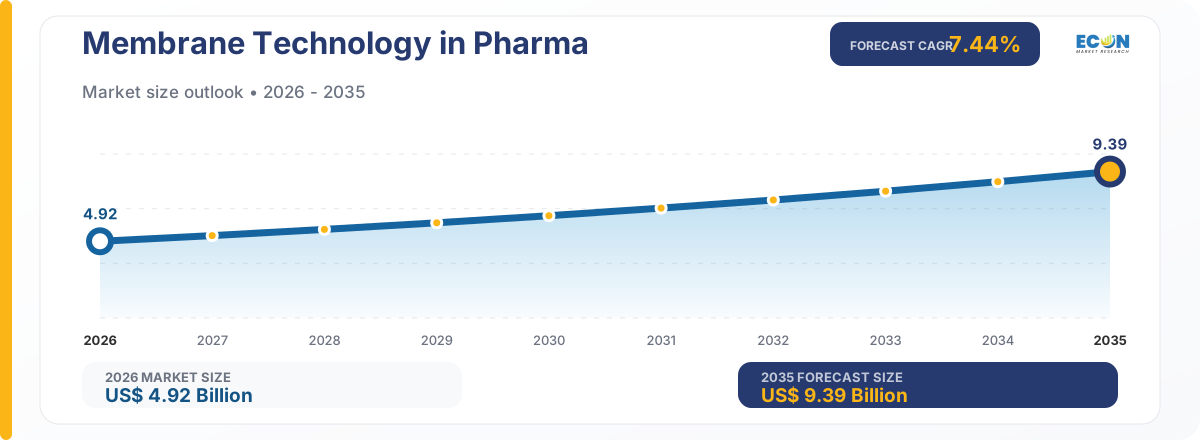
As per Econ Market Research analysis, the Global Membrane Technology in Pharma, Biopharma, And Life Science Market valuation stood at US$ 4.92 Billion in 2026 and is expected to reach US$ 9.39 Billion by 2035, growing at a steady CAGR of 7.44% from 2026 to 2035. 2025 serves as the base year.
The global membrane technology market in pharma, biopharma, and life science is experiencing rapid growth, driven by its crucial role in various processes like drug delivery, filtration, and purification. Membrane technology involves the use of semi-permeable barriers to separate substances based on their size, shape, and charge, allowing for precise control and purification of pharmaceutical and biopharmaceutical products. This technology aids in improving product quality, reducing production costs, and enhancing efficiency in drug manufacturing processes.
Key applications include protein purification, virus filtration, and drug formulation. With increasing demand for Biopharmaceuticals and advancements in membrane materials and designs, the market is poised for significant expansion in the coming years. This growth is further fuelled by rising investments in research and development, stringent regulatory requirements, and the need for advanced purification techniques in the pharmaceutical and life science industries.
Membrane Technology in Pharma, Biopharma, And Life Science Dynamics
The increased frequency of chronic diseases and an aging population are driving up demand for biopharmaceuticals, which is fuelling the use of membrane technology in drug purification and filtering procedures. Furthermore, strict regulatory requirements for drug safety and efficacy fuel the demand for sophisticated purification procedures, propelling the market ahead.
Furthermore, technological developments in membrane materials, such as enhanced pore size distribution and surface chemistry, improve the efficiency and selectivity of membrane processes, resulting in widespread usage throughout the pharmaceutical sector. Furthermore, the growing emphasis on cost reduction and process optimization in drug manufacturing processes drives demand for membrane technology, which provides benefits such as lower energy usage, lower production costs, and greater process flexibility.
Furthermore, increased investments in R&,D activities focused at extending membrane technology applications, such as continuous production and point-of-care diagnostics, help to drive market expansion. However, constraints such as membrane fouling, scalability concerns, and high capital costs associated with membrane systems may partially impede market progress.
Membrane Technology in Pharma, Biopharma, And Life Science Drivers
Increasing Demand for Biopharmaceuticals
The increased frequency of chronic diseases, combined with the worldwide aging population, is driving up demand for biopharmaceuticals. Membrane technology is important in biopharmaceutical production because it facilitates processes like protein purification and virus filtering. As biopharmaceuticals become more prominent in disease treatment and prevention, the use of membrane technology is projected to grow dramatically. Furthermore, membrane techniques', versatility and scalability allow producers to easily address the expanding demand for biopharmaceutical products.
Technological Advancements in Membrane Materials
Continuous innovations in membrane materials, such as improved pore size distribution, surface chemistry, and membrane architecture, are enhancing the efficiency and selectivity of membrane processes. These advancements enable more precise control over separation processes, leading to higher product purity and yield. Furthermore, novel membrane materials exhibit enhanced resistance to fouling and better mechanical properties, prolonging membrane lifespan and reducing operating costs. As a result, pharmaceutical companies are increasingly adopting advanced membrane technologies to optimize their production processes and improve product quality, thus driving market growth.
Restraints:
Membrane Fouling and Scaling Issues
Membrane fouling, caused by the accumulation of undesired chemicals on membrane surfaces, and scaling, produced by the deposition of inorganic salts, are both significant difficulties in membrane-based processes. These concerns can result in poorer membrane performance, lower product quality, and higher operating expenses. Addressing membrane fouling and scaling necessitates additional maintenance processes and cleaning protocols, which causes downtime and adds operational complexity. As a result, these constraints limit the widespread application of membrane technology in pharmaceutical manufacture.
High Capital Costs
The initial investment necessary to deploy membrane-based filtering and purification systems can be significant, especially in large-scale pharmaceutical manufacturing facilities. High capital expenditures are a barrier to entry for small and medium-sized enterprises (SMEs) and may discourage them from investing in membrane technology adoption. Furthermore, continuing operational expenses, such as membrane replacement and maintenance, add to the total cost of ownership. Despite the long-term benefits of membrane technology in terms of process efficiency and product quality, the high upfront costs remain a substantial barrier to industry growth.
Opportunities:
Growing Emphasis on Sustainable Manufacturing
The increasing focus on sustainability and environmental responsibility in the pharmaceutical industry presents opportunities for membrane technology adoption. Membrane processes offer advantages such as reduced energy consumption, minimal use of chemicals, and lower wastewater generation compared to conventional separation techniques.
As pharmaceutical companies strive to minimize their environmental footprint and comply with regulatory standards, membrane technology emerges as a sustainable solution for achieving these objectives. By leveraging the environmental benefits of membrane technology, companies can enhance their corporate image, meet regulatory requirements, and gain a competitive edge in the market.
Segment Overview
By Type
Membrane technology is classified into several types, including Ultrafiltration, microfiltration, nanofiltration, chromatography, and other specialized approaches. Ultrafiltration is the separation of molecules based on their size, which allows for the purification of proteins, viruses, and nanoparticles. Microfiltration works on a bigger scale, eliminating particles and bacteria from liquids like water and medicinal solutions. Nanofiltration, on the other hand, focuses on the selective separation of ions and tiny molecules, with applications including pharmaceutical purification and water treatment.
Chromatography uses membranes as stationary phases to separate and purify complex mixtures of biomolecules, providing excellent resolution and purity. Additionally, other membrane-based techniques encompass a diverse range of applications, including membrane distillation, electrodialysis, and pervaporation, each tailored to specific separation needs within the pharmaceutical, biopharmaceutical, and life sciences industries.
By Application
Membrane technology has a wide range of applications in the pharmaceutical, biopharmaceutical, and life sciences industries. Membranes are used in pharmaceutical manufacturing for a variety of purification and separation processes, resulting in high-quality medication products. Membrane technology is used in biopharmaceutical applications to purify proteins, filter viruses, and formulate drugs, meeting the severe regulatory criteria for biologics production.
Furthermore, membrane technology is critical in life sciences research, as it allows for the separation and characterization of biomolecules, cells, and pathogens for diagnostic and therapeutic applications. Membrane technology serves as a crucial tool across several industries, driving advances in drug development, healthcare, and scientific research.
Membrane Technology in Pharma, Biopharma, And Life Science Overview by Region
North America dominates the market, driven by the presence of established pharmaceutical and Biotechnology companies, robust research and development infrastructure, and favourable regulatory policies. The region',s strong emphasis on technical innovation, combined with high demand for biopharmaceutical products, contributes to significant market growth.
Europe is closely following, with increased investments in healthcare infrastructure, rising chronic illness prevalence, and growing government initiatives to stimulate biopharmaceutical research and development. Furthermore, Asia Pacific emerges as a quickly growing market, driven by increased pharmaceutical manufacturing capabilities, rising healthcare spending, and a growing population.
Countries such as China, India, and South Korea are significant contributors to market growth, owing to their efforts to improve healthcare accessibility and affordability. Furthermore, Latin America, the Middle East, and Africa offer enormous potential for market expansion, driven by improved healthcare infrastructure, rising investments in pharmaceutical manufacture, and expanding awareness of innovative healthcare solutions.
Membrane Technology in Pharma, Biopharma, And Life Science Market Competitive Landscape
Merck Millipore, GE Healthcare, Sartorius AG, Thermo Fisher Scientific, and Danaher Corporation dominate the market with their diverse product portfolios, global distribution networks, and strong brand awareness. These firms prioritize ongoing research and development initiatives to introduce improved membrane technologies customized to specific application requirements, hence increasing their competitive position. Furthermore, collaborations with research institutes, pharmaceutical companies, and contract manufacturing organizations allow major industries to harness complementary skills and broaden their market presence. Furthermore, rising manufacturers and start-ups are increasingly entering the market with revolutionary membrane technologies targeting specialized applications, intensifying competition and driving technological breakthroughs in the industry.
Key Players:
Pall Corporation
Amazon Filters
Advantec MFS
Sartorius
3M Company
Novasep
Merck Millipore
TriSep Corporation
Koch Membrane Systems
GE Healthcare Life Sciences
Membrane Technology in Pharma, Biopharma, And Life Science Report Segmentation
Membrane Technology in Pharma, Biopharma, And Life Science Market Report Scope & Segmentation
| Attributes | Details |
|---|---|
| Market Size (Current)Current market valuation | US$ 4.92 Billion in 2026 |
| Market Size (Forecast)Projected market valuation | US$ 9.39 Billion in 2035 |
| Growth RateCompound Annual Growth Rate | CAGR of 7.44% from 2026 to 2035 |
| Forecast PeriodAnalysis timeline | 2026 – 2035 |
| Base YearReference year for analysis | 2025 |
| Historical Data AvailablePast market data availability | Yes |
| Regional ScopeGeographical coverage | Global |
| Segments CoveredMarket segments analyzed | By Technology
By Application
By Material
|
Frequently Asked Questions
Common questions about this report
The study period covers historical insights and forecast projections for the period 2026-2035.
About the Author
Market research expert with years of industry experience