

Crispr Technology Market
Crispr Technology Market Size, Share, Trends, Growth, and Industry Analysis, By Product (Enzymes, Kits andamp; Reagents, Guide RNA, Others), By Application (Biomedical, Agricultural, Industrial, Others), Regional Analysis and Forecast Period 2026-2035
Market Overview
As per Econ Market Research analysis, the Global Crispr Technology Market was recorded at US$ 4.95 Billion in 2026 and is projected to expand to US$ 14.96 Billion by 2035, registering a CAGR of 12.87% over the forecast period. The base year used is 2025.
Crispr Technology Market Size 2025-2035 (USD Billion)

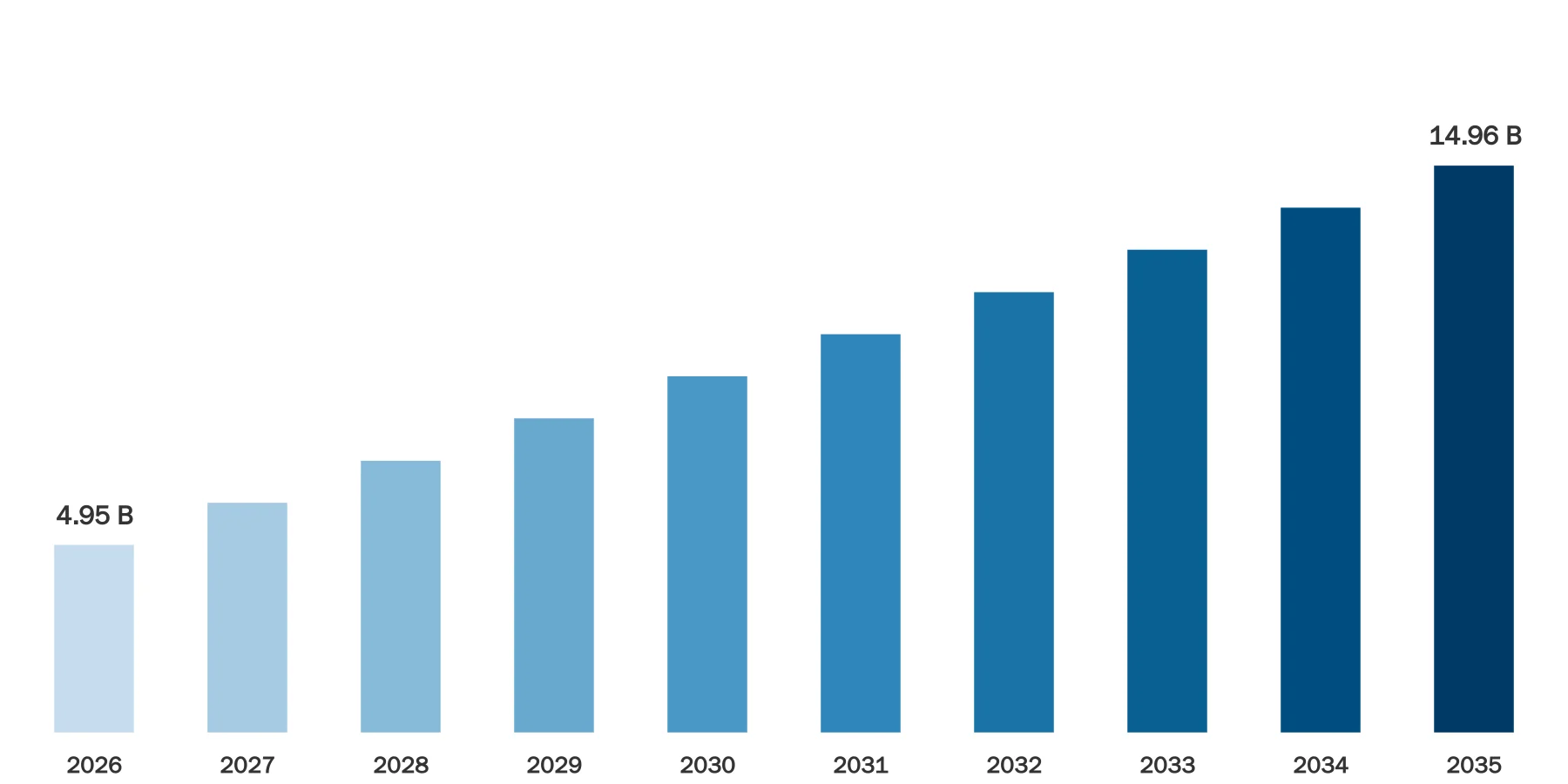
Source: Econ Market Research
CRISPR technology, standing for Clustered Regularly Interspaced Short Palindromic Repeats, represents a groundbreaking tool in genetic engineering, allowing scientists to precisely edit DNA. It works akin to a molecular pair of scissors, enabling targeted alterations within the genetic code of organisms, from bacteria to humans. This technology holds immense promise across various sectors, including agriculture, medicine, and Biotechnology, offering solutions to combat diseases, enhance crop resilience, and develop novel therapeutics.
The advent of novel applications, a rise in biotechnology investments, and an increase in research and development activities are all contributing to the exponential expansion of the global CRISPR technology market. CRISPR-associated enzymes, kits, and software are among the sectors of the market that serve a range of end-users, including contract research organizations, pharmaceutical firms, and academic research institutions. The increasing frequency of genetic abnormalities, the need for customized treatment, and the use of CRISPR technology in drug research and development procedures are major drivers of market expansion. Further promoting market advancement are proactive government initiatives, advantageous regulatory environments, and well-thought-out alliances amongst industry participants.
Crispr Technology Dynamics
Market expansion is being driven by the rapid breakthroughs in biotechnology and the growing investments in genomic research. The increasing occurrence of genetic disorders and the demand for accurate and effective genome editing instruments are driving the uptake of CRISPR technology in a number of industries, such as industrial biotechnology, healthcare, and agriculture. Furthermore, the adaptability of CRISPR technology is creating new opportunities for bioproduction, agricultural enhancement, and pharmaceutical research by enabling targeted genetic alterations in a variety of organisms.
However, the market is also characterized by challenges and uncertainties. Ethical considerations surrounding gene editing, particularly in the context of human germline modification, raise significant concerns among stakeholders. Additionally, the potential off-target effects of CRISPR-based interventions pose risks to the safety and efficacy of genome editing applications. Furthermore, the landscape of intellectual property rights related to CRISPR technology is complex and often subject to legal disputes, which could impact market dynamics and hinder innovation.
Crispr Technology Drivers
Growing Demand for Personalized Medicine
The precise alteration of the human genome made possible by CRISPR technology presents previously unheard-of possibilities for personalized therapy. With the use of this technique, genetic flaws can be specifically altered, possibly correcting hereditary disorders that were previously incurable. Personalized medicine is becoming more and more popular due to the rising incidence of genetic illnesses and the development of CRISPR-based therapies. Furthermore, the capacity to customize therapy based on the genetic profiles of specific patients improves therapeutic efficacy and reduces side effects, improving patient outcomes and the effectiveness of healthcare systems.
Expanding Applications in Agriculture
The agricultural sector is increasingly adopting CRISPR technology to develop crops with enhanced traits, such as disease resistance, drought tolerance, and improved nutritional content. By precisely editing plant genomes, CRISPR enables the development of crops that are more resilient to environmental stressors and pests, thereby increasing yield and ensuring food security.
Furthermore, CRISPR-based crop improvements offer sustainable solutions to address global challenges such as climate change and population growth. As the demand for food continues to rise, driven by population growth and changing dietary preferences, the adoption of CRISPR technology in agriculture presents significant opportunities to boost productivity and mitigate the impact of environmental factors on crop yields.
Restraints:
Ethical and Regulatory Concerns
The ethical implications of CRISPR technology, particularly concerning human germline editing and potential unintended consequences, raise significant regulatory and societal concerns. The ethical debate surrounding the use of CRISPR in humans extends to questions of consent, equity, and the potential for genetic enhancement. Moreover, regulatory frameworks governing the use of CRISPR technology vary across jurisdictions and are subject to evolving standards, leading to uncertainty and complexity in navigating legal and ethical considerations. These ethical and regulatory challenges pose barriers to the widespread adoption of CRISPR technology in certain applications, particularly in the clinical setting, where safety and ethical considerations are paramount.
Off-Target Effects and Genome Instability
Despite its precision, CRISPR technology may exhibit off-target effects, leading to unintended modifications in the genome. Off-target effects can pose risks to the safety and efficacy of CRISPR-based interventions, particularly in therapeutic applications where precision is critical. Additionally, repeated use of CRISPR may result in genome instability, potentially leading to unintended consequences such as genetic mutations or chromosomal rearrangements. Addressing these challenges requires ongoing research to improve the specificity and efficiency of CRISPR-based genome editing techniques, as well as robust safety assessments to mitigate potential risks associated with off-target effects and genome instability.
Opportunities:
Expansion of Renewable Energy Infrastructure
There are a lot of opportunities for the Crispr Technology market due to the infrastructure for renewable energy expanding quickly. An increasingly economical and sustainable method of producing Crispr Technology is made possible by growing investments in hydroelectric, solar, and wind power generation. Crispr Technology production can achieve greater efficiency and lower costs by utilising abundant renewable energy resources, which will increase its market competitiveness and scalability. Furthermore, integrated energy systems that improve energy security and resilience while lowering carbon emissions can be created through the synergies between renewable energy and Crispr Technology production.
Segment Overview
By Product
The CRISPR technology market is segmented by product into enzymes, kits &, reagents, guide RNA, and others. Enzymes play a crucial role in CRISPR-mediated genome editing by facilitating the precise cutting and modification of DNA sequences. Kits &, reagents encompass a range of tools and materials essential for conducting CRISPR experiments, including nucleases, buffers, and purification kits. Guide RNA (gRNA) serves as a guide molecule that directs the CRISPR-associated enzyme to the target DNA sequence for editing. Other products in this segment may include delivery systems, purification tools, and specialized reagents tailored for specific CRISPR applications.
By End-Use
The market is categorized by end-use into pharmaceutical companies and biotechnology companies, academics and government research institutes, and others such as contract research organizations (CROs). Pharmaceutical and biotechnology companies utilize CRISPR technology for drug discovery, development, and manufacturing processes, leveraging its precision and efficiency in genome editing. Academic and government research institutes play a pivotal role in advancing CRISPR technology through fundamental research, preclinical studies, and the exploration of novel applications. Contract research organizations offer specialized services in CRISPR-based research, providing expertise and resources to support both academic and industry-driven projects.
By Application
Segmented by application, the CRISPR technology market encompasses biomedical, agricultural, industrial, and other applications. In the biomedical field, CRISPR technology holds promise for developing novel therapies for genetic disorders, cancer, infectious diseases, and other health conditions through precise genome editing. In agriculture, CRISPR is utilized to engineer crops with enhanced traits such as disease resistance, improved nutritional content, and increased yield, addressing challenges in food security and sustainability.
Industrial applications of CRISPR include bioproduction, where it is employed to optimize microbial strains for the production of biofuels, pharmaceuticals, enzymes, and other industrial bioproducts. Other potential applications of CRISPR technology span diverse fields such as environmental conservation, synthetic biology, and bioinformatics, offering innovative solutions to address global challenges and drive scientific progress.
Crispr Technology Overview by Region
North America dominates the market, attributed to its strong presence of biotechnology companies, academic research institutions, and supportive government funding for genomic research. Additionally, well-established regulatory frameworks and a robust intellectual property landscape contribute to the region',s leadership in CRISPR technology development. Europe follows closely, with significant investments in biomedical research and a favorable regulatory environment for genome editing applications.
The Asia-Pacific region is witnessing rapid growth, fueled by increasing investments in biotechnology, rising prevalence of genetic diseases, and supportive government initiatives to promote innovation. Countries such as China and Japan are emerging as key players in the CRISPR technology market, leveraging their scientific expertise and technological capabilities to advance research and development efforts. However, regional variations in regulatory policies and ethical considerations regarding gene editing technologies pose challenges to market expansion.
Crispr Technology Market Competitive Landscape
Companies such as Editas Medicine, CRISPR Therapeutics, and Intellia Therapeutics are at the forefront of CRISPR-based therapeutics development, focusing on addressing unmet medical needs in areas such as genetic disorders, cancer, and infectious diseases. Additionally, tool providers like Thermo Fisher Scientific, Merck KGaA, and Synthego Corporation offer a wide range of CRISPR products and services, including enzymes, kits, and software solutions, catering to the needs of researchers and biopharmaceutical companies.
Academic institutions and research organizations also play a significant role in advancing CRISPR technology, contributing to the development of novel applications and driving scientific progress. Moreover, the competitive landscape is shaped by intellectual property disputes and licensing agreements, with companies vying for control over key CRISPR patents and technologies.
Crispr Technology Market Leading Companies:
CRISPR Therapeutics
Beam Therapeutics
Intellia Therapeutics
Editas Medicine
Caribou Biosciences
Mammoth Biosciences
Agilent Technologies
GenScript
Cellecta Inc.
Vertex Pharmaceuticals
Crispr Technology Recent Developments
Jan 2024, Danaher Corporation (NYSE: DHR) and the Innovative Genomics Institute (IGI) have announced the establishment of a joint center focused on advancing gene-editing therapies for rare and common diseases. Named the Danaher-IGI Beacon for CRISPR Cures, this initiative seeks to pioneer a novel framework for the development of genomic medicines, leveraging CRISPR-based gene editing to tackle a multitude of diseases. The center aims to adopt a unified approach across research, development, and regulatory processes to effectively address hundreds of medical conditions permanently.
Crispr Technology Report Segmentation
Crispr Technology Market Report Scope & Segmentation
| Attributes | Details |
|---|---|
Market Size (Current) | US$ 4.95 Billion in 2026 |
Market Size (Forecast) | US$ 14.96 Billion in 2035 |
Growth Rate | CAGR of 12.87% from 2026 to 2035 |
Forecast Period | 2026 – 2035 |
Base Year | 2025 |
Historical Data Available | Yes |
Regional Scope | Global |
Segments Covered | By Product
By Application
|
Frequently Asked Questions
Common questions about this report
The study period covers historical insights and forecast projections for the period 2026-2035.
About the Author
Market research expert with years of industry experience

Dipali Bhingare serves as the Market Research Director at Econ Market Research. With a focus on translating complex global economic shifts into actionable business intelligence, she oversees the strategic direction of comprehensive market studies. Her work empowers organizations to navigate volatile industries through data-driven forecasting and deep-dive competitive analysis.
Related Reports
Explore more market insights from the same category