

Glutathione Resin Market
Glutathione Resin Market Size, Share, Trends, Growth, and Industry Analysis, By Application (Protein Purification, Immunoprecipitation, Research), By End-User (Pharmaceutical andamp; Biotechnology Companies, Academic andamp; Research Institutes, Contract Research Organizations), Regional Analysis and Forecast Period 2026-2035
Glutathione Resin Market Overview
As per Econ Market Research analysis, the Global Glutathione Resin Market reached a valuation of US$ 0.67 Billion in 2026 and is anticipated to grow to US$ 1.45 Billion by 2035, at a CAGR of 8.9% during the forecast timeline 2026–2035. The base year considered is 2025.
Glutathione Resin Market Size 2025-2035 (USD Billion)

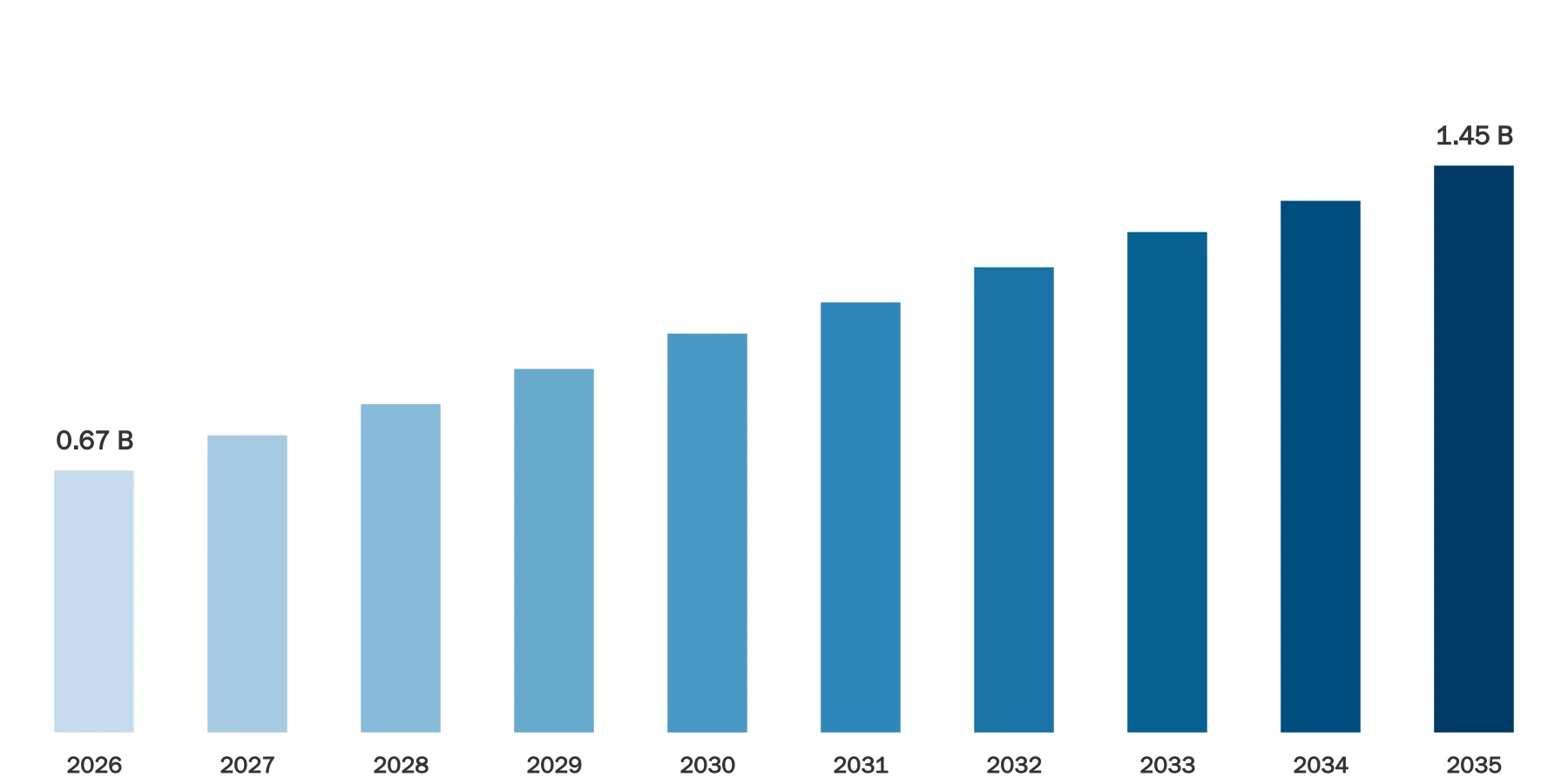
Source: Econ Market Research
Glutathione resin, a highly specialized chromatography medium, is designed to facilitate the purification of glutathione-tagged proteins. This resin operates on the principle of affinity chromatography, wherein the resin selectively binds to proteins containing a glutathione S-transferase (GST) tag. As demand for high-quality purified proteins rises in various industries, the glutathione resin market is experiencing a surge. The pharmaceutical sector particularly benefits from this technology due to its pivotal role in drug discovery, protein engineering, and bioprocessing applications. Moreover, the growing adoption of glutathione resin in proteomics research and molecular biology further propels market expansion.
The market is expanding due to several factors, such as the demand for Biopharmaceuticals, rising R&,D investments, and technological advancements. Producers are concentrating on creating new glutathione resin compositions that exhibit better performance attributes, like increased stability, improved purity, and higher binding capacity. Furthermore, key players', strategic alliances and collaborations are promoting innovation and increasing market competitiveness. On the other hand, obstacles like strict regulations and expensive production costs could partially impede market expansion.
Glutathione Resin Dynamics
The increasing demand for high-quality purified proteins in pharmaceutical and Biotechnology industries is a significant driver. As research activities intensify and the need for accurate protein purification grows, the demand for glutathione resin as a chromatography medium rises. Secondly, technological advancements play a crucial role in shaping market dynamics. Ongoing research efforts aimed at enhancing the performance characteristics of glutathione resin, such as higher binding capacity and improved stability, contribute to market growth by addressing industry requirements for more efficient protein purification processes. Furthermore, elements like production costs and regulatory frameworks have an impact on market dynamics.
Market participants face difficulties in adhering to strict regulatory requirements, especially when it comes to pharmaceutical applications. For their glutathione resin products to be approved for use in crucial applications, manufacturers must make sure they meet regulatory guidelines and quality standards. Furthermore, keeping a lid on production costs is necessary to stay competitive in the market. To offset the effects of growing production costs, businesses work to streamline their manufacturing procedures and make investments in reasonably priced technologies. In addition, by encouraging innovation and broadening their market reach, industry participants', strategic alliances and collaborations also influence market dynamics. Companies can take advantage of each other',s assets and capabilities through joint ventures and alliances, which helps with product development and market penetration.
Glutathione Resin Drivers
Increasing Demand for Biopharmaceuticals
The growing prevalence of chronic diseases and the rising aging population globally are driving the demand for biopharmaceuticals, which rely heavily on purified proteins. Glutathione resin, as a key component in protein purification processes, is witnessing heightened demand due to its ability to efficiently isolate and purify glutathione-tagged proteins. As biopharmaceutical research and production activities expand, the demand for glutathione resin is expected to escalate, propelling market growth.
Technological Advancements in Protein Purification
Ongoing advancements in protein purification technologies, including improvements in glutathione resin formulations, are fuelling market growth. Manufacturers are continuously innovating to enhance the performance characteristics of glutathione resin, such as increasing binding capacity, improving purity levels, and ensuring stability under various conditions. These technological enhancements not only cater to the evolving needs of the pharmaceutical and biotechnology industries but also enable researchers to conduct more efficient protein purification processes, thereby driving the adoption of glutathione resin.
Restraints:
Stringent Regulatory Requirements
The glutathione resin market is subject to stringent regulatory requirements, particularly in the pharmaceutical sector. Compliance with regulatory guidelines and quality standards is essential for manufacturers to ensure the safety and efficacy of their products. Meeting these regulatory demands entails significant investments in research, development, and quality control, which can pose challenges for market players, especially smaller companies with limited resources.
The production of glutathione resin involves sophisticated manufacturing processes and high-quality raw materials, contributing to elevated production costs. Additionally, factors such as energy expenses, labor costs, and overheads further add to the overall production expenditures. High production costs can potentially limit market growth by affecting product pricing and competitiveness, especially in regions where cost-sensitive buyers dominate the market.
Opportunities:
Focus on Research and Development
Investing in research and development (R&,D) initiatives presents significant opportunities for market players to differentiate their products and gain a competitive edge. Continued innovation in glutathione resin technology, such as the development of novel formulations with enhanced performance characteristics, can address unmet needs in protein purification processes and unlock new market opportunities. Moreover, R&,D efforts aimed at exploring novel applications of glutathione resin beyond traditional biopharmaceuticals, such as in diagnostics and personalized medicine, can further broaden the market',s scope and drive growth.
Segment Overview
By Application
Glutathione resin serves a multitude of applications across industries, primarily employed for protein purification, immunoprecipitation (IP), and research endeavours. Its role in protein purification is pivotal, facilitating the isolation and purification of glutathione-tagged proteins crucial for biopharmaceuticals, molecular biology, and biotechnology. Additionally, in IP assays, it enables the isolation of specific proteins or protein complexes for studying protein-protein interactions and cellular processes.
Widely used in research laboratories, glutathione resin aids in elucidating protein structure, function, and interactions, driving advancements in biomedical research and drug discovery. Beyond these core applications, its versatility extends to various industries, suggesting potential uses in diagnostics, food and beverage production, and environmental monitoring, underpinning its significance and demand across diverse fields.
Glutathione Resin Overview by Region
North America and Europe currently dominate the market, driven by established pharmaceutical and biotechnology industries. These regions benefit from extensive R&,D activities, favourable government initiatives, and robust healthcare infrastructure, fostering the adoption of glutathione resin in protein purification processes. However, the Asia-Pacific region emerges as a promising market due to rapid industrialization, increasing investments in healthcare, and a growing demand for biopharmaceuticals.
Countries like China and India are witnessing substantial growth in their biotechnology sectors, presenting lucrative opportunities for market players to expand their presence and capitalize on the rising demand for glutathione resin. Moreover, Latin America and the Middle East &, Africa are also experiencing steady growth, propelled by advancements in healthcare infrastructure and increasing research activities. As the global biopharmaceutical and research industries continue to evolve, regional markets are expected to undergo further expansion, offering prospects for market players to diversify their operations and tap into emerging opportunities.
Glutathione Resin Market Competitive Landscape
Companies such as Thermo Fisher Scientific Inc., Merck KGaA, GE Healthcare Life Sciences, and Bio-Rad Laboratories, Inc. are among the leading players in the market, offering a wide range of glutathione resin products catering to diverse applications in protein purification and research. These companies focus on developing advanced formulations with improved performance characteristics, including higher binding capacity, enhanced purity, and greater stability, to meet the evolving demands of the pharmaceutical and biotechnology industries.
Additionally, strategic collaborations and partnerships are common strategies employed by market players to expand their product portfolios and enhance their market presence. Furthermore, geographical expansion initiatives aimed at tapping into emerging markets in Asia-Pacific, Latin America, and the Middle East &, Africa are underway to capitalize on the growing demand for biopharmaceuticals and research tools in these regions. As competition intensifies, companies are also investing in marketing and promotional activities to increase brand visibility and customer engagement.
Glutathione Resin Market Leading Companies:
Merck KGaA
Thermo Fisher Scientific
Takara Bio
Bio-Rad Laboratories
Cytiva
Mitsubishi Corporation Life Sciences
Nissor Pharmaceuticals
Gold Biotechnology
Abcam plc
DSS Takara Bio India Pvt Ltd
Geno Technology Inc.
KOHJIN Life Sciences Co. Ltd.
Creative Biomart
Thomas Scientific
KYOWA HAKKO BIO CO., LTD.
Glutathione Resin Report Segmentation
Glutathione Resin Market Report Scope & Segmentation
| Attributes | Details |
|---|---|
Market Size (Current) | US$ 0.67 Billion in 2026 |
Market Size (Forecast) | US$ 1.45 Billion in 2035 |
Growth Rate | CAGR of 8.9% from 2026 to 2035 |
Forecast Period | 2026 – 2035 |
Base Year | 2025 |
Historical Data Available | Yes |
Regional Scope | Global |
Segments Covered | By Application
By End-User
|
Frequently Asked Questions
Common questions about this report
The study period covers historical insights and forecast projections for the period 2026-2035.
About the Author
Market research expert with years of industry experience

Related Reports
Explore more market insights from the same category