

Hospital Bed Market
Hospital Bed Market Size, Share, Trends, Growth, and Industry Analysis, By Type (Electric Beds, Semi-Electric Beds, Manual Beds), By Usage (Acute Care, Long-Term Care, Psychiatric Care, Maternity Care), By End User (Hospitals, Clinics, Home Care Settings), Regional Analysis and Forecast Period 2026-2035
Hospital Bed Market Overview
As per Econ Market Research analysis, the Global Hospital Bed Market was recorded at US$ 4.69 Billion in 2026 and is projected to expand to US$ 7.74 Billion by 2035, registering a CAGR of 5.72% over the forecast period. The base year used is 2025.
Hospital Bed Market Size 2025-2035 (USD Billion)

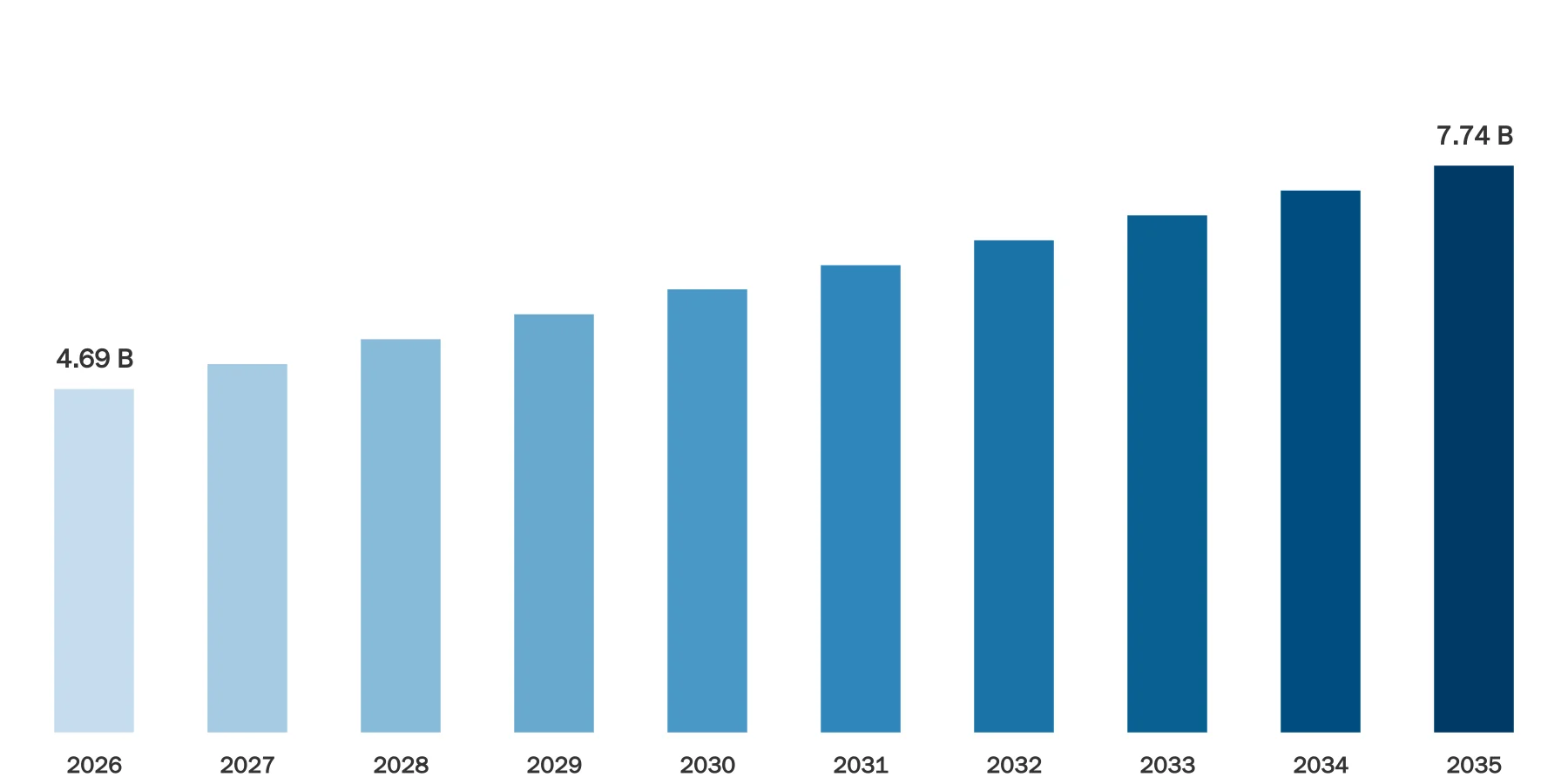
Source: Econ Market Research
Hospital beds are crucial for patient care, providing comfort, support, and safety during treatment and recovery. With advancements in medical technology and an aging population, the demand for hospital beds continues to grow. Factors such as rising chronic diseases, increasing surgical procedures, and expanding healthcare infrastructure contribute to this demand. Additionally, the market encompasses various types of hospital beds, including manual, electric, and specialized beds like ICU beds and birthing beds, catering to diverse patient needs.
In recent years, the hospital bed market has seen significant innovation and growth. Manufacturers are working on building beds with modern features including adjustable height, remote-controlled functionalities, and integrated patient monitoring systems to improve patient comfort and healthcare provider productivity. Furthermore, there is a growing emphasis on ergonomic design and infection control techniques to improve patient safety and hygiene in healthcare environments. The market is also characterized by rising adoption of smart technologies, such as IoT-enabled beds and Telemedicine integration, which allows for remote monitoring and administration of patients.
Hospital Bed Dynamics
One key driver is the aging population worldwide, with a growing number of elderly individuals requiring healthcare services and specialized care, leading to increased demand for hospital beds. Additionally, the rising prevalence of chronic diseases, such as cardiovascular disorders, diabetes, and cancer, further contributes to the demand for hospital beds, as these conditions often necessitate prolonged hospitalization and rehabilitation. Furthermore, improvements in medical technology have a significant impact on market dynamics, with manufacturers always inventing to offer beds with improved features and functionality.
Electric beds with adjustable height and positioning, integrated patient monitoring systems, and pressure-relieving surfaces are increasing popularity, motivated by the need to increase patient comfort, safety, and healthcare provider efficiency. Furthermore, the adoption of smart technology, such as IoT-enabled beds and telemedicine integration, is on the rise, enabling remote monitoring and management of patients, particularly in the aftermath of the COVID-19 pandemic, which has highlighted the necessity of remote healthcare solutions.
Hospital Bed Drivers
Aging Population
The global demographic landscape is witnessing a significant shift towards an aging population, with a higher proportion of elderly individuals requiring healthcare services. This demographic trend is a major driver for the hospital bed market as older adults often require specialized care and prolonged hospitalization due to age-related illnesses and conditions.
As the elderly population continues to grow, the demand for hospital beds is expected to rise substantially, driving market growth. Manufacturers are responding to this trend by developing innovative beds with features specifically tailored to meet the needs of elderly patients, such as pressure-relieving surfaces, fall prevention mechanisms, and ergonomic designs to enhance comfort and safety.
Technological Advancements
Rapid advancements in medical technology are driving innovation in the hospital bed market, leading to the development of beds with advanced features and functionalities. Electric beds equipped with adjustable height and positioning, integrated patient monitoring systems, and smart technologies such as IoT connectivity are becoming increasingly prevalent.
These technological advancements not only improve patient comfort and safety but also enhance healthcare provider efficiency by enabling remote monitoring and management of patients. Furthermore, technological innovation has LED to the emergence of specialty beds designed for specific medical conditions such as ICU beds, bariatric beds, and birthing beds, catering to diverse patient needs and expanding the market potential.
Hospital Bed Restraints:
High Initial Investment Costs
One of the key barriers to the hospital bed market is the high initial investment costs associated with innovative bed technology. Electric beds with advanced features such as automated adjustments, integrated monitoring systems, and smart capabilities are typically more expensive than regular manual beds. These high prices can be a barrier to adoption for healthcare facilities, especially in resource-constrained situations where financial constraints may prevent investment in new technology. Additionally, continuous maintenance and servicing charges increase the total cost of ownership, making it difficult for some healthcare institutions to replace existing bed infrastructure.
Stringent Regulatory Requirements
The hospital bed market is subject to strict rules that control medical equipment manufacturing, sale, and use. Compliance with regulatory requirements and acquiring relevant certifications may be time-consuming and costly for manufacturers, especially for products that incorporate new technologies or are intended for specific medical applications.
Furthermore, changes in regulatory requirements or the introduction of new standards can have an impact on product development schedules and market entrance strategies, creating obstacles for market players. Furthermore, changes in regulatory frameworks across different regions and countries can cause challenges for companies operating in several markets, forcing them to negotiate diverse regulatory landscapes and maintain compliance with local laws.
Hospital Bed Opportunities:
Integration of Smart Technologies
The integration of smart technologies such as IoT connectivity, Artificial Intelligence, and telemedicine opens up new avenues for innovation and growth in the hospital bed market. Smart beds outfitted with sensors and monitoring equipment can enable remote monitoring of patient vital signs, movement, and activity, allowing healthcare personnel to discover medical issues early and intervene proactively. Furthermore, telemedicine integration enables virtual consultations and remote patient management, minimizing the requirement for physical presence in healthcare facilities and making better use of hospital bed capacity. Manufacturers can use these technologies to differentiate their products, improve their value offer, and enter new markets, such as home healthcare and remote patient monitoring applications.
Segment Overview
By Type
By type, hospital beds encompass a range of specialized options tailored to specific medical requirements. Regular beds serve as the standard option for general patient care, while pediatric beds are designed to accommodate the unique needs of children, ensuring their safety and comfort during treatment. Respiratory beds feature specialized features such as adjustable head positioning to facilitate respiratory therapy for patients with breathing difficulties.
ICU beds are equipped with advanced monitoring and life support systems to cater to critically ill patients, while bariatric beds offer enhanced support and capacity for overweight or obese individuals. Birthing beds provide comfort and accessibility for expectant mothers during labor and delivery, while pressure relief beds are designed to prevent pressure ulcers and promote healing for bedridden patients. Other types of hospital beds may include specialty options designed for specific medical conditions or patient populations, such as orthopedic beds or psychiatric beds.
By Usage
In terms of usage, hospital beds are categorized based on the level of care they provide. Critical care beds are utilized in intensive care units (ICUs) and other critical care settings, where patients require close monitoring and life-saving interventions. Acute care beds cater to patients requiring short-term medical treatment for acute illnesses or injuries, typically in hospital wards or emergency departments. Long-term care beds are intended for patients with chronic or persistent medical conditions who require extended periods of care, often in nursing homes or rehabilitation facilities.
By End-Use
Hospital beds are used by a variety of end users in the healthcare profession. Hospitals and clinics are the principal purchasers of hospital beds, which are used across a variety of medical departments and specialties to meet patient care demands. Ambulatory surgery centers (ASCs) use hospital beds for short-term recovery after outpatient surgical procedures. Other end users may include specialty medical centers, hospices, and long-term care facilities that serve specific patient demographics or medical problems. Each area of the hospital bed market plays an important role in fulfilling the different healthcare needs of patients and healthcare providers, encouraging innovation and growth in the industry.
Hospital Bed Overview by Region
In North America, the market is characterized by robust demand fueled by a well-established healthcare system, high healthcare expenditure, and technological advancements. Europe follows a similar trajectory, with strong demand for hospital beds driven by aging populations and government investments in healthcare infrastructure.
The Asia Pacific region presents significant growth opportunities, propelled by rapid urbanization, increasing healthcare spending, and expanding access to healthcare services. Countries like China and India are witnessing a surge in demand for hospital beds due to population growth, rising chronic diseases, and improving healthcare infrastructure. In Latin America and the Middle East &, Africa, market growth is driven by efforts to enhance healthcare access and quality, although challenges such as economic instability and political unrest may impact market dynamics.
Hospital Bed Market Competitive Landscape
Major players in the market include Hill-Rom Holdings Inc., Stryker Corporation, and Getinge AB, who offer a comprehensive range of hospital bed products to meet various medical demands. To remain competitive, these important competitors prioritize product development and technological innovation, investing in R&,D to deliver sophisticated features such as smart technology, ergonomic designs, and infection control measures. Furthermore, strategic partnerships, mergers, and acquisitions are frequent methods used by companies to extend their market presence and strengthen their product line.
Regional players play an important role, especially in emerging economies, exploiting their local experience and distribution networks to compete effectively. Moreover, competition in the hospital bed market is intensifying with the emergence of new entrants and start-ups, driven by opportunities in telemedicine integration, home healthcare, and personalized patient care solutions.
Hospital Bed Market Leading Companies:
Span-America Medical Systems Inc. (Savaria Corporation)
Getinge AB
GF Health Products Inc.
Hill-Rom Holdings Inc.
Invacare Corporation
Malvestio S.P.A.
Paramount Bed Holdings Co. Ltd.
Savion Industries
Stiegelmeyer GmbH &, Co. KG.
Stryker Corporation
Hospital Bed Market Report Segmentation
Hospital Bed Market Report Scope & Segmentation
| Attributes | Details |
|---|---|
Market Size (Current) | US$ 4.69 Billion in 2026 |
Market Size (Forecast) | US$ 7.74 Billion in 2035 |
Growth Rate | CAGR of 5.72% from 2026 to 2035 |
Forecast Period | 2026 – 2035 |
Base Year | 2025 |
Historical Data Available | Yes |
Regional Scope | Global |
Segments Covered | By Type
By Usage
By End User
|
Frequently Asked Questions
Common questions about this report
The study period covers historical insights and forecast projections for the period 2026-2035.
About the Author
Market research expert with years of industry experience

Dipali Bhingare serves as the Market Research Director at Econ Market Research. With a focus on translating complex global economic shifts into actionable business intelligence, she oversees the strategic direction of comprehensive market studies. Her work empowers organizations to navigate volatile industries through data-driven forecasting and deep-dive competitive analysis.
Related Reports
Explore more market insights from the same category