

3D Printing Medical Device Market
3D Printing Medical Device Market Size, Share, Trends, Growth, and Industry Analysis, By Technology (Electron Beam Melting (EBM), Laser Beam Melting (LBM), Photopolymerization, Droplet Deposition Manufacturing), By Component (Equipment, Materials, Services), By Application (Implants, Surgical Instruments, Prosthetics, Tissue Engineering), Regional Analysis and Forecast Period 2026-2035
3D Printing Medical Device Market Overview
As per Econ Market Research analysis, the Global 3D Printing Medical Device Market was estimated at US$ 5.06 Billion in 2026 and is forecast to attain US$ 18.84 Billion by 2035, expanding at a CAGR of 15.7% between 2026 and 2035. The base year for the study is 2025.
3D Printing Medical Device Market Size 2025-2035 (USD Billion)

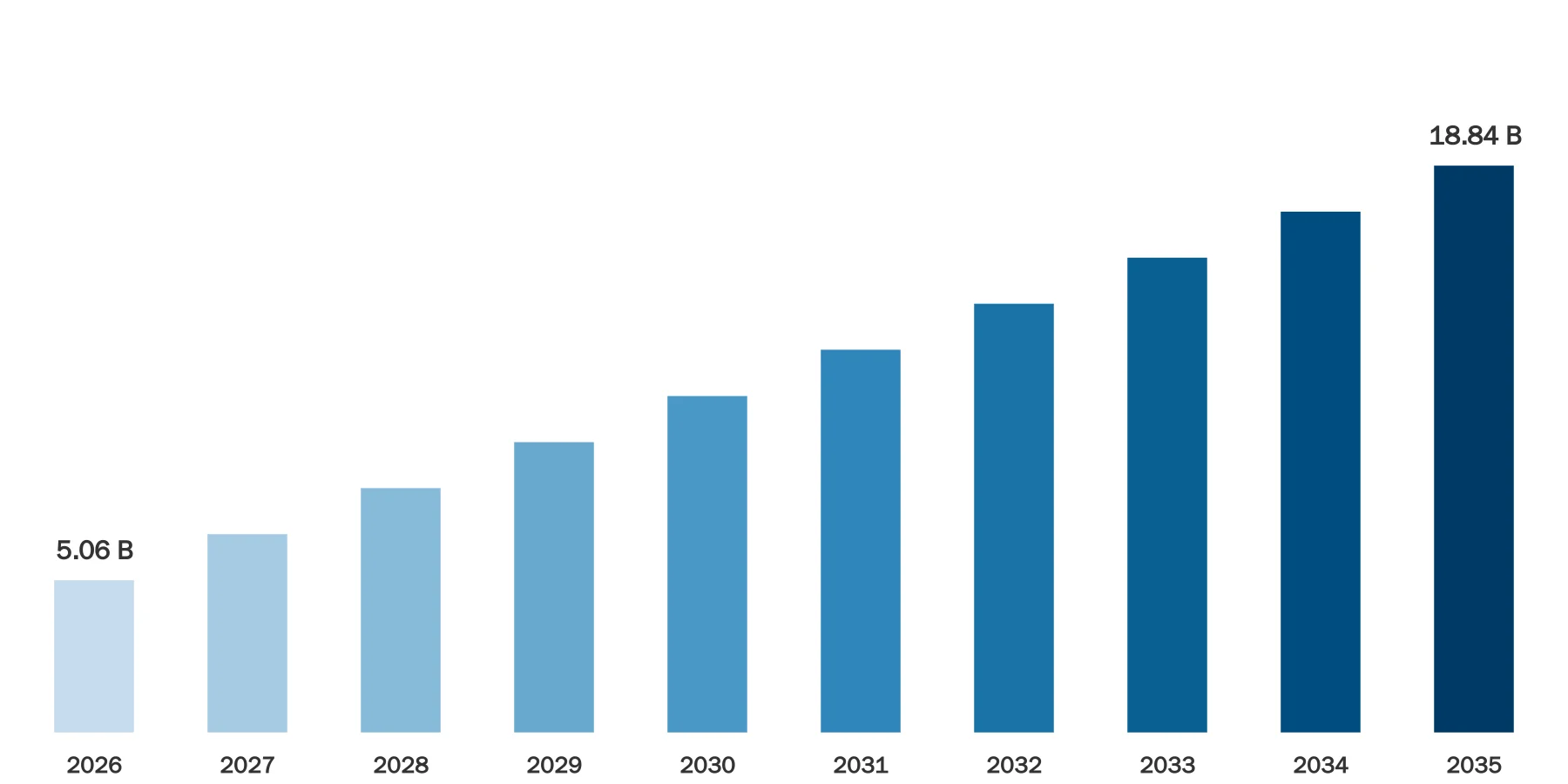
Source: Econ Market Research
3D Printing allows for the production of customized Medical Devices tailored to individual patients', needs, leading to improved treatment outcomes and patient care. The market has witnessed significant growth due to advancements in 3D printing technology, such as improved printing materials and techniques, as well as increased adoption by healthcare providers worldwide.
Key drivers include the ability to produce complex geometries, cost-effectiveness for small batch production, and reduced lead times compared to traditional manufacturing methods. Moreover, 3D printing enables rapid prototyping and customization, making it ideal for producing patient-specific implants and prosthetics. However, challenges such as regulatory hurdles, quality control standards, and limited reimbursement policies may hinder market growth.
3D Printing Medical Device Dynamics
One significant driver is the increasing demand for personalized healthcare solutions, fuelled by the growing prevalence of chronic diseases and the aging population. 3D printing technology enables the production of custom-made medical devices tailored to individual patient anatomies, leading to better treatment outcomes and patient satisfaction. Additionally, the ability of 3D printing to rapidly prototype and iterate designs accelerates the development of innovative medical devices, fostering technological advancements in the healthcare sector.
Moreover, the market is propelled by the expanding applications of 3D printing in various medical fields, including orthopedics, dentistry, and prosthetics. Orthopedic implants, in particular, benefit from 3D printing',s capability to produce complex geometries and porous structures that promote osseointegration and improve implant longevity. Similarly, dental applications such as crowns, bridges, and dental models leverage 3D printing for its accuracy, efficiency, and cost-effectiveness.
However, the market faces a number of challenges, including regulatory hurdles, quality control requirements, and reimbursement regulations. Regulatory bodies are responsible for guaranteeing the safety and efficacy of 3D printed medical equipment, which may necessitate more validation and testing than traditional production processes. Quality control procedures are crucial to ensure the consistency and reliability of 3D printed products, and reimbursement rules must adjust to meet the specific characteristics of individualized medical equipment.
3D Printing Medical Device Drivers
Growing Demand for Personalized Healthcare Solutions
The increasing prevalence of chronic diseases and the aging population have intensified the need for personalized medical treatments. 3D printing technology allows for the creation of custom-made medical devices tailored to individual patient anatomies, leading to improved treatment outcomes and patient satisfaction. By enabling the production of patient-specific implants, prosthetics, and surgical guides, 3D printing enhances the efficacy and precision of medical interventions. This demand for personalized healthcare solutions is driving the adoption of 3D printing technology across various medical specialties, including orthopedics, dentistry, and cardiology.
Expanding Applications of 3D Printing in Medicine
The versatility of 3D printing technology has permitted its use in a variety of medical applications. In orthopedics, 3D printing enables the creation of complicated implants with patient-specific geometries, which improves implant fit and performance. Dental applications benefit from 3D printing',s accuracy and efficiency in producing crowns, bridges, and dental models. Furthermore, 3D printing is transforming the field of Regenerative Medicine by allowing the production of tissue scaffolds and organoids for transplantation and drug testing. The capacity to quickly prototype and iterate designs also speeds up the development of advance medical equipment, fostering technical advancements in healthcare.
3D Printing Medical Device Restraints:
Regulatory Hurdles
The regulatory landscape governing 3D printed medical devices is complex and evolving, presenting challenges for market participants. Regulatory agencies require comprehensive validation and testing to ensure the safety and efficacy of 3D printed products, which may prolong the time to market and increase development costs. Manufacturers must navigate stringent regulatory requirements, including quality control standards and documentation, to obtain regulatory approval for their products. This regulatory uncertainty poses a significant barrier to entry for new market entrants and may hinder the widespread adoption of 3D printing technology in healthcare.
Quality Control Challenges
Maintaining consistent quality and reliability is crucial for the successful adoption of 3D printed medical devices. Variability in printing parameters, material properties, and post-processing techniques can impact product performance and patient outcomes. Ensuring reproducibility and reliability through robust quality control measures is essential to mitigate the risk of product defects and regulatory non-compliance. However, achieving consistent quality across different printers, materials, and production processes remains a challenge for manufacturers, requiring ongoing optimization and standardization efforts.
3D Printing Medical Device Opportunities:
Advancements in Materials and Printing Technologies
Continuous improvements in 3D printing materials and printing processes create chances for market expansion and innovation. Researchers are creating new biocompatible materials with improved mechanical qualities and bioactivity, which will broaden the spectrum of uses for 3D printed medical devices. Furthermore, advances in printing technologies, such as multi-material printing and high-resolution printing, allow for the creation of increasingly sophisticated and functional medical devices. These advances in technology boost the capabilities of 3D printing in healthcare, driving the creation of next-generation medical devices.
Segment Overview
By Product
By product, the market encompasses equipment, materials, and services/software. Equipment involves the actual 3D printers used in medical device manufacturing, ranging from desktop printers to industrial-scale machines. Materials refer to the raw substances utilized in the printing process, including metals, polymers, and ceramics, each tailored for specific medical applications.
Services and software encompass the comprehensive support systems and digital tools required for designing, modelling, and optimizing 3D printed medical devices. Together, these product segments constitute the essential components of the 3D printing medical device market, driving innovation and facilitating the production of advanced healthcare solutions.
By Technology
The market is characterized by various 3D printing technologies, each offering unique capabilities and applications. Laser beam melting, photopolymerization, droplet deposition/extrusion-based technologies, and electron beam melting are among the primary techniques employed in medical device fabrication. Additionally, three-dimensional printing, adhesion bonding, and binder jetting techniques contribute to the diversity of printing methods utilized in healthcare. Other emerging technologies further expand the technological landscape, promising novel approaches to 3D printing in medicine. These diverse printing technologies enable the precise fabrication of medical devices with varying materials and geometries, catering to a wide range of clinical needs.
By Application
In terms of application, the market covers a wide range of medical devices and products. Surgical guides and tools make surgical procedures more precise and efficient. Tissue-engineered products contribute to regenerative medicine by encouraging tissue repair and regeneration. Hearing aids and prostheses help patients restore sensory and motor functions, thereby enhancing their quality of life.
Standard and bespoke prostheses and implants treat musculoskeletal ailments and injuries, restoring mobility and function. Wearable medical gadgets offer continuous monitoring and help for a variety of medical disorders. Other uses include a wide range of medical equipment suited to specific clinical demands, highlighting the adaptability and potential of 3D printing in medicine.
By End-User
End-users of 3D printing medical devices include hospitals and surgical centers, academic institutions, dental and orthopedic clinics, pharma-biotech and medical device companies, and clinical research organizations. These entities play vital roles in the adoption, development, and utilization of 3D printing technology in healthcare. Hospitals and surgical centers utilize 3D printed devices for patient care and treatment, while academic institutions and research laboratories contribute to advancements in the field through research and education.
Dental and orthopedic clinics leverage 3D printing for personalized treatments and prosthetic fabrication. Pharma-biotech and medical device companies drive innovation in 3D printing technology, developing new products and solutions for the market. Clinical research organizations conduct studies and trials to assess the safety and efficacy of 3D printed medical devices, facilitating their regulatory approval and commercialization.
3D Printing Medical Device Overview by Region
North America, notably the United States, dominates the market due to a strong healthcare system, large investment in R&,D, and a favorable regulatory environment. The region has a high acceptance rate of 3D printing technology in medical applications, which is driven by the presence of important industry participants and academic institutions at the forefront of innovation.
Europe follows closely, with governments like as Germany, the United Kingdom, and France encouraging market expansion through initiatives supporting customized medicine and Additive Manufacturing. Asia-Pacific has emerged as a rapidly growing market, driven by increased healthcare expenditure, rising patient demand for innovative medical treatments, and government efforts promoting healthcare innovation. Countries like China, Japan, and South Korea are witnessing significant investments in 3D printing technology, particularly in orthopedics and dental applications.
Latin America and the Middle East &, Africa regions present untapped opportunities for market expansion, with growing awareness of 3D printing',s potential in healthcare and increasing collaborations between local governments, academic institutions, and industry players. However, challenges such as limited access to healthcare resources, economic constraints, and regulatory barriers may impede market growth in these regions.
3D Printing Medical Device Market Competitive Landscape
Leading companies such as Stratasys Ltd., 3D Systems Corporation, Materialise NV, and EnvisionTEC GmbH are at the forefront, leveraging their extensive experience, innovative product portfolios, and strategic partnerships to maintain a competitive edge. These companies prioritize ongoing R&,D efforts to improve their 3D printing capabilities, broaden their product offerings, and meet changing market demands.
Furthermore, relationships with healthcare providers, academic institutions, and regulatory bodies allow them to create customized solutions for specific medical uses and regulatory needs. Emerging players, such as start-ups and small to medium-sized enterprises, are also making substantial inroads in the industry, seizing on niche possibilities and innovative technology to challenge existing leaders. Furthermore, mergers and acquisitions play an important role in changing the competitive environment, allowing corporations to consolidate existing market positions, enter new markets, and increase their technological capabilities.
3D Printing Medical Device Market Leading Companies:
Stratasys Ltd.
EnvisionTEC
Koninklijke Philips N.V.
3D Systems, Inc.
EOS
Renishaw plc
Materialise
3T Additive Manufacturing Ltd.
GENERAL ELECTRIC COMPANY
Carbon, Inc.
Prodways Group
SLM Solutions
3D Printing Medical Device Recent Developments
June 2023, Mighty Oak Medical and HP joined forces in June 2023 to pioneer healthcare applications utilizing HP',s Jet Fusion 5200 3D printers. Leveraging HP',s industrial Multi Jet Fusion technology, the partnership aims to slash printing timelines, ensuring swift access to personalized care for a broad spectrum of patients.
3D Printing Medical Device Report Segmentation
3D Printing Medical Device Market Report Scope & Segmentation
| Attributes | Details |
|---|---|
Market Size (Current) | US$ 5.06 Billion in 2026 |
Market Size (Forecast) | US$ 18.84 Billion in 2035 |
Growth Rate | CAGR of 15.7% from 2026 to 2035 |
Forecast Period | 2026 – 2035 |
Base Year | 2025 |
Historical Data Available | Yes |
Regional Scope | Global |
Segments Covered | By Technology
By Component
By Application
|
Frequently Asked Questions
Common questions about this report
The study period covers historical insights and forecast projections for the period 2026-2035.
About the Author
Market research expert with years of industry experience

Dipali Bhingare serves as the Market Research Director at Econ Market Research. With a focus on translating complex global economic shifts into actionable business intelligence, she oversees the strategic direction of comprehensive market studies. Her work empowers organizations to navigate volatile industries through data-driven forecasting and deep-dive competitive analysis.
Related Reports
Explore more market insights from the same category