

Electric Vehicle Battery Thermal Management Systems Market
Electric Vehicle Battery Thermal Management Systems Market Size, Share, Trends, Growth, and Industry Analysis, By Propulsion (Battery Electric Vehicle (BEV), Hybrid Electric Vehicle (HEV), Plug-in Hybrid Electric Vehicle (PHEV), Fuel Cell Vehicle (FCV)), By Technology (Active, Passive), By Type (Liquid Cooling, Air Cooling), Regional Analysis and Forecast Period 2026-2035
Electric Vehicle Battery Thermal Management Systems Market Overview
As per Econ Market Research analysis, the Global Electric Vehicle Battery Thermal Management Systems Market accounted for US$ 11.98 Billion in 2026 and is expected to surpass US$ 58.9 Billion by 2035, witnessing a CAGR of 16.3% throughout 2026–2035. The analysis is based on 2025 as the base year.
Electric Vehicle Battery Thermal Management Systems Market Size 2025-2035 (USD Billion)

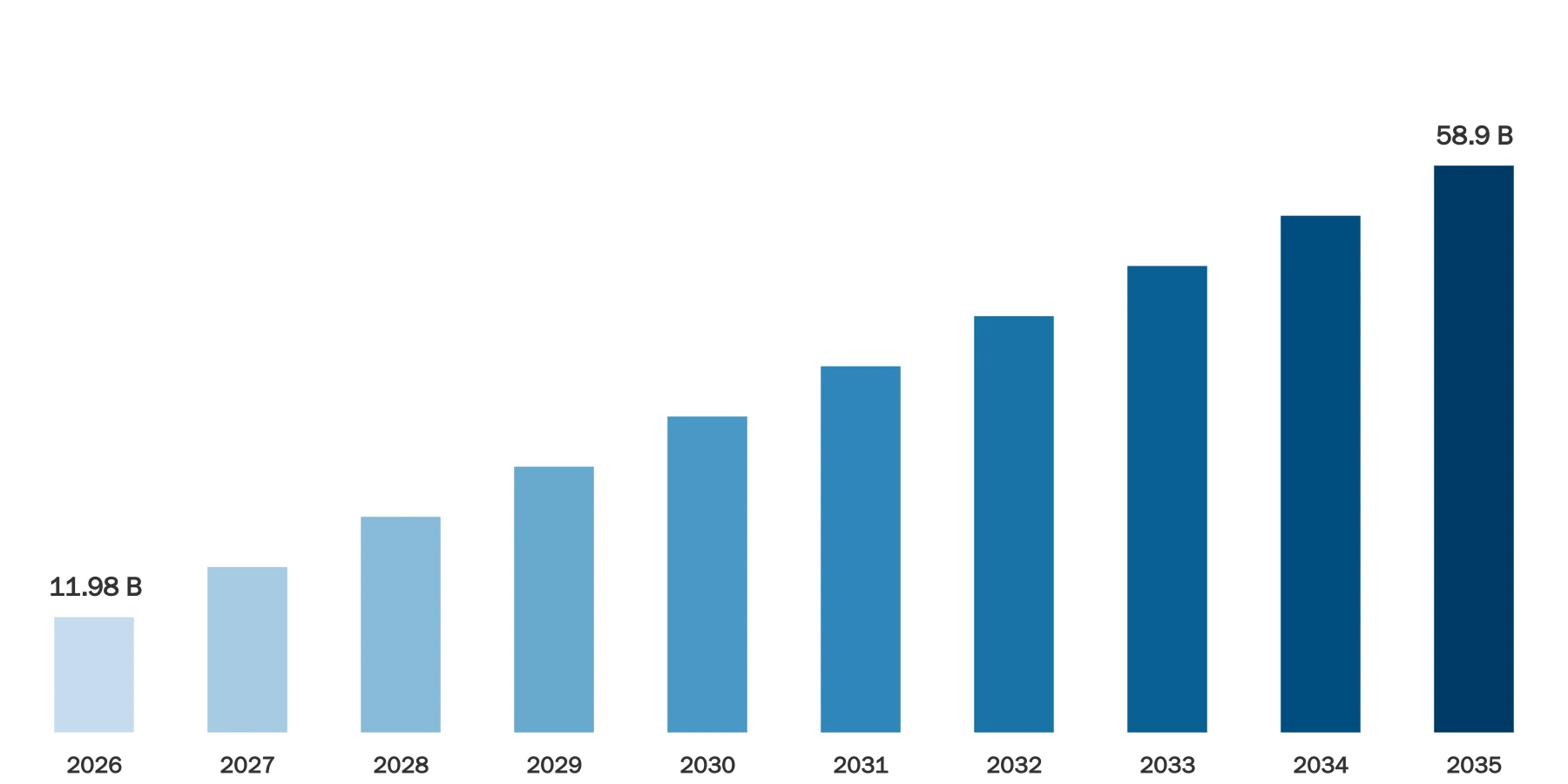
Source: Econ Market Research
Technologies called Electric Vehicle Battery Thermal Management Systems are made to control the temperature of the battery pack in cars so that it runs as efficiently, long as possible, and safely. In order to keep the battery within the proper working temperature range, these systems use heating and cooling processes, which improve efficiency and dependability. With EVs becoming more common in the automotive industry, it',s crucial for manufacturers and stakeholders to prioritize the efficient and safe functioning of battery systems. These systems are created to control battery temperature, protecting against extreme heat or cold that could harm battery performance, safety, and lifespan.
The demand for electric vehicle battery thermal management solutions has greatly increased in the past few years due to several important reasons. The primary factor driving this growth is the rise in electric vehicle adoption on a global scale, which is fuelled by environmental worries, government policies encouraging clean energy projects, and advancements in battery technology that have enhanced the performance and cost-effectiveness of electric vehicles. As more electric vehicles are being used, the need for efficient thermal management solutions to improve battery performance and lifespan has also grown.
Moreover, as consumers demand longer battery life, faster charging, and more reliable electric vehicles, the importance of effective thermal management systems is becoming increasingly apparent. The electric vehicle battery thermal management market stands out for its wide range of technologies used to maintain ideal temperatures. Active cooling methods, like liquid cooling or refrigerant systems, use coolant fluids to absorb and release heat produced during battery usage, ensuring steady temperature control throughout the battery pack. Passive cooling techniques, however, use materials that have high thermal conductivity to remove heat without requiring extra power, which can save costs and improve reliability.
Electric Vehicle Battery Thermal Management Systems Dynamics
The market for electric vehicle battery thermal management is impacted by various factors. Government regulations promoting clean energy and stricter emissions standards are driving the adoption of electric vehicles, increasing the demand for efficient thermal management systems. Additionally, growing consumer awareness of the environmental benefits of electric vehicles and advancements in battery technology are also contributing to market growth. Moreover, the increased funding in research and development efforts from major industry leaders to improve the effectiveness, dependability, and affordability of thermal management solutions is driving innovation and competition in the market.
The automotive industry is moving towards electric mobility, which is leading to more collaboration between automakers, battery manufacturers, and technology providers to create solutions for the challenges in managing electric vehicle batteries. There is also a growing focus on battery safety and preventing thermal runaway events, which is pushing the development of better cooling and heating technologies.
Furthermore, the rising popularity of electric cars in developing countries, along with improvements in charging infrastructure, creates profitable chances for the market to grow. The Global Electric Vehicle Battery Thermal Management Market is influenced by various factors like rules and regulations, technological progress, industry partnerships, and efforts to reach new markets, all of which play a role in shaping its growth and competitive environment.
Electric Vehicle Battery Thermal Management Systems Drivers
Government Regulations and Incentives
Government rules that require lower emissions and support clean energy programs play a huge role in driving the market for electric vehicle battery thermal management. These rules push car manufacturers to make more electric vehicles, which increases the need for battery thermal management systems. In addition, governments offer financial incentives like tax breaks, rebates, and subsidies to encourage people to use electric vehicles, which also helps the market grow. This means car companies have to invest in better thermal management solutions to follow the rules and take advantage of incentives, which leads to more innovation and growth in the market.
Technological Advancements in Battery Systems
The continuous improvements in battery technology, such as increasing energy density and charging speed, are fuelling the need for better thermal management solutions. With electric vehicle batteries becoming more powerful and smaller, effectively managing thermal concerns is becoming more crucial to guarantee battery safety, lifespan, and efficiency. New cooling and heating technologies, like liquid cooling systems and phase change materials, are being created to tackle these challenges.
Additionally, improvements in predictive analytics and AI allow for instant monitoring and optimization of battery temperature, increasing system efficiency and reliability. These tech enhancements not only boost market expansion but also empower car manufacturers to provide electric vehicles with extended driving range, quicker charging speeds, and enhanced durability, ultimately attracting more customers to the electric vehicle industry.
Restraints:
One major obstacle facing the electric vehicle battery thermal management market is the high initial costs of advanced thermal management systems. These systems are crucial for maintaining battery performance and safety, but their integration significantly raises manufacturing expenses for electric vehicles, ultimately driving up their retail prices. This expense can discourage cost-conscious consumers from buying electric vehicles, especially in areas where there are few incentives or subsidies for electric vehicles. To address this restraint, industry players need to focus on cost reduction strategies such as economies of scale, technological innovations, and supply chain optimizations to make electric vehicles more affordable and competitive in the automotive market.
Infrastructure Limitations
One major obstacle in the electric vehicle battery thermal management market is the inadequate charging infrastructure. Despite the growing popularity of electric vehicles, many areas are still lacking in charging stations, particularly in rural regions and developing nations. This lack of infrastructure presents difficulties for electric vehicle owners, who may experience anxiety over their vehicle',s range and inconvenience from limited charging options.
Additionally, the absence of fast-charging infrastructure is preventing the widespread acceptance of electric vehicles, as consumers are hesitant to invest without convenient and speedy charging solutions. To overcome this restraint, governments, utilities, and private stakeholders need to collaborate to expand the charging infrastructure network and deploy fast-changing technologies, thereby promoting the adoption of electric vehicles and supporting market growth.
Opportunities:
Integration of Renewable Energy Sources
The use of solar and wind power in electric vehicle battery thermal management offers great potential for the market. These renewable energy sources can power charging stations for electric vehicles, leading to reduced emissions and more sustainable transportation options. Furthermore, the combination of renewable energy generation and electric vehicle charging can help ease grid congestion and improve energy efficiency.
By utilizing renewable energy for charging, stakeholders can lower costs and make electric vehicles more environmentally friendly, appealing to eco-conscious consumers. Furthermore, advancements in energy storage technologies such as grid-scale batteries and vehicle-to-grid (V2G) systems enable the efficient integration of renewable energy with electric vehicle charging infrastructure, unlocking new revenue streams and business opportunities for market players.
Segment Overview
By System Type
By System Type market is segmented into active and passive types. Active systems use liquid cooling or refrigerant-based solutions to actively control battery temperature with pumps, fans, and coolant fluids. They efficiently absorb and release heat during battery operation for precise temperature control. Passive systems, on the other hand, rely on materials with high thermal conductivity to dissipate heat without requiring extra power.
Passive cooling systems are often easier to design and use, employing materials like heat sinks or phase change materials to regulate battery temperature without using external power. While active systems provide more options for controlling temperature, passive systems are usually more budget-friendly and need less upkeep, making them ideal for situations where simplicity and dependability are key.
By Application
By application market is segmented into, commercial and passenger vehicles. Commercial electric vehicles span a variety of uses including buses, trucks, delivery vans, and fleet vehicles for transportation, logistics, and commercial operations. These vehicles usually have larger battery packs and higher energy needs, necessitating sturdy thermal management systems to regulate the battery temperature in different operating conditions.
On the other hand, passenger electric vehicles include cars, SUVs, and other personal transport vehicles meant for individual or family use. In passenger vehicles, thermal management plays a crucial role in ensuring optimal driving range, efficient charging, and passenger comfort. It is essential to prioritize battery safety and longevity in order to maximize performance and reliability for both commercial and passenger electric vehicles. Effective battery thermal management systems are necessary to achieve these goals and extend the lifespan of the batteries.
Electric Vehicle Battery Thermal Management Systems Overview by Region
In North America, strict emissions regulations, along with government incentives and a growing awareness of environmental issues, are encouraging the adoption of electric vehicles and increasing the demand for thermal management systems for batteries. Meanwhile, in Europe, there is a growing trend towards electric vehicle adoption driven by ambitious goals for reducing carbon emissions and the expansion of charging infrastructure, supported by government policies such as subsidies and tax breaks.
In countries like China and India, concerns about air pollution and rising fuel prices, along with government support for electric vehicles, are speeding up the adoption of electric cars and the market for thermal management solutions in the Asia Pacific region. Meanwhile, Latin America, the Middle East, and Africa are experiencing slower growth due to infrastructure challenges and higher upfront costs. However, as awareness of the benefits of electric vehicles grows and infrastructure improves, there is potential for growth in these regions as well. Overall, the electric vehicle battery thermal management market reflects a complex interplay of regulatory frameworks, technological advancements, and consumer preferences across diverse regional landscapes.
Electric Vehicle Battery Thermal Management Systems Market Competitive Landscape
Established players such as LG Chem, Panasonic Corporation, and Samsung SDI Co., Ltd., leverage their extensive experience in battery technology to develop advanced thermal management systems tailored to the specific needs of electric vehicles. Additionally, automotive giants like Tesla, BMW, and Nissan invest heavily in research and development to enhance their proprietary thermal management technologies, aiming to gain a competitive edge in the market. Moreover, a multitude of emerging startups and technology firms, including Gentherm, BorgWarner Inc., and Mahle GmbH, are pioneering novel thermal management solutions, ranging from liquid cooling systems to phase change materials, to address the evolving demands of the electric vehicle industry.
Electric Vehicle Battery Thermal Management Systems Market Leading Companies:
LG Chem
Panasonic Corporation
Samsung SDI
BYD Company Limited
Contemporary Amperex Technology Co. Limited (CATL)
Tesla Inc.
A123 Systems LLC
Robert Bosch GmbH
Delphi Technologies
Johnson Controls International plc
Mitsubishi Electric Corporation
Continental AG
Visteon Corporation
BorgWarner Inc.
Denso Corporation
Electric Vehicle Battery Thermal Management Systems Market Recent Developments
July 2023, Marelli has launched a cutting-edge Thermal Management Module designed for electric vehicles, aimed at enhancing performance, safety, and extending driving distance by as much as 20%.
May 2023, Carrar and Gentherm are teaming up to provide advanced two-phase immersion thermal management solutions for electric vehicle (EV) battery modules.
Oct 2022, TotalEnergies and Valeo are teaming up to revolutionize battery cooling for electric vehicles, ultimately decreasing their carbon emissions
Electric Vehicle Battery Thermal Management Systems Report Segmentation
Electric Vehicle Battery Thermal Management Systems Market Report Scope & Segmentation
| Attributes | Details |
|---|---|
Market Size (Current) | US$ 11.98 Billion in 2026 |
Market Size (Forecast) | US$ 58.9 Billion in 2035 |
Growth Rate | CAGR of 16.3% from 2026 to 2035 |
Forecast Period | 2026 – 2035 |
Base Year | 2025 |
Historical Data Available | Yes |
Regional Scope | Global |
Segments Covered | By Propulsion
By Technology
By Type
|
Frequently Asked Questions
Common questions about this report
The study period covers historical insights and forecast projections for the period 2026-2035.
About the Author
Market research expert with years of industry experience

Related Reports
Explore more market insights from the same category