

Chlor Alkali Equipment Market
Chlor Alkali Equipment Market Size, Share, Trends, Growth, and Industry Analysis, By Product (Chlorine, Caustic Soda, Soda Ash), By Technology (Membrane Cell, Diaphragm Cell, Mercury Cell), By End-Use Industry (Chemicals, Textiles, Paper andamp; Pulp, Water Treatment, Others), Regional Analysis and Forecast Period 2026-2035
Market Overview
As per Econ Market Research analysis, the Global Chlor Alkali Equipment Market valuation stood at US$ 60.88 Billion in 2026 and is expected to reach US$ 87.4 Billion by 2035, growing at a steady CAGR of 4.1% from 2026 to 2035. 2025 serves as the base year.
Chlor Alkali Equipment Market Size 2025-2035 (USD Billion)

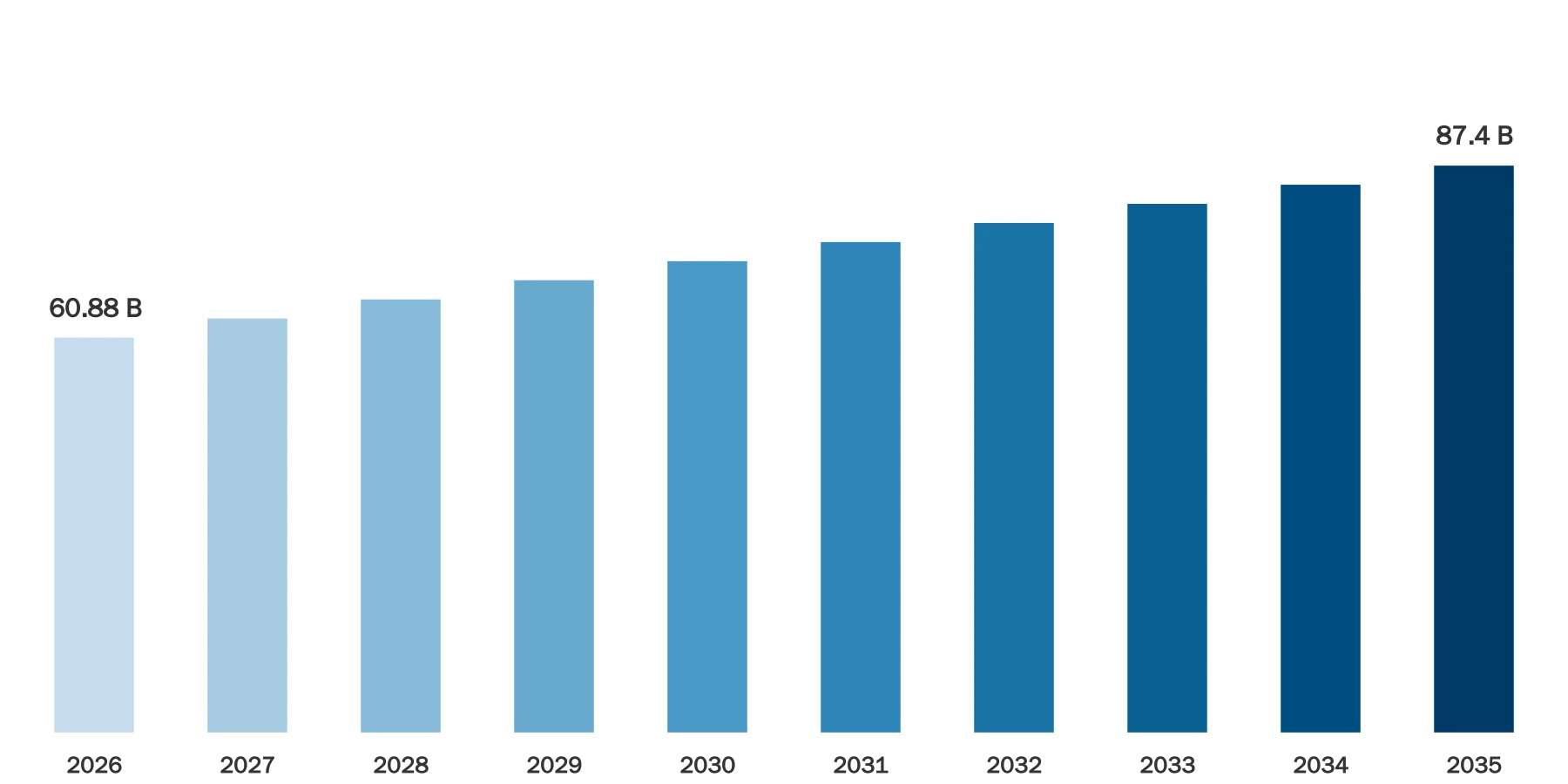
Source: Econ Market Research
Chlor-alkali refers to the industrial process that simultaneously produces chlorine gas, sodium hydroxide, and hydrogen through the electrolysis of brine (sodium chloride solution). This process is fundamental to various industries, including petrochemicals, textiles, and water treatment, as the products find application in the manufacturing of plastics, detergents, and pulp and paper, among other vital commodities.
Chlor Alkali Equipment Dynamics
One of the primary drivers is the increasing demand for chlor-alkali products in various end-use industries, including water treatment, chemical manufacturing, and textiles. The rising global population, coupled with urbanization trends, propels the need for clean water, driving the demand for caustic soda in water treatment applications. Similarly, the expanding chemical and manufacturing sectors, particularly in regions like Asia-Pacific, contribute to the growing consumption of chlorine for the production of essential compounds like polyvinyl chloride (PVC).
The dynamics of the market are significantly influenced by technological advancements, with a notable shift towards electrolysis technologies that are more energy-efficient and sustainable. Particularly, membrane cell technology is becoming more and more well-known due to its advantages for the environment and increased energy efficiency over more conventional techniques like mercury cell and diaphragm cell technologies. In order to improve the efficiency of chlor-alkali equipment, manufacturers are spending money on research and development, with an emphasis on lowering environmental impact and energy consumption.
Chlor Alkali Equipment Drivers
Rising Demand in Water Treatment
A major driver for the global chlor-alkali equipment market is the escalating demand for clean water and wastewater treatment. The increasing global population, coupled with stringent environmental regulations, has heightened the need for effective water treatment solutions. Caustic soda, a key product of chlor-alkali production, is extensively used in water treatment processes for pH control and the removal of impurities. As countries focus on improving water quality and sanitation infrastructure, the demand for chlor-alkali products, specifically caustic soda, is expected to surge, driving the growth of the market.
Expansion of Chemical and Manufacturing Industries
The global manufacturing and chemical industries', expansion is one of the main factors propelling the chlor-alkali equipment market. One of the main products of the chlor-alkali process is chlorine, which is an essential raw material for making many different kinds of chemicals, including PVC and other polymers. The need for these chemicals is fuelled by the growth of sectors like plastics, textiles, and pharmaceuticals. The market for chlor-alkali equipment is expected to gain from the growing need for chlorine in various manufacturing processes as a result of growing industrialization, especially in emerging economies.
Restraints:
High Energy Consumption
A substantial restraint for the chlor-alkali equipment market is the energy-intensive nature of the electrolysis process. Electrolysis is a key step in chlor-alkali production, and the high energy requirements contribute significantly to operational costs. As industries globally face pressure to reduce their carbon footprint and energy consumption, finding energy-efficient alternatives becomes crucial. The industry is actively exploring and investing in technologies such as membrane cell technology to mitigate this restraint and enhance overall sustainability.
Environmental Concerns and Regulatory Compliance
Regulation and reputational issues are brought about by environmental concerns related to conventional chlor-alkali production methods, specifically the use of mercury in the mercury cell process. Stricter environmental laws force industries to use more sustainable and clean production techniques, which raises the cost of compliance. Companies in the chlor-alkali equipment market may face constraints as a result of the potential need to make significant capital investments and operational adjustments in order to transition to environmentally friendly technologies. One of the biggest concerns for industry players is continuing to be cost-effective while navigating these compliance challenges.
Opportunities:
Technological Advancements and Innovation
The chlor-alkali equipment market presents opportunities for innovation and technological advancements. The shift towards membrane cell technology, which offers improved energy efficiency and reduced environmental impact, opens avenues for companies to invest in research and development. Developing more efficient and sustainable electrolysis technologies can not only address environmental concerns but also enhance the competitiveness of companies in the market.
Segment Overview
By Type
The two primary categories of chlor-alkali equipment are determined by the methods of production. During electrolysis, the anode and cathode compartments are divided using specialised membranes in the Ion Exchange Membrane Method, enabling selective ion passage. This approach, which is known for its energy efficiency, lowers operating expenses and its impact on the environment. Conversely, the Diaphragm Method uses physical barriers to divide the areas used for producing sodium hydroxide and chlorine. The diaphragm method, although less energy-efficient than the ion exchange membrane method, is prized for its affordability and ease of use. These various varieties meet different industrial requirements and provide options for balancing economic and environmental sustainability.
By Application
Equipment for chlor-alkali is used in a variety of industries and is grouped according to particular end-use applications. The machinery used in the chlor-alkali industry is essential for generating hydrogen, sodium hydroxide, and chlorine&mdash,three essential ingredients for the production of detergents, plastics, and textiles. Chlor-alkali products, in particular sodium hydroxide, are essential to metallurgical engineering for surface treatment, metal extraction, and ore leaching.
Chlor-alkali equipment is essential to the synthesis of different chemical compounds in the Chemical Industry and broader fields such as agriculture, Speciality Chemicals, and pharmaceuticals. Beyond its primary use in the chlor-alkali industry and metallurgical engineering, these applications demonstrate the versatility of chlor-alkali equipment, highlighting its significance in diverse industrial domains and reinforcing its role in facilitating essential processes.
Chlor Alkali Equipment Overview by Region
Asia-Pacific stands out as a key player, driven by robust industrialization in countries such as China and India. The region',s burgeoning chemical, manufacturing, and water treatment sectors fuel the demand for chlor-alkali products. North America and Europe, with their well-established industrial bases, also significantly contribute to the market share. In North America, the United States is a major consumer of chlor-alkali products, particularly in the production of chemicals and plastics. In Europe, countries like Germany and the United Kingdom play pivotal roles in the market, driven by the demand from industries such as automotive, textiles, and water treatment.
Latin America and the Middle East &, Africa are emerging as regions with untapped potential. The Middle East, in particular, benefits from its strategic position as a hub for the chemical and petrochemical industries. The growth of these regions can be attributed to increasing industrialization, urbanization, and a rising focus on infrastructure development.
Chlor Alkali Equipment Market Competitive Landscape
Notable companies that make a significant contribution to the market are Azienda Chimica Genovese S.R.L. (Italy), Bluestar, and INEOS Limited (U.K.). These businesses are constantly researching and developing new technologies, with a focus on membrane cell technology as a way to lower environmental impact and increase energy efficiency.
Companies frequently enter into strategic alliances and mergers in the market in an effort to increase their market share and diversify their product lines. A more integrated supply chain is facilitated, for example, by partnerships between chemical companies and manufacturers of chlor-alkali equipment. Furthermore, attention to sustainability and adherence to environmental laws is becoming more and more important. In order to address environmental concerns related to traditional chlor-alkali production methods and to align with global sustainability goals, companies are investing in more environmentally friendly technologies and processes.
Chlor Alkali Equipment Market Leading Companies:
Asahi Kasei Corporation
Bluestar
Thyssenkrupp Nucera
AkzoNobel N.V.
Bayer MaterialScience AG (Covestro)
The Dow Chemical Company
Tata Chemicals Ltd.
Axiall Corporation (Westlake Chemical)
Olin Corporation
Formosa Plastics Corporation
Nirma Limited
Occidental Petroleum Corporation (OxyChem)
Solvay S.A.
Chlor Alkali Equipment Recent Developments
May 2023, Thyssenkrupp Nucera AG &, Co. KGaA, based in Dortmund, Germany, has joined forces with OxyChem for the implementation of the cutting-edge eBiTAC v7 electrolyzers. This collaboration aims to facilitate the transition of the Battleground plant in LaPorte, Texas, from diaphragm to membrane chlor-alkali technology, as reported by Chemengonline.
Global Chlor Alkali Equipment Report Segmentation
Chlor Alkali Equipment Market Report Scope & Segmentation
| Attributes | Details |
|---|---|
Market Size (Current) | US$ 60.88 Billion in 2026 |
Market Size (Forecast) | US$ 87.4 Billion in 2035 |
Growth Rate | CAGR of 4.1% from 2026 to 2035 |
Forecast Period | 2026 – 2035 |
Base Year | 2025 |
Historical Data Available | Yes |
Regional Scope | Global |
Segments Covered | By Product
By Technology
By End-Use Industry
|
Frequently Asked Questions
Common questions about this report
The study period covers historical insights and forecast projections for the period 2026-2035.
About the Author
Market research expert with years of industry experience

Dipali Bhingare serves as the Market Research Director at Econ Market Research. With a focus on translating complex global economic shifts into actionable business intelligence, she oversees the strategic direction of comprehensive market studies. Her work empowers organizations to navigate volatile industries through data-driven forecasting and deep-dive competitive analysis.
Related Reports
Explore more market insights from the same category