

Woodworking Machinery Market
Woodworking Machinery Market Size, Share, Trends, Growth, and Industry Analysis, By Type (Lathe, Planer, Saw, Grinding Machine, Others), By Application (Furniture Industry, Construction Industry, Shipbuilding Industry, Others), Regional Analysis and Forecast Period 2026-2035
Woodworking Machinery Market Overview
As per Econ Market Research analysis, the Global Woodworking Machinery Market generated revenue of US$ 75.56 Billion in 2026 and is forecast to achieve US$ 145.14 Billion by 2035, at a CAGR of 7.52% during the study period 2026–2035. The base year considered is 2025.
Woodworking Machinery Market Size 2025-2035 (USD Billion)

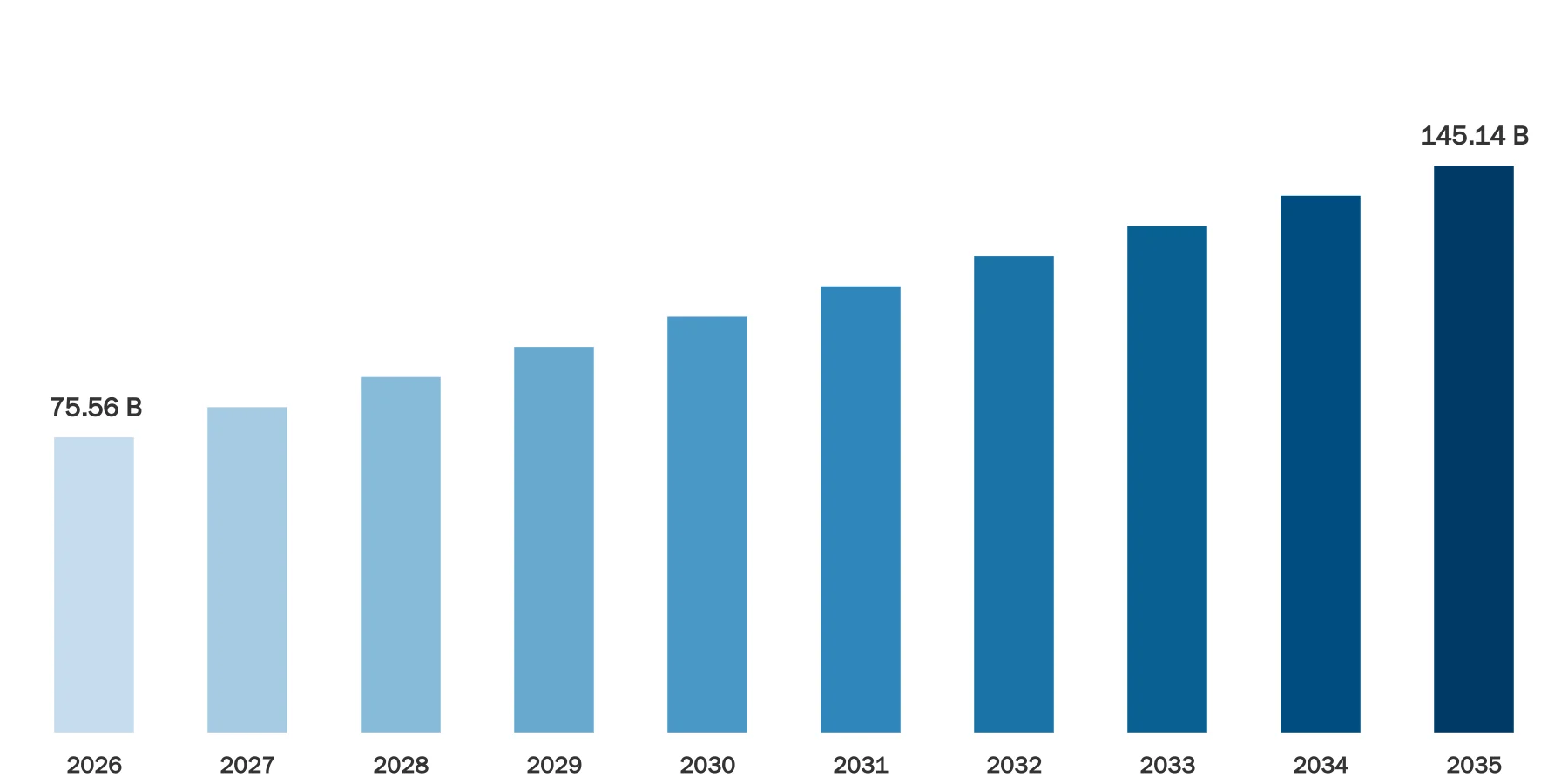
Source: Econ Market Research
The term "woodworking machinery" describes a wide range of instruments and apparatus intended for applications including shaping, cutting, moulding, and finishing wood materials. These devices are essential to the production of building supplies, furniture, and other wood-based goods. The market is propelled by the growing need for wood products in the furniture and construction sectors, as well as technological developments that have produced more accurate and efficient woodworking equipment.
The global expansion of the furniture and construction industries has resulted in notable growth in the woodworking machinery market in recent years. Modern woodworking machinery is in high demand due to the growing demand for high-quality wood products brought about by infrastructure development projects and urbanisation. The industry has also been impacted by the use of computer-controlled and automated systems, which have improved productivity, accuracy, and efficiency in wood processing operations. This change in technology has not only increased the overall efficiency of woodworking equipment but also created new opportunities for product development and innovation.
Woodworking Machinery Dynamics
The strong global expansion of the furniture and construction industries, which is being driven by growing urbanisation and infrastructure development, is one of the main causes. Modern woodworking machinery is in high demand as a result of the growing demand for wood products. Manufacturers are looking for precise and effective tools to keep up with the growing demands of production. The market dynamics are significantly shaped by technological advancements, whereby the implementation of computer-controlled and automated systems improves the overall efficiency of woodworking machinery. This move towards smart technologies increases productivity and encourages industry innovation.
The market does, however, face obstacles like the high upfront costs of sophisticated machinery and environmental issues with wood processing residues. In order to address these issues, manufacturers are making investments in sustainable practices, such as the creation of waste management systems and environmentally friendly woodworking equipment. The competitive environment also has an impact on market dynamics, as major players are constantly conducting research and development to bring in novel and affordable solutions. The industry is constantly evolving due to this competitive climate, which is responsible for everything from the development of more environmentally friendly and energy-efficient woodworking machinery to the integration of Internet of Things (IoT) technologies. These dynamic factors will continue to shape the market',s growth trajectory and reshape the woodworking machinery landscape as it continues to evolve.
Woodworking Machinery Drivers
Global Construction Boom
One of the significant drivers propelling the woodworking machinery market is the ongoing global construction boom. The increasing need for residential and commercial spaces, driven by rapid urbanization and infrastructure development projects worldwide, fuels the demand for wood products. This surge in construction activities directly translates into a higher demand for woodworking machinery, as manufacturers seek advanced tools for efficient wood processing. The machinery market benefits from the construction sector',s expansion, providing opportunities for growth, innovation, and the introduction of cutting-edge technologies to meet the escalating demands of the construction industry.
Technological Advancements
The market for woodworking machinery is significantly driven by the ongoing advancements in technology. Wood processing operations have undergone a revolution thanks to automation, computer numerical control (CNC) systems, and smart technologies, which have improved productivity, accuracy, and efficiency. Manufacturers of woodworking machinery are spending money on R&,D to incorporate these technological developments into their products and provide solutions that meet the changing demands of the market. Innovative technology adoption boosts woodworking machinery',s efficiency and creates new opportunities for product development, differentiation, and competitiveness in the market.
Restraints:
The high initial costs of sophisticated machinery are a major barrier to the market for woodworking machinery. Large upfront investments are necessary for the implementation of technologically complex and automated systems, which presents a challenge for smaller manufacturers or those with limited resources. The high cost of purchasing state-of-the-art equipment can prevent some players from entering the market and slow down adoption overall, especially in areas or market niches where financial constraints are common.
Environmental Concerns
Another restraint facing the woodworking machinery market is the environmental impact associated with wood processing residues. The disposal of waste generated during wood processing poses environmental challenges, including deforestation concerns and the emission of harmful by-products. Regulatory pressures and growing environmental consciousness among consumers are driving the industry towards sustainable practices. Manufacturers are compelled to address these environmental concerns by developing eco-friendly woodworking machinery and incorporating waste management solutions, adding an additional layer of complexity and cost to operations.
Opportunities:
Focus on Sustainable Practices
Market demand for woodworking machinery is expected to rise significantly as sustainability becomes more and more important. Manufacturers can take advantage of this trend by creating and marketing environmentally friendly machinery that has a minimal impact on the environment. In addition to addressing environmental issues, sustainable practices&mdash,such as the use of recycled materials, energy-efficient technologies, and waste reduction strategies&mdash,also meet the increasing demand for morally and responsibly conducted business. Businesses that incorporate sustainability into their woodworking machinery products stand to gain a competitive advantage and seize market share from consumers who are becoming more and more interested in eco-friendly solutions.
Segment Overview
By Type
The woodworking machinery market is categorized into several types, each playing a distinct role in wood processing. Lathes, a key segment, are machines designed for rotating a workpiece on its axis to perform various operations such as cutting, sanding, and drilling. Lathes are essential for shaping cylindrical wood components with precision. Planers, another vital type, are utilized for smoothing and flattening surfaces, ensuring a uniform thickness. This segment is crucial in achieving the desired dimensions and quality in wood products. Saws, a versatile category, encompass various types such as circular saws, band saws, and jigsaws. Saws are fundamental for cutting wood into different shapes and sizes, catering to the diverse requirements of the woodworking industry.
By Application
The application-based segmentation of the woodworking machinery market identifies two primary sectors driving demand. The furniture segment represents a significant portion of the market, with machinery tailored to the production of various wooden furniture components. Woodworking machinery in this segment is essential for shaping, cutting, and assembling components to manufacture diverse furniture items, ranging from chairs and tables to cabinets and beds. The construction segment plays a pivotal role, addressing the woodworking needs in the construction industry.
Machinery in this category is employed for processing wood used in building materials, structural components, and architectural elements. Additionally, the others category covers a spectrum of applications outside the furniture and construction sectors, such as crafting musical instruments, crafting wood art, or creating specialty wood products. This segment showcases the adaptability of woodworking machinery to diverse industries and artistic endeavours, illustrating its significance beyond traditional applications. In summary, the segmentation by application underscores the integral role woodworking machinery plays in shaping both functional and artistic aspects of various industries, contributing to the overall versatility and importance of the market.
Woodworking Machinery Overview by Region
In North America, the market benefits from a robust construction sector and a well-established furniture industry. Technological advancements in woodworking machinery are prominent in this region, driven by a focus on automation and efficiency. Europe, with its rich history of craftsmanship, boasts a sophisticated woodworking machinery market. The region is characterized by a strong emphasis on precision and quality, leading to the adoption of advanced technologies in wood processing. Additionally, stringent environmental regulations encourage the development of eco-friendly machinery.
The market for woodworking machinery is dominated by the Asia-Pacific region due to the region',s rapid industrialization and urbanisation. The demand for wood products is increased by the construction boom in nations like China and India, which also increases the need for effective machinery. Asia-Pacific makes a substantial contribution to the global supply chain as a centre of manufacturing for woodworking machinery. Despite its potential for growth, Latin America faces obstacles like unstable economies. The performance of the furniture and construction industries affects the region',s woodworking machinery market, and as economic stability increases, growth prospects arise.
Woodworking Machinery Market Competitive Landscape
Established global players such as SCM Group, HOMAG Group, and Biesse Group dominate the market with their comprehensive product portfolios and widespread geographical presence. These industry giants invest heavily in research and development to introduce cutting-edge technologies, automated solutions, and environmentally sustainable practices into their woodworking machinery offerings. The constant pursuit of efficiency, precision, and cost-effectiveness in wood processing equipment drives competition, fostering a climate of continuous improvement and innovation.
The market also features a vibrant presence of regional and niche players specializing in specific types of woodworking machinery or catering to niche applications. These players often carve out a competitive niche by providing tailored solutions to address unique industry demands. Notable regional players may include companies like Altendorf Group in Germany or Cantek America Inc. in North America, which leverage their regional expertise and customer relationships to compete effectively.
Woodworking Machinery Market Leading Companies:
Biesse Group
SCM Group
HOMAG Group
IMA Schelling Group
Weinig Group
Altendorf GmbH
Felder Group
HOLYTEK Industrial Corp.
Woodworking Machinery Recent Developments
Nov 2023, InCompass, a platform company affiliated with TJM Capital Partners, is pleased to reveal its most recent strategic acquisition of Newman Machine Company, a renowned pioneer in the field of woodworking machinery.
June 2023, Rockler Woodworking is set to enhance its e-commerce infrastructure by revamping its legacy ERP system and point-of-sale system in collaboration with Visionet. This strategic move aims to modernize business practices, ensuring a seamless shopping experience for customers. The upgrades are designed to streamline commerce operations, elevate customer satisfaction, and foster loyalty, ultimately delivering superior business outcomes.
Global Woodworking Machinery Report Segmentation
Woodworking Machinery Market Report Scope & Segmentation
| Attributes | Details |
|---|---|
Market Size (Current) | US$ 75.56 Billion in 2026 |
Market Size (Forecast) | US$ 145.14 Billion in 2035 |
Growth Rate | CAGR of 7.52% from 2026 to 2035 |
Forecast Period | 2026 – 2035 |
Base Year | 2025 |
Historical Data Available | Yes |
Regional Scope | Global |
Segments Covered | By Type
By Application
|
Frequently Asked Questions
Common questions about this report
The study period covers historical insights and forecast projections for the period 2026-2035.
About the Author
Market research expert with years of industry experience

Related Reports
Explore more market insights from the same category