

Breathwork Therapy Market
Breathwork Therapy Market Size, Share, Trends, Growth, and Industry Analysis, By Technique (Diaphragmatic Breathing, Pranayama-Based Breathwork, Buteyko Breathing, Holotropic Breathwork, Others), By Therapy Type (Stress & Anxiety Management, Mindfulness & Relaxation Therapy, Respiratory Wellness Support, Sleep Improvement, Others), By Delivery Mode (In-Person Sessions, Live Online / Virtual Sessions, Self-Guided Digital Programs, Integrated Programs), Regional Analysis and Forecast Period 2026-2035
Breathwork Therapy Market Overview
As per Econ Market Research analysis, the Global Breathwork Therapy Market was valued at approximately US$ 1.64 Billion in 2026 and is predicted to reach US$ 4.84 Billion by 2035, expanding at a CAGR of 12.80% over the forecast duration. The base year is 2025.
Breathwork Therapy Market Size 2025-2035 (USD Billion)

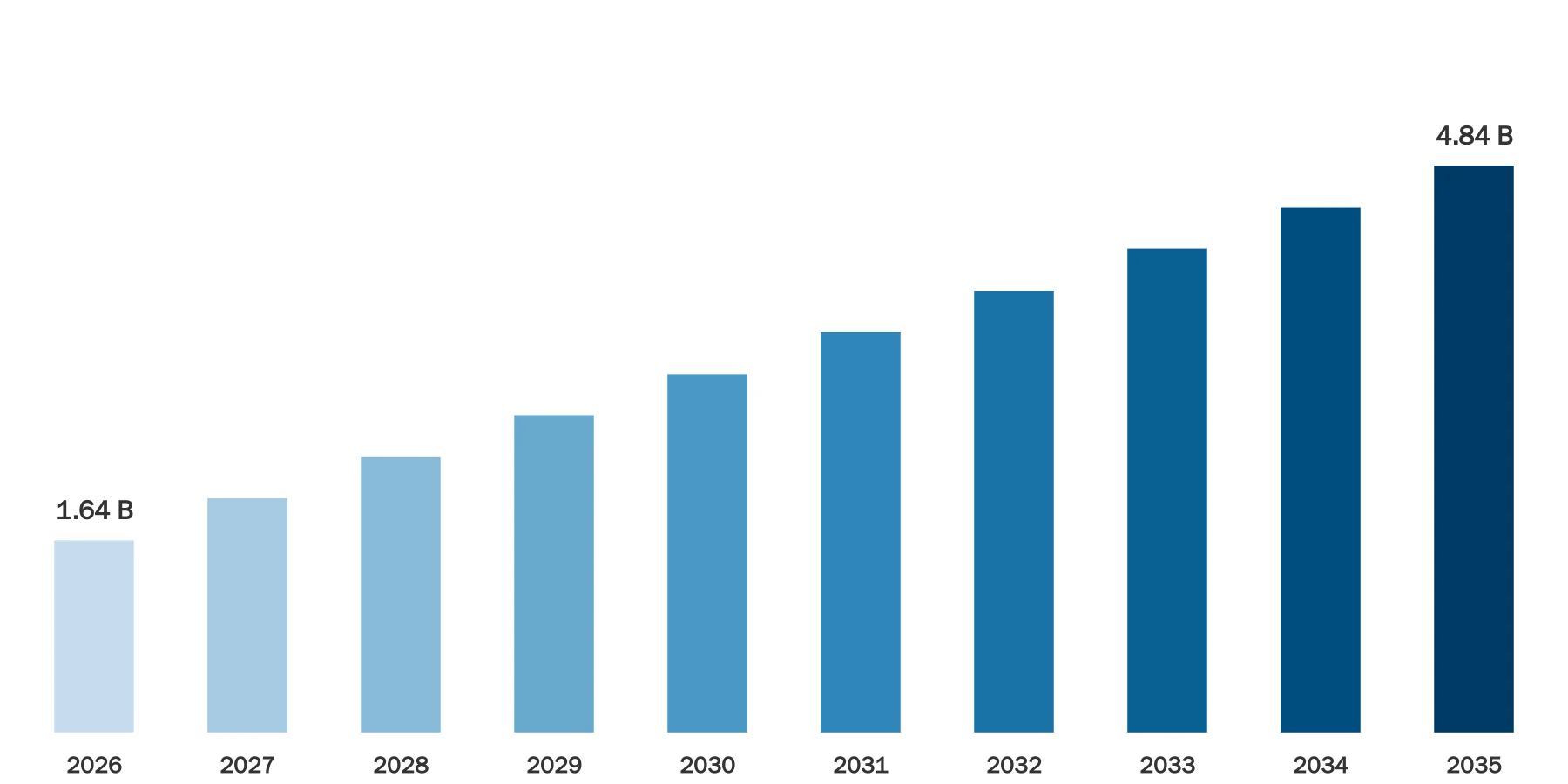
Source: Econ Market Research
The Breathwork Therapy Market is emerging as a significant segment within the broader mental wellness, preventive healthcare, and digital wellness ecosystem. Breathwork therapy encompasses structured breathing techniques designed to support emotional regulation, stress reduction, mindfulness, respiratory wellness, and sleep improvement. The market is influenced by increasing awareness of Mental Health conditions, workplace stress, lifestyle disorders, and the demand for non-pharmacological interventions. According to global health statistics, 1.1 billion people were living with mental disorders in 2021, while anxiety disorders affected 359 million individuals, creating a substantial target population for breathwork-based interventions.
Breathwork therapy programs are delivered through wellness centers, healthcare facilities, corporate wellness initiatives, fitness platforms, mobile applications, and virtual coaching services. Diaphragmatic breathing, pranayama-based practices, buteyko breathing, and holotropic breathwork remain among the most widely adopted techniques. The market is witnessing integration with wearable devices, Artificial Intelligence-enabled coaching, biometric tracking, and personalized wellness programs. Increased participation in mindfulness practices, digital health adoption, and evidence supporting breath-regulation techniques continue to strengthen the Breathwork Therapy Market Size, Breathwork Therapy Market Analysis, and Breathwork Therapy Industry Report landscape across developed and developing economies.
USA Market
The United States represents the leading country within the Breathwork Therapy Market due to widespread mental health awareness, digital wellness adoption, and strong participation in preventive healthcare programs. Corporate wellness initiatives, telehealth expansion, fitness memberships, and app-based wellness services contribute significantly to market penetration. The country records high levels of stress, anxiety, occupational burnout, and sleep-related disorders, creating strong demand for structured breathing interventions.
Breathwork therapy adoption in the United States is supported by integration into behavioral health programs, Meditation platforms, workplace wellness packages, and recovery programs. Digital platforms provide guided breathing sessions ranging from two-minute stress-relief exercises to comprehensive therapeutic breathing courses. The U.S. also hosts a large concentration of breathwork instructors, mindfulness coaches, wellness startups, and technology providers. Research activity has expanded significantly, including randomized controlled trials evaluating online breathwork interventions for anxiety management.
A 2026 randomized controlled trial involving 107 adults reported significant reductions in anxiety symptoms through a six-week online conscious connected breathwork program. Demand from healthcare providers, educational institutions, military wellness programs, and corporate organizations continues to support Breathwork Therapy Market Growth across the country.
European Market
Europe remains a major region within the Breathwork Therapy Market due to strong awareness of mental wellness, preventive healthcare policies, and widespread adoption of mindfulness-based interventions. Countries including Germany, the United Kingdom, France, the Netherlands, Spain, and Sweden have established wellness ecosystems that support breathwork adoption across healthcare and corporate settings.
European consumers demonstrate high participation in meditation programs, yoga practices, wellness retreats, and digital mental health applications. Breathwork therapy is increasingly integrated into stress-management workshops, employee wellness initiatives, and rehabilitation programs. Rising concerns related to anxiety, workplace stress, and emotional wellbeing continue to expand the addressable population. Data from England indicate that 25.8% of individuals aged 16–24 experienced common mental health conditions in 2024, highlighting a significant need for supportive interventions.
The region is also witnessing growth in hybrid delivery models combining in-person sessions with virtual coaching. Wellness tourism, holistic health services, and preventive care strategies support the expansion of the Breathwork Therapy Market Outlook. Growing interest in evidence-based breathing techniques and mind-body therapies continues to strengthen the European Breathwork Therapy Industry Analysis.
Breathwork Therapy Market Latest Trends
The Breathwork Therapy Market is undergoing rapid transformation driven by digitalization, personalization, and integration with broader wellness ecosystems. One of the most prominent trends is the expansion of mobile-based breathwork applications offering guided breathing exercises, progress tracking, sleep support, anxiety management modules, and mindfulness programs. Digital wellness platforms increasingly combine breathwork with meditation, journaling, and behavioral coaching.
Another major trend involves wearable-device integration. Smartwatches, fitness trackers, and biometric sensors now provide respiratory rate monitoring, heart-rate variability analysis, stress tracking, and real-time breathing guidance. These capabilities enable personalized breathwork recommendations based on physiological data.
Artificial intelligence is also influencing market development. AI-driven wellness platforms provide adaptive breathing routines tailored to individual stress levels, sleep quality, and wellness goals. Personalized coaching models enhance user engagement and retention.
Corporate wellness adoption continues to accelerate. Employers are integrating breathwork sessions into employee assistance programs, stress-management workshops, and leadership development initiatives. Organizations recognize the role of breathing exercises in supporting productivity, focus, and emotional resilience.
Virtual breathwork sessions represent another important trend. Live online classes and instructor-led digital programs expand accessibility while reducing geographic barriers. Research supporting online breathwork effectiveness is strengthening confidence among users and healthcare professionals. A randomized controlled study reported anxiety reductions of 10.56 points among participants receiving online conscious connected breathwork compared with 1.89 points in a control group.
The market is also witnessing increased interest in advanced techniques such as holotropic breathwork, transformational breathing, coherent breathing, and pranayama-based protocols. These developments collectively contribute to evolving Breathwork Therapy Market Trends, Breathwork Therapy Market Research Report findings, and long-term industry expansion.
Breathwork Therapy Market Dynamics
The Breathwork Therapy Market is shaped by growing mental health awareness, rising adoption of non-pharmacological wellness solutions, increasing digital health penetration, and expanding scientific validation of breathing interventions. Mental health challenges continue to affect large populations globally, creating sustained demand for accessible wellness tools. Technological advancements support remote delivery, biometric monitoring, and personalized therapeutic experiences.
Healthcare providers increasingly recognize breathing practices as complementary interventions for stress reduction, emotional regulation, and wellness improvement. Simultaneously, challenges related to standardization, certification requirements, and varying scientific evidence influence market development. Digital platforms and mobile applications expand accessibility, while corporate wellness initiatives create new commercial opportunities. Consumer demand for preventive health solutions remains a fundamental market catalyst. The market also benefits from growing acceptance of holistic therapies among healthcare professionals, employers, fitness providers, and educational institutions.
DRIVER
Rising Prevalence of Stress, Anxiety, and Mental Health Disorders
The primary driver of the Breathwork Therapy Market is the increasing prevalence of stress, anxiety, burnout, and emotional health challenges. Global mental health statistics indicate that 1.1 billion individuals were living with mental disorders in 2021, while anxiety disorders affected 359 million people. These figures demonstrate the large population seeking accessible wellness interventions.
Modern lifestyles contribute to elevated stress levels through demanding work environments, digital overload, financial pressures, and social challenges. Breathwork therapy offers a low-cost, scalable, and accessible solution that can be practiced across diverse settings. Organizations increasingly incorporate breathing programs into employee wellness initiatives to improve focus, resilience, and wellbeing.
Healthcare practitioners are also recommending structured breathing exercises as complementary approaches to stress management. Scientific evidence supporting breathing interventions continues to expand, encouraging broader adoption among consumers and professionals. Online delivery models further enhance accessibility, allowing individuals to participate from homes, workplaces, and educational institutions. These factors collectively strengthen the demand trajectory of the Breathwork Therapy Market.
RESTRAINT
Limited Standardization Across Breathwork Therapy Practices
A significant restraint affecting the Breathwork Therapy Market is the lack of universal standards governing training, certification, therapeutic protocols, and practitioner qualifications. Breathwork encompasses diverse methodologies, including diaphragmatic breathing, pranayama, buteyko breathing, and holotropic approaches. Variations in techniques can create inconsistencies in treatment outcomes and user experiences.
Healthcare providers often require evidence-based protocols before integrating interventions into formal treatment frameworks. Differences in instructor training standards may limit confidence among healthcare organizations and insurers. Regulatory classification also varies across countries, influencing market adoption rates.
Consumer confusion may arise due to the wide range of available programs and differing claims regarding therapeutic benefits. While several breathing techniques have demonstrated positive outcomes, evidence levels differ among methodologies. The absence of consistent industry-wide accreditation frameworks can restrict professional recognition. Addressing standardization challenges through certification programs, clinical research, and best-practice guidelines remains critical for long-term industry development.
OPPORTUNITY
Expansion of Digital Wellness and Virtual Therapy Platforms
The rapid growth of digital wellness technologies creates substantial opportunities for the Breathwork Therapy Market. Mobile applications, virtual coaching platforms, wearable devices, and telehealth services enable scalable delivery of breathing interventions. Consumers increasingly seek convenient, on-demand wellness solutions that fit busy lifestyles.
Digital platforms can reach users across multiple geographic markets without requiring physical infrastructure. Live online sessions, recorded breathing programs, and AI-assisted coaching expand access to breathwork services. Integration with wearable devices allows personalized recommendations based on stress indicators, respiratory patterns, and sleep metrics.
Educational institutions, employers, healthcare organizations, and fitness providers are adopting digital wellness tools to support large populations efficiently. The expansion of smartphone penetration and internet accessibility further broadens market reach. Personalized user experiences, subscription-based wellness ecosystems, and data-driven intervention strategies create attractive growth opportunities for market participants seeking differentiation and scale.
CHALLENGES
Scientific Validation and Clinical Acceptance Requirements
One of the major challenges facing the Breathwork Therapy Market is the need for stronger scientific validation across different breathwork methodologies. While many studies demonstrate positive outcomes, healthcare professionals often require extensive clinical evidence before recommending interventions as part of structured treatment pathways.
Some breathing techniques possess substantial research support, while others rely heavily on anecdotal evidence. Variability in study design, sample size, intervention duration, and outcome measures can complicate comparisons. Clinical acceptance depends on demonstrating reproducible benefits across diverse populations.
Healthcare systems increasingly prioritize evidence-based practices, requiring robust data related to efficacy, safety, and long-term outcomes. Regulatory scrutiny may also increase as digital therapeutic platforms expand. Market participants must continue investing in clinical trials, academic collaborations, and outcome measurement frameworks. Addressing these scientific requirements will strengthen credibility, improve healthcare integration, and support broader adoption across clinical and wellness environments.
Breathwork Therapy SWOT Analysis
Strengths
Non-pharmacological wellness intervention with broad accessibility.
Compatible with digital, virtual, and in-person delivery models.
Applicable across stress management, mindfulness, sleep, and respiratory wellness.
Low infrastructure requirements compared with many therapeutic services.
Increasing scientific research supporting breathing-based interventions.
Strong alignment with preventive healthcare and wellness trends.
Weaknesses
Limited standardization of certification and practitioner qualifications.
Variability in outcomes across different techniques.
Uneven clinical acceptance among healthcare professionals.
Dependence on user engagement and adherence.
Limited reimbursement coverage in many healthcare systems.
Consumer confusion regarding technique selection.
Opportunities
Expansion of AI-enabled wellness platforms.
Growth in corporate wellness programs.
Integration with wearable health monitoring technologies.
Increasing adoption within educational institutions.
Rising demand for digital mental wellness solutions.
Development of personalized breathing protocols.
Threats
Competition from meditation, yoga, and mental wellness applications.
Regulatory changes affecting digital health services.
Scientific scrutiny of unsupported therapeutic claims.
Data privacy concerns associated with wellness platforms.
Market saturation within wellness application categories.
Economic uncertainty affecting discretionary wellness spending.
Breathwork Therapy Segmentation Analysis
The Breathwork Therapy Market is segmented based on technique, therapy type, and delivery mode. Segmentation enables providers to address diverse user needs ranging from stress management and mindfulness support to respiratory wellness and sleep improvement. Application-based demand is strongest among mental wellness users, corporate wellness participants, fitness enthusiasts, and preventive healthcare consumers.
Delivery models continue evolving as digital platforms complement traditional in-person services. Market share distribution varies according to regional preferences, technology adoption levels, and healthcare integration. Providers increasingly combine multiple techniques and delivery formats to improve engagement and therapeutic outcomes. Personalized programs tailored to specific user objectives represent an important competitive differentiator across all segments.
By Technique
Diaphragmatic breathing holds the largest market share within the technique segment, accounting for approximately 32% of global adoption due to its simplicity, accessibility, and broad application across wellness programs. Healthcare professionals frequently recommend diaphragmatic breathing for stress management and respiratory support.
Pranayama-based breathwork maintains a substantial market share because of its strong connection to yoga and mindfulness practices. The technique is widely utilized across wellness centers, fitness facilities, and digital wellness platforms. Buteyko breathing attracts users seeking respiratory wellness support, particularly among individuals interested in breathing efficiency and respiratory control.
Holotropic breathwork occupies a specialized segment focused on emotional exploration and transformational experiences. Demand for instructor-led sessions remains strong within wellness retreats and specialized therapeutic environments.
Other techniques include box breathing, coherent breathing, alternate nostril breathing, transformational breathwork, and conscious connected breathing. Growing awareness of different methodologies contributes to diversification across the Breathwork Therapy Market Share landscape. Providers increasingly offer multi-technique programs to address varied consumer objectives and improve engagement.
By Therapy Type
Stress and anxiety management represents the largest therapy-type segment, accounting for approximately 35% of market share. Rising stress levels, workplace pressures, and increasing awareness of mental wellness support demand within this category. Users seek accessible interventions that promote emotional regulation and resilience.
Mindfulness and relaxation therapy constitutes another significant segment. Breathwork serves as a foundational component of mindfulness programs, meditation sessions, and relaxation protocols. Integration with digital wellness applications further supports adoption.
Respiratory wellness support continues gaining traction as consumers focus on breathing efficiency, lung health, and overall wellness. Specialized breathing techniques are increasingly incorporated into wellness programs targeting respiratory performance.
Sleep improvement represents a rapidly expanding segment. Guided breathing exercises are commonly used to support relaxation before bedtime and improve sleep quality. Digital platforms frequently integrate sleep-focused breathwork modules.
Other applications include athletic recovery, performance optimization, emotional wellbeing, rehabilitation support, and preventive wellness. Diversified demand across these therapy categories supports long-term Breathwork Therapy Market Opportunities and industry expansion.
By Delivery Mode
In-person sessions retain the largest market share, representing approximately 34% of total adoption. Many participants value direct instructor guidance, community engagement, and personalized feedback. Wellness centers, retreats, fitness facilities, and therapeutic practices continue supporting this segment.
Live online and virtual sessions have experienced substantial growth due to increased accessibility and geographic flexibility. Virtual delivery enables participation regardless of location while maintaining instructor interaction.
Self-guided digital programs represent one of the fastest-expanding categories. Mobile applications, recorded breathing sessions, AI-powered coaching, and subscription-based wellness platforms provide convenient on-demand access. This segment benefits from smartphone adoption and consumer preference for flexible wellness solutions.
Integrated programs combine in-person experiences with digital support tools. Participants may attend instructor-led sessions while utilizing mobile applications for ongoing practice. Hybrid delivery models improve engagement, adherence, and personalization. Continued technological advancement strengthens the competitive position of integrated solutions across the Breathwork Therapy Market Forecast period.
Regional Analysis
North America maintains the largest regional market share due to strong digital wellness adoption and mental health awareness.
Europe benefits from preventive healthcare initiatives and widespread mindfulness participation.
Asia-Pacific demonstrates significant growth through wellness traditions and digital health expansion.
Middle East & Africa show increasing adoption driven by wellness investments and healthcare modernization.
Regional performance is influenced by healthcare infrastructure, technology penetration, and wellness culture.
North America
North America accounts for the largest regional share of the Breathwork Therapy Market, representing approximately 36% of global market activity. The region benefits from strong mental health awareness, advanced digital health infrastructure, and widespread adoption of wellness technologies.
The United States dominates regional demand due to extensive use of wellness applications, corporate wellness programs, and telehealth services. Breathwork is increasingly incorporated into behavioral health support, fitness programs, mindfulness training, and workplace wellness initiatives. Organizations recognize the potential benefits of breathing exercises for stress reduction, emotional regulation, and productivity enhancement.
Canada also demonstrates substantial participation, supported by growing interest in preventive healthcare and mindfulness-based wellness programs. Consumers increasingly utilize mobile applications providing guided breathing exercises, meditation content, and sleep support.
Technology companies, wellness startups, healthcare providers, and fitness organizations actively expand breathwork offerings throughout the region. Integration with wearable devices further strengthens user engagement through biometric feedback and personalized recommendations.
Research activity remains robust, contributing to greater professional acceptance and consumer confidence. The region continues to lead innovation across digital wellness platforms, virtual coaching services, and personalized breathwork programs, reinforcing its dominant market share position.
Europe
Europe holds the second-largest regional share of the Breathwork Therapy Market, accounting for roughly 29% of global market participation. Preventive healthcare strategies, mindfulness adoption, and wellness culture contribute significantly to regional growth.
The United Kingdom represents a major market due to increasing awareness of stress management and mental wellbeing. Rising prevalence of mental health conditions among younger populations supports demand for accessible wellness interventions. Germany demonstrates strong adoption through integration of complementary wellness practices and preventive healthcare programs.
France, Spain, the Netherlands, and Nordic countries continue expanding participation in mindfulness, yoga, and breathing-based wellness services. Wellness retreats, corporate wellness initiatives, and digital health platforms contribute to market penetration.
European consumers increasingly seek non-pharmacological approaches supporting emotional wellbeing, sleep quality, and stress management. Hybrid service models combining in-person and virtual sessions are gaining popularity throughout the region.
Regulatory frameworks emphasizing preventive care and wellbeing support broader acceptance of breathing interventions. Healthcare providers, wellness practitioners, and employers increasingly incorporate breathwork programs into wellness offerings. Continued investment in digital health technologies strengthens Europe’s position within the Breathwork Therapy Industry Report landscape.
Asia-Pacific
Asia-Pacific accounts for approximately 24% of the global Breathwork Therapy Market and represents a highly influential region due to longstanding breathing traditions and expanding digital health adoption. Countries including India, China, Japan, South Korea, and Australia drive regional demand.
India plays a critical role because of widespread familiarity with pranayama and yoga-based breathing practices. Government-supported wellness initiatives and growing participation in holistic health programs contribute to adoption. Breathwork is widely integrated into yoga studios, wellness centers, educational institutions, and digital wellness applications.
China demonstrates growing interest in mindfulness and preventive wellness solutions. Urbanization, workplace stress, and increasing health awareness support demand for breathing-based interventions. Japan and South Korea benefit from advanced digital infrastructure and strong consumer interest in self-care technologies.
Australia maintains a well-developed wellness sector incorporating breathwork into fitness, mental health support, and corporate wellness programs. Digital delivery models expand accessibility across geographically dispersed populations.
The region’s large population base, growing smartphone penetration, and cultural familiarity with breathing practices create favorable conditions for market expansion. Continued integration with digital health ecosystems is expected to strengthen regional market share.
Middle East & Africa
The Middle East & Africa region accounts for approximately 11% of global Breathwork Therapy Market activity and demonstrates increasing adoption across wellness and healthcare sectors. Regional governments continue investing in healthcare modernization, wellness tourism, and preventive health initiatives.
Countries within the Gulf region are witnessing growing interest in mindfulness, mental wellbeing, and lifestyle management. Corporate wellness programs and premium wellness facilities increasingly incorporate breathing-based interventions into broader wellness offerings. The expansion of digital health platforms supports accessibility among urban populations.
The United Arab Emirates and Saudi Arabia represent key markets due to strong investment in healthcare innovation and wellness infrastructure. Wellness retreats, fitness centers, and holistic health providers actively promote breathing techniques as part of integrated wellbeing programs.
South Africa serves as an important African market with growing awareness of mental health and stress-management solutions. Digital wellness applications and online coaching platforms help expand market reach beyond major metropolitan areas.
The region continues to experience rising demand for accessible, non-pharmacological wellness interventions. Increasing smartphone usage, healthcare investments, and wellness awareness contribute to steady market development across Middle Eastern and African countries.

Competitive Landscape
The Breathwork Therapy Market features a combination of meditation platforms, dedicated breathwork applications, wellness technology companies, and integrated health ecosystems. Competition centers on user engagement, personalization capabilities, content libraries, instructor networks, digital accessibility, and biometric integration.
Leading companies compete through mobile applications offering guided breathing exercises, stress-management programs, mindfulness content, sleep support, and wellness coaching. Several organizations integrate breathwork with meditation, fitness tracking, recovery monitoring, and behavioral health tools. Artificial intelligence, wearable connectivity, and personalized coaching continue to emerge as key differentiators.
Market share concentration remains moderate, with major digital wellness platforms holding significant positions while specialized breathwork providers address niche segments. Companies increasingly expand content offerings to include diaphragmatic breathing, box breathing, pranayama, coherent breathing, sleep-focused protocols, and performance optimization programs.
Strategic priorities include international expansion, subscription retention, enterprise wellness partnerships, and healthcare collaborations. Competitive intensity continues increasing as new entrants develop specialized applications and digital therapeutic platforms. User experience, scientific credibility, and personalized intervention delivery remain critical factors influencing competitive positioning within the Breathwork Therapy Market Share environment.
List of Top Breathwork Therapy Companies
Headspace
Calm
Othership
Breathwrk
SOMA Breath
Insight Timer
Prana Breath
Breathe2Relax
Open
Ultrahuman
Leading Companies by Market Share
Headspace – Estimated market share of 16%–18% within the organized digital breathwork and mindfulness platform segment, supported by extensive guided breathing content, enterprise wellness partnerships, and global user reach.
Calm – Estimated market share of 14%–16% within the organized digital breathwork and relaxation platform segment, supported by integrated sleep, meditation, relaxation, and breathing programs.
Investment Trends & Opportunities
Investment activity within the Breathwork Therapy Market increasingly focuses on digital wellness platforms, personalized health technologies, and preventive healthcare solutions. Investors recognize growing demand for accessible mental wellness interventions supported by mobile applications and virtual coaching services.
Funding is directed toward AI-enabled wellness platforms capable of delivering personalized breathing programs based on user behavior and biometric data. Wearable integration represents another important investment area, enabling real-time monitoring of respiratory patterns, stress indicators, and recovery metrics.
Corporate wellness solutions continue attracting investment as organizations seek scalable tools supporting employee wellbeing. Educational institutions, healthcare providers, and insurers represent additional partnership opportunities for market participants.
Expansion into emerging markets provides significant potential due to increasing smartphone penetration and rising wellness awareness. Investors are also supporting multilingual content development and localized wellness offerings.
Research collaborations represent another investment priority. Clinical studies demonstrating efficacy strengthen credibility and facilitate healthcare integration. The growing intersection of mental health technology, behavioral wellness, and digital therapeutics creates a favorable environment for strategic investments across the Breathwork Therapy Market Opportunities landscape.
Product Innovation & Development
Product innovation remains a defining characteristic of the Breathwork Therapy Market. Companies continuously enhance digital platforms through personalization, artificial intelligence, wearable integration, and immersive user experiences.
AI-driven recommendation engines now analyze user preferences, stress indicators, and wellness objectives to deliver customized breathing programs. Personalized intervention pathways improve engagement and support long-term adherence. Wearable connectivity allows platforms to incorporate physiological metrics such as respiratory rate, heart-rate variability, and sleep quality.
Interactive user interfaces increasingly feature visual breathing guides, adaptive pacing systems, and progress-tracking dashboards. Developers are integrating breathwork with meditation, mindfulness training, fitness recovery, and sleep optimization modules.
Virtual reality and immersive wellness environments represent emerging innovation areas. These technologies create guided experiences that combine breathing exercises with sensory engagement. Hybrid programs also enable seamless transitions between instructor-led sessions and self-guided practice.
Companies continue expanding content libraries to include diaphragmatic breathing, box breathing, coherent breathing, pranayama techniques, and performance-focused breathing protocols. Scientific validation, user-centered design, and personalized wellness delivery remain central themes shaping product development across the Breathwork Therapy Industry Analysis landscape.
Recent Developments (2023–2026)
June 2023 – Several digital wellness platforms expanded guided breathwork libraries with stress-management and sleep-improvement programs integrated into mobile applications.
February 2024 – Multiple wearable wellness providers introduced enhanced respiratory monitoring features supporting personalized breathing recommendations and stress tracking.
September 2024 – Corporate wellness providers increased adoption of virtual breathwork workshops aimed at employee resilience, focus, and emotional wellbeing.
June 2025 – Othership announced financing activity supporting expansion of immersive wellness facilities that integrate breathwork, recovery, and community-based wellness experiences.
February 2026 – Research published in the Journal of Affective Disorders reported significant anxiety reductions among participants completing a six-week online conscious connected breathwork program.
Scope of the Breathwork Therapy Market Report
The Breathwork Therapy Market Report provides comprehensive analysis of industry structure, segmentation, regional performance, competitive positioning, technological developments, and market opportunities. The report evaluates adoption patterns across healthcare, corporate wellness, fitness, mindfulness, and digital health sectors.
Coverage includes detailed assessment of technique categories such as diaphragmatic breathing, pranayama-based breathwork, buteyko breathing, holotropic breathwork, and related methodologies. Therapy-type analysis examines stress and anxiety management, mindfulness and relaxation therapy, respiratory wellness support, sleep improvement, and additional applications.
The report further investigates delivery models including in-person sessions, live virtual programs, self-guided digital platforms, and integrated hybrid solutions. Regional analysis covers North America, Europe, Asia-Pacific, and Middle East & Africa with emphasis on market share distribution and adoption trends.
Competitive analysis evaluates major industry participants, strategic initiatives, innovation activity, and positioning within the evolving wellness ecosystem. Additional coverage includes investment trends, technological advancements, regulatory considerations, and emerging opportunities. The report serves as a strategic resource for investors, healthcare organizations, wellness providers, technology developers, and corporate decision-makers seeking actionable Breathwork Therapy Market Insights, Breathwork Therapy Market Outlook, and Breathwork Therapy Market Research Report intelligence.
Breathwork Therapy Market Report Scope & Segmentation
| Attributes | Details |
|---|---|
Market Size (Current) | US$ 1.64 Billion in 2026 |
Market Size (Forecast) | US$ 4.84 Billion in 2035 |
Growth Rate | CAGR of 12.80% from 2026 to 2035 |
Forecast Period | 2026 – 2035 |
Base Year | 2025 |
Historical Data Available | Yes |
Regional Scope | Global |
Segments Covered | By Technique
By Therapy Type
By Delivery Mode
|
Frequently Asked Questions
Common questions about this report
The study period covers historical insights and forecast projections for the period 2026-2035.
About the Author
Market research expert with years of industry experience

Related Reports
Explore more market insights from the same category