

Mental Health Market
Mental Health Market Size, Share, Trends, Growth, and Industry Analysis, By Disorder (Schizophrenia, Alcohol Use Disorders, Bipolar Disorder, Depression, Anxiety, Post-Traumatic Stress Disorder, Others), By Service (Emergency Mental Health Services, Outpatient Counselling, Home-Based Treatment Services, Inpatient Hospital Treatment Services, Others), By Age Group (Pediatric, Adult, Geriatric), Regional Analysis and Forecast Period 2026-2035
Mental Health Market Overview
As per Econ Market Research analysis, the Global Mental Health Market valuation stood at US$ 455.11 Billion in 2026 and is expected to reach US$ 620.84 Billion by 2035, growing at a steady CAGR of 3.51% from 2026 to 2035. 2025 serves as the base year.
Mental Health Market Size 2025-2035 (USD Billion)

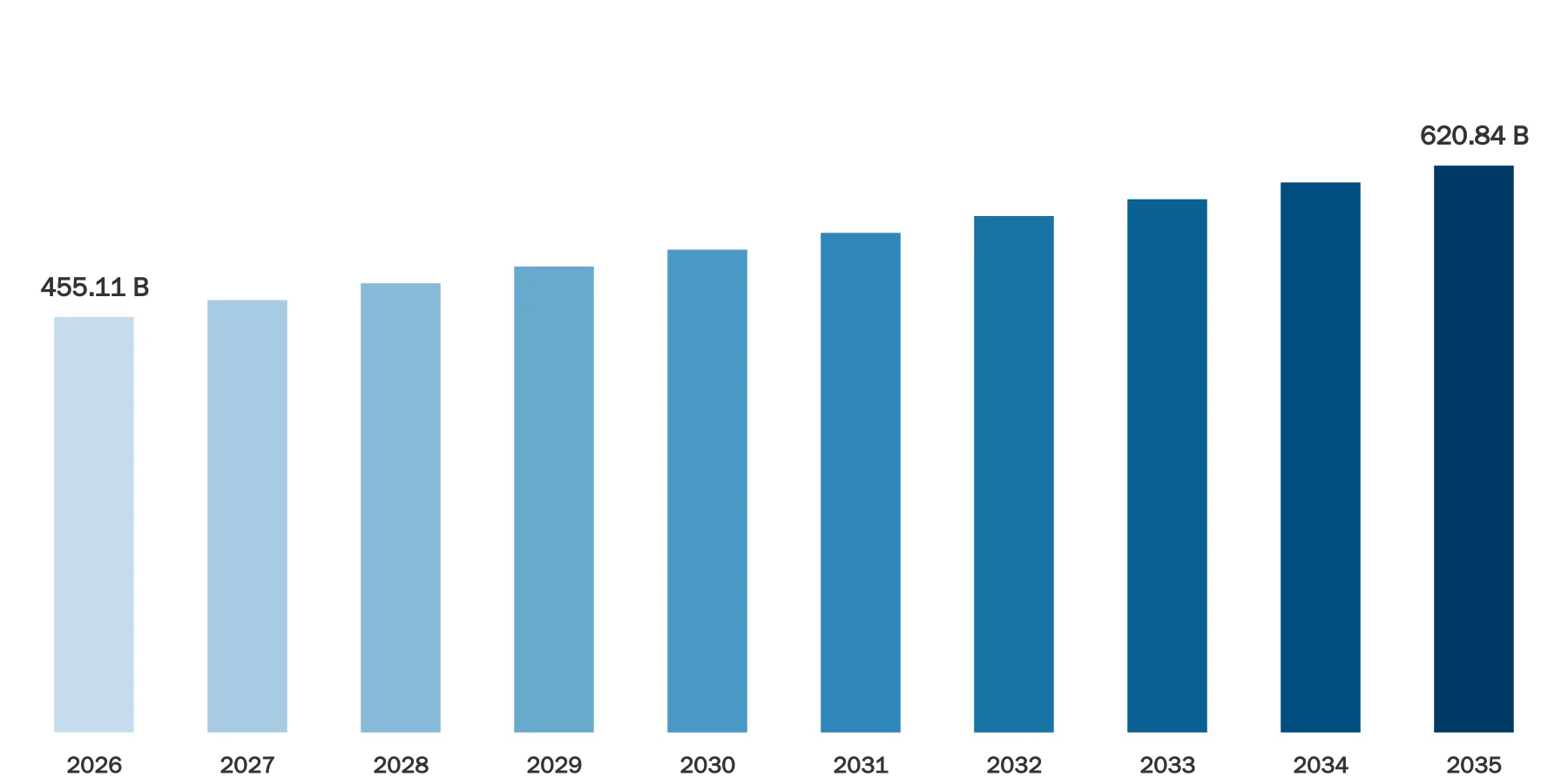
Source: Econ Market Research
A greater understanding of mental health difficulties and a rising demand for efficient treatments have fueled the market for mental health',s tremendous expansion and evolution in recent years. The market for diagnosing, treating, and supporting people with mental health issues includes a wide range of goods and services. Therapy and counselling services, medications, digital mental health solutions, and various support systems are important facets of the mental health sector.
The rising awareness of the incidence of mental health illnesses and the de-stigmatization of getting treatment are two key factors driving the growth of this market. There are now more readily available and reasonably priced services as a result of the active efforts of governments, healthcare providers, and organizations to address mental health issues. Telehealth and smartphone applications are two examples of digital mental health platforms that have been crucial in enhancing access to therapy. They provide resources for people looking for assistance, self-help tools, and distance treatment sessions.
Pharmaceutical firms are also creating novel medications to treat illnesses like schizophrenia, anxiety, and sadness. With a rising number of products and services that reflect the expanding understanding of mental health, the market for mental health is changing quickly. In the years to come, it is anticipated that the market will continue to expand and innovate as awareness continues to rise.
Market Dynamics
The market for mental health has undergone tremendous change recently. Growth has been spurred by lowered stigma and increased understanding of mental health issues. Demand for services has increased due to a rising global burden of mental health illnesses, which has fueled a flourishing business. Particularly in the wake of the COVID-19 pandemic, telehealth and digital solutions have revolutionized the industry, increasing accessibility and convenience of mental health care. More people are seeking therapy as a result of government initiatives and the expansion of insurance coverage, which has been crucial.
The market has undergone consolidation as a result of major healthcare organizations increasing their portfolios of mental health services through mergers and acquisitions. The market has also been invaded by startups and tech firms, providing innovation and competition. However, problems still exist. The dynamics of the market are still impacted by disparities in access to care, a lack of qualified workers, and high expenses. The destiny of the industry is also impacted by changes in regulations and payment mechanism evolution. The market for mental health as a whole is growing and innovating as a result of rising awareness of the value of mental health and ongoing efforts to solve the problems of accessibility and cost.
Market Drivers
Increasing Awareness and Reduced Stigma
First off, a number of reasons, such as media attention, educational initiatives, and advocacy campaigns, might be blamed for the increase in awareness. People are better able to identify symptoms and seek help as society grows more aware of the prevalence and effects of mental health issues. Early intervention as a result of this increased knowledge has lessened the severity of mental health problems and the accompanying load on people and healthcare systems. Another critical component of this driver is eliminating the stigma associated with mental illness.
Because of societal stigma, people with mental health disorders have historically experienced prejudice, condemnation, and unwillingness to seek treatment. Nevertheless, continued initiatives to reduce stigma associated with mental health issues have been helpful. The open discussion of mental health experiences by public figures and the normalization of seeking help have made it more socially acceptable to access mental health services. Consequently, people are increasingly willing to acknowledge their mental health needs and reach out to professionals for support.
Insurance Coverage improvement
Increased benefits for mental health are part of insurance coverage enhancements. Nowadays, a lot of insurance companies give more thorough coverage for mental health services, such as therapy, counselling, medication, and hospitalization. As a result, more people will be able to get mental health care because the financial barriers to doing so are lower. Laws requiring mental health benefits to be equal to those for medical and surgical procedures have also been crucial in guaranteeing this. These regulations eliminate the historical discrepancy in treatment by requiring insurance providers to offer equal coverage for mental health problems.
Additionally, a more equal system is being created as a result of the enforcement of these regulations and increased compliance by insurance companies. Furthermore, the enforcement of these laws and improved compliance by insurance providers are leading to a more equitable system. It helps individuals with mental health conditions to access necessary treatments without facing excessive out-of-pocket expenses or restrictions.
Restraints
Shortage of Mental Health Professionals
Due to increased knowledge and decreased stigma, there has been a significant increase in the need for mental health treatments recently. The availability of mental health specialists has not kept up with this rising need, though. Long appointment wait times and insufficient access are caused by this demand-supply mismatch, particularly in rural or underserved locations.
Mental health specialists frequently specialize in specialized fields, such as geriatric psychiatry, child psychology, or addiction counselling. This specialization may make it harder to find experts qualified to handle particular mental health requirements. It might take a lot of time and money to complete the rigorous education and training needed to become a mental health professional. These problems deter people from entering the field of mental health, which exacerbates the shortage. Inadequate reimbursement rates from insurance companies can deter mental health professionals from participating in insurance networks, limiting the affordability of care for patients.
High Treatment Costs
Without sufficient insurance coverage, therapy sessions, psychiatric evaluations, and drugs can be quite expensive. High out-of-pocket costs may operate as a deterrent, keeping people from receiving essential care, which can have detrimental effects on their mental health. Additionally, since mental health issues frequently call for continuous care and assistance, the total cost of care is high. This may lead to patients stopping their treatments early because of financial hardship. This problem is made worse by inadequate insurance coverage or a lack of coverage for particular mental health services. High deductibles, co-pay requirements, or caps on the number of sessions that are covered may deter people from seeking assistance. Additionally, the indirect costs associated with mental health, such as lost productivity at work, can have a significant economic impact, creating financial strain not only for individuals seeking treatment but also for employers and society as a whole.
Opportunities
Adoption of Telehealth and Teletherapy Services
Geographical obstacles are eliminated through telehealth and teletherapy services, enabling people to receive mental health treatment from the comfort of their own homes or from any location with an internet connection. This is especially important for people who reside in remote or underdeveloped locations since it increases the population',s access to mental health care.
Teletherapy provides more schedule flexibility and requires less preparation and time than in-person sessions. It makes it simpler for people to fit treatment into their everyday life since it enables them to obtain the care they require outside of the restrictions of conventional office hours. The stigma attached to obtaining mental health care can be lessened by the digital nature of teletherapy services. Telehealth allows access to a wide range of mental health professionals, including specialized therapists and counselors, regardless of one',s physical location. This diversity in services enhances the quality of care and increases the likelihood of finding the right fit for individual needs.
Expansion of Electric Vehicle Charging Infrastructure
AI-driven systems may examine big patient data sets and find minute trends and signs of mental health issues. As a result, mental health problems can possibly be diagnosed and treated earlier and with greater accuracy. Treatment plans can be customized depending on a patient',s particular needs and reactions using machine learning algorithms. This personalisation makes therapy and drug plans more successful, enhancing patient outcomes.
Virtual assistants and chatbots driven by AI can give 24/7 help, providing quick solutions and coping mechanisms to people in need. They are useful resources, especially in times of need. By tracking patient information and behaviour over time, machine learning can anticipate possible mental health crises. As a result, emergency room visits and hospitalizations are decreased. AI-enhanced remote monitoring systems can track patient progress during teletherapy sessions. This real-time feedback assists therapists in adjusting treatment plans and addressing emerging issues promptly.
Segment Overview
By Disorder
Based on disorder, the global mental health market is divided into schizophrenia, alcohol use disorders,bipolar disorder, depression, anxiety, post-traumatic stress disorder, substance abuse disorders, eating disorders, and other disorders. The depression category dominates the market with the largest revenue share in 2022. Depression is a common mental health condition characterized by persistent sadness and a lack of interest in activities.
Treatment may involve therapy, medication, or a combination of both. Schizophrenia is a severe and complex mental disorder characterized by hallucinations, delusions, disorganized thinking, and impaired cognitive function. Treatment typically involves a combination of antipsychotic medications and psychosocial interventions. This segment focuses on issues related to problematic alcohol consumption, dependence, and addiction. Treatment options range from counseling and support groups to medical interventions. Bipolar disorder involves extreme mood swings, including manic episodes and depressive episodes.
Management often includes mood stabilizers, therapy, and lifestyle adjustments. Anxiety disorders encompass conditions like generalized anxiety disorder, social anxiety, and panic disorder. Treatments include therapy, medication, and coping strategies. PTSD results from exposure to traumatic events and is treated with therapy, often including exposure therapy and cognitive-behavioral therapy. This segment includes various forms of substance abuse and addiction. Treatment may involve detoxification, rehabilitation programs, and ongoing support. Eating disorders like anorexia and bulimia require specialized treatment, often involving nutritional counseling, therapy, and medical monitoring.
By Service
Based on the service, the global mental health market is categorized into emergency mental health services, outpatient counselling, home-based treatment services, inpatient hospital treatment services, and other services. The inpatient hospital treatment services category leads the global mental health market with the largest revenue share in 2022. Inpatient hospital treatment services are designed for individuals with severe and acute mental health conditions that require intensive care and supervision.
These services are provided in psychiatric hospitals or specialized mental health units within general hospitals. They include crisis stabilization, medication management, and various forms of therapy. These services cater to individuals experiencing acute mental health crises, such as severe depression, suicidal ideation, or psychosis. They typically include crisis hotlines, crisis stabilization units, and emergency psychiatric evaluations. The focus is on providing immediate assessment and intervention to manage crisis situations.
Outpatient counseling services offer therapy and counseling on an outpatient basis, typically in clinics, private practices, or community mental health centers. Individuals with various mental health concerns, ranging from mild to moderate, can access regular counseling sessions to address their needs. Home-based mental health services bring care to individuals within their own homes. This approach is particularly useful for people with severe mental illnesses who may face barriers in attending inpatient or outpatient facilities. Home-based treatment often involves a team of professionals providing therapy, medication management, and support.
By Age Group
Based on age group, the global mental health market is segmented into pediatric, adult, and geriatric. The adult segment dominates the mental health market. The adult segment includes individuals from roughly 18 to 65 years old. It covers a wide range of mental health conditions, including mood disorders, anxiety disorders, substance use disorders, and more. Treatment options include therapy, medication, and various support services tailored to the specific needs of adults. This segment is the most diverse in terms of the types of mental health conditions encountered.
Pediatric mental health segment focuses on the mental health needs of children and adolescents, typically up to the age of 18. Pediatric mental health services address conditions such as attention-deficit/hyperactivity disorder (ADHD), autism spectrum disorders, anxiety, depression, and behavior disorders. Treatment often involves a combination of therapy, family support, and sometimes medication. Early intervention and support are critical to addressing mental health issues in this age group.
The geriatric segment addresses the unique mental health challenges faced by older adults, typically aged 65 and above. Conditions such as dementia, depression, and anxiety are common in this age group. Geriatric mental health services often focus on cognitive and emotional well-being, caregiving support, and addressing issues related to aging, such as loneliness and isolation. Treatment may involve psychotherapy, medication, and strategies to enhance quality of life.
Overview by Region
The global mental health market is categorized into North America, Europe, Asia-Pacific, and the Rest of the World. Asia-Pacific emerged as the leading region, capturing the largest market share in 2022. The Asia-Pacific area has a sizable and diverse population, and each nation has different mental health needs. This diversity has stimulated creativity in the creation of regionally and culturally appropriate mental health remedies.
Many nations in the Asia-Pacific area have seen a noticeable rise in mental health awareness in recent years. More people are seeking and using mental health services as the stigma associated with it increasingly fades. Increased healthcare spending, particularly investments in mental health infrastructure and services, has been a result of economic expansion in many Asia-Pacific countries. Access to treatment and care alternatives has increased as a result of this economic development. With tech-savvy populations driving the growth of online counselling, mental health applications, and telepsychiatry services, the region has embraced telehealth and digital mental health solutions.
Numerous governments in the Asia-Pacific area have started policies and programmes to increase access and service quality after realizing the value of mental health. The exchange of knowledge and best practices in the field of mental health care has been encouraged by regional partnerships and organizations, which has improved outcomes and advanced treatment modalities. Additionally, the Asia-Pacific area has actively participated in mental health research, which has aided in our understanding of these diseases, their prevalence, and efficient treatments.
Competitive Landscape
In the global mental health market, a few major players exert significant market dominance and have established a strong regional presence. These leading companies remain committed to continuous research and development endeavors and actively engage in strategic growth initiatives, including product development, launches, joint ventures, and partnerships. By pursuing these strategies, these companies aim to strengthen their market position, expand their customer base, and capture a substantial share of the market.
Key Players
Mindscape
Calm
MoodMission Pty Ltd.
Sanvello Health
Headspace Inc.
Flow
Youper, Inc.
The MENTOR Network
Universal Health Services, Inc.
Behavioral Health Network, Inc.
CareTech Holdings PLC
Strategic Behavioral Health
Recent Developments
In October 2023, PE-Backed With the acquisition of Atlanta, Hightop Health launches an outpatient mental health platform. Hightop Health, a brand-new outpatient mental health service, has entered the behavioural health market. Hightop provides an outpatient mental health platform that employs an integrative and measurement-based approach to care. It is supported by private equity firms JLL Partners and SV Health Investors.
In July 2023, Big Health, a market leader in non-drug digital mental health therapies, has acquired Limbix, the company behind the first, evidence-based digital therapy for adolescents and young adults with depressive symptoms.
Mental Health Market Report Scope & Segmentation
| Attributes | Details |
|---|---|
Market Size (Current) | US$ 455.11 Billion in 2026 |
Market Size (Forecast) | US$ 620.84 Billion in 2035 |
Growth Rate | CAGR of 3.51% from 2026 to 2035 |
Forecast Period | 2026 – 2035 |
Base Year | 2025 |
Historical Data Available | Yes |
Regional Scope | Global |
Segments Covered | By Disorder
By Service
By Age Group
|
Frequently Asked Questions
Common questions about this report
The study period covers historical insights and forecast projections for the period 2026-2035.
About the Author
Market research expert with years of industry experience

Dipali Bhingare serves as the Market Research Director at Econ Market Research. With a focus on translating complex global economic shifts into actionable business intelligence, she oversees the strategic direction of comprehensive market studies. Her work empowers organizations to navigate volatile industries through data-driven forecasting and deep-dive competitive analysis.
Related Reports
Explore more market insights from the same category