Acute Agitation and Aggression Treatment Overview
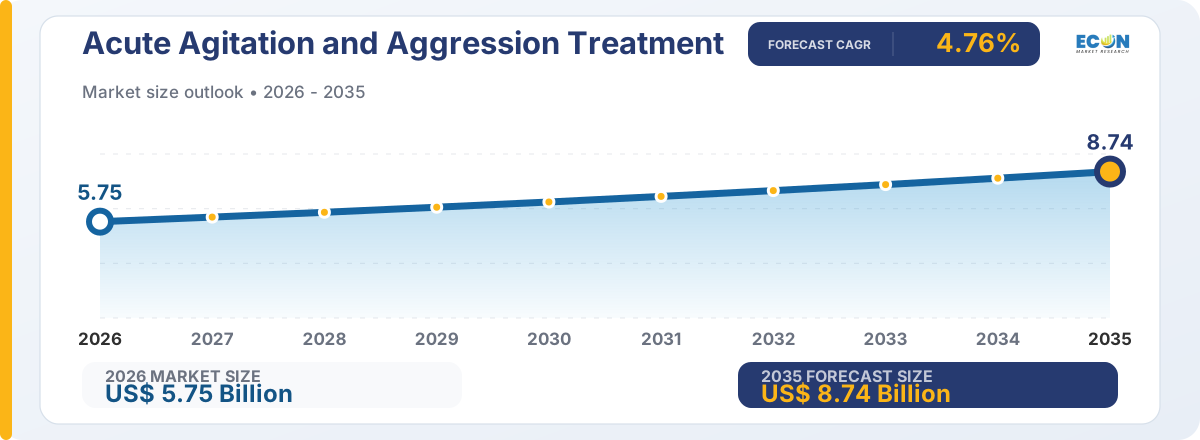
As per Econ Market Research analysis, the Global Acute Agitation and Aggression Treatment size amounted to US$ 5.75 Billion in 2026 and is anticipated to grow to US$ 8.74 Billion by 2035, recording a CAGR of 4.76% during 2026–2035. The base year taken for analysis is 2025.
The Acute Agitation and Aggression Treatment Market is driven by the increasing global burden of psychiatric and neurological disorders, with over 970 million individuals affected worldwide in 2023, including approximately 24 million diagnosed with schizophrenia and 40 million with bipolar disorder. Acute agitation episodes occur in nearly 10%–20% of psychiatric emergency cases, requiring immediate pharmacological intervention. Hospital emergency departments report that 1 in 5 behavioral health visits involves aggressive behavior requiring sedation or rapid tranquilization. The demand for fast-acting intramuscular and inhalation therapies has increased by 30% over the past 5 years, reflecting a growing need for rapid symptom control in clinical settings.
In the United States, the Acute Agitation and Aggression Treatment Market is supported by approximately 13 million emergency department visits annually related to Mental Health conditions, with nearly 1.7 million cases involving acute agitation episodes. Around 20% of patients with schizophrenia in the U.S. experience at least 1 severe agitation episode per year. The use of second-generation antipsychotics accounts for nearly 65% of prescriptions in acute agitation management. Additionally, over 6,000 psychiatric facilities and 5,500 hospitals in the U.S. provide acute behavioral care, with intramuscular administration used in nearly 55% of emergency interventions.
Market Latest Trends
The Acute Agitation and Aggression Treatment Market Trends highlight a strong shift toward rapid-onset and non-invasive therapies, with inhalable and sublingual formulations witnessing adoption growth of approximately 25% between 2020 and 2024. The demand for second-generation antipsychotics has increased significantly, accounting for nearly 60%–70% of prescriptions due to improved safety profiles compared to first-generation drugs. Digital monitoring tools integrated with psychiatric care have seen adoption in over 35% of advanced healthcare facilities, enhancing patient tracking during acute episodes.
Another major trend in the Acute Agitation and Aggression Treatment Market Analysis is the increased focus on patient-centered care, with nearly 45% of clinicians preferring treatments that reduce restraint usage. The use of benzodiazepines remains prevalent, contributing to approximately 30% of acute agitation interventions globally. Furthermore, regulatory approvals for novel therapies have increased by 15% between 2021 and 2024, supporting innovation. The Acute Agitation and Aggression Treatment Industry Report also shows a 20% rise in outpatient psychiatric services, influencing demand for oral and sublingual medications.
Market Dynamics
The Acute Agitation and Aggression Treatment Market Dynamics are influenced by increasing psychiatric disorder prevalence, rising emergency visits, and growing adoption of rapid-acting therapeutics. Approximately 1 in 8 individuals globally experiences a mental health disorder, contributing to increased acute agitation incidents. The market is also shaped by advancements in Drug delivery systems, with intramuscular formulations accounting for over 50% of hospital-based treatments. However, regulatory challenges and side-effect concerns impact adoption rates. The Acute Agitation and Aggression Treatment Market Outlook indicates growing demand across hospitals and psychiatric facilities, with emerging economies contributing nearly 35% of new patient cases annually.
DRIVER
Increasing Prevalence of Psychiatric Disorders
The primary driver in the Acute Agitation and Aggression Treatment Market Growth is the rising prevalence of psychiatric disorders, with global mental health cases exceeding 970 million in 2023. Schizophrenia affects around 0.3% of the global population, while bipolar disorder affects nearly 2.8% of adults. Acute agitation episodes occur in approximately 50% of schizophrenia patients at least once annually. Emergency departments report that 15%–20% of psychiatric visits involve aggressive or violent behavior requiring immediate pharmacological management. The increasing geriatric population, projected to reach 1.4 billion individuals aged 60+ by 2030, further contributes to agitation cases linked to dementia, affecting over 55 million people globally.
RESTRAINT
Adverse Effects and Safety Concerns
A major restraint in the Acute Agitation and Aggression Treatment Market is the risk of adverse effects associated with pharmacological treatments, affecting approximately 25%–30% of patients receiving antipsychotics. First-generation antipsychotics are linked to extrapyramidal symptoms in nearly 40% of cases, limiting their use. Benzodiazepines, used in about 30% of acute cases, can cause respiratory depression in 5%–10% of high-risk patients. Additionally, regulatory restrictions on sedative use in elderly populations, particularly those with dementia, impact treatment adoption. Reports indicate that nearly 15% of healthcare providers prefer non-pharmacological interventions due to safety concerns.
OPPORTUNITY
Advancements in Drug Delivery Systems
The Acute Agitation and Aggression Treatment Market Opportunities are driven by innovations in drug delivery, including inhalable and sublingual therapies, which have shown 20% faster onset compared to traditional oral medications. New formulations have reduced administration time by nearly 50%, improving patient compliance. The adoption of non-invasive treatments has increased by approximately 25% in outpatient settings. Furthermore, digital therapeutics integration has expanded by 30%, enabling real-time monitoring of agitation episodes. Emerging markets in Asia-Pacific and Latin America contribute to over 40% of unmet treatment demand, presenting significant growth opportunities for pharmaceutical companies.
CHALLENGES
Limited Access to Mental Healthcare Services
One of the key challenges in the Acute Agitation and Aggression Treatment Market is limited access to mental healthcare services, particularly in low- and middle-income countries where nearly 75% of patients do not receive adequate treatment. The global shortage of mental health professionals, estimated at fewer than 10 psychiatrists per 100,000 population in many regions, restricts timely intervention. Emergency departments often experience overcrowding, with psychiatric patients accounting for up to 12% of visits, leading to delayed treatment. Additionally, stigma associated with mental illness prevents approximately 60% of affected individuals from seeking medical care.
SWOT Analysis
Strengths
Increasing prevalence of psychiatric disorders affecting over 970 million individuals globally
Availability of multiple drug classes, including antipsychotics and benzodiazepines, covering over 80% of treatment needs
High adoption of intramuscular treatments in 50%–60% of emergency cases
Strong clinical guidelines supporting rapid tranquilization in over 70% of healthcare systems
Weaknesses
Adverse drug reactions impacting 25%–30% of treated patients
Limited availability of advanced therapies in 40% of low-income regions
High dependency on hospital-based treatment, accounting for nearly 65% of interventions
Underdiagnosis of psychiatric conditions in approximately 50% of global cases
Opportunities
Expansion of non-invasive treatments growing at 20% adoption rates
Emerging markets contributing to over 40% of unmet demand
Increasing geriatric population, with dementia cases exceeding 55 million globally
Technological integration in healthcare systems, adopted by 35% of facilities
Threats
Regulatory restrictions impacting 15% of new drug approvals
Rising preference for non-pharmacological therapies in 20% of cases
High treatment costs limiting access for 30% of patients
Increasing concerns over misuse of sedatives in 10% of cases
Segmentation Analysis
The Acute Agitation and Aggression Treatment Market Segmentation includes treatment approach, route of administration, indication, and end-user, each contributing significantly to market dynamics. Treatment approaches vary based on clinical severity, with second-generation antipsychotics leading at approximately 60% usage. Intramuscular administration dominates emergency settings with over 50% share, while oral routes account for nearly 35%. Schizophrenia represents the largest indication segment at around 40%, followed by bipolar disorder at 25%. Hospitals and emergency departments lead the end-user segment with nearly 60% of total treatment utilization.
By Treatment Approach
The Acute Agitation and Aggression Treatment Market by treatment approach is dominated by second-generation antipsychotics, accounting for approximately 60%–65% of prescriptions due to improved safety profiles and reduced side effects compared to first-generation drugs. First-generation antipsychotics still hold around 20% share, primarily used in severe cases requiring rapid sedation. Benzodiazepines contribute nearly 30% of treatments, often used in combination therapies for enhanced efficacy. Alpha-2 adrenergic agonists represent a smaller segment, with approximately 10% usage, mainly in specialized cases. Combination therapy usage has increased by 15% in the past 5 years, indicating a trend toward multi-drug approaches for effective symptom control.
By Route of Administration
In the Acute Agitation and Aggression Treatment Market, intramuscular (IM) administration dominates with over 50% share due to its rapid onset, typically within 15–30 minutes. Oral and sublingual routes account for approximately 35%–40%, preferred in mild to moderate cases where patient cooperation is possible. Intravenous (IV) administration represents around 10%–15%, primarily used in critical care settings. The adoption of sublingual formulations has increased by 20%, offering faster absorption compared to traditional oral tablets. Hospitals report that nearly 70% of emergency interventions rely on IM injections for immediate symptom control.
By Indication
Schizophrenia holds the largest share in the Acute Agitation and Aggression Treatment Market, contributing approximately 40% of cases, with over 24 million patients globally. Bipolar disorder accounts for around 25%, with acute manic episodes often requiring urgent intervention. Dementia and Alzheimer’s-related agitation represent nearly 20%, affecting over 55 million individuals worldwide. Substance toxicity and withdrawal cases contribute approximately 15%, with increasing incidence linked to rising substance abuse rates, affecting over 35 million people globally. Emergency departments report that 1 in 4 agitation cases is associated with substance-related conditions.
By End-User
Hospitals and emergency departments dominate the Acute Agitation and Aggression Treatment Market, accounting for nearly 60% of total usage due to high patient inflow and availability of rapid-response treatments. Psychiatric care facilities represent around 25%–30%, focusing on long-term management and recurrent cases. Retail pharmacies contribute approximately 15%, primarily dispensing oral medications for outpatient care. The number of psychiatric facilities globally exceeds 20,000, supporting specialized treatment services. Additionally, outpatient mental health visits have increased by 20% over the past 5 years, boosting demand for non-invasive therapies.
Regional Analysis
The Acute Agitation and Aggression Treatment Market demonstrates varied regional performance, with North America leading at approximately 40% share, followed by Europe at 25%, Asia-Pacific at 20%, and Middle East & Africa at 15%. Increasing mental health awareness and healthcare infrastructure development influence regional growth patterns.
North America
North America holds nearly 40% of the Acute Agitation and Aggression Treatment Market Share
The United States accounts for approximately 85% of the regional market
Over 13 million mental health-related emergency visits occur annually
Around 20% of schizophrenia patients experience acute agitation episodes yearly
North America dominates due to advanced healthcare infrastructure and high awareness levels, with over 6,000 psychiatric facilities and 5,500 hospitals providing treatment. Approximately 65% of prescriptions involve second-generation antipsychotics, reflecting strong adoption of modern therapies. Emergency departments report that 1 in 5 psychiatric visits involves aggressive behavior, requiring rapid intervention. The region also benefits from high healthcare expenditure, with mental health services accounting for nearly 10% of total healthcare spending.
Europe
Europe accounts for approximately 25% of the market
Around 84 million individuals are affected by mental health disorders
Nearly 15% of emergency psychiatric cases involve acute agitation
Second-generation antipsychotics represent 55% of prescriptions
Europe’s market is driven by strong regulatory frameworks and public healthcare systems. Countries such as Germany, France, and the UK report that 10%–15% of psychiatric admissions involve agitation episodes. The region has over 4,000 psychiatric institutions, supporting treatment demand. Additionally, aging populations contribute significantly, with over 20 million dementia patients in Europe, increasing the need for agitation management therapies.
Asia-Pacific
Asia-Pacific holds approximately 20% market share
Over 400 million individuals suffer from mental health disorders
Nearly 70% of patients remain untreated in low-income areas
Acute agitation cases account for 10%–15% of psychiatric emergencies
Asia-Pacific shows significant growth potential due to rising awareness and healthcare investments. Countries like China and India contribute to over 50% of regional cases. The shortage of mental health professionals, with fewer than 5 psychiatrists per 100,000 population in some areas, limits treatment access. However, increasing government initiatives have improved treatment rates by 15% over the past decade.
Middle East & Africa
Middle East & Africa account for approximately 15% of the market
Around 100 million individuals are affected by mental health conditions
Nearly 75% of patients lack access to adequate treatment
Emergency psychiatric cases represent about 8%–12% of hospital visits
The region faces challenges due to limited healthcare infrastructure and low awareness. However, urban areas show increasing adoption of modern therapies, with antipsychotic usage rising by 10% annually. Government initiatives have improved access to mental health services in countries such as the UAE and South Africa, where psychiatric facility numbers have increased by 20% over the past 5 years.
Competitive Landscape
The Acute Agitation and Aggression Treatment Market Competitive Landscape is characterized by the presence of over 25 major pharmaceutical companies and numerous regional players. Approximately 60% of the market is controlled by the top 10 companies, indicating moderate consolidation. Companies focus heavily on research and development, with nearly 15% of annual budgets allocated to innovation in psychiatric treatments. Clinical trials for new therapies have increased by 20% between 2020 and 2024, highlighting strong pipeline activity.
Strategic collaborations and partnerships account for nearly 30% of market expansion initiatives, enabling companies to enhance product portfolios and geographic reach. Additionally, over 40 new drug formulations have been introduced globally in the past decade, targeting faster onset and improved safety profiles. The market also sees high competition in generic drug production, with generics accounting for approximately 50% of total prescriptions, intensifying pricing pressure among manufacturers.
List of Top Acute Agitation and Aggression Treatment Companies
Eli Lilly
Pfizer
Otsuka Pharmaceutical
H. Lundbeck
GlaxoSmithKline (GSK)
Johnson & Johnson
BioXcel Therapeutics
Teva Pharmaceuticals
Bausch Health
Bristol-Myers Squibb
Leading Companies by Market Share
Eli Lilly and Johnson & Johnson are the leading companies in the Acute Agitation and Aggression Treatment Market, collectively accounting for approximately 30%–35% of total market share. Eli Lilly holds around 18% share due to its strong portfolio of antipsychotic medications, while Johnson & Johnson contributes approximately 15%–17% with widely used psychiatric drugs and global distribution networks.
Market Investment Outlook
The Acute Agitation and Aggression Treatment Market Investment Outlook highlights significant opportunities in research, infrastructure, and emerging markets. Global investments in mental health have increased by approximately 25% over the past 5 years, with governments allocating nearly 5%–10% of healthcare budgets to psychiatric care. Pharmaceutical companies are investing heavily in drug development, with over 50 active clinical trials targeting acute agitation treatments as of 2024.
Private sector funding has also increased, with venture capital investments in mental health startups rising by 30% since 2020. Emerging markets in Asia-Pacific and Latin America attract nearly 40% of new investments due to high unmet needs. Additionally, digital health solutions, including remote monitoring and telepsychiatry, have received funding increases of 35%, supporting integrated care models.
New Product Development
New product development in the Acute Agitation and Aggression Treatment Market focuses on rapid-onset and patient-friendly formulations. Over 20 new drug candidates are currently in late-stage clinical trials, targeting faster symptom relief within 10–20 minutes. Inhalable and sublingual therapies have shown 25% higher patient compliance compared to traditional oral medications.
Pharmaceutical companies are also developing combination therapies, with 15 new multi-drug formulations introduced since 2021. Long-acting injectables are gaining traction, reducing relapse rates by approximately 30%. Additionally, advancements in nanotechnology-based drug delivery systems have improved bioavailability by 20%, enhancing treatment efficacy. Regulatory approvals for innovative therapies have increased by 15% over the past 3 years, supporting market expansion.
Recent Developments
In 2023, a new sublingual antipsychotic formulation demonstrated a 20% faster onset compared to oral tablets in clinical trials.
In 2024, over 10 new clinical trials were initiated targeting acute agitation treatments with improved safety profiles.
In 2023, a leading pharmaceutical company expanded production capacity by 25% to meet rising demand for injectable antipsychotics.
In 2025, a novel inhalable therapy achieved regulatory approval, reducing symptom onset time to under 15 minutes.
In 2024, digital monitoring integration increased by 30% in psychiatric facilities, improving patient management during agitation episodes.
Report Coverage of Acute Agitation and Aggression Treatment Market
The Acute Agitation and Aggression Treatment Market Report provides comprehensive coverage of treatment approaches, including antipsychotics, benzodiazepines, and emerging therapies, which collectively address over 90% of acute agitation cases. The report analyzes segmentation by route of administration, with intramuscular treatments accounting for more than 50% of emergency interventions. It also evaluates key indications such as schizophrenia, bipolar disorder, and dementia, representing approximately 85% of total cases.
The Acute Agitation and Aggression Treatment Market Research Report includes regional insights across North America, Europe, Asia-Pacific, and Middle East & Africa, covering nearly 100 countries. It examines competitive dynamics among over 25 major players and highlights investment trends, with funding increasing by 25% in recent years. Additionally, the report provides detailed analysis of technological advancements, regulatory frameworks, and clinical trial developments, offering actionable insights for stakeholders operating in the global market.
Acute Agitation and Aggression Treatment Report Scope & Segmentation
| Attributes | Details |
|---|---|
| Market Size (Current)Current market valuation | US$ 5.75 Billion in 2026 |
| Market Size (Forecast)Projected market valuation | US$ 8.74 Billion in 2035 |
| Growth RateCompound Annual Growth Rate | CAGR of 4.76% from 2026 to 2035 |
| Forecast PeriodAnalysis timeline | 2026 – 2035 |
| Base YearReference year for analysis | 2025 |
| Historical Data AvailablePast market data availability | Yes |
| Regional ScopeGeographical coverage | Global |
| Segments CoveredMarket segments analyzed | By Treatment Approach
By Route of Administration
By Indication
By End-User
|
Leading companies covered in this report
- Acute Agitation and Aggression Treatment Market The key players are Eli Lilly
- Pfizer
- Otsuka Pharmaceutical
- H. Lundbeck
- GlaxoSmithKline (GSK)
- Johnson & Johnson
- BioXcel Therapeutics
- Teva Pharmaceuticals
- Bausch Health
- and Bristol-Myers Squibb
Frequently Asked Questions
Common questions about this report
The study period covers historical insights and forecast projections for the period 2026-2035.
About the Author
Market research expert with years of industry experience