

3D Display Market
3D Display Market Size, Share, Trends, Growth, and Industry Analysis, By Product (Volumetric Display, Stereoscopic Display, HMD), By Technology (DLP, PDP, OLED, LED), By Application (TV, Smartphones, Monitor, Mobile Computing Devices, Projectors, Others), Regional Analysis and Forecast Period 2026-2035
3D Display Market Overview
As per Econ Market Research analysis, the Global 3D Display Market was valued at approximately US$ 139 Billion in 2026 and is predicted to reach US$ 594.07 Billion by 2035, expanding at a CAGR of 17.56% over the forecast duration. The base year is 2025.
3D Display Market Size 2025-2035 (USD Billion)

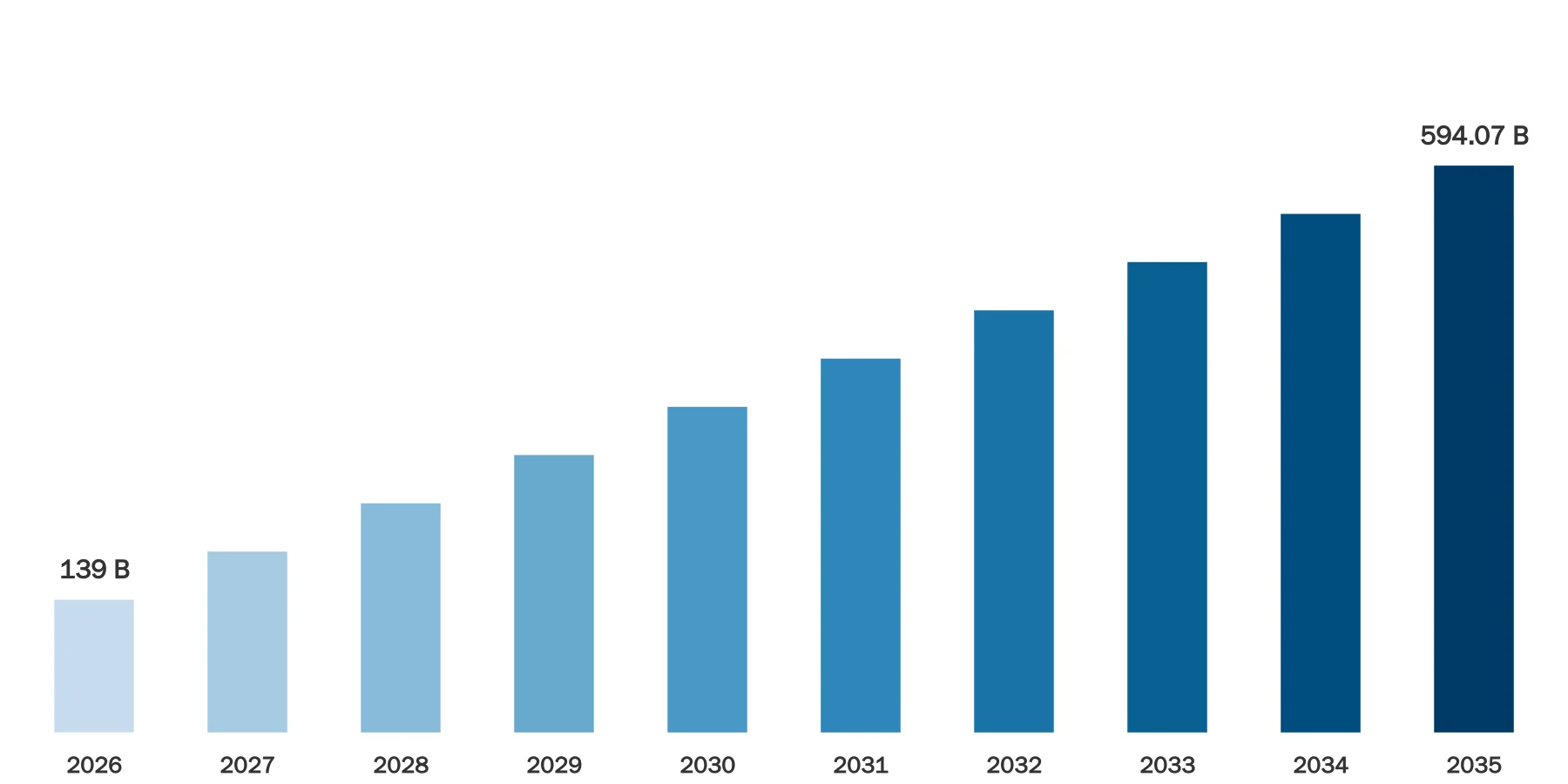
Source: Econ Market Research
A 3D display is a technological innovation that generates a convincing sense of depth, enhancing the viewing experience. Through dedicated software, hardware, and optics, this technology creates the perception of solid objects or images occupying physical space. Stereoscopic, volumetric, and holographic displays are among the various types of 3D display technologies available. These displays find applications in diverse fields such as entertainment, gaming, design, engineering, and medical imaging. The growing interest in virtual and augmented reality technologies has contributed to the increasing demand for high-quality 3D displays.
3D Display Market Dynamics
The market for 3D displays is influenced by several key factors that drive its growth. These factors include the increasing demand for immersive visual experiences, continuous advancements in display technologies, a rising adoption of 3D displays in the entertainment industry, and expanding applications in fields like medical imaging and design. The growing popularity of virtual and augmented reality technologies further fuels the demand for 3D displays. Additionally, the availability of affordable options and significant investments in research and development activities are expected to contribute to the expansion of the market. However, challenges such as the high cost of 3D display technology and concerns related to standardization and compatibility may hinder the overall growth of the market.
3D Display Market Drivers
Increasing Demand for High-Quality Visual Experiences
The 3D display market is propelled by a growing consumer demand for top-notch visual experiences. With an increasing desire for immersive and realistic visuals, 3D displays have emerged as a solution that offers a heightened sense of depth and realism. Across industries such as entertainment, gaming, and virtual reality, these displays have become essential for enhancing user engagement. As technology continues to advance, consumer expectations for visually captivating experiences have risen, driving a greater demand for 3D displays capable of delivering exceptional visual quality and unparalleled immersion.
Restraints
High Cost of 3D Display Technology
The high cost of 3D display technology poses a challenge in the market. Advanced 3D display technologies require substantial investments in research, development, and manufacturing. These costs can make 3D displays less accessible to a wider consumer base, limiting market growth. Additionally, the high cost of production affects pricing, making 3D displays less affordable for many potential buyers. Addressing cost barriers and achieving cost-effective solutions will be crucial to driving wider adoption of 3D display technology.
Opportunities
Investments in research and development
Investments in research and development (R&D) play a vital role in the growth of the 3D display market. R&D activities focus on improving the quality, performance, and affordability of 3D display technologies. These investments drive innovation, leading to breakthrough advancements in display technologies, manufacturing processes, and materials. They enable the development of more efficient and cost-effective solutions, which can expand the market by making 3D displays more accessible, enhancing their capabilities, and opening up new opportunities for applications in various industries.
Segment Overview
By Product Type
Based on the product type, the global 3D display market is segmented into Volumetric Display, stereoscopic display, and Head Mounted Display. The stereoscopic displays segment is dominating the market with the largest revenue share of around 72.5% in 2022, because of their widespread use in the entertainment sector and gaming applications. These displays generate the appearance of depth by using glasses, making them more accessible and cheaper than other forms of 3D display. Furthermore, developments in stereoscopic display technology have resulted in the creation of high-resolution and high-fidelity displays, which have increased their demand. Stereoscopic displays are also compatible with current infrastructure for content generation and delivery, making them easier to incorporate into existing systems.
By Technology
Based on the technology, the global 3D display market is segmented into digital light processing, plasma display panel, organic LED, and light emitting diode. The light-emitting diode segment is dominating the market with the largest revenue share of around 67.3% in 2022, because of their energy efficiency, longer longevity, and greater image quality. LEDs are often utilized in 3D display backlighting because they provide brighter and more colorful visuals than typical LCD panels. Furthermore, developments in LED technology have resulted in the creation of high-resolution and high-contrast displays, which have increased their demand. LEDs are considerably less expensive than other display technologies, which makes them a popular choice among manufacturers. As a result, they are projected to maintain their dominance in the 3D display industry for the next few years.
By Application
Based on application, the global 3D display market is segmented into television, smartphones, monitor, mobile computing devices, projectors, head-mounted display, and others. In 2022, the television category emerged as the dominant segment in the 3D display market, capturing the largest market share with around 32.4%, due to the increased need for immersive and high-quality visual experiences in the entertainment sector. The rising popularity of 3D films, as well as the expanding use of 3D technology in sports broadcasts, are driving up demand for 3D televisions. Furthermore, developments in display technology and the availability of low-cost 3D displays have made 3D televisions more accessible to consumers, contributing to the market's growth.
3D Display Market Overview by Region
The global 3D display market is segmented into North America, Europe, Asia-Pacific, and the Rest of the World in terms of regions. In 2022, North America dominated the market with a substantial share of approximately 29.7%. This can be attributed to the region's robust demand for advanced technology and the presence of numerous major companies. The United States, in particular, plays a significant role in driving market growth, thanks to substantial investments in research and development, particularly in the entertainment and gaming sectors. Moreover, the increasing adoption of 3D displays in industries like medical imaging, aerospace, and defense further contributes to the expansion of the market in the region.
3D Display Market Competitive Landscape
In the global 3D display market, a select few leading players hold significant market dominance and have established a strong regional presence. These key participants are deeply committed to continuous research and development efforts. Moreover, they actively pursue strategic growth initiatives such as product development, product launches, joint ventures, and partnerships. These endeavors are aimed at bolstering their market position and expanding their customer base, allowing them to capture a substantial share of the market.
Key Players
Samsung Electronics Co., Ltd.
LG Display Co., Ltd.
Sony Corporation
Panasonic Corporation
Sharp Corporation
Toshiba Corporation
BOE Technology Group Co., Ltd.
Innolux Corporation
HannStar Display Corporation
Chunghwa Picture Tubes Ltd.
Universal Display Corporation
Fujitsu Limited
Mitsubishi Electric Corporation,
AU Optronics Corp.
3D Display Market Recent Developments
In October 2022, Sony Electronics has unveiled a groundbreaking solution called the spatial reality display, which serves as a powerful tool for creators in various sectors such as automotive and Industrial Design. This innovative display enables designers to delve into the realms of computer graphics (CG) and visual effects (VFX) by empowering them to generate realistic 3D graphics. With its remarkable versatility, the spatial reality display opens up a plethora of opportunities for designers, providing them with an extensive range of possibilities to explore and harness the full potential of this cutting-edge technology.
3D Display Market Report Scope & Segmentation
| Attributes | Details |
|---|---|
Market Size (Current) | US$ 139 Billion in 2026 |
Market Size (Forecast) | US$ 594.07 Billion in 2035 |
Growth Rate | CAGR of 17.56% from 2026 to 2035 |
Forecast Period | 2026 – 2035 |
Base Year | 2025 |
Historical Data Available | Yes |
Regional Scope | Global |
Segments Covered | By Product
By Technology
By Application
|
Frequently Asked Questions
Common questions about this report
The study period covers historical insights and forecast projections for the period 2026-2035.
About the Author
Market research expert with years of industry experience

Related Reports
Explore more market insights from the same category