Tunnel Boring Machine Market Overview
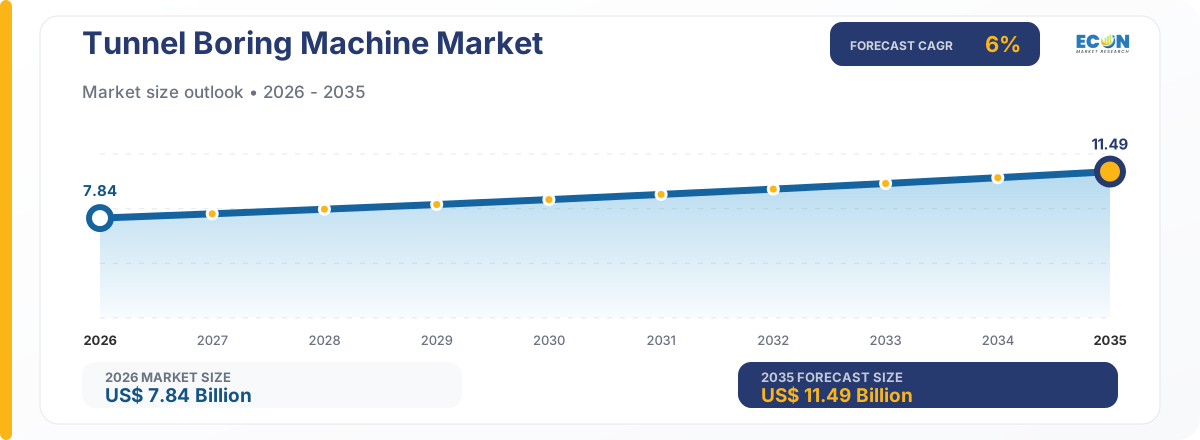
As per Econ Market Research analysis, the Global Tunnel Boring Machine Market reached a valuation of US$ 7.84 Billion in 2026 and is anticipated to grow to US$ 11.49 Billion by 2035, at a CAGR of 6% during the forecast timeline 2026–2035. The base year considered is 2025.
Tunnelling is vital in highway and railway construction, water supply systems, and utility tunnels. In general, it makes tunnels faster and minimizes surface damage, which is very crucial in urban and infrastructure development. A tunnel boring machine creates material to be excavated and transports it away as it cuts into the path using a rotating cutter head, thus smoother and faster than the traditional method of tunneling. The TBM market has always been growing on account of increasing urbanization, infrastructural development, and the need for efficient transport systems worldwide.
Governments are also making immense investments in transportation and utility projects, which drives up demand for TBMs. Furthermore, it will gain momentum further due to the development of more competent and eco-friendly machines through ongoing technological advancements. Significant areas of contribution to the TBM market include North America, Europe, and Asia-Pacific since most major construction works are under way. Further, with a growing focus on sustainability and reducing the carbon footprint of construction activities through minimized waste and energy consumption, the market also benefits through modern TBMs.
Dynamic Insights
One major driving factor is the rate of urbanization and infrastructural development going on in all corners of the globe. The higher the rate of urban growth, the higher the necessity for proper transportation facilities, this is where more metro, subway, and roads will come into existence requiring TBMs for the creation of tunnels. On the other hand, the modernization of infrastructures along with sustainability from the government end will drive further demand for such high advanced tunneling technologies with the least amount of damage to the environment.
However, the TBM market also has its problem areas. For instance, the upfront cost and delivery time for buying and operating these machines are relatively higher. This may be considered to be a disincentive factor for smaller companies coming into or investing in the market due to the high capital requirements of buying TBM technology. This also raises operational issues where the complexity of the work and the requirement of adequate labor may be significant operational challenges. Despite these challenges, it has tremendous potential for growth, especially with new technologies that improve the efficiency of operating a TBM and save operational costs. Smart city initiatives and growing concerns over the development of renewable energy projects, like underground storage facilities for utilities, will come to open new avenues in the application of TBM.
Drivers Insights
Urbanization and Infrastructure Development
Rapid urbanization is one of the key drivers in the global TBM market. Growth in population is generally accompanied by an increase in cities to accommodate traffic and cater to other needed services. Expansion requires new transport systems, and the growing need in the case of subways, metro lines, or road tunnels. The preference for these projects would be the TBM. This is due to minimized surface disruption and noise pollution. Construction is faster compared to traditional excavations. Thus, it leads to a higher rise in demand for efficient, sustainable urban infrastructure, resulting in the TBM market.
Government Investments in Transportation Projects
Governments around the world are investing heavily in transportation infrastructure to enhance connectivity and support economic growth. These investments are often part of broader initiatives to modernize aging infrastructure and improve public transport systems. For instance, many countries are launching major metro and rail projects, which require the use of TBMs for efficient tunneling. Additionally, government funding and support for green initiatives, including sustainable transport options, further drive demand for TBMs that can facilitate the construction of environmentally friendly infrastructure.
Restraints Insights
Some of the key constraints facing the TBM market is the high initial capital used in acquiring and running the tunnel boring machines. Many construction companies or projects in small budgets cannot afford all this capital investment. These major expenses are the purchase costs of the TBM itself, those incurred to prepare the site, maintain, and the highly paid labor costs. This financial burden will limit the adoption of TBMs in some regions, especially developing countries where budget constraints are more relevant.
Complexity of Operations
The operation of TBMs is complex and requires specialized knowledge and expertise. This complexity can lead to potential delays and challenges during tunneling projects if skilled personnel are not available. Additionally, unforeseen geological conditions can complicate the tunneling process, requiring operators to make quick adjustments that can increase project costs and timelines. The need for extensive training and expertise to operate TBMs effectively can deter some companies from investing in this technology, thereby restraining market growth.
Opportunities Insights
Technological Advancements
The TBM market is on the rise due to the continuous technological advancement that continues to improve the efficiency and effectiveness of tunneling operations. Innovations in automation, remote monitoring, and Data Analytics make TBMs more reliable and easier to operate, thereby helping reduce the cost of operation, ensure safety, and make decisions in real-time during the project. With the optimization of tunneling processes among companies, the demand for state-of-the-art, technically advanced TBMs is most likely to increase, hence creating a massive opportunity in the market for manufacturers and service providers.
Segment Analysis
By Machine Type
The TBM market could be divided by machine type into several categories, all designed for specific types of tunneling conditions and requirements of the project. The Slurry Type TBMs are machines that transport excavated material by a mixture of slurry, thus, they are suitable for working in soft ground conditions where stability must be maintained.
Earth Pressure Balance Shield TBMs have the capability to resist soil pressure, hence suitable for mixed ground condition work and having minimal ground settlement risk. Shielded TBMs are designed with a protective shield for structural support during excavation, thus, suitable for an urban environment where surface stability is at risk. Multi-Mode TBMs are versatile types of machines and can suit various kinds of ground, and types of tunneling. Hence, it serves as flexibility to projects under construction.
By Geology Type
The segmentation of the TBM market by geology type highlights the varying tunneling challenges posed by different ground conditions. Soft Ground environments, such as clay or silt, require specialized TBMs that can handle the moisture and instability of the soil, often utilizing slurry or earth pressure balance methods. In contrast, Hard Rock Ground conditions necessitate robust machines capable of withstanding high levels of pressure and abrasion, making them suitable for mining and long-distance tunnels.
Heterogeneous Ground presents a combination of soil types, requiring adaptable TBMs that can efficiently transition between different geological conditions. Variable Ground includes unpredictable geological formations that can change rapidly along a tunneling route, demanding advanced technologies and real-time monitoring systems to ensure safe and effective excavation. The ability to tailor TBM selection to these distinct geology types is essential for optimizing tunneling operations and minimizing project risks.
By End-User
The TBM market is segmented along end-user applications, including various industries that require access through tunneling technology. In the case of road transport, TBMs ensure underground routes that relieve congested surfaces and increase connectivity, thereby ensuring faster and direct means of traveling from one end of the city to the other. In railway transport, TBM technology contributes in constructing subways or rail tunnels that make easy passage in cities.
Tunnels are very significant when expanding public transport in a city as the population expands. In the Utilities sector, they enable installation of underground infrastructure such as water supply lines, sewage systems, and electrical conduits among others. In the Mining industry, access tunnels allow valuable Minerals to be brought to the surface from the underground deposits. The oil and gas industry employs tunneling on pipelines to ensure safe delivery of resources.
Regional Analysis
North America is a prime market for TBMs with huge infrastructure projects and spending on transportation systems, including underground expansions and utility tunnels. The old infrastructure in this region and the need to modernize it increase its use of advanced tunneling technologies. Europe is the other prominent market for TBMs, with Germany and the United Kingdom being amongst the leaders in tunneling projects. More is being focused on sustainable development in European cities. Moreover, TBMs have already become indispensable in underground transports without surface disruption for cities.
Asia-Pacific has a highly growing TBM market. The region has several countries that are urbanized with high population density, which includes China and India. Those countries are spending more in the development of metro and rail networks for the improvement of public transport and, therefore, an increase in demand for TBMs is seen. There is also increased demand because of the projects in ongoing infrastructures and smart city developments. Two developing regions are Latin America and Middle East &, Africa, characterized by the growing adoption of TBM with infrastructure developments in these regions and related expansions of urban areas, but governments of these areas find these solutions more important because the development they seek now increasingly requires efficient tunneling methods.
Competitive Landscape
The key players in the industry are companies like Herrenknecht AG, TERRATEC, SELI, and Hitachi Zosen Corporation, which have established reputations for producing advanced TBMs tailored to various geological conditions and project requirements. These companies invest heavily in research and development to improve the efficiency, safety, and sustainability of their machines, thereby staying ahead of competitors in a rapidly evolving market. Apart from these industry giants, many regional players are gaining importance through localized know-how and focused technology solutions for specific markets.
Increasing demand for ',green', tunneling solutions further sharpens competition and encourages manufacturers to cut down carbon footprint and waste. Strategic partnerships and collaborative agreements today are commonplace between construction companies and manufacturers of TBM, working together to find the strengths from each other towards the effective execution of their project. On the other hand, automation and the digital transformation change the playing field so much in matters related to tunneling activities for the firms that it can embrace.
List of Key Players:
Amberg Engineering
Kawasaki Heavy Industries, Ltd.
Mitsubishi Heavy Industries, Ltd.
Hitachi Zosen Sakai Works
Herrenknecht AG
Sika AG
SN Mercantile India Pvt. Ltd.
High Speed Two Ltd.
Komatsu Ltd.
China Railway Tunnel Group
Mammoet
The Robbins Company
Japan Tunnel Systems Corporation
TERRATEC Ltd.
Liaoning Censcience End-Use Co. Ltd.
Recent Developments:
In January 2024, Chennai Metro Rail Ltd introduced a tunnel boring machine (TBM) named Eagle, which is tasked with constructing a tunnel connecting the Light House metro station to the Boat Club station.
In February 2024, HS2 unveiled a TBM called Emily to facilitate the railway construction between London and Birmingham.
In June 2023, TERRATEC successfully delivered a Rock Slurry Machine for the Mumbai Sewer Disposal Project (MSDP) Stage-II.
Global Tunnel Boring Machine Report Segmentation
Tunnel Boring Machine Market Report Scope & Segmentation
| Attributes | Details |
|---|---|
| Market Size (Current)Current market valuation | US$ 7.84 Billion in 2026 |
| Market Size (Forecast)Projected market valuation | US$ 11.49 Billion in 2035 |
| Growth RateCompound Annual Growth Rate | CAGR of 6% from 2026 to 2035 |
| Forecast PeriodAnalysis timeline | 2026 – 2035 |
| Base YearReference year for analysis | 2025 |
| Historical Data AvailablePast market data availability | Yes |
| Regional ScopeGeographical coverage | Global |
| Segments CoveredMarket segments analyzed | By Machine Type
By Geology
By Application
|
Frequently Asked Questions
Common questions about this report
The study period covers historical insights and forecast projections for the period 2026-2035.
About the Author
Market research expert with years of industry experience