Cotton Ginning Machinery Market Overview
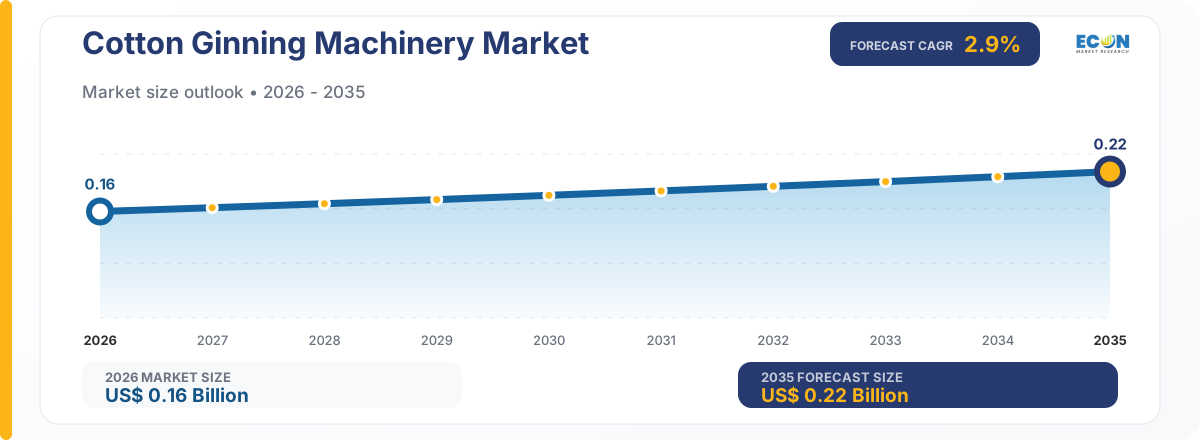
As per Econ Market Research analysis, the Global Cotton Ginning Machinery Market was recorded at US$ 0.16 Billion in 2026 and is projected to expand to US$ 0.22 Billion by 2035, registering a CAGR of 2.9% over the forecast period. The base year used is 2025.
The use of cotton ginning machinery enables mechanization and the saving of time, in an otherwise fully manual operation, and allows for great efficiency in terms of production quality and productivity in the sector. Cotton gins allow a final step before entering subsequent manufacturing processes for textiles, such as clothing, household products, or industrial use. As demand for cotton products continues to increase globally, the need for efficient and high-quality ginning machinery is also on the rise.
The growth in Textile production, expansion of cotton agriculture, and innovation in machinery that improves efficiency and reduces fiber damage are the major market drivers. Moreover, emerging economies with expanding agricultural sectors, particularly in Asia-Pacific and Africa, are investing in advanced ginning technology to enhance production capacity and improve the quality of cotton. Another driving force in this market is environmental considerations since green and energy-efficient machines are being developed to minimize the carbon footprint of the industry.
Dynamic Insights
Some of the innovations in machinery are automation and energy-efficient systems, which increase productivity without damaging the cotton fibers and thus enhancing the quality of yield while minimizing waste. Textile industries are growing in developing countries such as India and China, creating investment opportunities in advanced ginning technology to support both local and global supply chains.
The market, however, also has some negative sides that may impede its growth, among them is the steep cost of acquiring sophisticated ginning machinery. This, therefore, limits its applicability to smaller or highly price-sensitive farmers and manufacturers. Other factors that can restrain the growth of the market are fluctuating raw cotton prices and environmental concerns about producing cotton. Manufacturers have to concentrate more on the creation of eco-friendly ginning solutions that use minimal quantities of water and energy.
Drivers Insights
Rising Demand for Cotton Textiles
Since cotton is one of the most used natural fibers in the textile industry, the demand for cotton-based apparel and home textiles is steady. The need for more efficient cotton ginning machinery drives this demand in order to provide a faster supply of high-quality cotton lint. Expansion of the textile industry, mainly in emerging markets such as China, India, and Vietnam, is forcing manufacturers to use the latest ginning machinery both in domestic markets and the international market. As demand for cotton fibers grows for numerous applications, the growth rate of the market for cotton ginning machinery remains positive.
Advancements in Machinery Technology
The shift towards automation and precision in machinery has been instrumental in advancing the cotton ginning process. Modern ginning machines now include features like automated control systems, improved safety mechanisms, and high-speed functionality that reduces fiber damage and boosts output. These advancements not only enhance operational efficiency but also reduce labor costs, making it more attractive for large-scale and small-scale cotton producers alike. As producers seek to upgrade their machinery to stay competitive and reduce processing time, technological progress in ginning machinery remains a vital market driver.
Restraints Insights
Fluctuations in Raw Cotton Prices
The global cotton market is highly susceptible to price volatility due to various factors such as changing weather conditions, shifts in consumer demand, and international trade policies. When cotton prices fluctuate, it impacts the overall production costs for manufacturers, often leading to cautious investments in machinery. These market uncertainties can make cotton ginning enterprises hesitant to invest in new equipment, stalling potential growth in machinery demand during periods of price instability.
High-end cotton ginning machinery is very expensive to buy and install, especially for small cotton producers. It takes a lot of capital at the onset to purchase high-end machinery with automation and energy-saving technology. Such machinery may discourage many small operations from adopting these solutions, and this financial barrier creates a disparity in production efficiency and quality across the cotton supply chain, especially in developing regions where access to capital is limited.
Opportunities Insights
Focus on Sustainable Ginning Solutions
With increasing awareness of the environmental impact of cotton production, the demand for energy-efficient and eco-friendly ginning machinery is growing. Manufacturers are investing in machinery designs that minimize water and energy consumption, aligning with sustainable practices and carbon reduction goals. This shift toward sustainable machinery creates a valuable opportunity for ginning equipment manufacturers to capture new market segments and cater to environmentally conscious producers who are adopting green practices across their operations.
Segment Analysis
By Type
The market of cotton ginning machinery is broadly classified into segments of By Type, consisting of mainly Raw Cotton Gin and Roller Cotton Gin. Huge demand exists for roller cotton gins due to easy processing of short- to medium-staple cotton with the promise of higher-quality output without the damage of many fibers. Suitable for such places where there is priority regarding cotton quality, such machinery can find strong demand in the Indian market also.
Roller gins are utilized by rollers and blades that separate the fibers very delicately. They find an application in certain varieties of cotton. Raw cotton gins are used in primary cotton processing to remove impurities and large particles. This is crucial at the primary stage because it yields clean cotton, which can then be processed for subsequent ginning, making the machines operate efficiently at the subsequent stages.
By Application
Applications under the By Application segment include Saw Gin, Rotary Knife Gin, and Double Roller Gin. Each of them is applied depending on specific processing needs. Saw gins are more commonly used for their high-speed operation, ideal for large-scale cotton processing, owing to the ability to process a higher volume of cotton and separate fibers quickly.
The advantage of a rotary knife gin is to provide a delicate cut on fine fibers, thereby minimising damage and ensuring quality output. Double roller gins use two rotating rollers for gentle fibre separation and are more suitable for finer fibres, requiring higher-quality ginning. Each application type works under different aspects of cotton ginning, whether for fastness in the ginning of large amounts, high quality, or delicate lengths.
Regional Analysis
Asia-Pacific is the leading region in the market. India, China, and Pakistan dominate in terms of both demand and production. They have large textile industries which depend on efficient cotton processing, therefore, investments in advanced ginning machinery are necessary to meet the high volumes of production. The increasing demand in this region is also being driven by the growing need for cotton in both domestic and international textile markets, which drives manufacturers to adopt machinery that improves productivity and fiber quality.
In North America, the United States remains important in that it owns large-scale farms of cotton and advanced agriculture. Generally, American cotton producers employ high-capacity and advanced machinery to produce quality material and reduce waste since they are the top exporters globally. On the other hand, ginning machinery demand is experiencing an increase in Africa, indeed, cotton is such a significant crop for a developing economy in countries as varied as Egypt, Mali, and Burkina Faso. All of these places are attempting to develop a viable cotton industry. Of course, the cost concern continues to be an obstacle due to the fact that many African regions favor economic yet effective ginning products.
Competitive Landscape
Lummus Corporation, Bajaj Steel Industries Ltd., Shandong Swan Cotton Industrial Machinery Stock Co., Ltd., etc. stand out because they have specific knowledge and are innovating in ginning technology. They continue investing in R&,D to produce machinery that provides efficiency with minimal damage to the fiber and in compliance with the environmental norms. They are also interested in expanding geographically by strategic partnerships, acquisitions, and network service to meet the rapidly growing demands in large cotton-producing regions like Asia-Pacific and North America.
Regional manufacturers and the local companies are also relevant, mainly in the price-sensitive low-cost regions. Local companies normally provide more accessible or semi-automatic machines to be used in smaller scale productions. That fits smaller regions like African and South Asia where people could have minimal or no accessibility to highly sophisticated technologies. Local players also depend on after-sales support and service as important enablers in markets that hardly have technical skills in machine maintenance. Competition is amplified as companies introduce sustainable solutions, like energy efficiency in machinery, for alignment with global environmental standards.
List of Key Players:
Trident Industries
Deligent Ginning Machinery
Henan Xinxiang Jianghe
ShanDong Swan Cotton Industrial Machinery
Bajaj Group
Balkan Cotton Gin Machinery
Nipha Group
Sinocot
ShanDong XinTianShan Cotton Machinery
Busa Industria
Jadhao Gears Pvt. Ltd.
Bhagwati Engineering Works
Handan Golden Lion
Anhui Huaibeishi Huaimian Mianji
Lummus Corporation
Global Cotton Ginning Machinery Report Segmentation
Cotton Ginning Machinery Market Report Scope & Segmentation
| Attributes | Details |
|---|---|
| Market Size (Current)Current market valuation | US$ 0.16 Billion in 2026 |
| Market Size (Forecast)Projected market valuation | US$ 0.22 Billion in 2035 |
| Growth RateCompound Annual Growth Rate | CAGR of 2.9% from 2026 to 2035 |
| Forecast PeriodAnalysis timeline | 2026 – 2035 |
| Base YearReference year for analysis | 2025 |
| Historical Data AvailablePast market data availability | Yes |
| Regional ScopeGeographical coverage | Global |
| Segments CoveredMarket segments analyzed | By Product Type
By Feeding Type
By Plant Capacity
|
Frequently Asked Questions
Common questions about this report
The study period covers historical insights and forecast projections for the period 2026-2035.
About the Author
Market research expert with years of industry experience