

Backhoe Loader Market
Backhoe Loader Market Size, Share, Trends, Growth, and Industry Analysis, By Horsepower (Under 80 HP, 80-100 HP, Over 100 HP), By Dig Depth (Under 10 Feet, 10-15 Feet, Over 15 Feet), By Application (Construction andamp; Urban Infrastructure, Agriculture andamp; Forestry, Mining andamp; Quarrying, Utility andamp; Maintenance), Regional Analysis and Forecast Period 2026-2035
Backhoe Loader Market Overview
As per Econ Market Research analysis, the Global Backhoe Loader Market generated revenue of US$ 22.91 Billion in 2026 and is forecast to achieve US$ 43.18 Billion by 2035, at a CAGR of 7.3% during the study period 2026–2035. The base year considered is 2025.
Backhoe Loader Market Size 2025-2035 (USD Billion)

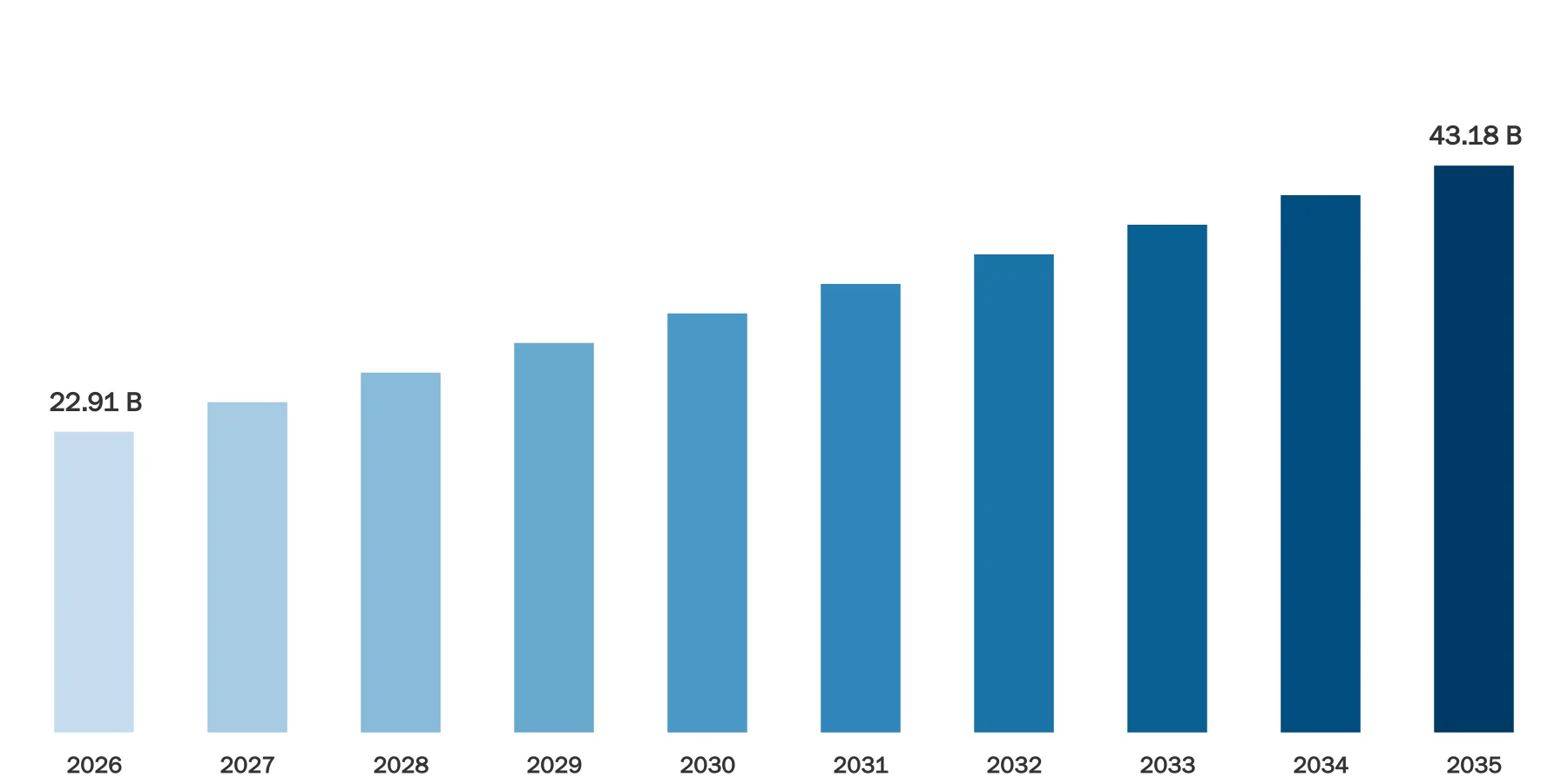
Source: Econ Market Research
A backhoe loader offers a front bucket for scooping and a rear digging arm for excavation. So, it is highly viable for all sorts of actions on construction sites, within road maintenance, and in agricultural projects. It can be used in versatile types of work and is therefore easily transportable for shifting between different jobs. The market for backhoe loaders is expanding steadily, as construction activities and infrastructure development are rising across the globe. Heavy investments by emerging economies in infrastructure push up demand for these machines. Moreover, technology advancements, such as improved fuel efficiency and better operator comfort, are pulling more customers toward modern backhoe loaders. However, challenges such as fluctuating raw material prices and environmental regulations can impact market growth.
Dynamic Insights
Some of the key drivers for the industry include increased construction and infrastructural project demands, predominantly in developing regions. More so, governments are investing a lot in the construction of roads, cities, as well as public utilities, hence, raising the demand for powerful and versatile equipment like the backhoe loader. Increased technological advancements also, including greater fuel efficiency and hydraulic performance, makes it a more attractive purchase in different industries.
However, the market also has some challenges that can hinder growth. For example, unstable prices of raw materials, such as steel and components, may increase the cost of manufacturing and, therefore, increase prices for end users. Also, strict regulations on emissions and noise levels may compel manufacturers to spend on compliance technologies, which will raise operational costs. Another critical factor is competition in the market, since there are many manufacturers trying to grab market share. This can lead to price wars and innovation.
Drivers Insights
Increasing Infrastructure Development
A strong global push for infrastructure development is driving the backhoe loader market. Emerging economies are investing significantly in transportation, utilities, and urbanization projects through both government and private sectors. This has created a high demand for construction machinery, with backhoe loaders playing an essential role in tasks like excavation, grading, and material handling. As the nation continues to develop its infrastructure, the backhoe loader becomes even more valuable for that development and serves well in helping it to find its way into growth market development.
Technological Advancements
Another key driver is the rapid advancement in technology within the construction machinery sector. Manufacturers are continually innovating to enhance the performance and efficiency of backhoe loaders. Modern machines come equipped with advanced features such as fuel-efficient engines, improved hydraulic systems, and integrated GPS technology for precision work. These advancements not only increase productivity but also reduce operational costs for users. As construction companies seek to improve their efficiency and reduce downtime, they are more likely to invest in advanced backhoe loaders, propelling market growth.
Restraints Insights
Fluctuating Raw Material Prices
Fluctuations in raw material prices tend to affect the backhoe loader market greatly. There is a possibility that supply chain interruptions and geopolitical tension may influence the price of steel and electronic parts. This may lead to high production costs for manufacturers and, therefore, higher prices for the equipment. This price sensitivity may deter such buyers, particularly small and medium-sized enterprises that have tighter budgets.
Environmental Regulations
Stringent regulations regarding emissions and noise level are another restraint in relation to the backhoe loader market. The governments of various countries are pushing to make standards tighter to curtail pollution and move toward sustainability. Again, though very much an environmental concern, it makes the production cycle of manufactures more difficult owing to the need to invest in more sophisticated technologies aimed at controlling emissions. This includes emission control technologies, which thus increases production cost and extends the development cycle. The rules may leave fewer models available or cost consumers more money, thus slowing the growth of the market.
Opportunities Insights
Growing Demand for Rental Services
Growth of equipment rental services holds considerable promise for the market. Most construction companies are known to rent machinery due to the capital investment requirement, this is more characteristic for smaller companies. During oscillations in economic conditions, a company seeks flexibility along with cost savings. Rental companies are increasingly adding backhoe loaders to their fleets, giving manufacturers the opportunity to supply machines tailored for rental use, thereby expanding their customer base.
Segment Analysis
By Type
The backhoe loader market has two main types: center-mounted backhoes and side-shift backhoes. Center-mounted backhoes are designed to have the digging arm mounted in the center of the loader to provide stability and ease in maneuverability. Such a design is well-suited for confined spaces, especially in urban construction and landscaping projects. On the other hand, while in side-shift backhoes the digging arm is able to shift sideways it is possible for the digger to dig on sides without having to change whole machine. It also particularly excels at trenching and utility installation type works.
By Engine Power
The power segment of an engine categorizes backhoes into three major segments: under 80 HP, 80-100 HP, and over 100 HP. Backhoes under 80 HP are primarily used for light-duty applications. They are suitable for smaller construction sites, residential projects, and landscaping tasks. These machines offer excellent maneuverability in tight spaces and are cost-effective for small businesses. Mid-range 80-100 HP category.
It has power and versatility, making it suitable for a wide range of construction and agricultural applications. Backhoes above 100 HP are meant for heavy-duty applications. This includes large construction, excavation, and heavy industrial applications. They have the power to do demanding work, which makes them suitable for big contractors and projects that have significant earth-moving capabilities.
By Application
The application segment consists of various fields where backhoe loaders are used, like construction, agricultural, industrial, and municipal applications. In the construction sector, backhoe loaders are quite indispensable for digging foundations, grading, and material handling due to their versatility and efficiency. In agriculture, they are used for land preparation, crop maintenance, and loading materials, thereby helping improve productivity on farms.
The industrial segment uses backhoe loaders for maintenance work, material movement, and site preparation, which indicates their ability to be applied in almost any industrial setting. In addition, municipal applications use backhoe loaders for infrastructure maintenance, road repairs, and public works projects, which emphasizes their vital role in the maintenance of urban and rural environments.
Regional Analysis
North America still holds a large market share, mainly because of developed construction industries and continued infrastructural investments. The US is the leading country within this region as this country has an extensive system of highways, road maintenance, and commercial construction efforts. Demand for backhoes in North America further increases due to the deployment of modern machinery and equipment, which enhance productivity and efficiency on construction sites.
The market in Europe is highly characterized by sustainability and innovation. Germany, UK, and France are investing in green infrastructure and construction, which requires backhoes with their fuel-efficient and environmentally friendly technologies. The Asia-Pacific region, including companies such as China and India, is experiencing rapid urbanization and infrastructural expansion, thereby demanding a healthy request for backhoes. Backhoe loaders are also always important for a number of growing agricultural sectors in these countries. The increasing developing economies in Latin America and the Middle East, now realize the importance of the construction and infrastructure industry, hence, more investment in that sector is done.
Competitive Landscape
Some of the major players in the market include Caterpillar, John Deere, JCB, and Komatsu. The companies have strong brand recognition, extensive distribution networks, and a wide range of product offerings. These companies are investing heavily in research and development to introduce advanced features in their backhoe loaders, such as improved fuel efficiency, enhanced hydraulic systems, and operator-friendly technologies. They also focus on after-sales support and service, building long-term relationships with customers, which further solidifies their competitive edge.
In recent years, smaller and regional manufacturers have entered the market to capture niche segments or specific geographical markets. These companies often offer cheaper solutions, which are sought after by budget-conscious buyers, especially in emerging economies where infrastructure development is increasing fast. As competition increases, companies are also looking for strategic partnerships, mergers, and acquisitions to increase market presence and enhance their product portfolio. Due to the fact that rental services for Construction Equipment have already started burgeoning, manufacturers came up with models especially for this market, which created additional competition.
List of Key Players:
Caterpillar, Inc.
Doosan Bobcat Company
Hitachi Construction Machinery Co., Ltd.
JCB
John Deere
Komatsu Ltd.
Sany Heavy Industry Co., Ltd.
Volvo Construction Equipment
XCMG Construction Machinery Co., Ltd.
CNH Industrial
Recent Developments:
In March 2023, CASE has introduced five new backhoe loader models at CONEXPO, aimed at providing businesses with a wider range of backhoe options. These new models are designed to meet the needs of various markets, including landscaping, rental, and utilities.
Global Backhoe Loader Report Segmentation
Backhoe Loader Market Report Scope & Segmentation
| Attributes | Details |
|---|---|
Market Size (Current) | US$ 22.91 Billion in 2026 |
Market Size (Forecast) | US$ 43.18 Billion in 2035 |
Growth Rate | CAGR of 7.3% from 2026 to 2035 |
Forecast Period | 2026 – 2035 |
Base Year | 2025 |
Historical Data Available | Yes |
Regional Scope | Global |
Segments Covered | By Horsepower
By Dig Depth
By Application
|
Frequently Asked Questions
Common questions about this report
The study period covers historical insights and forecast projections for the period 2026-2035.
About the Author
Market research expert with years of industry experience

Dipali Bhingare serves as the Market Research Director at Econ Market Research. With a focus on translating complex global economic shifts into actionable business intelligence, she oversees the strategic direction of comprehensive market studies. Her work empowers organizations to navigate volatile industries through data-driven forecasting and deep-dive competitive analysis.
Related Reports
Explore more market insights from the same category