

Striking Tools Market
Striking Tools Market Size, Share, Trends, Growth, and Industry Analysis, By Product Type (Hammers, Axes, Sledgehammers, Mallets), By Material (Steel, Wood, Fiberglass), By Application (Construction, Woodworking, Metalworking), Regional Analysis and Forecast Period 2026-2035
Market Overview
As per Econ Market Research analysis, the Global Striking Tools Market generated revenue of US$ 1.46 Billion in 2026 and is forecast to achieve US$ 1.92 Billion by 2035, at a CAGR of 3.1% during the study period 2026–2035. The base year considered is 2025.
Striking Tools Market Size 2025-2035 (USD Billion)

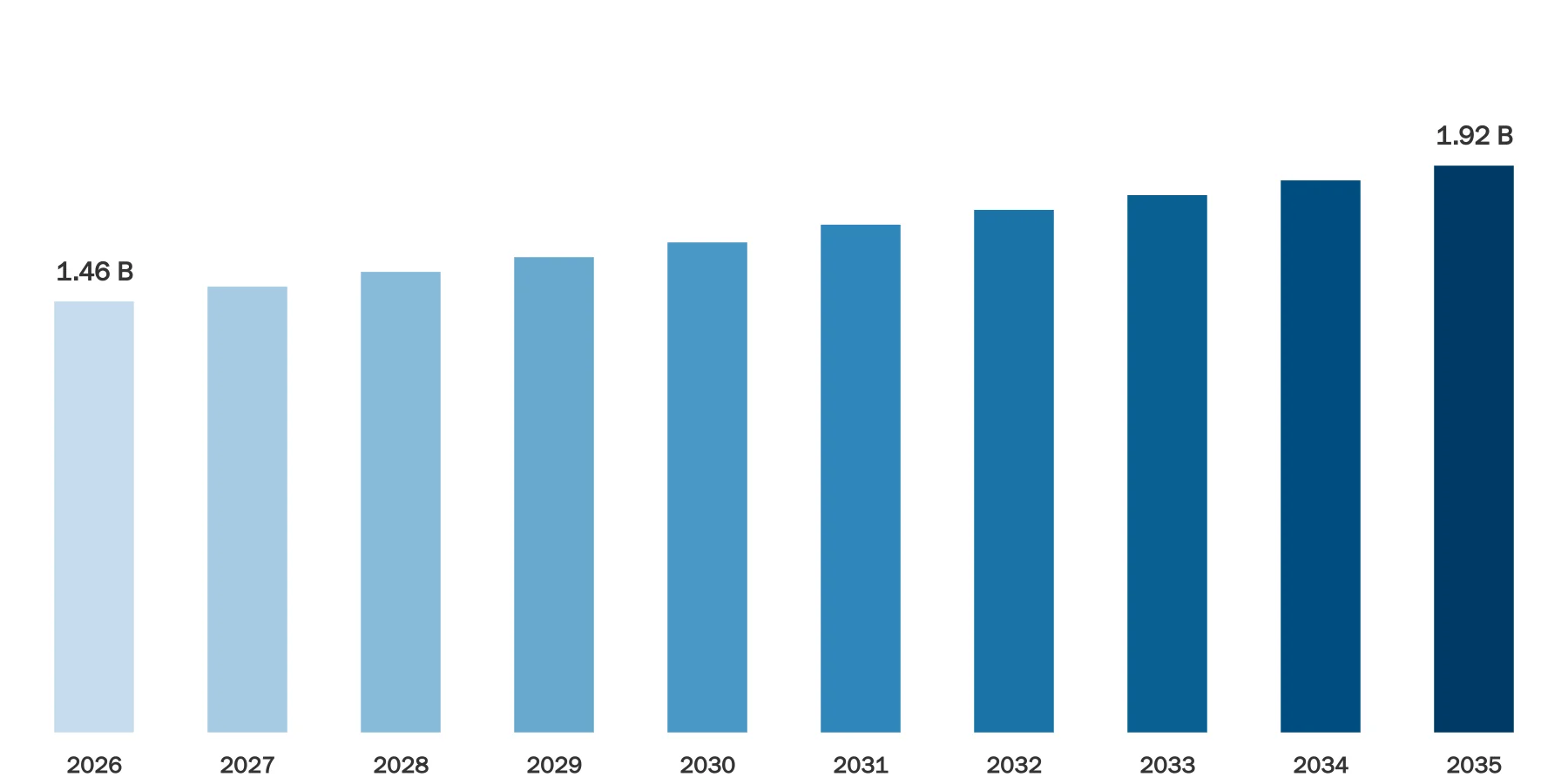
Source: Econ Market Research
Hammers, mallets, and axes are only a few of the tools available in the market for striking tools. Other tools are made for jobs involving impact force. These tools are indispensable in many homes and businesses across the globe, with uses ranging from construction to metallurgy, woodworking, and more. Durability, effectiveness, and user safety are improved by new materials and ergonomic designs. Growing renovations, building projects, and the DIY culture all contribute to the market',s expansion. Furthermore, new developments like adjustable features and anti-vibration technology meet changing customer demands.
Striking Tools Dynamics
The hammering implements Industry developments, economic conditions, and technical advancements are some of the elements that impact market dynamics. Product development is driven by innovations in materials and design, which improve user comfort, efficiency, and durability. Market demand is impacted by changes in the economy, consumer spending and construction activity levels have an impact on sales. Furthermore, the adoption of ergonomic and sustainable designs is driven by safety laws and environmental concerns. Price competitiveness and product diversification are fostered by manufacturer competition. Furthermore, changing customer desires for configurable and multipurpose products influence market trends.
Striking Tools Drivers
Industrial Growth and Construction Activity
The need for striking tools is driven by industrial growth and building activity, which generates a need for tools that facilitate a variety of operations, such as maintenance, demolition, and assembly. An expansion in industries and the number of building projects they involve means that more tools like sledges, mallets, and hammers are needed. These instruments are critical to the infrastructure and growth of industrial sectors around the world since they are needed for manufacturing plants, construction sites, and maintenance activities.
DIY and Home Improvement Trends
Demand for striking tools is driven by trends in do-it-yourself and home remodeling, as more people take on projects to improve their living areas. The popularity of social media platforms and online tutorials featuring do-it-yourself projects has LED to an increasing demand for tools such as screwdrivers, wrenches, and hammers. This tendency is a reflection of a societal movement toward individualism and creativity as people look to enhance and personalize their living spaces. As a result, people are more interested in purchasing superior striking equipment in order to complete these tasks efficiently.
Restraints:
Economic Downturns and Uncertainty
The market for striking tools is severely constrained during recessions and uncertain economic times due to a fall in industrial and building activity. The demand for tools like hammers and mallets declines as a result of decreased corporate investments and consumer spending. In addition, geopolitical tensions and financial market uncertainty make matters worse, causing companies and consumers to put off purchases. The market for striking tools is under pressure from these economic issues, which limits the potential for growth and profitability for both producers and retailers.
Slow Adoption of New Technologies
The market for striking tools is constrained by the slow adoption of new technology since established customers and industries are resistant to change. Market penetration is hindered by resistance to adopting novel tools such as power-assisted hammers or ergonomic designs, even with advances in materials and design. Manufacturers are impeded from introducing novel items by distrust towards unknown technologies and inertia within established operations. The industry',s ability to innovate and flourish as a market is limited by the sluggish adoption of striking tools.
Opportunities:
E-commerce and Digital Platforms
Due to their ability to reach a worldwide audience, e-commerce and digital platforms provide the striking tools market a huge opportunity. Online platforms are a valuable tool for manufacturers to promote their goods, find new clients, and build trust. Customers now have greater access to a large selection of striking tools because to the convenience of online shopping, which increases market visibility and sales potential. Digital platforms also help manufacturers become more competitive by allowing them to collect insightful customer feedback, improve marketing tactics, and adjust to changing market trends.
Technological Advancements and Innovation
Manufacturers can create innovative goods with improved performance, durability, and safety features by funding research and development. By incorporating smart technology like sensors and networking, tools', functionality and user experience can be completely transformed. These cutting-edge products not only meet changing consumer demands but also set producers apart in a crowded market, increasing market share and promoting long-term profitability and growth.
Segment Overview
By Types
Based on types, the global striking tools market is divided into hammers, hatchets, and mallets. The hammers category dominates the market with the largest revenue share in 2023. Hammers are adaptable instruments used for pounding surfaces or things. Claw, ball-peen, sledge, and frame hammers are just a few of the different varieties that they may be found in.
Although ball-peen hammers are used in metalworking to shape and strike metal surfaces, claw hammers are frequently utilized in carpentry and building for driving and extracting nails. With a cutting edge on one side and a striking surface on the other, hatchets are compact, portable instruments. They',re necessary for outdoor activities like hiking, camping, and forestry because they',re frequently used for splitting, chopping, and shaping wood. A large, usually rubber, plastic, or wooden head characterizes mallets, which resemble hammers. For applications requiring a milder impact, they are perfect because they may be used to strike surfaces without damaging them.
By Applications
Based on the applications, the global striking tools market is categorized into household, commercial, and public. The household category leads the global striking tools market with the largest revenue share in 2023. The household category includes swivel tools intended for home or individual use in residential environments. Usually, these tools are utilized for maintenance, house repairs, and do-it-yourself jobs. Striking tools used professionally in commercial and industrial contexts are included in the commercial section. These tools are frequently used in manufacturing, construction, vehicle repair, and other business settings since they are made to resist rigorous use. The public segment includes striking tools that are used for a variety of public works and infrastructure projects by government agencies, municipalities, and public service organizations.
Striking Tools Overview by Region
The global striking tools market is categorized into North America, Europe, Asia-Pacific, and the Rest of the World. North America emerged as the leading region, capturing the largest market share in 2023. Due in large part to current infrastructural projects, residential development, and commercial construction activity, the region has a thriving construction industry. Furthermore, North American customers have a strong DIY culture, which drives up demand for domestic striking tools. The creation of sophisticated, high-quality striking instruments has also been aided by technological innovation and developments in the area.
Moreover, the existence of notable producers, vast supply chains, and advantageous financial circumstances reinforce North America',s standing as a major participant in the worldwide market for striking instruments. Numerous factors, such as the region',s growing economies', rapid industrialization, urbanization, and infrastructure development, are responsible for this expansion. The need for striking tools is driven by an increase in construction activities, especially in the residential and commercial sectors. In addition, the market is developing as a result of growing middle-class population, rising disposable incomes, and increased awareness of DIY culture.
Striking Tools Competitive Landscape
In the global striking tools market, a few major players exert significant market dominance and have established a strong regional presence. These leading companies remain committed to continuous research and development endeavors and actively engage in strategic growth initiatives, including product development, launches, joint ventures, and partnerships. By pursuing these strategies, these companies aim to strengthen their market position, expand their customer base, and capture a substantial share of the market.
Striking Tools Market Leading Companies:
Infar Industrial Co., Ltd
Fiskars
Powerbuilt Tools
Bon Tool
Coulee Hardware
Grainger
Ashbel Merrel Leonard
GENIUS TOOLS USA
CS Unitec
Luna Tools
ROBIN Tools
Wilton
GARANT
CRAFTSMAN, and various others.
Striking Tools Recent Developments
In February 2023, Custom Carbide Cutter Acquired by Arch Cutting Tools. The Cincinnati-based business offers distributors and manufacturers cutting tools. Arch Cutting Tools, a pioneer in high-performance bespoke tooling, will welcome the new acquisition. The medical, aerospace, defense, automotive, energy, agricultural, and general industrial markets are served by Arch, which has its headquarters in Bloomfield Hills, Michigan.
In February 2022, Peak Toolworks', cutting tool reach in the Midwest is increased by the acquisition of Tooling Concepts. The Elkhart, Indiana, plant opens up additional service prospects for the company, which it can provide to its customers who are involved in the cutting and machining of metal, wood, plastic, and Composite Materials.
In June 2021, the acquisition of Indexable Cutting Tools of Canada, Inc. was announced by GWS Tool Group. With the addition of capacity and capabilities in the insert tooling market and the full vertical integration of ceramic blank manufacturing from powder, the purchase of Indexable enhances the GWS portfolio. Their wide range of ceramic inserts, which are made with a patented microwave sintering process, includes silicon nitride, white ceramic, and whiskered ceramic.
Striking Tools Market Report Segmentation
Striking Tools Market Report Scope & Segmentation
| Attributes | Details |
|---|---|
Market Size (Current) | US$ 1.46 Billion in 2026 |
Market Size (Forecast) | US$ 1.92 Billion in 2035 |
Growth Rate | CAGR of 3.1% from 2026 to 2035 |
Forecast Period | 2026 – 2035 |
Base Year | 2025 |
Historical Data Available | Yes |
Regional Scope | Global |
Segments Covered | By Product Type
By Material
By Application
|
Frequently Asked Questions
Common questions about this report
The study period covers historical insights and forecast projections for the period 2026-2035.
About the Author
Market research expert with years of industry experience

Dipali Bhingare serves as the Market Research Director at Econ Market Research. With a focus on translating complex global economic shifts into actionable business intelligence, she oversees the strategic direction of comprehensive market studies. Her work empowers organizations to navigate volatile industries through data-driven forecasting and deep-dive competitive analysis.
Related Reports
Explore more market insights from the same category