

Benchtop Tools Market
Benchtop Tools Market Size, Share, Trends, Growth, and Industry Analysis, By Product Type (Bench Saws, Bench Sanders, Drill Presses, Planers, Jointers), By Application (Woodworking, Metalworking), By End-User (DIY/Residential, Professional/Industrial), Regional Analysis and Forecast Period 2026-2035
Benchtop Tools Market Overview
As per Econ Market Research analysis, the Global Benchtop Tools Market was valued at US$ 0.22 Billion in 2026 and is expected to reach US$ 0.38 Billion by 2035, registering a CAGR of 6.3% during the forecast period 2026–2035. The base year considered is 2025.
Benchtop Tools Market Size 2025-2035 (USD Billion)

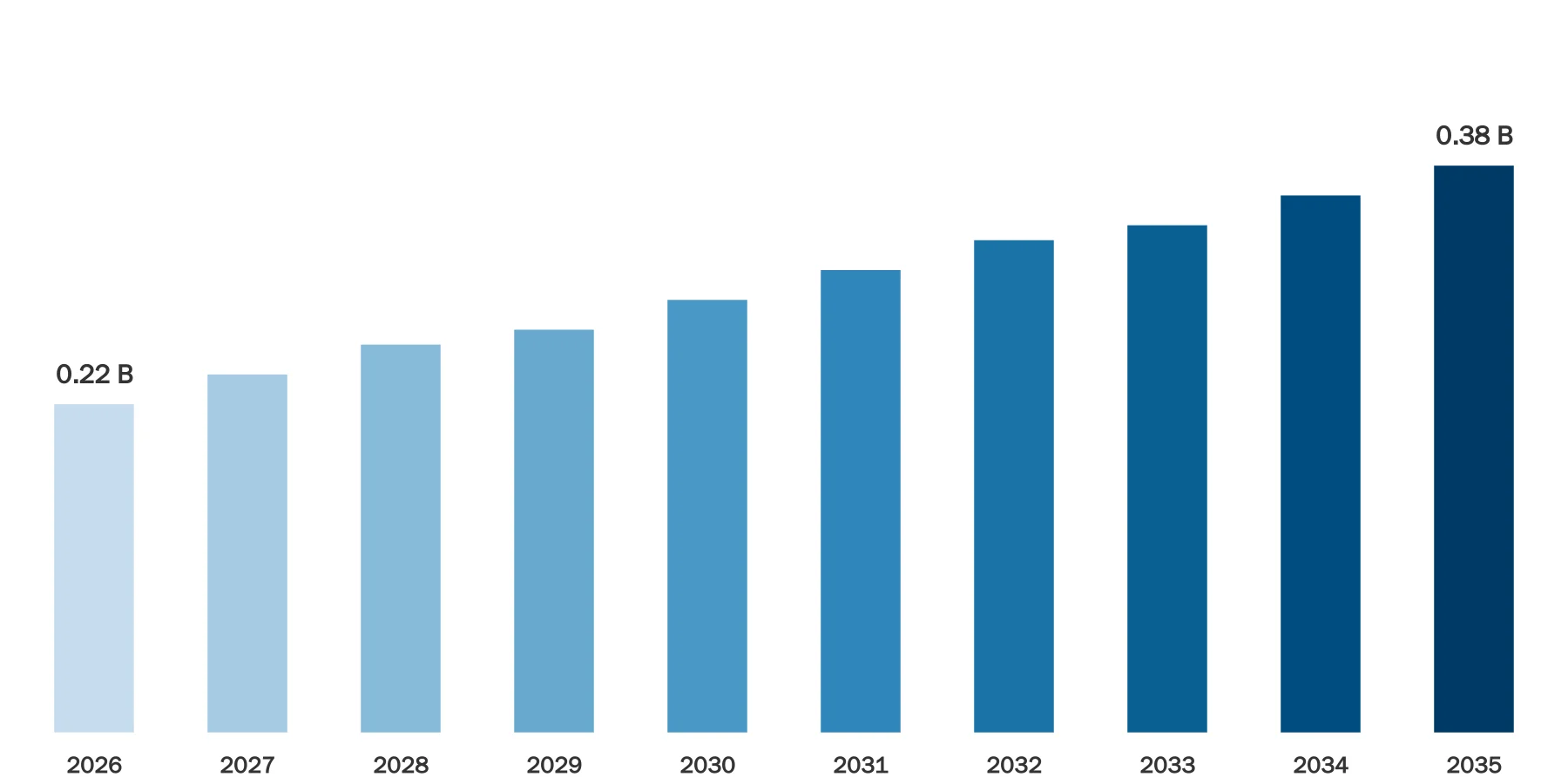
Source: Econ Market Research
Benchtop tools, including but not limited to drills, saws, sanders, grinders, and routers, are characterized by their compact size, ease of use, and suitability for smaller-scale projects or tasks. These tools are typically designed to be mounted or placed on workbenches or other stable surfaces, hence the term ",benchtop.", They offer convenience, efficiency, and precision, making them indispensable for professionals and hobbyists alike.
Benchtop tools have evolved to offer better performance, durability, and safety features due to advancements in technology and materials. The market is driven by a number of factors, including the global DIY culture boom, the growing demand for customised furniture and home improvement projects, and the growing use of power tools in industrial applications to increase productivity. Additionally, the growth of online marketplaces for product promotion, sales, and distribution has expanded the market reach of producers of benchtop tools, allowing them to serve a wide range of clients worldwide.
Benchtop Tools Dynamics
Technological advancements play a pivotal role, with manufacturers constantly innovating to improve tool performance, safety features, and user experience. Additionally, the increasing adoption of automation and digitalization in manufacturing processes is reshaping the industry landscape, leading to greater efficiency and precision in benchtop tool production. Market dynamics are also shaped by shifting consumer preferences and lifestyles, with a growing DIY culture and demand for customized solutions driving sales in the residential segment, while industrial applications benefit from expanding infrastructure projects and the need for high-performance tools.
Furthermore, macroeconomic factors that can affect production costs, pricing strategies, and market competitiveness include currency exchange rates, geopolitical tensions, and fluctuating raw material prices. These factors also have an impact on market dynamics. Market dynamics are also influenced by regulatory frameworks pertaining to emissions, environmental sustainability, and product safety, as manufacturers endeavour to meet regulations and set themselves apart through environmentally conscious endeavours. Furthermore, as businesses compete for market share through product differentiation, pricing strategies, and distribution channels, the competitive landscape&mdash,which is defined by the presence of both established players and new entrants&mdash,favours innovation and market segmentation.
Benchtop Tools Drivers
Technological Advancements
Technological innovations continue to drive the benchtop tools market forward. Advances in materials science, such as the development of lightweight yet durable alloys and composites, contribute to the creation of more efficient and ergonomic tools. Moreover, integration of smart technologies like sensors and connectivity features enhances tool performance and user experience, enabling real-time monitoring of operations and predictive maintenance. These advancements not only increase productivity and precision but also cater to evolving consumer demands for convenience and efficiency, thereby driving market growth.
Rise of DIY Culture
The burgeoning do-it-yourself (DIY) culture across residential and commercial sectors acts as a significant driver for the benchtop tools market. Increasingly, individuals and small businesses are opting to undertake projects such as home renovations, woodworking, and crafting independently, rather than relying solely on Professional Services. This trend is fuelled by factors such as easy access to instructional resources online, desire for customization, and cost-saving measures. Benchtop tools offer versatility, affordability, and ease of use, making them indispensable for DIY enthusiasts. As the popularity of DIY projects continues to soar, especially in regions with high urbanization rates and growing middle-class populations, the demand for benchtop tools is expected to rise correspondingly, driving market expansion.
Restraints:
Intense Competition
The benchtop tools market is characterized by intense competition among both established players and new entrants, leading to price pressures and margin erosion. Manufacturers face constant pressure to innovate and differentiate their offerings to maintain market share and profitability. Moreover, the presence of counterfeit products and unauthorized sellers poses a threat to legitimate manufacturers, undermining brand reputation and consumer trust. As a result, companies must invest heavily in marketing, distribution, and intellectual property protection to mitigate these challenges, which can strain financial resources and impede market growth.
Regulatory Compliance
Compliance with stringent regulations pertaining to product safety, emissions, and environmental sustainability poses a significant restraint for benchtop tool manufacturers. Regulatory standards vary across regions and can entail complex certification processes, testing requirements, and documentation obligations. Non-compliance can result in costly fines, recalls, and damage to brand reputation. Additionally, evolving regulatory landscapes and increasing consumer awareness regarding environmental issues necessitate continuous adaptation and investment in research and development to develop eco-friendly products and manufacturing processes. These regulatory hurdles and associated compliance costs can hinder market entry for smaller players and limit market expansion opportunities, particularly in regions with stringent regulatory frameworks.
Opportunities:
Product Innovation
Continued investment in product innovation offers opportunities for differentiation and market expansion. Manufacturers can develop cutting-edge benchtop tools with enhanced performance, durability, and safety features to cater to evolving consumer demands and industry requirements. Integration of smart technologies, such as Internet of Things (IoT) connectivity, Artificial Intelligence, and Augmented Reality, enables remote monitoring, predictive maintenance, and personalized user experiences. Furthermore, sustainable manufacturing practices and eco-friendly materials appeal to environmentally conscious consumers and align with corporate social responsibility initiatives. By prioritizing innovation and sustainability, companies can position themselves as market leaders and capture market share in an increasingly competitive landscape.
Segment Overview
By Product
The segmentation by product encompasses various types of benchtop tools catering to different tasks and applications. Sawing tools include band saws, circular saws, and scroll saws, designed for cutting various materials such as wood, metal, and plastic with precision and efficiency. Bench drill presses offer controlled drilling operations, making them ideal for creating accurate holes in a variety of materials.
Grinder and sander tools provide versatile grinding, sanding, and polishing functionalities, essential for surface preparation and finishing tasks. Jointers are used for flattening and straightening the edges of lumber, crucial in woodworking projects requiring precise joinery. Planers and routers facilitate shaping, trimming, and profiling wood surfaces, enabling intricate woodworking designs and smooth finishes.
By End User
Segmentation by end-user categorizes the market based on the primary consumers of benchtop tools. The industrial segment comprises businesses and manufacturers utilizing benchtop tools for professional applications in sectors such as construction, manufacturing, and automotive. Industrial users demand high-performance tools capable of withstanding heavy-duty usage and delivering precise results to enhance productivity and efficiency in their operations.
On the other hand, the residential segment includes individual consumers, hobbyists, and small-scale businesses employing benchtop tools for DIY projects, home renovations, and crafting endeavours. Residential users seek user-friendly, affordable, and versatile tools suitable for occasional or hobbyist use, emphasizing ease of operation and safety features.
By Distribution Channel
Segmentation by distribution channel distinguishes how benchtop tools are marketed and sold to consumers. The offline channel encompasses traditional brick-and-mortar stores, specialty tool shops, home improvement centers, and industrial supply stores where customers can physically browse, inspect, and purchase benchtop tools. Offline channels provide a hands-on shopping experience, enabling customers to receive personalized assistance from sales representatives and access immediate product availability.
Conversely, the online channel involves e-commerce platforms, manufacturer websites, and online retailers offering benchtop tools for purchase via the internet. Online distribution channels provide convenience, accessibility, and a wider range of product options, allowing customers to compare prices, read reviews, and make purchases from the comfort of their homes or workplaces.
Benchtop Tools Overview by Region
In North America, robust industrial infrastructure and a thriving DIY culture drive demand for benchtop tools in both the industrial and residential segments. The region benefits from a strong presence of established manufacturers offering innovative products and comprehensive distribution networks. Europe showcases a mature market characterized by stringent regulatory standards, fostering innovation in eco-friendly and high-performance benchtop tools.
Additionally, the growing emphasis on renovation and restoration projects in historical urban centers fuels demand for precision tools among residential users. Asia-Pacific region, rapid industrialization, urbanization, and infrastructure development initiatives stimulate market growth, particularly in emerging economies such as China and India. Rising disposable incomes, coupled with increasing adoption of power tools in construction and manufacturing sectors, contribute to market expansion. Moreover, the proliferation of online retail platforms facilitates market access for consumers in remote regions.
Latin America and the Middle East &, Africa regions exhibit untapped potential for benchtop tool manufacturers, driven by urbanization, construction activities, and a burgeoning middle class seeking affordable yet reliable tools for DIY projects and small-scale businesses. However, challenges such as economic instability, political uncertainties, and infrastructural constraints may hinder market penetration in these regions.
Benchtop Tools Market Competitive Landscape
Key players such as Stanley Black &, Decker, Bosch, Makita Corporation, and DeWalt dominate the market with extensive product portfolios, strong brand recognition, and global distribution networks. These companies invest heavily in research and development to introduce innovative features, improve performance, and enhance user safety, thereby maintaining their competitive edge. Additionally, strategic mergers, acquisitions, and partnerships are commonplace in the industry, enabling companies to expand their product offerings, penetrate new markets, and leverage complementary technologies.
Regional players often focus on niche segments or cater to specific customer needs, offering personalized solutions and localized support services. Furthermore, emerging market entrants capitalize on technological advancements, market gaps, and changing consumer preferences to disrupt the market with innovative products and competitive pricing strategies. The competitive landscape is also influenced by factors such as pricing dynamics, product quality, after-sales support, and brand reputation, as companies vie for market share and customer loyalty in an increasingly saturated and competitive environment.
Benchtop Tools Market Leading Companies:
Robert Bosch
Stanley Black &, Decker
Makita Corporation
Techtronic Industries
Koki Holdings
Hilti
CHERVON
CHANG TYPE Industrial
Festool
Ferm International
JPW Industries
KYOCERA Corporation
Laguna Tools
POWERTEC
Positec Tool Corporation
Benchtop Tools Report Segmentation
Benchtop Tools Market Report Scope & Segmentation
| Attributes | Details |
|---|---|
Market Size (Current) | US$ 0.22 Billion in 2026 |
Market Size (Forecast) | US$ 0.38 Billion in 2035 |
Growth Rate | CAGR of 6.3% from 2026 to 2035 |
Forecast Period | 2026 – 2035 |
Base Year | 2025 |
Historical Data Available | Yes |
Regional Scope | Global |
Segments Covered | By Product Type
By Application
By End-User
|
Frequently Asked Questions
Common questions about this report
The study period covers historical insights and forecast projections for the period 2026-2035.
About the Author
Market research expert with years of industry experience

Dipali Bhingare serves as the Market Research Director at Econ Market Research. With a focus on translating complex global economic shifts into actionable business intelligence, she oversees the strategic direction of comprehensive market studies. Her work empowers organizations to navigate volatile industries through data-driven forecasting and deep-dive competitive analysis.
Related Reports
Explore more market insights from the same category