

Cutting Tools Market
Cutting Tools Market Size, Share, Trends, Growth, and Industry Analysis, By Tool Type (Indexable, Solid), By Material (Cemented Carbide, High-Speed Steel, Ceramics, Diamond), By Application (Milling, Turning, Drilling, Grinding), By End-Use Industry (Automotive, Aerospace andamp; Defense, Construction, Oil andamp; Gas), Regional Analysis and Forecast Period 2026-2035
Market Overview
As per Econ Market Research analysis, the Global Cutting Tools Market valuation stood at US$ 78.3 Billion in 2026 and is expected to reach US$ 131.9 Billion by 2035, growing at a steady CAGR of 5.89% from 2026 to 2035. 2025 serves as the base year.
Cutting Tools Market Size 2025-2035 (USD Billion)

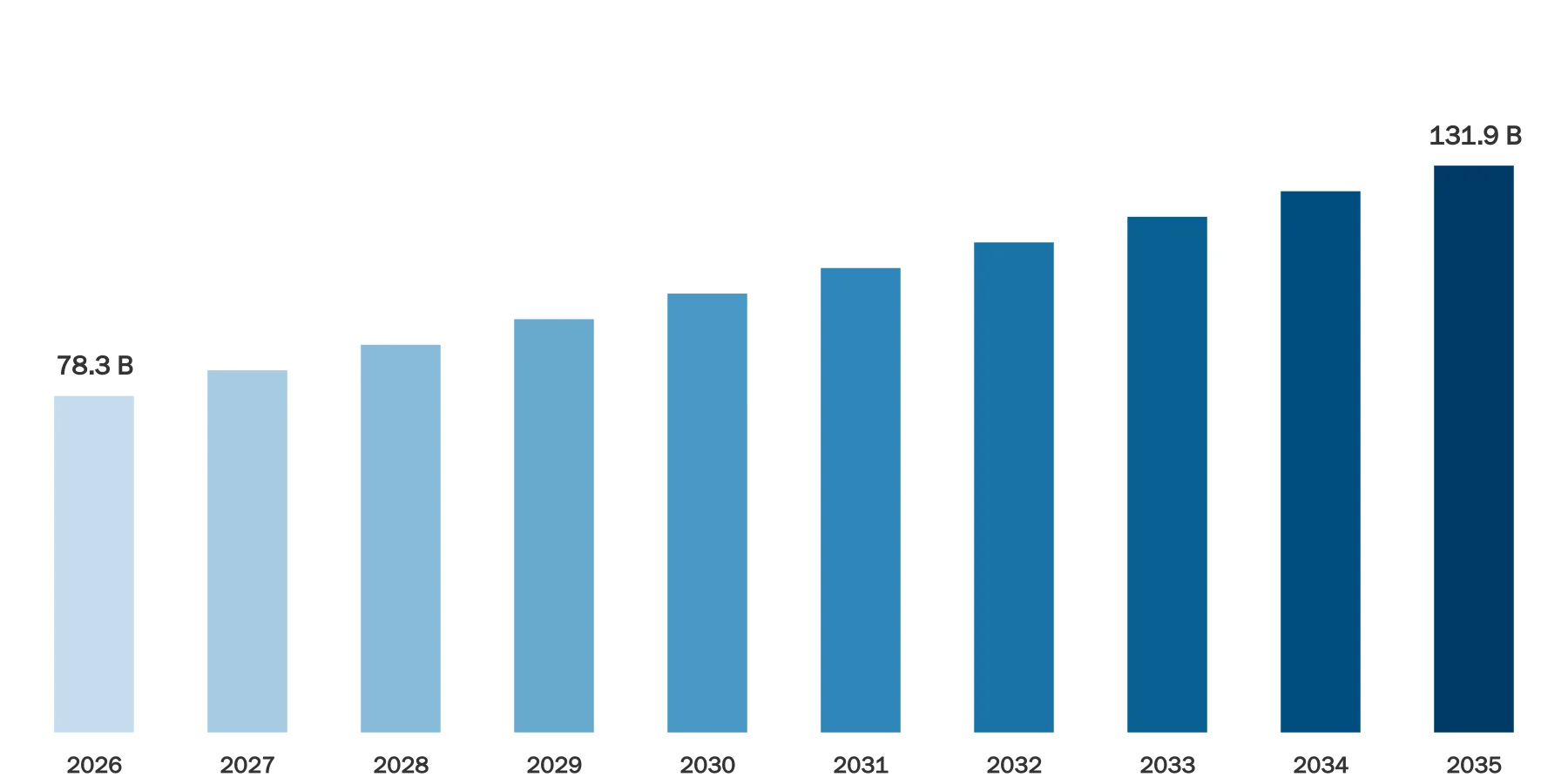
Source: Econ Market Research
The global cutting tools market encompasses a diverse range of tools utilized across numerous industries for cutting, shaping, and machining materials like metals, plastics, and composites. These tools, including drills, saws, milling cutters, and lathe tools, play a crucial role in manufacturing processes across sectors such as automotive, aerospace, construction, and electronics. The market is characterized by constant innovation and technological advancements, with materials like high-speed steel, carbide, and diamond coatings enhancing performance and longevity. Automation and computer numerical control (CNC) machining are driving efficiency and precision, further boosting market growth. However, challenges such as fluctuating raw material costs and environmental concerns regarding tool disposal persist.
Cutting Tools Dynamics
Technological developments are crucial, as continuous innovation propels the creation of state-of-the-art instruments with improved accuracy, effectiveness, and longevity. High-speed steel, carbide, and diamond coatings are among the materials that are still at the top of the market because they work well in a variety of industries', machining processes. Furthermore, the widespread adoption of automation and computer numerical control (CNC) machining is transforming manufacturing processes by increasing efficiency and productivity while decreasing the need for manual labour.
Industry regulations and changing consumer preferences also have an impact on market dynamics. The increasing need for precision and customised parts, especially in industries like electronics, aerospace, and automotive, is pushing tool manufacturers to invest in cutting edge technologies. Furthermore, the market is changing as a result of the increased focus on sustainability, as producers use eco-friendly products and production techniques to reduce their negative effects on the environment. Cutting tool prices are subject to volatility and supply chains are impacted by geopolitical tensions, among other issues. Market dynamics are further impacted by regulatory changes and economic uncertainty, which forces industry participants to strategically adapt.
Cutting Tools Drivers
Technological Advancements
Continuous technological advancements are a significant driver in the cutting tools market. Innovations in materials science have led to the development of advanced materials such as carbide, ceramics, and diamond coatings, which offer superior hardness, wear resistance, and thermal stability. These materials enable cutting tools to withstand higher cutting speeds and feed rates, resulting in increased productivity and efficiency in machining operations.
Furthermore, advancements in manufacturing processes, such as Additive Manufacturing and precision grinding techniques, allow for the production of complex cutting tool geometries with exceptional accuracy and repeatability. As industries demand higher precision and performance from cutting tools, technological advancements will continue to drive growth in the market by meeting evolving customer requirements and improving overall machining efficiency.
Rise of Automation and CNC Machining
The market for cutting tools is also being driven by the growing use of automation and computer numerical control (CNC) machining systems. Numerous advantages come with automation and CNC machining, such as increased output rates, increased accuracy, and lower labour costs. CNC machines can complete intricate machining tasks with little assistance from humans, producing parts of consistently high quality and faster cycle times. This tendency is especially noticeable in sectors like electronics, aerospace, and automotive, where producing components with precise tolerances requires precision machining. The market is predicted to grow as a result of manufacturers', efforts to remain competitive and increase productivity, which will raise demand for cutting tools compatible with automated and CNC machining systems.
Restraints
Fluctuating Raw Material Prices
Fluctuations in the prices of raw materials used in cutting tool manufacturing, such as Tungsten carbide, high-speed steel, and cobalt, pose a significant restraint to the market. The prices of these materials are subject to various factors, including supply-demand dynamics, geopolitical tensions, and currency fluctuations. Sharp increases in raw material prices can significantly impact manufacturing costs for cutting tool producers, leading to compressed profit margins or the need to pass on increased costs to customers.
Moreover, prolonged periods of volatility in raw material prices can disrupt supply chains and lead to inventory management challenges for manufacturers. To mitigate the impact of fluctuating raw material prices, cutting tool manufacturers may need to explore alternative materials, optimize supply chain management practices, and establish long-term supplier partnerships.
Environmental Concerns
Environmental regulations and sustainability concerns present another restraint to the cutting tools market. The manufacturing processes associated with cutting tool production can generate waste materials and consume significant amounts of energy and resources. Additionally, the disposal of used cutting tools can pose environmental risks if not managed properly. As governments worldwide implement stricter environmental regulations and consumers increasingly prioritize sustainable products, cutting tool manufacturers are under pressure to reduce their environmental footprint. This may require investments in eco-friendly manufacturing technologies, such as recycling programs, energy-efficient production processes, and the use of biodegradable materials. Compliance with environmental regulations and sustainability initiatives may entail additional costs and operational complexities for cutting tool manufacturers, impacting their competitiveness in the market.
Opportunities
Adoption of Industry 4.0 Technologies
The adoption of Industry 4.0 technologies, such as Internet of Things (IoT), Artificial Intelligence (AI), and machine learning, presents an opportunity for the cutting tools market. These technologies enable real-time monitoring, predictive maintenance, and optimization of machining processes, resulting in increased efficiency, reduced downtime, and cost savings. IoT-enabled sensors embedded in cutting tools can collect data on performance metrics such as temperature, vibration, and tool wear, allowing manufacturers to identify potential issues and pre-emptively address them before they escalate.
AI and machine learning algorithms can analyse large datasets to optimize cutting parameters, tool paths, and machining strategies, further improving productivity and quality. As industries embrace digital transformation and connectivity, the demand for smart cutting tools equipped with Industry 4.0 capabilities is expected to rise. Cutting tool manufacturers can seize this opportunity by integrating advanced technologies into their products and offering value-added services such as predictive maintenance and remote monitoring to enhance customer satisfaction and competitiveness in the market.
Segment Overview
By Tool Type
The market is divided into indexable and solid round tools. Indexable tools feature replaceable cutting inserts, allowing for cost-effective tool maintenance and flexibility in machining operations. Solid round tools, on the other hand, are single-piece tools typically used for drilling, milling, and turning applications where high precision and rigidity are required.
By Product
Cutting tools encompass a range of products including groovers, reamers, milling cutters, drills, and others. Groovers are used for creating grooves or slots in workpieces, while reamers are employed to achieve precise diameter and surface finish in existing holes. Milling cutters are versatile tools used for a variety of milling operations, and drills are utilized for creating holes in materials. The ",others", category includes specialty cutting tools tailored for specific applications or industries.
By Material Type
Cutting tools can be categorized based on the materials from which they are made, including cemented carbide, high-speed steel, ceramics, CBN (cubic boron nitride), and others. Cemented carbide tools offer high hardness and wear resistance, making them suitable for machining tough materials. High-speed steel tools provide excellent cutting performance at high speeds, while ceramic tools are preferred for high-temperature and high-speed machining applications. CBN tools are used for hard turning and finishing operations on hardened steel components.
By End-User
The cutting tools market serves various end-user industries such as automotive, general manufacturing, oil &, gas, aerospace &, defense, electronic &, electrical, medical, and others. Automotive and general manufacturing industries are major consumers of cutting tools for mass production of components. Oil &, gas and aerospace &, defence sectors require cutting tools for machining critical components with high precision and reliability. Electronic &, electricals and medical industries demand cutting tools for manufacturing intricate and delicate parts used in electronic devices and medical equipment.
By Distribution Channel
Cutting tools are distributed through offline and online channels. Offline distribution channels include brick-and-mortar stores, industrial supply distributors, and direct sales from manufacturers. Online channels encompass e-commerce platforms, manufacturer websites, and online marketplaces, providing customers with convenient access to a wide range of cutting tools and related products.
Cutting Tools Overview by Region
Developed regions like North America and Europe boast mature manufacturing sectors and high levels of automation, driving significant demand for cutting tools across industries such as automotive, aerospace, and electronics. Moreover, these regions are characterized by a strong emphasis on innovation and adoption of advanced machining technologies, leading to a continuous evolution of cutting tool designs and materials.
In contrast, emerging economies in Asia Pacific, particularly China, India, and Japan, are witnessing rapid industrial growth fuelled by infrastructure development, urbanization, and increasing investment in manufacturing capabilities. These countries serve as key manufacturing hubs for various industries, driving substantial demand for cutting tools to support production activities.
Additionally, the adoption of Industry 4.0 technologies and government initiatives to promote domestic manufacturing further contribute to market growth in the region. Meanwhile, regions such as Latin America, the Middle East, and Africa present untapped potential for the cutting tools market, with growing investments in infrastructure projects and industrial development initiatives. However, market growth in these regions is constrained by factors such as political instability, economic challenges, and infrastructure limitations.
Cutting Tools Market Competitive Landscape
Key market players include Sandvik AB, Kennametal Inc., Mitsubishi Materials Corporation, and IMC Group (Ingersoll Cutting Tools), among others. These companies offer a comprehensive range of cutting tools tailored to meet the diverse needs of industries such as automotive, aerospace, and general manufacturing. To maintain their competitive edge, market players focus on research and development initiatives to introduce advanced cutting tool designs and materials, enhancing performance, durability, and efficiency.
Additionally, strategic collaborations and acquisitions are common strategies employed by companies to expand their product portfolios, enter new markets, and strengthen their market presence. The market also witnesses competition from smaller regional players offering niche products and catering to specific industry segments. Furthermore, the increasing emphasis on sustainability and environmental responsibility drives competition in the market, with companies striving to develop eco-friendly cutting tools and adopt sustainable manufacturing practices.
Cutting Tools Market Leading Companies:
Sandvik AB
ISCAR Ltd. (IMC Group)
Kennametal Inc.
Mitsubishi Materials Corporation
Kyocera Corporation
Guhring Inc.
OSG Corporation
Sumitomo Electric Carbide, Inc.
Seco Tools
MAPAL Dr. Kress KG
Global Cutting Tools Report Segmentation
Cutting Tools Market Report Scope & Segmentation
| Attributes | Details |
|---|---|
Market Size (Current) | US$ 78.3 Billion in 2026 |
Market Size (Forecast) | US$ 131.9 Billion in 2035 |
Growth Rate | CAGR of 5.89% from 2026 to 2035 |
Forecast Period | 2026 – 2035 |
Base Year | 2025 |
Historical Data Available | Yes |
Regional Scope | Global |
Segments Covered | By Tool Type
By Material
By Application
By End-Use Industry
|
Frequently Asked Questions
Common questions about this report
The study period covers historical insights and forecast projections for the period 2026-2035.
About the Author
Market research expert with years of industry experience

Related Reports
Explore more market insights from the same category