

Solar Train Market
Solar Train Market Size, Share, Trends, Growth, and Industry Analysis, By Technology (Photovoltaic Solar Trains, Solar-Battery Hybrid Trains, Solar Thermal Trains), By Operating Speed (Below 100 Km/h, 100–200 Km/h, Above 200 Km/h), By Application (Freight, Passenger), By Infrastructure Support (Dedicated Solar Tracks, Hybrid Energy Facilities, Charging Stations), Regional Analysis and Forecast Period 2026-2035
Solar Train Market Overview
As per Econ Market Research analysis, the Global Solar Train Market generated revenue of US$ 4.53 Billion in 2026 and is forecast to achieve US$ 34.15 Billion by 2035, at a CAGR of 22.38% during the study period 2026–2035. The base year considered is 2025.
Solar Train Market Size 2025-2035 (USD Billion)

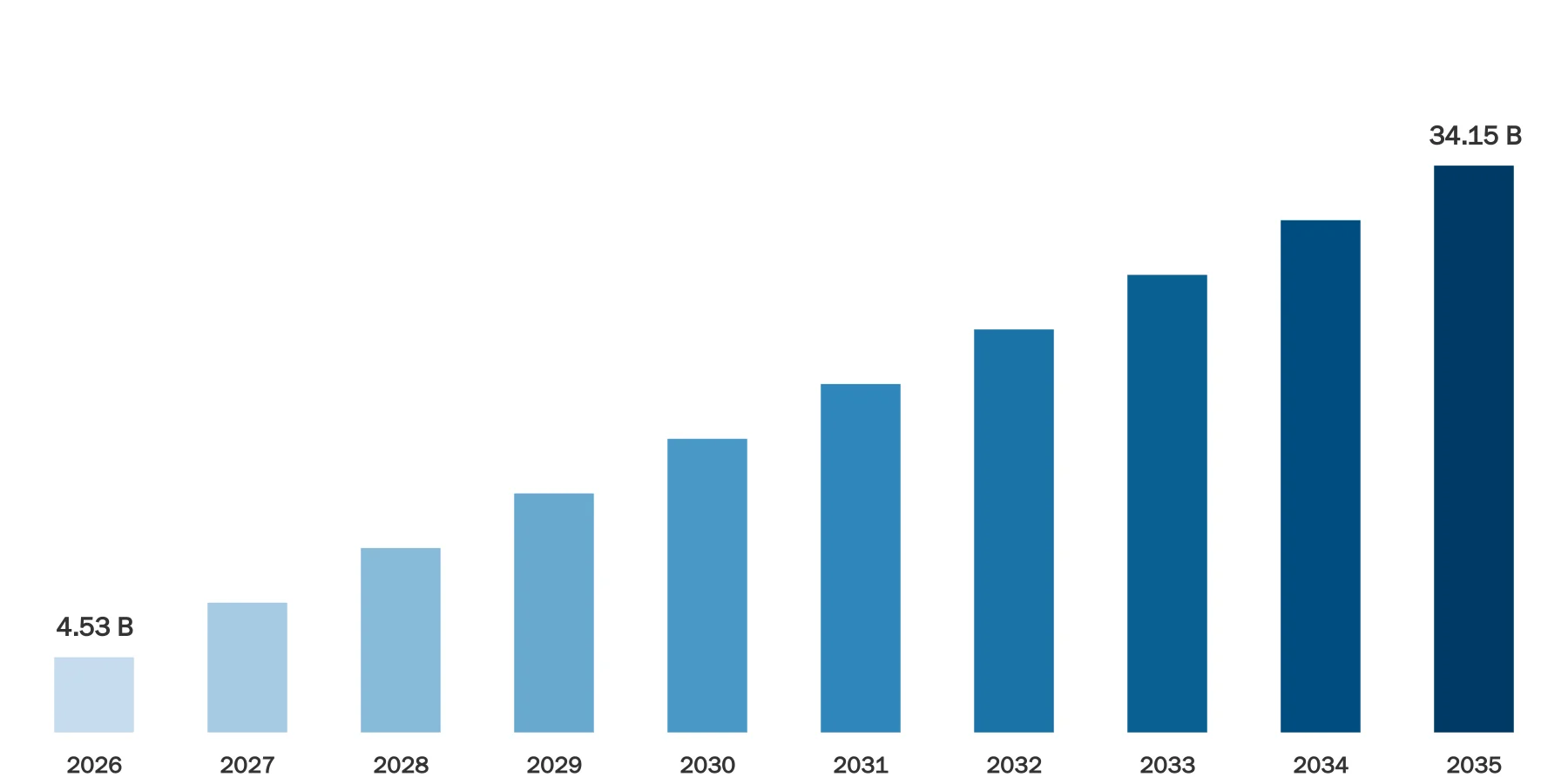
Source: Econ Market Research
The global solar train market refers to creating, running, and taking care of trains that run on solar power. These trains have solar panels on their roofs that collect sunlight and turn it into electricity to power the train',s engines and other functions. This new way of transportation brings many advantages, such as less dependence on fossil fuels, cheaper operating expenses, and a smaller environmental footprint compared to regular diesel or electric trains.
The global solar train market has seen a big increase in recent years as people become more worried about climate change and look for sustainable transportation options. Governments and businesses globally are putting money into solar train technology to cut down on carbon emissions and move towards cleaner energy sources. Better solar panels and energy storage systems have also made solar trains more efficient and affordable, helping the market grow even more. The global solar train market is likely to witness promising growth in the sustainable transportation sector, with ongoing efforts to improve performance and scalability through research and development.
Solar Train Dynamics
Government initiatives and policies are essential drivers of growth in the global solar train industry. Incentives like subsidies, tax breaks, and grants encourage investment in solar train projects, while regulations supporting renewable energy adoption help expand the market. Additionally, the rising public awareness and concern for environmental issues such as climate change and air pollution are driving demand for cleaner transportation options, leading to increased adoption of solar trains.
Furthermore, advancements in technology play a key role in the growth of the solar train market. Enhancements in solar panel efficiency, battery storage capacity, and electric propulsion systems improve the performance and feasibility of solar trains, making them more appealing to both operators and investors. Collaborations among research institutions, tech firms, and railway operators also fuel innovation and speed up the creation of new solar train technologies.
Solar Train Drivers
Government Support and Policies
The global solar train market is being driven by government initiatives and policies that support renewable energy and sustainable transportation. Governments are providing subsidies, tax incentives, and funding programs to encourage investment in solar train projects, making it easier for operators and investors to get involved. Regulations that require the reduction of carbon emissions and promote clean energy sources are also boosting demand for solar trains. With governments around the world focusing on sustainability and committing to reducing carbon emissions, the regulatory environment is expected to fuel significant growth in the market.
Technological Advancements
Continuous advancements in technology are key in driving the global solar train market ahead. Enhancements in the efficiency of solar panels, energy storage systems, and electric propulsion technologies improve the performance and feasibility of solar trains, making them more competitive with traditional diesel and electric trains. Moreover, progress in materials science and engineering plays a role in reducing the weight of solar panels and enhancing their durability, facilitating more effective integration onto train rooftops. Additionally, developments in digitalization and Data Analytics allow for better monitoring and optimization of solar train operations, enhancing energy efficiency and overall performance. As research and development efforts continue to push the boundaries of solar train technology, the market is poised for further expansion and innovation.
Solar Train Restraints:
The main obstacle preventing solar trains from being widely used is the high upfront costs involved in setting them up. Even with the potential long-term savings on fuel and the positive environmental impact, the initial investment needed for buying and installing solar panels, upgrading infrastructure, and improving Rolling Stock can be quite significant. This financial challenge could discourage operators and investors from supporting solar train initiatives, particularly in areas with limited funding or where traditional transportation systems are well-established.
Intermittent Nature of Solar Power
Solar train operations can be tricky due to the sporadic nature of solar power generation. Weather conditions and sunlight hours can impact efficiency, leading to fluctuations in power output. To combat this issue, operators need to consider backup power systems or hybrid propulsion solutions for consistent operation during low solar irradiance periods. Additionally, advancements in energy storage technologies, such as batteries or supercapacitors, can help store excess solar energy for use during periods of low sunlight, improving the overall reliability and resilience of solar train systems.
Solar Train Opportunities:
Urban Transit and Last-Mile Connectivity
The increasing need for eco-friendly urban transportation options offers a great chance for the growth of solar trains, especially in crowded areas with many public transport users. Solar trains can work alongside current transit systems and offer a green, efficient option for city commuters, cutting down on traffic jams and pollution. Additionally, light rail systems powered by solar energy can improve connectivity between different parts of a city, making it easier for people to get around and reducing the need for cars.
Segment Overview
By Propel Type
By Propel Type, Solar Train Market is segmented into rechargeable batteries for zero-emission and flexible energy storage. Others generate electricity with onboard fuel cells powered by hydrogen, offering longer range and faster refuelling than battery-electric trains. There are also trains that combine electric and diesel power for areas with limited electrification. Solar trains capture solar energy from photovoltaic panels on their rooftops for sustainable and renewable propulsion. Compressed Natural Gas (CNG) and liquefied natural gas (LNG) trains utilize natural gas as a fuel source, offering reduced emissions compared to diesel-powered trains.
By Application
By Application, Solar trains are segmented into freight trains transport goods efficiently over long distances, providing environmentally-friendly logistics solutions. Passenger trains carry travellers, offering comfortable and sustainable transportation options for commuters.
By Battery Technology
By Battery Technology, market is segmented into traditional lead-acid batteries are commonly employed due to their dependability and affordability, although they have restricted energy capacity and longevity. Cutting-edge technologies like sintered PNE (plastic negative electrode) and fibre PNE present better efficiency and endurance, making them appropriate for intensive applications.
Gel tubular batteries deliver superior safety and require minimal maintenance, perfect for challenging operational settings. Valve-regulated lead-acid (VRLA) batteries offer sealed construction and minimal maintenance requirements, suitable for urban transit applications. Lithium-ion batteries offer high energy density and fast charging capabilities, making them ideal for long-range and high-speed solar trains.
By Operational Speed
By Operational Speed market is segmented into, speeds below 100 km/h are commonly used for urban transit and short-distance commuting, offering frequent stops and efficient transportation within city limits. Trains with speeds between 100 and 200 km/h are meant for regional and intercity travel, providing faster and more comfortable journeys over longer distances. High-speed trains, categorized by speeds above 200 km/h, offer rapid and efficient transportation between major cities and urban centres.
Solar Train Overview by Region
The global solar train market is seeing different levels of adoption and growth opportunities across various regions. North America and Europe are at the forefront due to government support, infrastructure, and a focus on sustainability. These regions see heavy investments in research and development, promoting innovation and the implementation of solar train initiatives. In Asia Pacific, urbanization, population growth, and environmental awareness are driving the demand for sustainable transportation options, leading to market growth.
In countries like China and India, there is a strong focus on renewable energy, creating profitable prospects for companies that manufacture and operate solar trains. Government projects like China',s Belt and Road Initiative and India',s Smart Cities Mission are driving the expansion of solar-powered transportation systems. In other areas such as Latin America, Africa, and the Middle East, the market for solar trains is still in the early stages but holds great potential for advancement as governments work towards updating transportation infrastructure and decreasing reliance on traditional fuels.
Solar Train Market Competitive Landscape
Established manufacturers such as Alstom, CRRC Corporation Limited, and Bombardier Transportation leverage their extensive experience and resources to develop innovative solar train solutions and expand their market presence. These companies focus on research and development initiatives to enhance product performance, reliability, and efficiency, while also emphasizing partnerships and collaborations to capitalize on emerging market opportunities.
Additionally, smaller players and startups, including Solar Rail Solutions and Byron Bay Railroad Company, contribute to market competitiveness by introducing niche products and niche markets, fostering innovation and diversity within the industry. Moreover, strategic alliances between manufacturers, technology providers, and railway operators facilitate knowledge exchange, technology transfer, and market penetration, driving further competition and growth in the global solar train market.
Solar Train Market Leading Companies:
Alstom SA
CRRC Corporation Limited
Bombardier Transportation Inc.
Solar Rail Solutions Ltd.
Byron Bay Railroad Company Inc.
Siemens AG
Hitachi Rail Limited
Canadian Solar Inc.
Hyundai Rotem Company Ltd.
Vivarail Ltd.
Talgo SA
BNSF Railway Company
Wabtec Corporation
Stadler Rail AG
Trina Solar Limited.
Solar Train Recent Developments
Jan 2024, Gujarat',s advancement is propelled by major initiatives such as the hybrid renewable energy park and solar park. The Dholera Solar Park represents another significant project propelling Gujarat into the future. Situated 80 kilometres from Ahmedabad, this massive undertaking stands as India',s largest solar project, boasting a capacity of 5,000 MW according to the government.
Jan 2023, Siemens secures contracts aimed at facilitating the integration of solar power within the UK',s railway system. With transportation contributing to 27% of carbon emissions in Britain, electrifying the country',s rail network is crucial to revolutionize everyday journeys for passengers and expedite the transition to net zero emissions
Solar Train Market Report Scope & Segmentation
| Attributes | Details |
|---|---|
Market Size (Current) | US$ 4.53 Billion in 2026 |
Market Size (Forecast) | US$ 34.15 Billion in 2035 |
Growth Rate | CAGR of 22.38% from 2026 to 2035 |
Forecast Period | 2026 – 2035 |
Base Year | 2025 |
Historical Data Available | Yes |
Regional Scope | Global |
Segments Covered | By Technology
By Operating Speed
By Application
By Infrastructure Support
|
Frequently Asked Questions
Common questions about this report
The study period covers historical insights and forecast projections for the period 2026-2035.
About the Author
Market research expert with years of industry experience

Dipali Bhingare serves as the Market Research Director at Econ Market Research. With a focus on translating complex global economic shifts into actionable business intelligence, she oversees the strategic direction of comprehensive market studies. Her work empowers organizations to navigate volatile industries through data-driven forecasting and deep-dive competitive analysis.
Related Reports
Explore more market insights from the same category