

Seismic Support Vessels Market
Seismic Support Vessels Market Size, Share, Trends, Growth, and Industry Analysis, By Dimension (2D Seismic Vessels, 3D Seismic Vessels, 4D Seismic Vessels), By Technology (Towed Streamer Vessels, Ocean Bottom Seismic Vessels, Transition Zone Seismic Vessels), Regional Analysis and Forecast Period 2026-2035
Seismic Support Vessels Market Overview
As per Econ Market Research analysis, the Global Seismic Support Vessels Market size amounted to US$ 0.49 Billion in 2026 and is anticipated to grow to US$ 0.93 Billion by 2035, recording a CAGR of 7.3% during 2026–2035. The base year taken for analysis is 2025.
Seismic Support Vessels Market Size 2025-2035 (USD Billion)

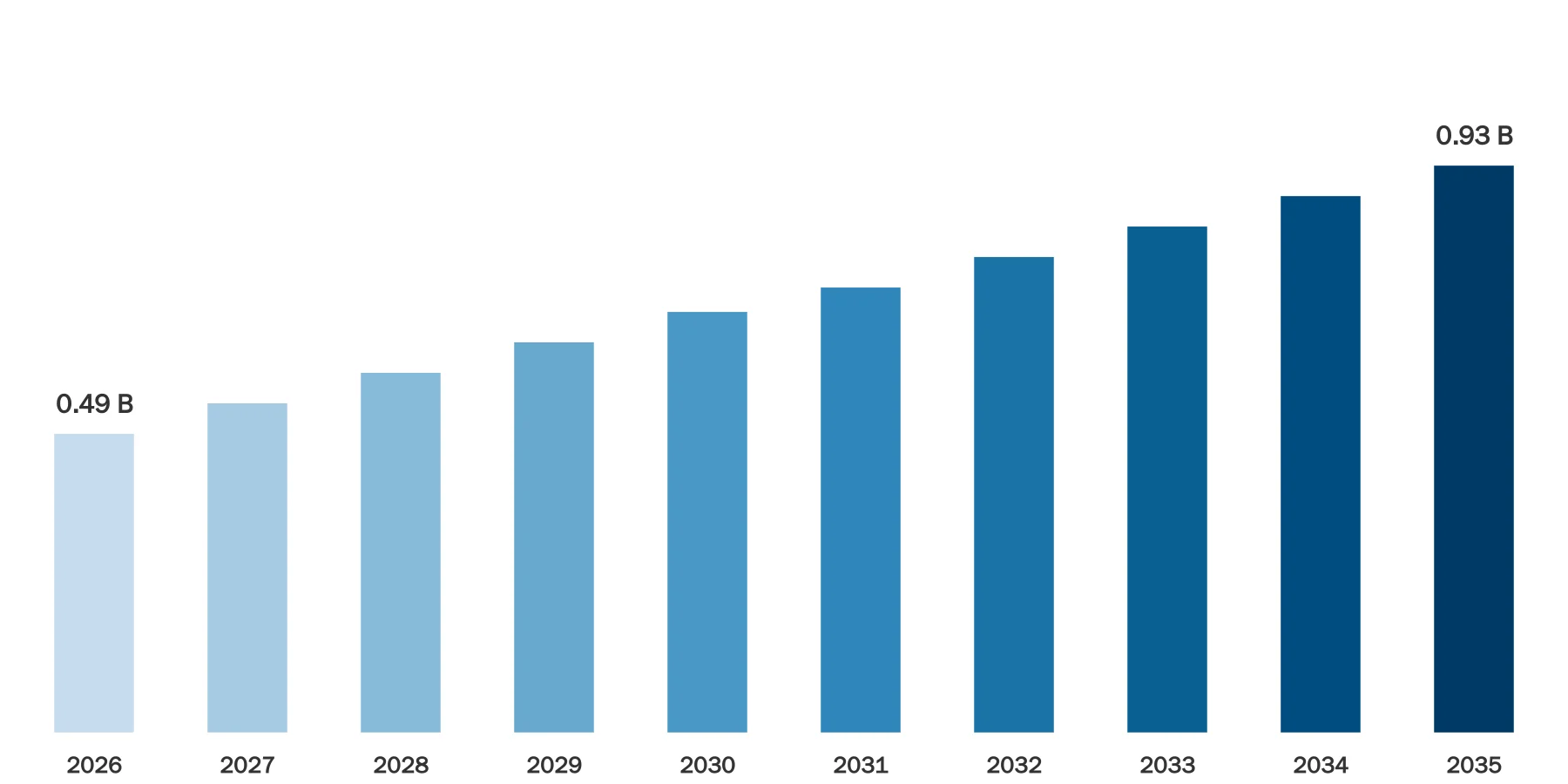
Source: Econ Market Research
Seismic support vessels play a crucial role in the oil and gas sector by supporting seismic surveys, which are essential for discovering potential oil and gas reservoirs beneath the seabed. These vessels are equipped with advanced technology and equipment to conduct seismic surveys efficiently in various marine environments.
The need for oil and gas exploration activities worldwide has an impact on the seismic support vessel industry. The oil sector is always looking to maximize output and find new reserves, so gathering seismic data efficiently is critical. With the use of geophysical tools like seismic airguns, streamers, and sensors, seismic support vessels may send sound waves into the ocean and record the reflections, which yields important geological data.
The rising need for energy, technological developments in offshore exploration, and the finding of new offshore oil and gas deposits are some of the reasons propelling the market',s expansion. Furthermore, the market dynamics are shaped by regulatory policies and environmental concerns, which have an impact on exploration activities and vessel operations.
Seismic Support Vessels Dynamics
The global energy demand is a major factor driving the need for oil and gas exploration to meet growing energy needs worldwide. As traditional reserves decrease, companies are venturing into deeper offshore regions, creating a demand for advanced seismic technologies and specialized vessels that can operate in tough marine conditions. Technological progress is key in shaping market trends, with innovations in seismic survey tools and vessel design improving efficiency and accuracy for more precise data collection and analysis. This leads to a higher demand for modern vessels with state-of-the-art geophysical and navigational systems.
Moreover, regulatory policies and environmental considerations significantly influence market dynamics. Stringent regulations governing offshore exploration activities impact operational practices and vessel design requirements. Environmental concerns drive the adoption of eco-friendly practices and technologies within the industry, promoting the development of greener seismic support vessels.
Seismic Support Vessels Drivers
Global Energy Demand
The growing need for energy around the world, especially in developing countries, is a big factor pushing the market for seismic support vessels. As traditional oil and gas sources run low, companies are turning to more difficult offshore locations for exploration. This requires advanced seismic technology and specialized ships to effectively search for new resources. The increasing energy demand is fueling investment in offshore exploration, leading to a higher demand for seismic support vessels that have the latest geophysical equipment and technologies.
Technological Advancements
The market is growing due to continuous improvements in seismic survey technologies and vessel design. Innovations like better data processing techniques, improved seismic imaging capabilities, and the creation of autonomous vessels are changing how offshore exploration is done. Today',s seismic support vessels have advanced sensors, Data Analytics systems, and dynamic positioning technologies, allowing for accurate data collection even in challenging marine environments. These advancements not only enhance exploration results but also help reduce operational costs, increasing the need for next-generation seismic support vessels.
Seismic Support Vessels Restraints:
Volatility in Oil Prices
The market for seismic support vessels is greatly affected by changes in global oil prices. When oil prices are low, companies in the oil and gas industry tend to cut back on exploration projects, which in turn decreases the need for seismic services and vessels. Economic downturns and geopolitical events that impact oil markets can also contribute to uncertainty in the market, causing companies to be more cautious with their investment decisions.
Environmental Regulations and Compliance
Stringent environmental regulations governing offshore operations pose challenges for the seismic support vessels market. Compliance with environmental standards, such as minimizing marine noise pollution and reducing emissions, requires investments in eco-friendly vessel technologies and operational practices. Meeting regulatory requirements adds complexity and cost to vessel operations, potentially affecting profit margins and market competitiveness.
Seismic Support Vessels Opportunities:
Renewable Energy Expansion
The shift to renewable energy sources is opening up new possibilities for the seismic support vessels market. Projects involving offshore wind and wave energy often need the same surveying and mapping approaches as offshore oil and gas exploration. Seismic support vessels have the chance to expand their offerings to cater to renewable energy projects by providing services such as site assessments, cable routing, and environmental impact assessments. Diversifying into the renewable energy sector can help reduce market risks linked to fluctuations in oil prices and also meet sustainability goals.
Segment Overview
By Dimension
The segmentation by dimension categorizes seismic support vessels into three main size classifications: medium (less than 40 meters), large (between 40 to 70 meters), and very large (over 70 meters). Each size category is tailored to specific operational needs and capabilities. Medium-sized vessels are versatile and suitable for shallow-water surveys, offering cost-effective solutions for smaller-scale projects.
Large vessels provide enhanced capacity and range, making them ideal for deepwater exploration and broader survey areas. Very large vessels are equipped with advanced technologies and extensive on-board facilities, enabling complex and long-duration survey missions in deep and remote offshore locations.
By Application
The segmentation by application highlights the versatile uses of seismic support vessels across industries. In the oil and gas sector, these vessels are instrumental in supporting exploration activities, utilizing specialized equipment for seismic surveys to locate potential hydrocarbon reserves. Beyond energy exploration, seismic support vessels contribute to geological surveys, providing crucial data for scientific research and environmental studies.
Additionally, these vessels play a vital role in defense applications, aiding naval operations with advanced sonar and acoustic technologies for submarine detection and maritime surveillance. This diverse range of applications underscores the importance of seismic support vessels in facilitating exploration, research, and security across marine environments.
Seismic Support Vessels Overview by Region
North America, particularly the Gulf of Mexico, remains a prominent market due to extensive offshore oil and gas exploration activities. Europe, with its focus on sustainable exploration practices and offshore wind energy development in the North Sea, drives demand for advanced seismic support vessels. In the Asia-Pacific region, emerging economies like China and India are investing in offshore exploration, contributing to market expansion. The Middle East and Africa witness strong demand driven by investments in offshore projects, while Latin America, including Brazil and Mexico, shows growth potential in both oil and gas exploration and renewable energy initiatives.
Seismic Support Vessels Market Competitive Landscape
Key players in this sector include marine vessel operators such as Bourbon Offshore, PGS, and Polarcus, known for their extensive fleets of seismic vessels equipped with advanced geophysical equipment. These companies offer comprehensive solutions for oil and gas exploration, leveraging their expertise in marine operations and seismic data acquisition.
In addition to vessel operators, shipbuilders such as Ulstein Group and Damen Shipyards play a crucial role in the competitive landscape by designing and constructing specialized seismic support vessels tailored to industry requirements. These shipbuilders collaborate closely with operators to incorporate cutting-edge technologies and optimize vessel performance for offshore surveying missions.
Moreover, equipment manufacturers like ION Geophysical and Sercel provide essential seismic acquisition systems, streamer cables, and other geophysical instrumentation that enhance the capabilities of seismic support vessels. Their innovations in seismic imaging and data processing contribute to more efficient and accurate exploration outcomes.
Seismic Support Vessels Market Leading Companies:
Tananger Offshore AS
Rederij Groen
Damen Shipyards Group
Naval Dynamics
Cemre Shipyard
Swire Pacific Offshore Operations (Pte) Ltd
Salt Ship Desig
Sanco Shipping AS,
Ulstein Group ASA
Seismic Support Vessels Market Recent Developments
Sept 2023, Argeo, a prominent provider of robotic and digital solutions in the ocean industry, and Shearwater GeoServices Holding, a leading company offering marine seismic acquisition and processing services, have formed a strategic alliance aimed at advancing and developing innovative technology and products within the subsea and marine seismic sectors.
April 2024, Shearwater Geoservices, a prominent seismic vessel owner, has secured a significant new debt refinancing agreement with Norwegian lenders. Based in Bergen, the company announced that the $700 million deal will enhance its focus on ",sustainable value generation.",
Seismic Support Vessels Report Segmentation
Seismic Support Vessels Market Report Scope & Segmentation
| Attributes | Details |
|---|---|
Market Size (Current) | US$ 0.49 Billion in 2026 |
Market Size (Forecast) | US$ 0.93 Billion in 2035 |
Growth Rate | CAGR of 7.3% from 2026 to 2035 |
Forecast Period | 2026 – 2035 |
Base Year | 2025 |
Historical Data Available | Yes |
Regional Scope | Global |
Segments Covered | By Dimension
By Technology
|
Frequently Asked Questions
Common questions about this report
The study period covers historical insights and forecast projections for the period 2026-2035.
About the Author
Market research expert with years of industry experience

Related Reports
Explore more market insights from the same category