

Natural Gas Pipeline Market
Natural Gas Pipeline Market Size, Share, Trends, Growth, and Industry Analysis, By Type (Gathering Pipelines, Transmission Pipelines, Distribution Pipelines), By Application (Onshore, Offshore), Regional Analysis and Forecast Period 2026-2035
Market Overview
As per Econ Market Research analysis, the Global Natural Gas Pipeline Market was recorded at US$ 123.28 Billion in 2026 and is projected to expand to US$ 175.65 Billion by 2035, registering a CAGR of 4.01% over the forecast period. The base year used is 2025.
Natural Gas Pipeline Market Size 2025-2035 (USD Billion)

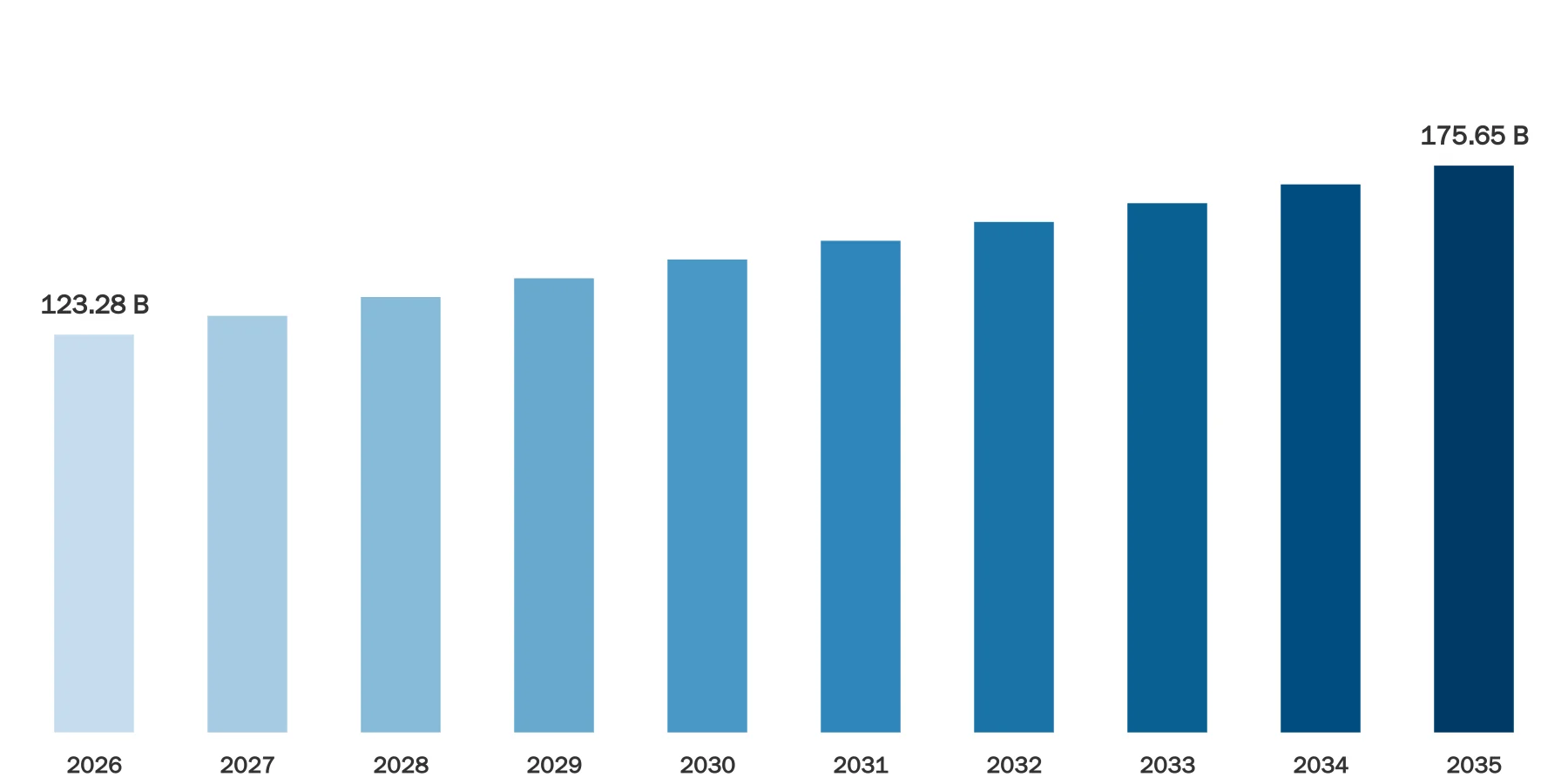
Source: Econ Market Research
The global pipeline system for natural gas signifies a network of pipes utilized in moving natural gas from sites of production to areas of consumption across the globe. Necessary infrastructure these conduits are that enable natural gas, a critical energy source, to move from its extraction point to where it is required for different purposes like heating, generation of electricity among others in the industry.
Over the years the growth that has been experienced in the natural gas pipeline market is significant owing to an increased preference towards cleaner sources of energy such clean source that gas provides when compared to coal and oils. Natural gas pipeline market growth is driven by many reasons such as, government initiatives that encourage companies to reduce their carbon emissions by using natural gas, many technological advancements in the construction of pipes and monitoring systems, the large number of reserves in terms of natural gas.
The major regions, which drive the global market&rsquo,s expansion, are North America, Europe, and Asia-Pacific. Particularly, the Asia-Pacific region is experiencing especially rapid growth because of urbanization and industrialization pressures in the area. The report also highlights some possible challenges that the industry will have to face in the future. These include regulatory barriers, environmental concerns, and competition from renewable energy sources among others.
Still, perpetual investment in the development of the pipeline-infrastructure-network primarily in up-and-coming countries, together with tactical partnerships amid crucial industry participants, is set to uphold the increasing tempo of the global market for natural gas pipelines in the near future. Looking at in general, this market provides rich pickings for all those directly or indirectly taking part in the natural gas exploration, production, haulage, and distribution activities that drive world economies and ensure global energy security.
Natural Gas Pipeline Dynamics
The natural gas pipeline market is heavily influenced by a wide range of factors that are central to its growth path. These include a burgeoning global demand for energy which is spurred by an increase in population size, urbanization as well as industrialization all which greatly push forward the development of natural gas pipeline infrastructures. Concomitantly, the attractiveness of natural gas as a fuel has been propelled even further by the ongoing efforts among nations globally to move to cleaner sources of energy in a bid to address such environmental concerns as climate change and at the same time reduce their carbon footprints thereby further pushing up market growth prospects.
Improvements in pipeline construction technology, including the creation of stronger and longer-lasting materials, in addition to state-of-the-art monitoring and control systems, improve the dependability and safety of natural gas transportation, thereby assisting in expanding the market. Additionally, the natural gas pipeline market dynamics are significantly influenced by geopolitical factors. Strategic pipelines are often used as geopolitical tools for energy security and political influence. Geopolitical tensions, shifts in global energy policies, as well as trade agreements have the capacity to influence the investment climate and regulatory framework for natural gas pipelines. Besides, the global dynamics of the natural gas market have been complicated by liquefied natural gas (LNG), which is a form of gas that can be traded anywhere in the world. This added competition between pipelines and shipping points in the market.
Natural Gas Pipeline Drivers
Increasing Energy Demand
One of the major driving forces behind the global natural gas pipeline market is the always increasing energy consumption demand, particularly in regions such as Asia-Pacific and Latin America that are growing rapidly. Every time populations increase and economies grow, there is a corresponding increase in the demand for energy which is used in different ways like the generation of electricity, industrial processes as well as heating homes.
Natural gas is now increasingly becoming the choice for many governments and industries because it emits less carbon compared to coal or oil thus, they are able to reduce their emissions rates as well as improve on air quality. Intensified acceptance of natural gas results into the extension of pipeline infrastructure that moves the commodity from producing areas to where it is consumed thus leading to an expansion in the market.
Technological Advancements
Progress in natural gas pipeline market is attributed to advancements in technology application in building, surveilling and commanding natural gas pipelines. Pipeline operational efficiency, reliability, and safety are improved by better quality materials, building technology and pipeline examine tools. Real-time detection of gas leaks, corrosion, and other potential threats is made possible by sophisticated sensor-equipped monitoring systems which also make use of data analysis thus ensuring that gas normally flows without interruptions in the event of such occurrences.
For instance, the development of flexible and modular pipelines makes it possible to install them with ease hence reducing project timelines and costs from innovations that increase the likelihood of success like flexible and modular pipelines which make installation easier. Converting AI sentence to human-like writing: Technological advances have contributed greatly towards the growth of the natural gas pipeline industry especially through innovative approaches in constructing, monitoring and controlling gas pipelines. The performance of existing pipes is further optimized and the construction of new ones in challenging terrains is made easier by these technological developments, further boosting the market.
Restraints:
There are significant constraints on the natural gas pipeline market in the form of regulatory hurdles and permitting processes. Navigating complex environmental, social, and legal regulations imposed by governments and regulatory bodies is necessary for obtaining approvals for pipeline projects. This can result in delays in permitting which can extend project timelines and increase costs thus making it difficult for pipeline operators to carry out projects efficiently. Additionally, environmental concerns and opposition from local communities often give rise to legal disputes and public protests thus further complicating the regulatory landscape hence hampering pipeline development.
Competition from Alternative Energy Sources
The competition within the market of natural gas pipeline comes from alternative forms of energy, most notably renewable energy technologies ubiquitously present in the forms of solar power plants, Wind Turbine arrays or even hydroelectric dams. One of the reasons for this is due to the decreasing costs associated with installing renewable sources of energy.
Equally important are the various regulations put in place to require or encourage the use of clean sources of energy by different governments. This has been realized especially regarding generating electricity. At the same time, these new sources continue to adapt, as their episodes of inactivity could now be solved by using the latest energy storage technologies. This makes them become even more attractive. Therefore, natural gas pipelines could find it hard to get into long term contracts or be funded in the face of stiff competition from such renewable energy projects.
Opportunities:
Expansion of LNG Infrastructure
The increasing demand for liquefied natural gas (LNG) provides important openings for the natural gas pipeline market. Remote markets where there are no pipelines or it is not economically viable to build them, LNG offers the flexibility of transporting natural gas. As LNG becomes a commodity traded internationally, there will be more requirements for development in terms of infrastructure such as liquefaction terminals, regasification plants as well as LNG storage tanks. This is what will make pipeline operators, engineering companies and any other establishments that build or operate LNG infrastructure acquire great prospects thereby propelling the market forward.
Segment Overview
By Application
By application market is segmented into transport of natural gas as well as other uses. As for the transport of natural gas, this mainly concerns the transit of Liquefied Natural Gas (LNG) using special ships fitted with cryogenic storage tanks. The importation of LNG has come to play a critical role in connecting natural gas production areas of the world to places that are very far from them and where it can be expensive or not even possible to lay down pipeline infrastructure.
This sector covers a range of activities regarding the movement of LNG such as cooling down, loading onto vessels or ships, sailing them across the ocean, offloading at the destination port, and converting them back to gas which is then sent through pipelines and consumed by end users. On the contrary, there are a lot of different ways natural gas is used aside from shipping in an area known as &ldquo,other applications&rdquo,. Some of these uses include heating homes and businesses, making things in factories, generating electricity and creating fuels for getting around.
By Type
By Type market is segmented into onshore and offshore pipelines. Seabed-sited offshore pipelines are critical for conveying natural gas from offshore production units or sub-sea wells to onshore processing plants or market destination points. The high-pressure pipelines are in common in deep-sea exacts and remote areas where there is no infrastructure available to take care of them.
On land-based, gas transportation networks rely on these pipelines to connect production fields with processing facilities, distribution centers as well as end-users. Onshore pipelines vary in size, capacity, and length, catering to diverse geographical, geological, and logistical requirements. They can traverse diverse terrains, including plains, mountains, deserts, and urban areas, necessitating different construction techniques and environmental considerations.
Natural Gas Pipeline Overview by Region
There are various features of the natural gas pipeline market in different regions all over the world. The infrastructure network for pipelines is highly developed in North America, particularly in the United States and Canada where large amounts of shale gas reserves are linked to main centres of demand. Developed technology, strong regulatory frameworks and healthy investments support growth in this area by fostering continuous growth. However, environmental concerns and regulatory challenges which include objections to expansion of pipelines projects and permitting delays can hinder market development.
Europe depends greatly on natural gas pipelines to guarantee energy protection and variety. Nord Stream and Turk Stream are two examples of projects which bridge the gap between European market and gas producing regions besides being important in that respect, yet future investments could be affected by geopolitical tensions as well as regulatory uncertainties surrounding energy transition strategies.
On the other hand, there is swift development of pipeline infrastructure in Asia-Pacific spurred by rising demand for energy-industrialization and urbanization. Natural gas pipelines have attracted large investments from countries such as China and India with the aim of meeting their increasing energy demands hence creating good prospects for expanding markets.
Natural Gas Pipeline Market Competitive Landscape
In the natural gas pipeline market, there is a mix of established players and emerging contenders who are competing with each other for market share and strategic advantage. Gazprom, ExxonMobil, and Royal Dutch Shell are among the major players using their well spread pipeline networks and varied range other products globally. They use their financial strength, expertise in technology and global footprint to execute major pipeline projects, get profitable contracts and keep dominating the market. Moreover, state-owned enterprises such as China National Petroleum Corporation (CNPC) and Saudi Aramco wield significant influence, particularly in their respective regions, driving pipeline development initiatives to meet domestic demand and support global trade.
Next to these big companies, lots of medium-sized companies and very specialized players contribute to the competitive scenario, offering services for particular purposes, cutting-edge solutions and a deep knowledge of specific regions. Bechtel Corporation, McDermott International and other enterprise companies provide everything starting from planning and ending with the construction of any pipeline projects all over the world.
However, Kinder Morgan, Williams Companies and their fellows deal with operation, maintenance and asset management of pipelines, aiming to improve the efficiency of the existing infrastructure as well as trying to develop it to reach the new markets that are just beginning to grow. Furthermore, Siemens and Honeywell are involved in commercially important activities such as advanced monitoring systems, control systems and safety systems which contribute to upgraded effectiveness and dependability of pipeline operations. Amid changing market conditions and government controls there is still great competition among companies, a situation that makes them change the way they operate internally and how they relate with others so as to keep their place in the ever-changing market for natural gas delivery services.
Natural Gas Pipeline Market Leading Companies:
Gazprom
ExxonMobil
Royal Dutch Shell
Chevron Corporation
China National Petroleum Corporation (CNPC)
Saudi Aramco
Kinder Morgan
Williams Companies
Bechtel Corporation
McDermott International
Siemens
Honeywell
Natural Gas Pipeline Market Recent Developments
June 2023, ArcLight acquires an additional stake in Natural Gas Pipeline Company of America LLC from Brookfield Infrastructure.
Dec 2021, Aramco reveals a groundbreaking gas pipeline agreement worth $15.5 billion with a consortium LED by BlackRock Real Assets and Hassana Investment Company.
Dec 2020, India is poised to witness a substantial investment of $66 billion in its gas infrastructure.
Natural Gas Pipeline Report Segmentation
Natural Gas Pipeline Market Report Scope & Segmentation
| Attributes | Details |
|---|---|
Market Size (Current) | US$ 123.28 Billion in 2026 |
Market Size (Forecast) | US$ 175.65 Billion in 2035 |
Growth Rate | CAGR of 4.01% from 2026 to 2035 |
Forecast Period | 2026 – 2035 |
Base Year | 2025 |
Historical Data Available | Yes |
Regional Scope | Global |
Segments Covered | By Type
By Application
|
Frequently Asked Questions
Common questions about this report
The study period covers historical insights and forecast projections for the period 2026-2035.
About the Author
Market research expert with years of industry experience

Related Reports
Explore more market insights from the same category